

Choosing between a mortgage and rent impacts your net worth substantially. When you buy a home, your mortgage payments help build equity and can increase your wealth over time, especially if property values rise. Renting, on the other hand, is a regular expense that doesn’t contribute to asset growth. Your choice depends on market conditions and personal goals. To learn how these options can shape your financial future, keep exploring the key factors involved.
Key Takeaways
- Buying a home builds equity over time, increasing net worth, while renting payments do not contribute to asset accumulation.
- Mortgage payments gradually reduce debt and grow home equity, positively impacting net worth compared to rent expenses.
- Homeownership offers potential appreciation and tax benefits, enhancing long-term net worth; renting offers no asset growth.
- Market fluctuations can affect property value, influencing net worth differently for homeowners versus renters.
- Renting provides flexibility and lower upfront costs, which may be advantageous for short-term financial strategies or uncertain plans.
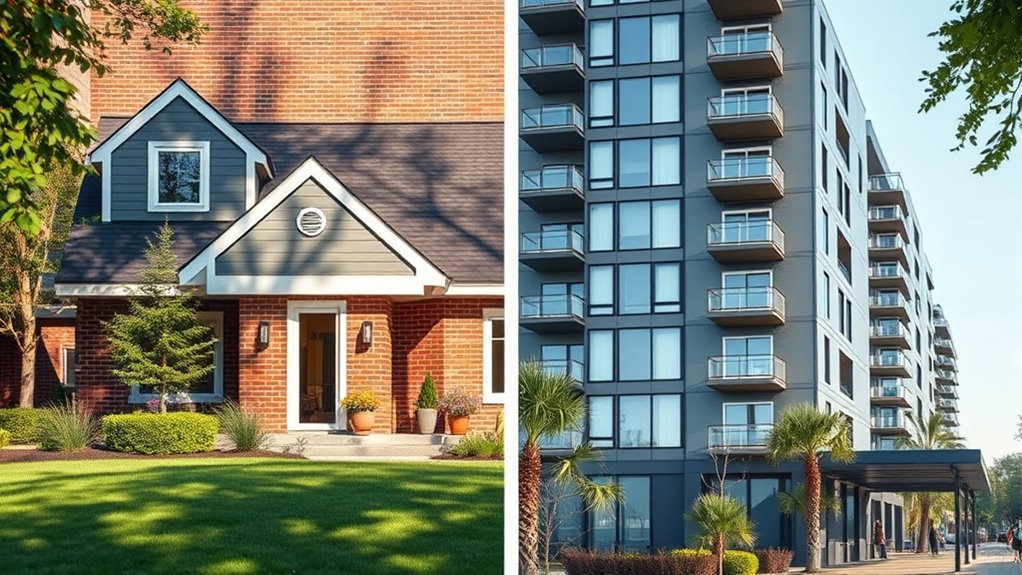
Are you trying to decide whether to buy a home with a mortgage or continue renting? This decision can considerably impact your net worth over time. When considering a mortgage versus rent, it’s essential to think about how each option influences your long-term financial health, especially in terms of real estate investment and understanding rental market trends. Buying a home means putting your money into an asset that can appreciate, while renting often feels like throwing money away on something that never belongs to you.
Deciding between buying a home with a mortgage or renting impacts your long-term financial growth.
With a mortgage, your monthly payments build equity, gradually transforming your payments into ownership. As property values fluctuate, your investment can grow, especially if real estate investment continues to be a sound strategy in your area. Keep an eye on rental market trends, as they can indicate whether renting is becoming more affordable or if rental prices are climbing, making homeownership more attractive. If rental market trends are on the rise, locking in a mortgage might save you money in the long run and help you build net worth faster. Conversely, if rental prices are decreasing or stagnant, staying a renter could be more economical, but it might limit your ability to accumulate assets.
Homeownership also offers tax benefits, such as mortgage interest deductions, which can further boost your net worth. Additionally, owning a home provides stability—no sudden rent hikes or lease terminations—and the freedom to customize your space. Over time, as you pay down your mortgage, you’re increasing your net worth by reducing debt and building equity. This process contrasts sharply with renting, where your monthly payments go directly to a landlord, with no return or ownership stake.
However, consider the risks involved. Real estate markets can be unpredictable, and if property values decline, your investment might lose value. Maintenance costs and property taxes can also eat into your potential gains. On the other hand, renting offers flexibility and fewer responsibilities, which can be advantageous if you’re uncertain about your long-term plans or if rental market trends suggest a decline in property values. Still, rent payments do not contribute to building assets, so over the long term, they don’t increase your net worth.
Furthermore, understanding anime movies and their cultural significance can provide insight into the storytelling and investment in creative works, much like real estate can be viewed as an investment asset. In the end, your choice hinges on your financial goals and the local real estate market conditions. If you’re aiming to grow your net worth through real estate investment, buying a home and paying a mortgage might be the smarter move, especially if rental market trends are pushing rental costs higher. But if flexibility, lower upfront costs, and minimizing risk appeal more to you, renting can keep your finances more liquid. Understanding these factors will help you make the best decision for building wealth and securing your financial future.
Frequently Asked Questions
How Does Mortgage Interest Affect Long-Term Wealth Accumulation?
Mortgage interest affects your long-term wealth growth by reducing the amount you can save or invest elsewhere. As you make mortgage payments, part of your interest goes toward building equity in your home, which can boost your net worth over time. While paying interest isn’t ideal, mortgage interest deductions can lower your tax bill, indirectly supporting wealth accumulation. Managing this interest wisely helps maximize your overall financial growth.
What Are the Tax Benefits of Homeownership Versus Renting?
When you own a home, you can deduct property taxes and mortgage interest on your taxes, reducing your taxable income. Homeownership also often includes paying for home insurance, which protects your investment. Renters, on the other hand, don’t benefit from these deductions, so owning a home can offer significant tax advantages. These benefits can help you save money and build wealth over time.
How Does Home Appreciation Influence Net Worth Over Time?
Home appreciation increases your net worth over time because the property’s value grows, often outpacing inflation. While your home appreciates, you still pay property tax and maintenance costs, which can affect your overall gains. By regularly maintaining your property and understanding tax benefits, you maximize appreciation’s positive impact. Over the years, this growth in property value can markedly boost your net worth, especially if you hold onto the home long-term.
What Are the Hidden Costs Associated With Renting Versus Owning?
Imagine your rent payments like watering a plant, seemingly simple but with hidden costs lurking beneath the surface. When you rent, you often overlook maintenance expenses, which can unexpectedly drain your budget. Owning a home, in contrast, involves hidden costs like repairs and upkeep that add up over time. These hidden costs can quietly chip away at your net worth, making it essential to budget for both visible and unseen expenses.
How Do Regional Housing Markets Impact the Mortgage Versus Rent Decision?
Regional housing markets greatly influence your mortgage versus rent decision. If you face regional affordability issues, owning might strain your finances, especially during market volatility when property values fluctuate unpredictably. In high-cost areas, renting could be more practical, allowing flexibility and lower upfront costs. Conversely, in stable, affordable regions, buying may build equity over time, making mortgage payments a smarter investment than rent. Always consider local market trends before deciding.
Conclusion
Ultimately, choosing between mortgage and rent isn’t just about payments—it’s about shaping your future. Some say renting keeps your options open, while owning builds lasting wealth. Think about it: if you invest wisely, owning could turn into your greatest financial asset. Don’t let fear hold you back—believe in your ability to make smart decisions. Your home isn’t just a place to live; it’s a powerful step toward financial stability and independence.