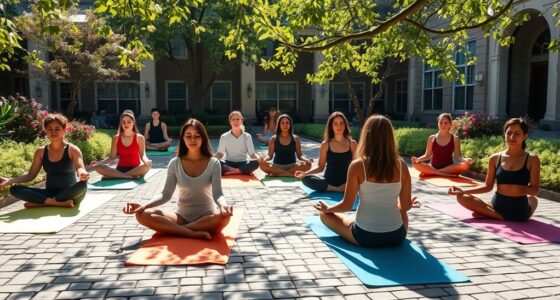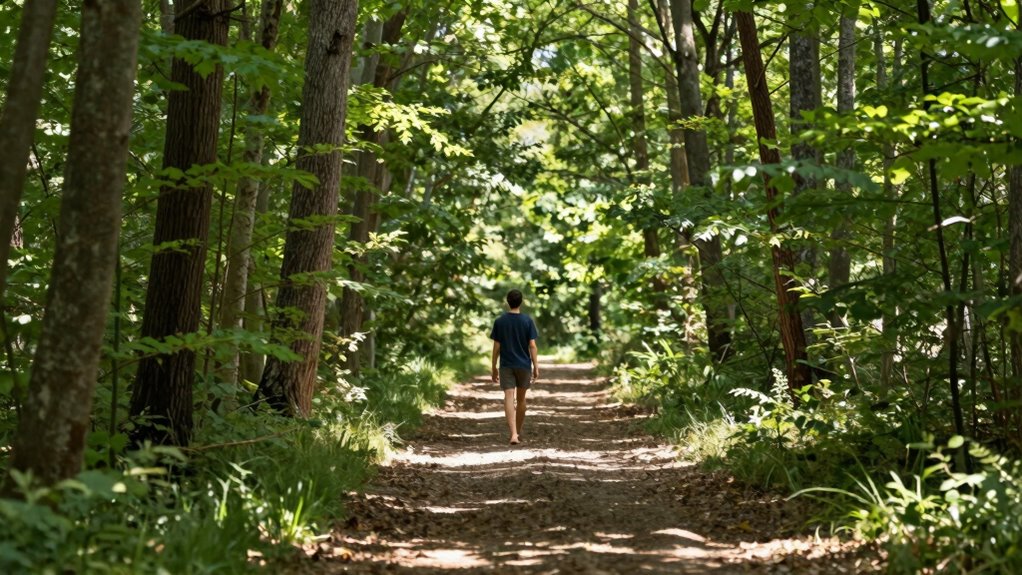

Mindful walking teaches you that calmness is always within reach, even in chaos. By slowing down and focusing on each step and breath, you anchor yourself in the present, reducing worries and racing thoughts. This practice helps your nervous system relax and shows you that stress doesn’t have to control you. As you embrace mindful movement, you’ll discover simple ways to find peace anytime chaos arises—there’s much more to uncover on this calming journey.

Get the little things that make your day delivered free with Prime
- Fast, free delivery on millions of items
- Prime Video, Amazon Music and more included
- Member-only deals all year
Key Takeaways
- Mindful walking demonstrates that calmness is always accessible, even amid chaos.
- Focused attention on each step and breath helps reduce racing thoughts and worries.
- Regular practice anchors the mind in the present, decreasing stress triggered by past or future concerns.
- Breath awareness during walking relaxes the nervous system, signaling safety and promoting relaxation.
- Mindful movement teaches resilience by showing stress is a natural part of life, manageable through awareness and acceptance.

When stress starts to overwhelm you, turning to mindful walking can provide a simple yet powerful way to find calm. This practice, often called walking meditation, invites you to slow down and bring your full attention to each step. This focus helps anchor your mind and reduces the chatter of worries or racing thoughts.
As you begin, find a quiet space where you can walk unhurried. Start by taking a few deep breaths, grounding yourself in the present. With each step, feel the contact of your foot with the ground. Notice the sensation of your weight shifting and how your muscles engage to propel you forward. The rhythm of your steps naturally pairs with your breath, creating a calming cadence. As you walk, avoid distractions like your phone or busy surroundings. Instead, stay fully present, observing the sights, sounds, and sensations around you without judgment.
Breath awareness plays a vital role in this process. By tuning into your breath, you slow down your nervous system, signaling to your body that it’s safe to relax. When your mind drifts—inevitably, it will—gently bring your focus back to your breath and your steps. This act of returning your attention trains your mind to stay centered, even amid stress. Over time, this practice becomes a tool you can use anytime you feel overwhelmed. It’s not about achieving perfection but about cultivating awareness and acceptance of your current experience.
Practicing walking meditation regularly can reveal important lessons about stress. You learn that stress often arises from racing thoughts, future worries, or past regrets—things outside your control. But through breath awareness and mindful movement, you realize you can anchor yourself in the present moment. This simple act of walking slowly and paying attention can shift your perspective, showing that calm is always accessible, even in hectic times. It’s a gentle reminder that, no matter how chaotic life gets, your landscaping and your steps can guide you back to peace and clarity. Recognizing the benefits of best safety glasses for 2024 can also inspire you to create a safe environment where you practice mindfulness comfortably and effectively. Additionally, understanding that mindful practices can be incorporated into daily routines emphasizes their accessibility and long-term benefits.
Incorporating the philosophical insights on authenticity and existence into your practice can deepen your understanding of stress as a natural part of life’s journey.
Frequently Asked Questions
Can Mindful Walking Replace Medication for Stress Relief?
Mindful walking can be a powerful meditation alternative for natural stress relief, but it might not fully replace medication for everyone. You can incorporate it into your routine to reduce anxiety and improve mood, but for severe stress or clinical conditions, consult your healthcare provider. Combining mindful walking with other stress management techniques offers a holistic approach, helping you feel calmer and more centered without relying solely on medication.
How Long Should I Practice Mindful Walking Daily?
Imagine yourself strolling through a peaceful park, your walking pace slow and deliberate. You should practice mindful walking for about 10 to 20 minutes daily, focusing on your breathing techniques and each step. As you walk, feel the air fill your lungs and notice the sensations in your feet. Consistency helps, so tailor your practice to fit your schedule, making it a calming daily ritual that eases stress.
Is Mindful Walking Effective for Severe Anxiety?
Mindful walking can be effective for severe anxiety by fostering a deeper nature connection and enhancing breath awareness. As you walk slowly, focus on your breath and the sights and sounds around you, which helps calm your mind. This practice encourages present-moment awareness, reducing anxious thoughts. While it might not eliminate severe anxiety alone, integrating mindful walking into your routine can markedly improve your overall sense of calm and emotional resilience.
Can I Do Mindful Walking Indoors or Only Outside?
You can definitely do mindful walking indoors, especially if you create a calm indoor environment. While outdoor benefits include fresh air and natural scenery, indoor mindful walking helps you focus on your breath and bodily sensations in a controlled setting. It’s perfect when the weather’s bad or you need convenience. Both environments support stress reduction, so choose based on your mood and circumstances for consistent practice.
What Are Common Challenges Beginners Face With Mindful Walking?
Like Odysseus facing the sirens, you might struggle with distraction and impatience at first. To overcome distraction, gently redirect your focus back to your breath or steps. Developing patience is key—don’t rush the process. Remember, mindful walking is a journey, not a race. With consistent practice, you’ll find yourself more present, calm, and in tune with each step, turning challenges into opportunities for growth.
Conclusion
As you walk mindfully, each step becomes a gentle ripple on a still pond, reminding you that stress is like fleeting waves—temporary and manageable. Your footsteps symbolize steady progress, anchoring you in the present moment. With patience and awareness, you learn that just as the pond calms after each ripple, your mind can find peace amid chaos. Embrace mindful walking as your compass, guiding you through life’s storms toward serenity.
Products Worth Considering
mindful walking meditation guide
As an affiliate, we earn on qualifying purchases.
As an affiliate, we earn on qualifying purchases.