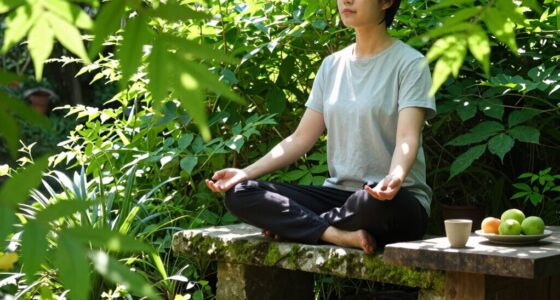

If you’re busy, simple mindfulness practices like mindful eating and breath awareness can help you find calm amidst chaos. Take a moment to savor your meals without distractions and focus on your breath when stress hits. These practices require no equipment and can be done anywhere, making them easy to fit into your day. By practicing consistently, you’ll build resilience and improve mental clarity—discover more easy ways to bring peace into your hectic routine as you explore further.
Key Takeaways
- Incorporate brief breathing exercises during hectic moments to quickly reduce stress and increase calmness.
- Practice mindful eating by savoring each bite without distractions, even during busy schedules.
- Use everyday routines, like commuting or waiting in line, to focus on breath awareness or sensory details.
- Set aside small, consistent mindfulness moments, such as deep breaths or grounding exercises, throughout the day.
- Focus on developing automatic mindful responses to everyday stressors for long-term mental resilience.

Ever feel like your busy schedule leaves little room for peace? If so, you’re not alone. Finding moments of calm can seem impossible when your days are packed with deadlines, meetings, and endless to-do lists. But even in the busiest moments, simple mindfulness practices can make a big difference. One of the most accessible and effective techniques is mindful eating. Instead of rushing through meals or snatching bites between tasks, take a moment to truly savor each mouthful. Focus on the taste, texture, and aroma of your food. Put away distractions like phones or work emails, and give your full attention to the act of eating. This practice not only helps you slow down but also improves digestion and makes your meals more satisfying. When you practice mindful eating regularly, you train your mind to stay present, which can reduce stress and foster a greater sense of control amid chaos. Incorporating evidence-based mindfulness techniques into your routine can further enhance your ability to manage stress effectively. These practices are supported by research emphasizing their role in promoting mental well-being and resilience. Additionally, engaging in mindful movement such as gentle stretching or walking can help break up your day and boost your mental clarity. Another powerful practice you can incorporate into your day is breath awareness. It requires nothing more than focusing on your breath, but it can have profound calming effects. Whenever you feel overwhelmed, pause for a moment and take a few deep, intentional breaths. Notice the sensation of the air filling your lungs and then slowly leaving your body. Pay attention to the rise and fall of your chest or abdomen. This simple act shifts your focus from worries or racing thoughts to the present moment, grounding you in calm. Research shows that mindfulness practices like breath awareness can lead to long-term reductions in anxiety. Developing a consistent mindfulness routine can help solidify these benefits and make them an integral part of your daily life. Breath awareness can be done anywhere, whether you’re sitting at your desk, stuck in traffic, or waiting in line. It’s a quick reset that helps you regain clarity and composure. It’s important to recognize that mindfulness can be cultivated through regular practice, making it a sustainable tool for managing stress over time. Over time, with consistent practice, breath awareness becomes an automatic response to stress, helping you stay centered even during the most hectic days. Both mindful eating and breath awareness are practical, easy-to-implement practices that fit into any schedule. They don’t require special equipment or long periods of time. Instead, they encourage you to bring your full attention to simple activities you already do daily. By cultivating these habits, you create small pockets of mindfulness that accumulate, making your busy life more manageable and peaceful. It’s not about finding hours of solitude; it’s about making the most of the moments you already have. With consistent effort, you’ll notice increased focus, reduced anxiety, and a greater sense of balance—even on your most hectic days.
Frequently Asked Questions
Can Mindfulness Improve Productivity at Work?
Yes, mindfulness can improve your productivity at work by reducing stress and enhancing focus. When you practice mindfulness, you become more aware of your thoughts and feelings, allowing you to manage stress better. This increased awareness helps you concentrate on tasks without getting overwhelmed. As a result, you work more efficiently, make clearer decisions, and stay present in your tasks, ultimately boosting your overall work performance.
How Quickly Can I See Benefits From Mindfulness?
You can notice some immediate benefits from mindfulness, even after just a few minutes. Regular practice over a mindfulness duration of around 10 minutes a day can lead to clearer focus, reduced stress, and improved mood within days. While long-term benefits grow with consistent effort, many people experience quick positive shifts, making it a practical tool for busy schedules. Keep practicing consistently to maximize these benefits over time.
Is Mindfulness Suitable for Children and Teenagers?
Yes, mindfulness is suitable for children and teenagers. It helps them develop child relaxation skills, reducing stress and anxiety. For teens, mindfulness enhances self-awareness and emotional regulation, making it easier to handle peer pressure and academic challenges. You can introduce simple practices like breathing exercises or mindful listening, which fit easily into their routines. By practicing regularly, children and teens can enjoy long-term benefits like improved focus, emotional resilience, and overall well-being.
Are There Specific Apps Recommended for Busy Schedules?
Think of your busy schedule as a fleeting cloud—mindfulness apps become your steady lighthouse. Apps like Calm and Headspace offer guided meditation and breathing exercises, making it easier to anchor yourself amidst chaos. With quick sessions, you can pause, breathe, and regain clarity anytime. These tools act as your personal compass, guiding you back to calmness and focus even when time feels scarce.
How Do I Stay Consistent With Daily Mindfulness?
To stay consistent with daily mindfulness, establish simple routines you can easily incorporate into your busy schedule. Dedicate a few minutes each morning or during breaks for mindfulness routines like deep breathing or short meditation sessions. Use reminders or apps to keep you on track, gradually making daily meditation a non-negotiable part of your day. Consistency builds habit, so stay patient and committed, and you’ll notice the benefits grow over time.
Conclusion
In the whirlwind of your busy life, these mindfulness practices are your anchor, grounding you amidst the chaos. Think of them as gentle whispers guiding you back to the present, like a lighthouse illuminating your path through foggy days. With just a few moments each day, you can cultivate calm and clarity, turning your busy schedule into a mindful journey. Embrace these tools, and watch as your stress melts away like snow in the sun.
Products Worth Considering
As an affiliate, we earn on qualifying purchases.