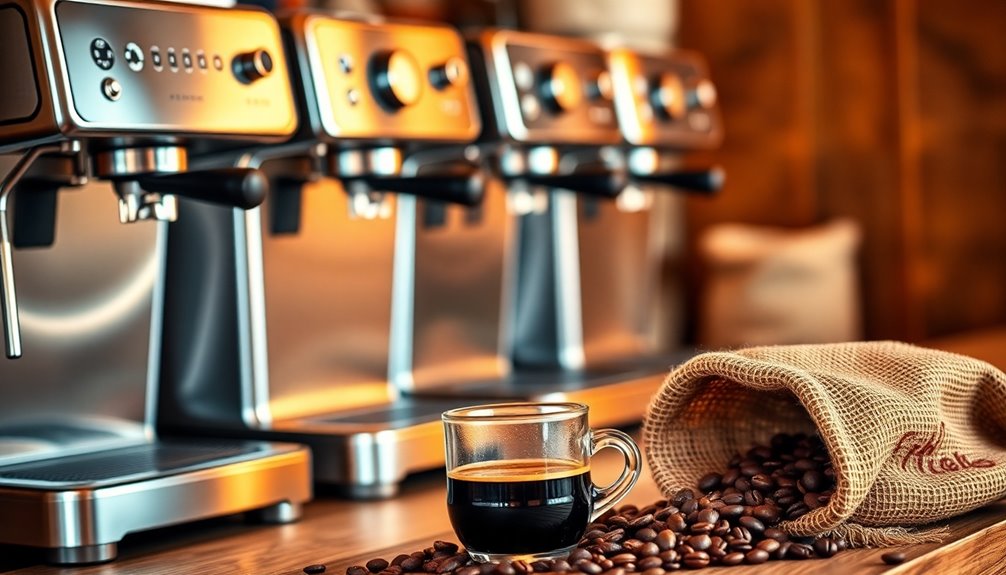

If you want an espresso machine under 500, this lineup ranges from simple steam models to pump-driven machines with more control. I rank the Breville Bambino as the best overall pick for its combination of quick heating, compact size, and hands-on espresso features. The De’Longhi Stilosa is a strong value choice for buyers who prefer straightforward manual operation, while the Chefman CraftBrew Digital suits beginners who want a more guided interface. The central tradeoff is simplicity and a small footprint versus the greater control and learning curve of a pump-driven machine. Read on for the full breakdown, selection criteria, and advice on matching a machine to your routine.
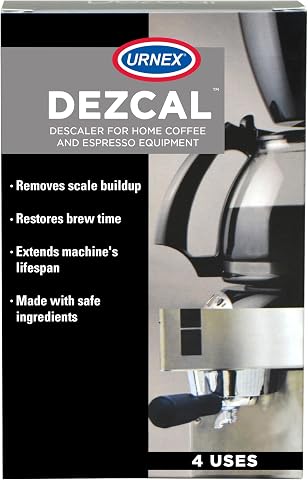
Complete the kit


Key Takeaways
The Breville Bambino leads the lineup for buyers who want a compact machine with more control than the basic steam-driven options.
The De’Longhi Stilosa makes the most sense for buyers who want manual espresso-making basics without extra interface features.
The 3.5-bar SHARDOR, KEENSTAR, and HBN models represent a different kind of entry point: simple steam-based brewing rather than the pump-driven approach found in many other picks.
Several machines advertise 20-bar pressure, but that headline figure alone does not tell you how easy a machine is to use or how well it suits your coffee routine.
Compactness and convenience vary across the shortlist: the CHULUX Slim is aimed at tight counters, while touchscreen and digital-control models add interface features that some buyers may not need.






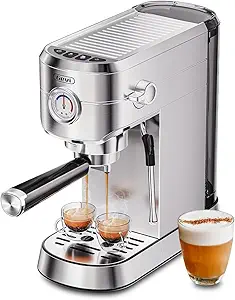
| espresso machine under 500 | Dimensions |
|---|---|
| SHARDOR 3.5 Bar Espresso Machi | 11.8 × 8.3 × 6 inches (H × D × W) |
| KEENSTAR 3.5 Bar Espresso Mach | 13.1 × 7.7 × 10 inches (H × W × D) |
| HBN Compact Espresso Machine w | 12.91 × 7.28 × 13.58 inches |
| Mr. Coffee 4-Shot Steam Espres | 11.2 × 11.2 × 15 inches (D × W × H) |
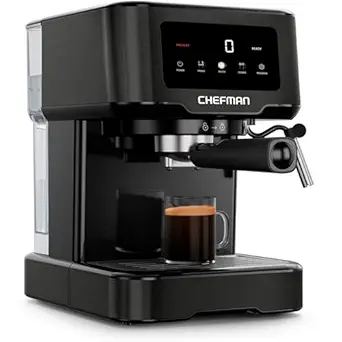
| Chefman CraftBrew Digital Espr | 10.8 × 8.9 × 11.9 inches (D × W × H) |
| Breville BES450BSS Bambino Esp | — |
| CASABREWS CM5418 Compact Espre | — |
| Arecovas Espresso Machine with | 12 x 5.2 x 11.9 in (D x W x H) |
| CHULUX Slim Espresso Machine w | 11.7 x 5.5 x 12.5 in (D x W x H) |
| CASABREWS Ultra Espresso Machi | 12.2 x 10.31 x 12.9 in (D x W x H) |
| De’Longhi Stilosa Compact Manu | — |
| 20-Bar Compact Espresso Machin | 5.3 × 12.2 × 11.5 inches |
| atatix Espresso Machine with M | — |
| XIXUBX Espresso Machine with M | — |
| Gevi 20 Bar Compact Espresso M | — |
More Details on Our Top Picks
SHARDOR 3.5 Bar Espresso Machine with Milk Frother
The SHARDOR is a sensible fit when counter space matters more than espresso pressure. Its 6-inch width and one-knob controls suit a small kitchen or office, while the adjustable steam wand adds flexibility for milk drinks. Like the KEENSTAR 3.5 Bar Espresso Machine, it uses an 800W system and 3.5-bar pressure, so neither is the choice for buyers seeking the pressure profile of a conventional pump espresso machine. SHARDOR’s overheat and overpressure protections are useful daily-use safeguards, but they do not change the lower-pressure brewing style. Choose it over the larger HBN if you need a narrower machine; skip it if you want more control over extraction or consistently traditional espresso.
Pros:- Narrow 6-inch footprint suits tight counters
- Adjustable steam wand supports different milk textures
- One-knob operation keeps the routine simple
- Overheat and overpressure protections are included
Cons:- 3.5-bar pressure produces espresso-style coffee rather than conventional espresso
- Small footprint may come with less room for larger drink preparation
Best for: Apartment dwellers or office coffee drinkers who want a narrow machine, simple controls, and occasional milk drinks.
Not ideal for: Espresso hobbyists seeking conventional pump pressure, fine extraction control, or traditional espresso rather than espresso-style coffee.
- Pressure:3.5 bar
- Power:800W
- Boiler material:Die-cast aluminum
- Dimensions:11.8 × 8.3 × 6 inches (H × D × W)
- Controls:One-knob
- Safety features:Overheat and overpressure protection
- Material safety:BPA-free
- Milk frothing:Adjustable steam wand
Our verdict“Choose the SHARDOR for a compact, straightforward milk-drink setup, not for traditional espresso extraction.”
KEENSTAR 3.5 Bar Espresso Machine 800W
For a beginner who values speed and a low-fuss routine, the KEENSTAR’s main draw is its stated brew time of under two minutes. Its 4.7-pound weight also makes it easier to move or store than the taller HBN Compact Espresso Machine. The tradeoff is familiar from the SHARDOR: 3.5-bar pressure makes this an espresso-style brewer, not a conventional pump machine for shoppers focused on traditional espresso. KEENSTAR can brew up to four small cups and includes a steam wand, but it asks for a specific medium-ground coffee and regular wand cleaning. That maintenance is a real factor for anyone making milk drinks daily; the accessories also need hand washing.
Pros:- Stated brewing time is under two minutes
- Light 4.7-pound body is easy to move and store
- Single-knob controls are approachable for beginners
- Steam wand supports milk-based drinks
Cons:- Requires specific medium-ground coffee for proper operation
- Steam wand needs frequent manual cleaning to prevent clogs
- Accessories are not dishwasher safe
Best for: First-time buyers in small kitchens who want quick small-batch coffee and are comfortable cleaning a steam wand by hand.
Not ideal for: People who want traditional pump espresso, use varied coffee grinds, or prefer dishwasher-safe accessories and minimal cleanup.
- Pressure:3.5 bar
- Power:800W
- Capacity:4 cups (240 ml)
- Dimensions:13.1 × 7.7 × 10 inches (H × W × D)
- Weight:4.7 lb
- Material:BPA-free
- Stated brew time:Under 2 minutes
- Controls:Single knob
Our verdict“Pick the KEENSTAR for quick, uncomplicated small-batch brewing if you accept its grind and cleaning requirements.”
HBN Compact Espresso Machine with Milk Frother, 800W
The HBN makes sense for a shared desk or home office where a few people want coffee without a large machine taking over the counter. Its 240 ml capacity yields two to four small cups, and the carafe’s water-level gauge helps portion each batch. A removable, washable drip tray also makes routine cleanup simpler than the KEENSTAR’s accessories, which are not dishwasher safe. Both machines use 3.5-bar pressure, so HBN’s stainless steel construction and semi-automatic operation are the differentiators, not a move into conventional pump espresso. The medium-coarse grind recommendation narrows coffee choices, and the limited batch size means frequent refills for larger groups.
Pros:- 240 ml carafe serves two to four small cups
- Removable drip tray can be washed
- Stainless steel construction
- One-knob controls keep operation simple
Cons:- Small capacity requires repeat brewing for larger groups
- Recommended medium-coarse grind limits coffee flexibility
- 3.5-bar output is below conventional pump espresso pressure
Best for: Small offices or households that brew a few small cups at a time and value a washable drip tray.
Not ideal for: Larger households or espresso hobbyists who need bigger batches, flexible grind options, or higher-pressure extraction.
- Capacity:240 ml
- Cup yield:2–4 cups
- Power:800W
- Voltage:120V
- Output pressure:3.5 bar
- Operation:Semi-automatic
- Coffee input:Ground coffee
- Dimensions:12.91 × 7.28 × 13.58 inches
- Weight:4.1 lb
Our verdict“Choose the HBN for modest office batches and easier drip-tray cleanup, rather than for high-volume or traditional espresso brewing.”
Mr. Coffee 4-Shot Steam Espresso Maker with Stainless Steel Frothing Pitcher
Among these picks, the Mr. Coffee is the clearest choice when serving several people matters more than pump-style espresso. Its portafilter brews up to four shots at once, a useful advantage over the single small carafes of the KEENSTAR and HBN. The included stainless steel frothing pitcher, marked water pitcher, and scoop make it a more complete starting kit for Cuban coffee or shared milk drinks. Its steam-brewing method is the main compromise: expect a different result from the Chefman CraftBrew’s 15-bar pump, with less pressure and crema than a conventional pump espresso machine. Brewing and frothing also rely on manual steps, and the listed 240V specification calls for checking outlet compatibility before purchase.
Pros:- Portafilter brews up to four shots at once
- Includes a stainless steel frothing pitcher and measuring scoop
- Marked water pitcher supports repeatable measuring
- Reusable permanent filter avoids disposable pods
Cons:- Steam brewing offers less pressure and crema than pump espresso machines
- Manual brewing and frothing take practice
- Listed 240V voltage may not suit every household outlet
Best for: Households or hosts who want to brew up to four shots in one batch and make Cuban-style coffee or milk drinks.
Not ideal for: Buyers prioritizing conventional pump pressure, a highly automated workflow, or a machine whose listed voltage matches their outlet without further checking.
- Operation:Semi-automatic
- Wattage:1200W
- Listed voltage:240V
- Capacity:Up to 4 shots
- Dimensions:11.2 × 11.2 × 15 inches (D × W × H)
- Filter:Reusable/permanent
- Included accessories:Stainless steel frothing pitcher, water pitcher, measuring scoop
- Brewing method:Steam brewing
Our verdict“Choose the Mr. Coffee for larger simultaneous servings and included accessories, provided its listed voltage suits your setup.”
Chefman CraftBrew Digital Espresso Machine with Steam Wand
The Chefman is the strongest fit here for buyers seeking a more conventional pump setup without moving to a larger machine. Its 15-bar pump separates it from the 3.5-bar SHARDOR, KEENSTAR, and HBN, while touch controls and programmable shot volume give you more repeatability than their one-knob interfaces. A removable 1.5-liter tank also reduces refill interruptions compared with the small-batch machines in this group. That added control does not make it hands-off: it uses ground coffee, and the built-in steam wand still calls for manual milk frothing. There is no grinder listed, so buyers wanting a whole-bean workflow need another appliance. For someone seeking a compact step up in pressure and shot control, the trade is reasonable.
Pros:- 15-bar pump offers a higher-pressure approach than the 3.5-bar models
- Programmable shot volume supports repeatable pours
- Removable 1.5-liter tank simplifies refilling
- Touch controls and two included shot baskets
Cons:- Requires ground coffee and does not include a grinder
- Milk frothing remains a manual task
- Limited to 120V power
Best for: Home coffee drinkers who want a pump-pressure machine, programmable shot volume, and a larger refillable tank.
Not ideal for: Buyers who want an integrated grinder, automatic milk preparation, or power beyond the listed 120V supply.
- Operation:Semi-automatic
- Pump pressure:15 bar
- Water tank:1.5 liters, removable
- Wattage:1350W
- Voltage:120V
- Dimensions:10.8 × 8.9 × 11.9 inches (D × W × H)
- Coffee input:Ground coffee
- Included shot baskets:Two
- Features:Touch controls, programmable shot volume, automatic descaling alert, built-in steam wand
Our verdict“Pick the Chefman for higher pump pressure and programmable shots, as long as you are prepared to grind coffee separately and froth milk by hand.”
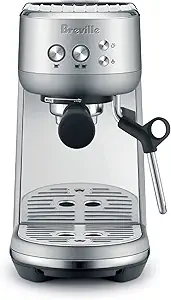
Breville BES450BSS Bambino Espresso Machine, Brushed Stainless Steel
I rank the Breville Bambino first for pairing a quick start with useful temperature control and approachable milk steaming. Its 3-second ThermoJet heat-up means less waiting before brewing, while PID control is designed to keep extraction temperature steady. The automatic steam wand also takes some of the guesswork out of making milk foam, a notable advantage over the manual wands on the CASABREWS CM5418 and CHULUX Slim. The tradeoff is that brewing still calls for hands-on work, including dialing in the grind, and the smaller water tank can mean more refills. Its compact build suits tight counters, though some plastic parts may feel less substantial than the brushed-steel CASABREWS Ultra. This is my strongest all-round pick for varied home use, not a fully hands-off machine.
Pros:- ThermoJet system reaches brewing readiness in 3 seconds
- PID temperature control supports consistent extraction
- Automatic steam wand simplifies milk texturing
- Compact footprint suits smaller counters
Cons:- Manual shot preparation takes practice to refine
- Small water tank may need frequent refilling
- Plastic parts may feel less substantial than all-metal alternatives
Best for: Home users who want a compact machine with fast startup, temperature control, and easier milk texturing
Not ideal for: People who want a large water reservoir or a fully automated espresso-making process
- Model:BES450BSS
- Color:Brushed Stainless Steel
- Power:1560 W
- Voltage:110–120 V
- Heat-up time:3 seconds
- Portafilter size:54 mm
- Warranty:1-year limited
Our verdict“Choose the Bambino for a compact, quick-heating machine that balances guided milk steaming with hands-on espresso preparation.”
CASABREWS CM5418 Compact Espresso Machine with Milk Frothing Steam Wand
The CASABREWS CM5418 suits buyers who want to practice espresso preparation and milk steaming without giving up a compact stainless-steel design. Its semi-automatic operation leaves grind choice and tamping in the user’s hands, making it less guided than the Breville Bambino, whose automatic wand lowers the barrier to milk texturing. A 34 oz removable tank is a practical step up from the Bambino’s smaller reservoir, while the steam wand supports cappuccinos and latte-art practice. There is a workflow catch: after frothing milk, the machine needs a cooling period before brewing to avoid its overheating protection mode. I’d choose it for a learner who wants control and a clear practice path, but not for someone expecting quick back-to-back milk drinks with little downtime.
Pros:- Removable 34 oz water tank makes refilling straightforward
- Steam wand allows practice with milk texture and latte art
- Compact stainless-steel design fits smaller kitchens
- Single- and double-cup filters offer basic shot flexibility
Cons:- Requires a cooling period between milk frothing and brewing
- Grind adjustment and tamping take practice
- Semi-automatic workflow is less guided than the Breville Bambino
Best for: New home baristas who want to learn manual shot preparation and practice steaming milk in a compact setup
Not ideal for: People who regularly make several milk drinks in a row and want to switch immediately between steaming and brewing
- Model:CM5418
- Pump pressure:20 bar
- Wattage:1350 W
- Water tank capacity:34 oz
- Material:Stainless steel
- Operation mode:Semi-automatic
- Included filters:One-cup and two-cup brewing filters
Our verdict“Pick the CM5418 if learning manual espresso and milk steaming matters more than fast drink-to-drink workflow.”
Arecovas Espresso Machine with Touchscreen and Milk Frother
I’d put the Arecovas touchscreen near the top of the list for buyers who want more on-machine guidance and drink choices. It offers single and double shots plus an Americano function, while the PID control and low-pressure pre-infusion are designed to support steady extraction. That gives it a more control-focused pitch than the narrow CHULUX Slim, which emphasizes saving counter width, and a broader drink menu than the Breville Bambino’s listed shot options. The 1.2 L removable tank is a useful middle ground for everyday use. Still, this is semi-automatic, not a bean-to-cup machine: it takes ground coffee and requires manual preparation. I’d skip it if whole-bean convenience or a guided automatic steam wand is the priority; the interface doesn’t remove the work of dialing in a shot.
Pros:- Touchscreen and LED display provide an at-a-glance interface
- PID control and pre-infusion are designed to support consistent extraction
- Includes single-shot, double-shot, and Americano options
- Removable 1.2 L tank supports convenient refilling
Cons:- Uses ground coffee rather than whole beans
- Semi-automatic preparation still requires manual technique
- Its extra controls may be unnecessary for buyers who want a simple basic setup
Best for: Ground-coffee users who want touchscreen controls, Americano brewing, and temperature-focused shot preparation
Not ideal for: People seeking an integrated grinder, whole-bean workflow, or fully automated milk texturing
- Operation mode:Semi-automatic
- Pump pressure:20 bar
- Wattage:1300 W
- Temperature control:PID algorithm with dual NTC sensors; within ±2°C
- Beverage options:Single shot, double shot, Americano
- Water tank capacity:1.2 L (41 oz)
- Dimensions:12 x 5.2 x 11.9 in (D x W x H)
- Interface:Touchscreen with LED display and real-time pressure gauge
Our verdict“Choose the Arecovas if you want multiple drink settings and guided controls but are comfortable preparing ground coffee manually.”
CHULUX Slim Espresso Machine with Milk Frother
The CHULUX Slim earns its place through a particularly narrow 5.5-inch width, making it the clearest choice here when counter space is the main constraint. Its 40 oz tank is larger than the CASABREWS CM5418’s 34 oz reservoir, so the small footprint doesn’t require accepting the smallest refill capacity in this group. Pre-infusion, PID temperature control, and a pressure gauge give it more brewing feedback than a bare-bones compact machine, while the manual steam wand lets owners make milk drinks. That hands-on setup is less beginner-friendly than the Breville Bambino’s automatic wand, and the narrow design can limit brewing and steaming at the same time. I’d pick CHULUX for a tight kitchen, not for a household that needs high-volume, rapid drink making.
Pros:- 5.5-inch width takes up little counter space
- 40 fl oz tank provides substantial capacity for a slim machine
- Pre-infusion and PID temperature control are included
- Pressure gauge adds brewing feedback
Cons:- Manual operation requires practice with grind and tamping
- Small footprint can limit simultaneous brewing and steaming
- Manual steam wand is less guided than the Breville Bambino’s automatic wand
Best for: Apartment dwellers or office users with very limited counter width who still want a steam wand
Not ideal for: Households making several drinks quickly or beginners who prefer automated milk texturing
- Pump pressure:20 bar
- Wattage:1350 W
- Voltage:120 V
- Water tank capacity:40 fl oz
- Dimensions:11.7 x 5.5 x 12.5 in (D x W x H)
- Weight:7.8 lb
- Features:Pre-infusion, PID temperature control, auto shut-off, pressure gauge
Our verdict“Choose the CHULUX when saving counter width matters more than a roomy workflow or automated milk steaming.”
CASABREWS Ultra Espresso Machine
I’d choose the CASABREWS Ultra when fewer water refills and a more café-style portafilter are higher priorities than a tiny footprint. Its 73 fl oz tank and 58 mm portafilter set it apart from the Breville Bambino, which is smaller and heats up in just 3 seconds but has a smaller tank and 54 mm portafilter. The LCD and adjustable brewing-temperature settings offer a more direct control interface than the simpler CASABREWS CM5418. A 20-bar pump and steam wand cover the expected espresso-and-milk-drink routine, but this machine remains semi-automatic: grind size and tamping still affect the result. Its roughly 10-inch width also takes more counter space than the slim CHULUX. I’d favor it for frequent home use, not for a compact kitchen or someone who wants guided shot preparation.
Pros:- 73 fl oz removable water tank reduces refill frequency
- 58 mm portafilter offers a larger-format brewing setup
- LCD display and customizable brewing temperature settings
- Steam wand supports milk drinks and microfoam preparation
Cons:- Grind size and tamping technique require adjustment
- Wider footprint uses more counter space than the CHULUX Slim
- Semi-automatic operation does not guide every preparation step
Best for: Frequent home espresso drinkers who want a large removable tank, 58 mm portafilter, and adjustable temperature settings
Not ideal for: Small-kitchen buyers or newcomers seeking a compact machine with highly guided preparation
- Pump pressure:20 bar
- Wattage:1350 W
- Voltage:120 V
- Water tank capacity:73 fl oz
- Dimensions:12.2 x 10.31 x 12.9 in (D x W x H)
- Weight:13.6 lb
- Portafilter size:58 mm
- Operation mode:Semi-automatic
Our verdict“Choose the CASABREWS Ultra for its large tank and 58 mm portafilter if you have the counter space and want hands-on control.”
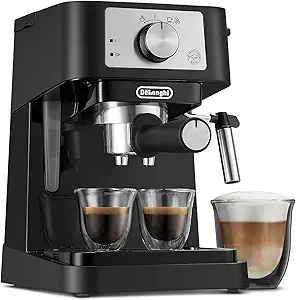
De’Longhi Stilosa Compact Manual Espresso Machine with Milk Frother
The Stilosa suits buyers who want a compact manual setup rather than extra automation. Its stainless steel boiler, ergonomic portafilter, and single and double filters give you control over shot size, while the manual frother lets you make milk drinks without adding a separate appliance. Compared with the Gevi, it offers a simpler feature set: the Gevi adds a pressure gauge, pre-infusion, and a hot water function, while the Stilosa keeps its appeal in a smaller, straightforward design. That simplicity comes with hands-on work, and there is no built-in grinder, so fresh beans call for another piece of equipment. Choose it for basic espresso and occasional cappuccinos; skip it if you want guided settings or less manual preparation.
Pros:- Compact design takes up less counter space.
- Stainless steel boiler construction.
- Manual frother supports cappuccinos and lattes.
- Single and double filters accommodate different shot sizes.
Cons:- Manual brewing and frothing require more effort than semi-automatic options.
- No built-in grinder, so fresh-ground coffee requires separate equipment.
Best for: Buyers with limited counter space who want hands-on control over basic espresso and milk drinks.
Not ideal for: People seeking push-button convenience or an all-in-one setup with a built-in grinder.
- Brand:De’Longhi
- Model:Stilosa
- Type:Manual espresso machine
- Boiler material:Stainless steel
- Milk frother:Manual
- Filters:Single and double
- Cup holder:Two-level
- Design:Compact and contemporary
Our verdict“Choose the Stilosa if a small, straightforward manual machine matters more to you than extra controls or automation.”
20-Bar Compact Espresso Machine with Milk Frother, Stainless Steel, Silver
This semi-automatic model is a fit for buyers who value a short wait before making coffee: its listed 20-second preheat is quicker than the atatix, which lists about 30 seconds. A pressure gauge gives you a visual reference while brewing, and the steam wand covers milk drinks. Its 34-ounce removable tank and drip tray also make routine refilling and cleanup more manageable. The compact footprint is especially appealing for a tight counter, though the listed dimensions still deserve a check against your space. One operating wrinkle sets it apart from a more flexible routine: the manual says to let the machine cool after frothing before brewing again. That pause makes it less convenient when preparing a succession of milk drinks.
Pros:- Listed preheating time is about 20 seconds.
- Pressure gauge provides a visual brewing reference.
- Removable 34-ounce water tank and drip tray support easier cleanup.
- Steam wand allows milk frothing.
Cons:- Needs to cool after frothing milk before brewing again.
- Requires preheating before use.
Best for: Coffee drinkers with limited counter space who want a quick warm-up and usually make drinks one at a time.
Not ideal for: Households that prepare several milk drinks back-to-back and want to move directly from steaming to brewing.
- Type:Semi-automatic
- Pump pressure:20 bar
- Power:1450 W
- Preheating time:About 20 seconds
- Water tank capacity:34 oz
- Dimensions:5.3 × 12.2 × 11.5 inches
- Features:Pressure gauge, steam wand, removable water tank and drip tray
- Color:Silver
Our verdict“Pick this machine for quick warm-up and a compact footprint if the cool-down pause between steaming and brewing suits your routine.”
atatix Espresso Machine with Milk Frother, 20 Bar Pressure
The atatix gives buyers two ways to control a shot: choose an automatic single or double extraction, or use manual extraction up to 102 seconds. That range makes it a better match for experimenting with shot length than the De’Longhi Stilosa, whose listed controls are a manual portafilter and single or double filters. NTC temperature control, listed at 90–96°C, adds a defined temperature range, and the steam wand is aimed at making dense microfoam for milk drinks. The tradeoff is a mixed-material build: ABS and stainless steel may feel less substantial than the Gevi’s stainless steel housing. The manual mode also has a clear time limit, so it is not an open-ended way to adjust extraction. Its detachable parts help with cleaning.
Pros:- Offers automatic single and double shots plus manual extraction.
- NTC temperature control is listed at 90–96°C.
- Steam wand supports making dense microfoam.
- Detachable parts and silicone suction feet support cleanup and stability.
Cons:- ABS construction may feel less substantial than the Gevi’s stainless steel housing.
- Manual extraction is limited to 102 seconds.
Best for: Home espresso drinkers who want both preset single and double shots and the option to adjust extraction manually.
Not ideal for: Buyers who prefer an all-metal housing or need manual extraction to run longer than the listed 102-second limit.
- Pressure:20 bar
- Temperature control:NTC precision, 90–96°C
- Preheat time:30 seconds
- Materials:ABS and stainless steel
- Extraction modes:Automatic single or double shot; manual up to 102 seconds
- Included accessories:Portafilter, funnel, coffee scoop/tamper, user manual
- Stability feature:Silicone suction feet
Our verdict“Choose the atatix if you want a choice between preset shots and timed manual extraction in a compact machine.”
XIXUBX Espresso Machine with Milk Frother
The XIXUBX stands out for its 42-ounce water tank, the largest stated capacity among these five machines. That can mean fewer refill interruptions than with the 34-ounce compact machine, a useful difference when making several drinks in a day. Its 360-degree rotating, detachable steam wand gives you room to position a pitcher and removes for cleaning, and a frothing pitcher is included. Compared with the atatix, which offers automatic and manual extraction modes, the XIXUBX description focuses more on milk preparation and tank capacity; it does not list shot-programming options or temperature controls. The stainless steel construction and one-year warranty add practical appeal, but frothing remains manual, and the missing dimensions make it harder to judge fit on a particularly crowded counter.
Pros:- 42-ounce tank supports multiple servings between refills.
- 360-degree rotating steam wand is detachable for cleaning.
- Stainless steel milk frothing pitcher is included.
- Stainless steel construction and a one-year warranty are specified.
Cons:- Milk frothing requires manual control.
- Product information does not specify machine dimensions.
Best for: People who make multiple drinks between refills and want a dedicated pitcher included for manual milk frothing.
Not ideal for: Buyers who need published dimensions before purchase or prefer automatic milk frothing and detailed shot controls.
- Pressure:20 bar
- Water tank capacity:42 oz
- Steam wand:360-degree rotating and detachable
- Included accessory:Stainless steel milk frothing pitcher
- Material:Stainless steel
- Warranty:1 year
Our verdict“Choose the XIXUBX if a larger stated tank and included frothing pitcher matter more than published dimensions or automatic controls.”
Gevi 20 Bar Compact Espresso Machine with Milk Frother
The Gevi is the most feature-oriented pick here for buyers who want more than espresso and steamed milk. Its hot water function gives you another route to Americanos or tea, while pre-infusion and a pressure gauge add controls absent from the simpler De’Longhi Stilosa description. The stainless steel housing also gives it a more metal-forward build than the ABS-and-steel atatix. Gevi lists NTC temperature control and a steam wand, so it covers both extraction and milk drinks without leaning on a single standout feature. The tradeoff is that its semi-automatic operation asks you to take an active role; it is not the easiest choice for someone seeking a fully automatic routine. A 12-month warranty is specified, but the product details do not list tank capacity or dimensions.
Pros:- Hot water function supports Americanos and tea.
- Pre-infusion and pressure gauge provide additional brewing controls.
- Stainless steel housing is specified.
- NTC temperature control and a steam wand cover espresso and milk drinks.
Cons:- Semi-automatic operation requires user involvement and some skill.
- Product details do not list water tank capacity or machine dimensions.
Best for: Buyers who make espresso, milk drinks, Americanos, or tea and want a semi-automatic machine with several listed controls.
Not ideal for: People who want fully automatic drink preparation or need stated tank capacity and dimensions to plan a kitchen setup.
- Pump pressure:20 bar
- Material:Stainless steel
- Control type:Semi-automatic
- Temperature control:NTC
- Brewing feature:Pre-infusion
- Additional functions:Pressure gauge and hot water function
- Warranty:12 months
Our verdict“Choose the Gevi if you want a stainless steel semi-automatic with hot water and extra brewing controls, rather than a simpler manual setup.”

How We Picked
I compared these machines through the needs of home buyers: brewing approach, everyday usability, milk-drink support, footprint, and the amount of hands-on effort each design is likely to ask of its owner. I gave more weight to useful distinctions than to headline specifications, since a pressure number or touchscreen does not by itself make better coffee. I also looked at whether the controls and included features appear suited to a new user or someone who wants to shape more of the process.
The ranking puts the Breville Bambino first for its balance of capability and compact design, then gives distinct places to simpler manual, digital, and space-saving choices. Steam-based models rank as straightforward options, but not as direct substitutes for pump-driven machines. I treated the listed pressure figures as one detail among many and weighed maintenance, learning curve, and likely fit for different routines alongside them.
Factors to Consider When Choosing Espresso Machine Under 500
Before choosing a machine, I would focus on the compromises that affect daily use more than a spec-sheet headline. These four factors can help narrow the field, especially if you are choosing between a basic steam model, a manual pump machine, and a feature-rich option.
Steam-Driven or Pump-Driven Brewing
A steam-driven machine and a pump-driven machine do not deliver the same brewing experience, even when both are sold as espresso makers. Steam models, such as the 3.5-bar options in this roundup, tend to keep the process simple but offer less control over extraction. Pump-driven designs give you a different brewing setup, though they can ask more of you as you learn to dose, tamp, and adjust your coffee. A common mistake is treating the advertised pressure figure as a direct measure of cup quality. Instead, look at the whole workflow and decide how much control you want to manage. If you mainly want an easy coffee routine, simplicity may matter more than a larger feature list.
Milk Drinks and the Work After Brewing
A steam wand can expand a machine’s menu, but it also adds steps after pulling a shot. You will need to learn how to position and clean the wand, and you may need a separate pitcher if one is not included. Buyers who mostly drink straight espresso can put less weight on frothing features and focus on the brewing process instead. If lattes or cappuccinos are part of your daily routine, check how the wand is controlled and whether you are comfortable steaming milk manually. An advertised frother does not always mean the machine automates milk preparation. Think about cleanup as part of the drink-making time, not as an afterthought.
Controls, Learning Curve, and Repeatability
Digital displays and touch controls can make settings easier to access, but they do not automatically make the final drink more consistent. Manual controls give you more direct involvement and can suit buyers who enjoy adjusting their process. A beginner may prefer clear, limited controls over a machine with features they will rarely use. Before buying, decide whether you want to learn the basics of grinding, dosing, and tamping or keep those decisions to a minimum. Repeatability also depends on using the same coffee and routine, not only on the machine’s interface. Paying extra for controls makes sense only when they solve a task you expect to repeat.
Counter Space, Accessories, and Care
Measure the space where the machine will sit, including room to lift a water tank or move a cup beneath the spouts. Slim designs can be useful on crowded counters, but a smaller body does not tell you how easy the machine is to refill or clean. Check what accessories come with the model and whether you will need to add a grinder, tamper, or milk pitcher to your setup. Regular rinsing and wiping are part of owning any espresso machine, while steam wands need prompt cleaning after use. A common buying misstep is choosing by machine footprint alone and overlooking the room needed for accessories and coffee preparation. Pick a setup that fits both your counter and your preferred cleanup routine.
When Paying More for Features Makes Sense
Extra features are most useful when they remove friction from a step you perform often. Faster heating, more capable controls, or a better-matched milk setup may be worthwhile for someone making several drinks each day. If you make occasional espresso and do not mind a manual routine, a simpler machine may leave you more satisfied than a feature-heavy model. Do not pay extra just because a machine lists a high pressure figure or a touchscreen. Compare the features you will use against the machine’s added cleaning and learning demands. I would spend more for a clear improvement in the routine, not for a longer spec list.
Frequently Asked Questions
Is a 3.5-bar espresso machine a good choice for a first machine?
It can suit a buyer who wants a simple introduction and is comfortable with a more basic brewing approach. The SHARDOR, KEENSTAR, and HBN models in this roundup are steam-based options, so they are not direct equivalents to pump-driven machines. If you want more control over brewing, I would look at a pump model such as the Bambino or Stilosa instead. Choose based on the kind of process you want, not just the word espresso in the product name.
Does a 20-bar rating mean one machine will make better espresso?
No, the number on the label is only one specification and does not settle how a machine will perform in your kitchen. Coffee choice, grind, dose, tamping, and the machine’s overall design all affect the result. Several models here list 20-bar pressure, so that number does little to separate them on its own. I would compare their controls, size, milk setup, and upkeep before using pressure as a deciding factor.
Should I choose a digital machine or a manual one?
A digital interface can make settings easier to access, which may appeal if you want fewer steps to remember. A manual machine gives you more direct involvement and may suit you if learning the process is part of the appeal. Neither format guarantees a better cup without a consistent coffee-preparation routine. I would choose the interface that feels easiest to use every morning rather than paying for controls you may rarely touch.
Do I need a separate grinder with these machines?
Check the included accessories and product details for the specific model, since the machine name alone does not tell you what comes in the box. A separate grinder can give you more say over grind freshness and adjustment, but it also takes space and adds another step to your routine. If you want a low-effort setup, weigh that extra equipment against your willingness to prepare coffee manually. I would also leave room in your setup for a tamper and any milk accessories you plan to use.
Which type should I choose if I mainly make milk drinks?
Start by deciding whether you want to steam milk yourself or prefer a simpler frothing routine. Models with a steam wand can suit buyers willing to learn the technique and clean the wand after use. If you mostly drink straight espresso, a wand should carry less weight in your decision. For frequent lattes or cappuccinos, compare the wand controls and your tolerance for extra preparation rather than relying on the phrase milk frother alone.
Conclusion
I would choose the Breville Bambino as the best overall pick for buyers who want a capable, compact machine with more brewing control. For best value and a manual routine, the De’Longhi Stilosa is the clearest fit; for beginners who want digital controls, look at the Chefman CraftBrew Digital. The Bambino is also my best premium-leaning option in this shortlist, while the CHULUX Slim is the specific pick for a crowded counter. If keeping the process simple matters most, compare the 3.5-bar steam models, but choose a pump-driven machine if control over brewing is the priority. Match the machine to the routine you will actually enjoy using.