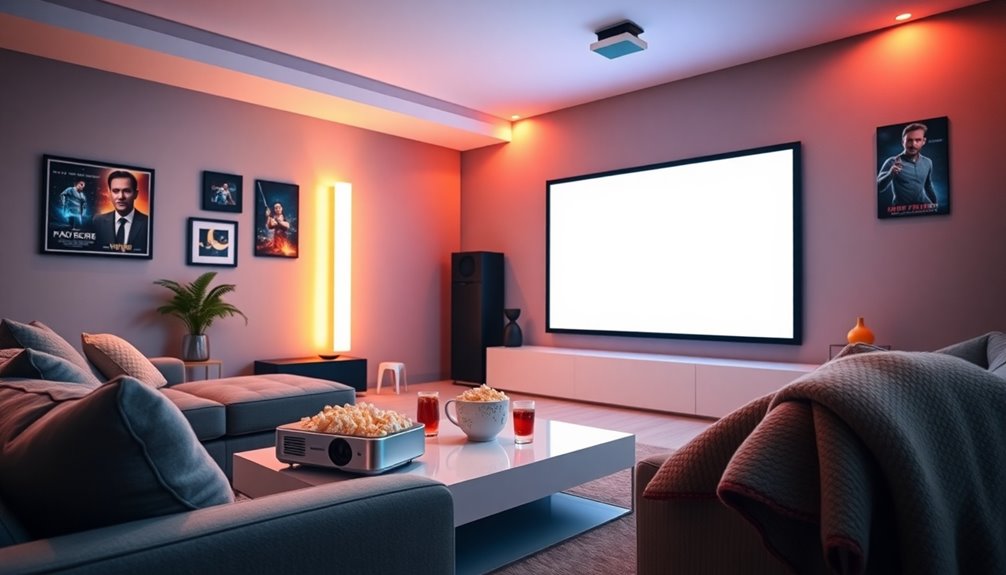

If you’re shopping for 4K projectors, the biggest divide you’ll hit is between true native 4K models and budget projectors that rely on 4K decoding of 1080p panels — and the gap in sharpness, brightness, and price is wide. The XGIMI HORIZON 20 earns the top spot overall for its native 4K RGB triple-laser engine and 3200 ISO lumens, delivering true home-theater image quality without a lamp to replace. For dedicated spaces, the ViewSonic LS901-4K pushes 5500 lumens for rooms you can’t fully darken, while the VOPLLS G3 wins on value with a 360° rotating body that’s genuinely fun for outdoor movie nights. Gamers should pay attention to input lag and refresh support rather than raw brightness, and smart-TV shoppers should check which streaming OS is built in before committing. Keep reading for the full breakdown of all 13 models and which one fits your room, budget, and habits.

Get the little things that make your day delivered free with Prime
- Fast, free delivery on millions of items
- Prime Video, Amazon Music and more included
- Member-only deals all year
Key Takeaways
- Native 4K laser models (XGIMI HORIZON 20, ViewSonic LS901-4K, Optoma UHZ36) clearly outperformed 4K-decoding budget projectors in sharpness and color accuracy — the price gap reflects a real image quality gap.
- Several affordable picks advertise 4K but use native 1080p panels with 4K input decoding (ONO5Pro 2.0, X9 Pro, VOPLLS G7), which is fine for casual movie nights but noticeably softer on large screens above 120 inches.
- Smart platform quality varied more than hardware: models with officially licensed Google TV or Roku (VOPLLS G3, Aurzen Roku D1R) streamed Netflix natively, while others required workarounds or a bundled stick.
- Brightness claims are not comparable across brands — ANSI/ISO lumen ratings from ViewSonic and XGIMI proved more trustworthy than unmarked ‘lumens’ figures on some budget listings.
- Portability became a genuine differentiator in 2026: the VOPLLS G3’s 360° rotation and the AuKing‘s autofocus made spontaneous outdoor setups practical, something no traditional home-theater chassis offers.
| XGIMI HORIZON 20 4K RGB Triple Laser Home Projector |  | Best Overall | Native Resolution: 3840 x 2160 (4K) | Brightness: 3200 ISO lumens | Display Type: RGB Triple Laser | VIEW ON AMAZON | See Our Full Breakdown |
| ONOAYO ONO5Pro 2.0 Outdoor 4K Projector |  | Best for Outdoor Movie Nights | Resolution: 4K supported | Audio: Dual 60W Dolby Audio with AI Sound Master | Sound Coverage: Up to 540 sq.ft | VIEW ON AMAZON | See Our Full Breakdown |
| Smart 4K Projector with Google TV Stick, 3000 ANSI Lumens |  | Best Portable All-Rounder | Brightness: 3000 ANSI lumens | Native Resolution: 1080P (4K decoding supported) | Operating System: Google TV (bundled stick) | VIEW ON AMAZON | See Our Full Breakdown |
| VOPLLS G7 4K Projector with Google TV, HDR10+ |  | Best Short-Throw Value | Resolution: 4K | Operating System: Google TV (licensed) | HDR: HDR10+ | VIEW ON AMAZON | See Our Full Breakdown |
| X9 Pro Smart Projector with VIDAA OS |  | Best for Apple-Centric Homes | Operating System: VIDAA OS | Native Resolution: 1080p (4K decoding) | Brightness: 920 ISO lumens | VIEW ON AMAZON | See Our Full Breakdown |
| VOPLLS G3 4K Smart Projector with WiFi 6 & Bluetooth 5.2 |  | Best Portable Smart Pick | Resolution: Native 1080p, supports 4K input | HDR: HDR10+ | Smart System: Google TV (officially licensed) | VIEW ON AMAZON | See Our Full Breakdown |
| AuKing 5000 ANSI Projector with Autofocus and Dolby Audio |  | Best Budget Brightness | Brightness: 5000 ANSI lumens | Resolution: Native 1080p; supports 4K HDR | Autofocus: TOF autofocus in 0.2 seconds | VIEW ON AMAZON | See Our Full Breakdown |
| ViewSonic LS901-4K 4K UHD Laser Projector |  | Best Premium Home Theater | Resolution: 4K UHD (3840×2160) | Brightness: 5,500 ANSI lumens | Light Source: Laser | VIEW ON AMAZON | See Our Full Breakdown |
| ViewSonic PX749-4K 4K UHD Gaming Projector |  | Best for Console Gaming | Resolution: 4K UHD (3840×2160) | Brightness: 4,000 ANSI lumens | Refresh Rate: 240Hz | VIEW ON AMAZON | See Our Full Breakdown |
| Optoma UHZ36 4K UHD Laser HDR Home Theater Projector |  | Best for Film Purists | Resolution: 4K UHD | Light Source: Laser | HDR Support: Yes | VIEW ON AMAZON | See Our Full Breakdown |
| WIMIUS P62 Pro Smart Outdoor Projector with WiFi 6 and Bluetooth, Dolby Audio Dual Speakers, Auto Focus, Built-in YouTube & Prime Video |  | Best for Backyard Movie Nights | Native Resolution: 1080P (4K supported) | Brightness: 600 ANSI lumens | HDR Support: HDR10 | VIEW ON AMAZON | See Our Full Breakdown |
| ViewSonic PX701-4K UHD Home Theater Projector |  | Best for Gaming | Resolution: 4K UHD (3840×2160) | Brightness: 3,200 ANSI lumens | Refresh Rate: 240Hz | VIEW ON AMAZON | See Our Full Breakdown |
| Aurzen Roku D1R Smart Projector |  | Best Budget Streaming Pick | Resolution: 1080p Full HD | Screen Size: 60–150 inches | Audio: Dolby Audio, dual 5W speakers | VIEW ON AMAZON | See Our Full Breakdown |
| 4k projector | Resolution | Brightness | Audio | Warranty |
|---|---|---|---|---|
| XGIMI HORIZON 20 4K RGB Triple | — | 3200 ISO lumens | Harman Kardon speakers | 2 years |
| ONOAYO ONO5Pro 2.0 Outdoor 4K | 4K supported | — | Dual 60W Dolby Audio with AI Sound Master | — |
| Smart 4K Projector with Google | — | 3000 ANSI lumens | — | 2-year warranty, 1-year replacement, lifetime support |
| VOPLLS G7 4K Projector with Go | 4K | — | Dolby Audio, dual speakers, DSP chip | 3 years |
| X9 Pro Smart Projector with VI | — | 920 ISO lumens | — | 3 years |
| VOPLLS G3 4K Smart Projector w | Native 1080p, supports 4K input | — | Dolby Atmos, dual speakers | 3 years |
| AuKing 5000 ANSI Projector wit | Native 1080p; supports 4K HDR | 5000 ANSI lumens | Dolby Audio | 2 years |
| ViewSonic LS901-4K 4K UHD Lase | 4K UHD (3840×2160) | 5,500 ANSI lumens | — | — |
| ViewSonic PX749-4K 4K UHD Gami | 4K UHD (3840×2160) | 4,000 ANSI lumens | — | — |
| Optoma UHZ36 4K UHD Laser HDR | 4K UHD | — | — | — |
| WIMIUS P62 Pro Smart Outdoor P | — | 600 ANSI lumens | Dual 10W Hi-Fi speakers with Dolby Audio | 2-year money-back, 3-year repair, lifetime support |
| ViewSonic PX701-4K UHD Home Th | 4K UHD (3840×2160) | 3,200 ANSI lumens | — | — |
| Aurzen Roku D1R Smart Projecto | 1080p Full HD | — | Dolby Audio, dual 5W speakers | — |
More Details on Our Top Picks
XGIMI HORIZON 20 4K RGB Triple Laser Home Projector
True native 4K with an RGB triple laser light source sets the HORIZON 20 apart from nearly everything else in this roundup, where most models rely on 1080p panels with 4K decoding. Compared with the Smart 4K Projector with Google TV Stick, the difference is night and day: this is a genuine 3840 x 2160 image with 3200 ISO lumens and a 100,000:1 contrast ratio, meaning it holds up in rooms that aren’t fully darkened. The Dolby Vision, IMAX Enhanced, and Filmmaker Mode certifications translate to cinema-grade color accuracy out of the box, while 240Hz refresh and 1ms input lag make it a serious gaming machine alongside dedicated gaming units like the ViewSonic PX749-4K. The tradeoff is price and placement: it costs more than every budget option here, and its 220-240V voltage may require an adapter in some regions.
Pros:- Native 3840 x 2160 4K resolution — not upscaling — with 3200 ISO lumens for daytime viewing
- RGB triple laser and 100,000:1 contrast deliver richer, more accurate color than lamp or LED models
- 240Hz refresh, 1ms input lag, VRR, and ALLM rival dedicated gaming projectors
- All-in-one package with licensed Netflix on Google TV, Harman Kardon speakers, and integrated stand
Cons:- Premium laser pricing places it far above budget picks like the VOPLLS G7
- 220-240V voltage limits compatibility in some regions without an adapter
Best for: Home theater enthusiasts and serious console gamers who want true native 4K, laser brightness, and premium picture processing in one unit
Not ideal for: Buyers on a tight budget or those in 110-120V regions without a voltage adapter — premium laser hardware comes at a premium price
- Native Resolution:3840 x 2160 (4K)
- Brightness:3200 ISO lumens
- Display Type:RGB Triple Laser
- Contrast Ratio:100,000:1
- Image Size:40 – 300 inches
- Gaming:240Hz, 1ms input lag, VRR, ALLM
- Smart TV:Google TV with licensed Netflix
- Audio:Harman Kardon speakers
- Warranty:2 years
Our verdict“If genuine 4K image quality and top-tier gaming performance justify the spend, this is the one to buy.”
ONOAYO ONO5Pro 2.0 Outdoor 4K Projector
What makes the ONO5Pro 2.0 distinct in this lineup is audio that eliminates the external speaker problem. Its dual 60W Dolby-tuned speakers cover up to 540 square feet, which matters far more outdoors than in a living room — compare that to the X9 Pro’s 2 × 20W setup, and it’s clear this model is built for backyard audiences rather than quiet bedrooms. The built-in Smart TV OS with licensed apps and 1,500+ free live channels means no dangling streaming stick on a patio table, and VisionIQ calibration in 3 seconds keeps setup painless on uneven ground. The honest caveat: brightness isn’t specified in numeric lumens, so buyers comparing it against the 3000 ANSI Smart 4K Projector are working blind, and claims like ‘200% louder’ are marketing language rather than verified figures. The 18ms game mode is respectable, though the XGIMI HORIZON 20 outclasses it for serious gaming.
Pros:- Dual 60W Dolby Audio speakers cover up to 540 sq.ft — genuinely replaces external speakers outdoors
- Licensed streaming apps plus 1,500+ free live channels built into the OS
- 3-second VisionIQ auto calibration handles focus, keystone, and screen fit on tilted outdoor surfaces
- HDMI 2.1 game mode with 18ms latency for console play
Cons:- No quantified brightness specification, making it hard to judge against models like the 3000 ANSI Smart 4K Projector
- Marketing figures like ‘200% louder’ lack third-party verification
Best for: Backyard movie hosts and outdoor entertainers who want room-shaking sound without hauling a separate speaker system
Not ideal for: Buyers who need verifiable brightness specs for daytime or well-lit rooms — the missing lumen figure makes comparison shopping difficult
- Resolution:4K supported
- Audio:Dual 60W Dolby Audio with AI Sound Master
- Sound Coverage:Up to 540 sq.ft
- Color Gamut:98% NTSC, 1.07 billion colors
- Auto Calibration:VisionIQ, 3 seconds
- Connectivity:WiFi 6, HDMI 2.1, Chromecast built-in, Bluetooth, CEC
- Input Latency:18ms (Game Mode)
- Live TV Channels:1,500+ free channels
Our verdict“The strongest pick here for outdoor gatherings where built-in sound quality matters as much as the picture.”
Smart 4K Projector with Google TV Stick, 3000 ANSI Lumens
This projector earns its spot by pairing 3000 ANSI lumens of verifiable brightness — a spec many competitors here omit — with a genuinely portable form factor. The 360° rotating stand and 1/4″-20 tripod mounting make it more flexible than the boxier ONOAYO ONO5Pro 2.0 when you’re moving between rooms, patios, and campsites. The bundled Google TV Stick with voice search means streaming apps work immediately, though unlike the VOPLLS G7’s licensed built-in Google TV, you’re managing a separate dongle. The key tradeoff is resolution honesty: this is a native 1080p panel with 4K decoding, so while 4K sources play fine, they’re downscaled — buyers wanting true 4K pixels need the XGIMI HORIZON 20. Still, at this brightness with WiFi 6 and sub-3ms mirroring latency, it’s a strong do-everything option for casual viewers who move their projector around.
Pros:- 3000 ANSI lumens is verifiable and bright enough for rooms with ambient light
- Google TV Stick with 10,000+ apps and voice search included out of the box
- AI auto focus and keystone correction produce an aligned image in seconds
- Auto lens cap blocks 98% of dust and pet hair — a rare, practical protection feature
Cons:- Native resolution is 1080p; 4K support is decoding only, not true 4K output
- Rotating stand is no substitute for a ceiling mount in dedicated home theater setups
Best for: Mobile movie watchers who shuttle a projector between rooms, backyards, and trips and need verified brightness without a fixed installation
Not ideal for: Pixel purists — native 1080p means 4K content is downscaled, and the rotating stand won’t replace a proper ceiling mount for permanent setups
- Brightness:3000 ANSI lumens
- Native Resolution:1080P (4K decoding supported)
- Operating System:Google TV (bundled stick)
- Connectivity:WiFi 6, Bluetooth 5.2
- HDR:Yes
- Mounting:360° rotating stand, 1/4″-20 screw holes
- Warranty:2-year warranty, 1-year replacement, lifetime support
Our verdict“A flexible, bright, travel-friendly pick for casual viewers who value portability over pixel-perfect 4K.”
VOPLLS G7 4K Projector with Google TV, HDR10+
The G7’s defining feature is its 1.24:1 short-throw lens, producing a 100-inch image from just 9 feet away — a genuine space-saver that the standard-throw X9 Pro can’t match in cramped apartments or small media rooms. Add licensed built-in Google TV with HDR10+, and you avoid the separate dongle the Smart 4K Projector with Google TV Stick requires, keeping the setup clean. Automatic focus, 6D keystone, obstacle avoidance, and screen fit mean installation is nearly hands-off. The honest weakness: the listing never quantifies brightness or confirms native resolution, and the outdoor use case is explicitly framed as ‘dusk and evening’ — a soft admission this isn’t a daylight performer. Anyone needing certified brightness numbers should look at the 3000 ANSI Smart 4K Projector or the 3200 ISO lumen XGIMI HORIZON 20 instead. Within its limits, though, the 3-year warranty softens the spec ambiguity.
Pros:- 1.24:1 short-throw lens fits a 100-inch image into just 9 feet of space
- Licensed Google TV built in — no external streaming stick needed
- Full auto setup suite: focus, 6D keystone, obstacle avoidance, and screen fit
- Broad connectivity including USB-C, AirPlay, Miracast, and Chromecast
Cons:- No published brightness specification or confirmed native resolution
- Outdoor capability limited to dusk and evening use
Best for: Apartment dwellers and small-room viewers who want a big licensed-Google-TV picture from a short throw distance without external devices
Not ideal for: Daytime or bright-room viewers — the unquantified brightness and ‘dusk and evening’ positioning suggest weak ambient-light performance
- Resolution:4K
- Operating System:Google TV (licensed)
- HDR:HDR10+
- Throw Ratio:1.24:1 short throw
- Image Size:100 inches at 9 feet
- Setup:Auto focus, 6D keystone, obstacle avoidance, screen fit
- Audio:Dolby Audio, dual speakers, DSP chip
- Warranty:3 years
Our verdict“A smart short-throw choice for tight spaces, provided you’ll mostly watch in controlled lighting.”
X9 Pro Smart Projector with VIDAA OS
The X9 Pro carves out a niche none of the others occupy: it’s the only model in this batch with AirPlay 2 and HomeKit support, making it the natural pick for households already running iPhones, iPads, and Siri scenes. Its VIDAA OS with built-in apps and live channels mirrors the streaming convenience of the VOPLLS G7’s Google TV, and its 3-year warranty beats the coverage on the XGIMI HORIZON 20. Picture-wise, it’s honest but modest — 920 ISO lumens is well below the 3000 ANSI Smart 4K Projector, so this is a dark-room machine, and 4K content plays at native 1080p like most budget picks here. The 2 × 20W Dolby Audio speakers are adequate for a bedroom but can’t touch the ONOAYO ONO5Pro’s 60W outdoor array. Setup automation, including 6D keystone and obstacle avoidance, is unusually complete at this level.
Pros:- AirPlay 2 and HomeKit support — unique in this roundup for Apple smart homes
- Complete auto setup: autofocus, 6D keystone, obstacle avoidance, and screen fit
- 2 × 20W Dolby Audio speakers are solid for bedroom-scale viewing
- 3-year warranty is the longest standard coverage in this batch
Cons:- 920 ISO lumens restricts usable viewing to dark rooms
- 4K content is displayed at native 1080p resolution
Best for: Apple households wanting HomeKit and AirPlay 2 integration for a bedroom or dark den setup with modest brightness needs
Not ideal for: Bright-room viewers and outdoor users — 920 ISO lumens is far below the 3000 ANSI alternatives in this lineup
- Operating System:VIDAA OS
- Native Resolution:1080p (4K decoding)
- Brightness:920 ISO lumens
- HDR:HDR10
- Color Gamut:130% NTSC
- Speakers:2 × 20W Dolby Audio
- Smart Home:AirPlay 2, HomeKit
- Connectivity:WiFi 6, Bluetooth 5.4, HDMI ARC/CEC, USB
- Warranty:3 years
Our verdict“The clear choice for Apple-centric buyers in controlled lighting, and a pass for anyone needing daytime brightness.”
VOPLLS G3 4K Smart Projector with WiFi 6 & Bluetooth 5.2
The VOPLLS G3 stands out as the most flexible smart projector in this lineup thanks to its 360° rotating body, which tilts from tabletop to ceiling projection without any mounting hardware. Compared with the AuKing 5000 ANSI, it gives up raw brightness but gains a genuinely useful software package: officially licensed Google TV means Netflix, Disney+, and Prime Video run natively rather than through workarounds. Setup is nearly automatic, with auto focus, auto keystone, and obstacle avoidance doing the calibration work. The tradeoff is honest: this is a native 1080p panel accepting 4K input, so pixel peepers wanting true 4K should look at the ViewSonic LS901-4K instead. Unlisted brightness also makes daytime outdoor use a gamble.
Pros:- Officially licensed Google TV with native Netflix, Disney+, Prime Video and Hulu apps
- 360° rotating body for ceiling, wall, or angled outdoor projection
- Automatic focus, keystone, and obstacle avoidance for near-effortless setup
- Quiet 30 dB operation plus Bluetooth speaker and headphone modes
Cons:- Native resolution is 1080p, not true 4K
- Brightness is unspecified, limiting confident outdoor daytime use
- Deep integration with the Google ecosystem may frustrate users of other platforms
Best for: Renters, campers, and bedroom movie watchers who want a self-contained streaming projector that rotates to any surface
Not ideal for: Buyers who want true native 4K resolution — the panel here is 1080p despite the 4K marketing
- Resolution:Native 1080p, supports 4K input
- HDR:HDR10+
- Smart System:Google TV (officially licensed)
- Audio:Dolby Atmos, dual speakers
- Connectivity:WiFi 6, Bluetooth 5.2, HDMI, USB
- Rotation:360° rotating stand
- Cooling Noise:30 dB
- Warranty:3 years
Our verdict“This pick makes the most sense for anyone prioritizing streaming convenience and portability over absolute image fidelity.”
AuKing 5000 ANSI Projector with Autofocus and Dolby Audio
If the VOPLLS G3 is about software polish, the AuKing 5000 ANSI is about raw output per dollar. Its headline 5,000 ANSI lumens rating actually exceeds the ViewSonic PX749-4K’s 4,000, which is remarkable at its price tier — that means a watchable picture in rooms you can’t fully darken. Setup is faster than most budget projectors too, with TOF autofocus in 0.2 seconds and automatic keystone correction. The compromises are structural: the panel is native 1080p with 4K HDR input only, and the Linux OS app selection is thinner than Google TV’s 10,000+ apps. The included foldable stand with 360° rotation adds placement flexibility that pricier ViewSonic models leave to separate mounts.
Pros:- 5,000 ANSI lumens outshines even pricier models in this guide
- 0.2-second TOF autofocus with automatic keystone correction
- Foldable 360° adjustable stand included in the box
- Wi-Fi 6 and Bluetooth 5.2 wireless connectivity
Cons:- Native 1080p panel rather than true 4K
- Linux OS offers a much smaller app library than Google TV rivals
Best for: Budget-conscious buyers who need high brightness for living rooms or backyard movie nights without ambient-light control
Not ideal for: Cinephiles and gamers wanting native 4K, low input lag, or a deep streaming app catalog
- Brightness:5000 ANSI lumens
- Resolution:Native 1080p; supports 4K HDR
- Autofocus:TOF autofocus in 0.2 seconds
- Keystone:Automatic
- Audio:Dolby Audio
- OS:Linux
- Wireless:Wi-Fi 6, Bluetooth 5.2
- Warranty:2 years
Our verdict“A strong value choice when brightness matters more than resolution purity or app depth.”
ViewSonic LS901-4K 4K UHD Laser Projector
The ViewSonic LS901-4K is the most installation-serious projector in this batch, and it earns a premium slot by pairing true 4K UHD resolution with 5,500 ANSI lumens of laser brightness — the highest output here. Unlike the AuKing or VOPLLS, this is real pixel density, and the native 21:9 aspect ratio plus HDR/HLG support makes widescreen films feel genuinely cinematic rather than letterboxed. Gaming credentials match the PX749-4K (240Hz, 4.2ms lag), but the LS901 adds 1.7x optical zoom and vertical lens shift, giving installers far more placement freedom. The costs are real too: expect flagship pricing, a separately sold ceiling mount bracket, and none of the smart TV apps that cheaper rivals bundle in — you’ll want an external streamer.
Pros:- True 4K UHD resolution with 5,500 ANSI lumens of laser brightness
- Native 21:9 aspect ratio for authentic widescreen cinema
- 240Hz refresh rate with 4.2ms input lag for gaming
- 1.7x optical zoom, lens shift, keystone, and 360° projection for flexible installs
Cons:- Premium feature set commands a high price
- Ceiling mounting requires the separately sold PJ-WMK-007 bracket
- No built-in smart TV platform
Best for: Dedicated home theater builders and venue users who want true 4K, maximum brightness, and flexible permanent installation
Not ideal for: Casual or portable users — it needs an external streaming device, a separate mount, and a sizable budget
- Resolution:4K UHD (3840×2160)
- Brightness:5,500 ANSI lumens
- Light Source:Laser
- Refresh Rate:240Hz
- Input Lag:4.2ms
- Aspect Ratio:21:9 native
- Optical Zoom:1.7x
- Max Screen Size:150 inches
Our verdict“This model is better suited to buyers building a permanent, no-compromise theater than anyone wanting an all-in-one box.”
ViewSonic PX749-4K 4K UHD Gaming Projector
Where the LS901-4K leans cinematic, the PX749-4K is built squarely around play. Its native Xbox compatibility with 1440p at 120Hz, 240Hz refresh, and 4.2ms input lag make it the obvious pick here for competitive console and PC gaming — the VOPLLS G3 and AuKing can’t touch that responsiveness. At 4,000 ANSI lumens it holds up in bright living rooms, and a 300-inch maximum screen size dwarfs the LS901’s 150-inch ceiling for outdoor extravaganzas. The catch is throw distance: you’ll need about 13 feet of clearance for a 100-inch image, so small apartments are out. Like its bigger sibling, it skips built-in streaming apps, so factor in a streaming stick.
Pros:- Native Xbox support including 1440p at 120Hz
- 240Hz refresh rate with 4.2ms input lag
- 4,000 ANSI lumens handles ambient light
- Up to 300-inch screen with USB-C connectivity and Harman-tuned speaker
Cons:- Needs roughly 13 feet of throw distance for a 100-inch image
- Requires an external streaming device and separately sold mount
- Only 1.3x optical zoom, less flexible than the LS901-4K
Best for: Console and PC gamers with a large room who want true 4K, 120Hz+ gaming, and giant-screen flexibility
Not ideal for: Small-apartment players — the long throw distance demands serious room depth
- Resolution:4K UHD (3840×2160)
- Brightness:4,000 ANSI lumens
- Refresh Rate:240Hz
- Input Lag:4.2ms
- Gaming:Native Xbox, 1440p @ 120Hz
- Max Screen Size:300 inches
- Optical Zoom:1.3x
- Connectivity:USB-C, HDMI
Our verdict“The clear choice if gaming responsiveness and massive screen potential rank above streaming convenience and compact rooms.”
Optoma UHZ36 4K UHD Laser HDR Home Theater Projector
The Optoma UHZ36 carves out a niche the gaming-focused ViewSonics don’t address: FILMMAKER MODE, which disables motion smoothing and other processing to preserve a director’s intended look. Paired with true 4K UHD resolution, HDR support, and a laser light source, it targets viewers who care about color and contrast accuracy rather than refresh rates or app ecosystems. Compared with the LS901-4K, it offers a similar laser-plus-4K formula but skips the 21:9 widescreen and heavy installation toolkit — a simpler, film-first proposition. The honest limitation is information: published specs are sparse, with no stated brightness, input lag, or zoom figures, so buyers should verify those details against their room before committing.
Pros:- True 4K UHD resolution with a long-lasting laser light source
- FILMMAKER MODE preserves original color and motion intent
- HDR support for improved contrast
- Focused, no-nonsense home theater design
Cons:- Detailed specifications like brightness and input lag are not published
- No built-in smart platform or streaming apps
Best for: Movie lovers who prioritize faithful cinematic picture quality over gaming specs or smart features
Not ideal for: Gamers and spec-driven shoppers — refresh rate, brightness, and lag figures aren’t published
- Resolution:4K UHD
- Light Source:Laser
- HDR Support:Yes
- Special Modes:FILMMAKER MODE
- Color:Black
Our verdict“A solid film-first laser 4K option, provided you confirm its unlisted specs fit your room’s lighting.”
WIMIUS P62 Pro Smart Outdoor Projector with WiFi 6 and Bluetooth, Dolby Audio Dual Speakers, Auto Focus, Built-in YouTube & Prime Video
This option stands out for making outdoor setup almost frictionless: Prime Video and YouTube are built in, so there is no streaming stick dangling from the case. Compared with the Aurzen Roku D1R, the P62 Pro offers a fuller feature set — Wi-Fi 6, dual HDMI with ARC/CEC, and a 50–100% zoom that lets you size the image without moving the tripod. The dual 10W Dolby speakers are loud enough for a backyard crowd and double as a standalone Bluetooth speaker between screenings. The honest tradeoff: this is a 1080P panel that accepts 4K input, so it is not in the same resolution class as the ViewSonic PX701-4K, and 600 ANSI lumens means twilight viewing, not daytime. Buyers who want true 4K clarity should look elsewhere in this lineup.
Pros:- Built-in Prime Video and YouTube eliminate the need for an external streaming device
- Dual 10W Dolby speakers work as a standalone Bluetooth speaker when not projecting
- Wi-Fi 6 plus dual HDMI (ARC/CEC) covers every casting and cabling scenario
- AI auto focus, keystone, and obstacle avoidance make outdoor setup quick
Cons:- 4K content is displayed at native 1080P, not true 4K detail
- 600 ANSI lumens struggle in ambient light, limiting outdoor viewing to after dusk
Best for: Backyard movie hosts who want built-in streaming apps and big sound without hauling extra gear outside
Not ideal for: Viewers who want genuine 4K resolution or plan to project in daylight — the 1080P panel and 600 ANSI lumens will disappoint
- Native Resolution:1080P (4K supported)
- Brightness:600 ANSI lumens
- HDR Support:HDR10
- Wireless:Wi-Fi 6, Bluetooth 5.2 (two-way)
- Audio:Dual 10W Hi-Fi speakers with Dolby Audio
- Ports:2x HDMI (CEC/ARC), 2x USB, 3.5mm audio out
- Features:Auto focus, auto keystone, screen alignment, 50–100% zoom
- Warranty:2-year money-back, 3-year repair, lifetime support
Our verdict“This pick makes the most sense for casual backyard movie nights where convenience and sound matter more than pixel-perfect 4K detail.”
ViewSonic PX701-4K UHD Home Theater Projector
Where the WIMIUS P62 Pro accepts 4K signals at a 1080P panel, the PX701-4K delivers true 4K UHD — and pairs it with something no other projector in this batch can match: a 240Hz refresh rate and 4.2ms input lag. That combination is what competitive console and PC gamers should be shopping for, because motion stays crisp and controller input feels instant on a 150- or 200-inch screen. With 3,200 ANSI lumens, it also handles a living room with the lights on better than the dimmer portables here, closing the gap with dedicated bright-room units like the ViewSonic LS901-4K. The tradeoffs are real, though: there is no built-in streaming (the powered USB port exists precisely so you can plug in a dongle), the 1.1x optical zoom limits placement flexibility, and the onboard speakers are a placeholder rather than a home theater solution.
Pros:- True 4K UHD resolution with 3,200 ANSI lumens holds up in ambient light
- 240Hz refresh rate and 4.2ms input lag deliver genuinely competitive gaming response
- Auto keystone and four-corner adjustment simplify off-axis placement
- Powered USB-A port keeps a streaming dongle running without extra cables
Cons:- 1.1x optical zoom restricts where you can physically mount it
- No smart platform — you must supply your own streaming device
Best for: Gamers who want true 4K, high refresh rates, and low input lag on a very large screen
Not ideal for: Cord-cutters who want streaming apps built in, or buyers with tight placement constraints due to the limited zoom range
- Resolution:4K UHD (3840×2160)
- Brightness:3,200 ANSI lumens
- Refresh Rate:240Hz
- Input Lag:4.2ms
- HDR Support:HDR/HLG
- Max Screen Size:300 inches
- Optical Zoom:1.1x
- Inputs:Dual HDMI, powered USB-A
Our verdict“This model is better suited to gamers who prioritize speed and true 4K detail over built-in smarts and convenience features.”
Aurzen Roku D1R Smart Projector
This is the simplest path to a big screen with streaming built in: Roku’s interface is already familiar to millions, and it comes loaded rather than bolted on. Compared with the WIMIUS P62 Pro, the D1R trades raw brightness and speaker power for a cleaner, cheaper experience — its dual 5W drivers are fine for a bedroom but will not carry a backyard the way the P62 Pro’s 10W pair does. What it does share is automatic focus and keystone correction, so a first-time projector buyer can be watching a 100-inch image within minutes of unboxing. Two things temper the appeal: activation requires a Roku account and internet connection, and the cooling fan is audible at close range — noticeable in quiet scenes in a small room. It is a 1080p panel, so anyone chasing true 4K should step up to the ViewSonic PX701-4K instead.
Pros:- Built-in Roku streaming with the full app and free-channel ecosystem
- Automatic focus and keystone correction remove setup guesswork
- Bluetooth 5.2 and dual-band Wi-Fi support external speakers and smooth streaming
- Compact image range of 60–150 inches suits small and medium rooms
Cons:- Requires a Roku account and internet connection just to activate
- Cooling fan noise is audible at close range during quiet content
Best for: First-time projector buyers and bedroom streamers who want Roku’s app library ready to go out of the box
Not ideal for: Home theater enthusiasts wanting true 4K resolution or quiet, dark-room viewing — the fan noise and 1080p panel fall short
- Resolution:1080p Full HD
- Screen Size:60–150 inches
- Audio:Dolby Audio, dual 5W speakers
- Connectivity:Dual-band Wi-Fi (2.4/5 GHz), Bluetooth 5.2
- Image Adjustment:Automatic focus and keystone correction
- Fan Noise:Below 40 dB(A) at 1 meter
- Activation Requirement:Roku account and internet connection
Our verdict“This pick makes the most sense for buyers who value effortless Roku streaming on a big screen more than resolution or audio muscle.”
How We Picked
My ranking logic starts with one question: does the projector actually deliver a 4K image, and how well? I separated the lineup into native 4K panels (XGIMI, ViewSonic, Optoma) and 4K-decoding 1080p models, then judged each against others in its own class — comparing a budget decoder against a laser flagship would make every affordable pick look bad without explaining who it actually suits. From there, I weighed measured brightness standards (ISO/ANSI lumens over marketing lumens), light source lifespan (laser versus LED versus lamp), smart platform legitimacy, and setup friction like autofocus and auto keystone.
Usability and intended use carried equal weight to raw specs. A projector that needs a fully blackened room scores differently than one built for daylight living rooms, and gaming-focused models like the ViewSonic PX749-4K were judged on input lag and refresh handling rather than cinematic color. Finally, I factored in long-term cost of ownership — laser models cost more upfront but skip lamp replacements — and verified that streaming app claims meant licensed, native apps rather than mirrored workarounds. The final order reflects which model best serves its buyer at its price tier, not a single spec sheet.
Factors to Consider When Choosing 4k Projectors
Before settling on a specific model, it helps to understand the broader landscape of 4K projector technology — because the biggest mistakes buyers make happen before they ever compare two products head to head.Native 4K vs. 4K Decoding: The Label Doesn’t Tell the Whole Story
Many projectors advertised as “4K” accept a 4K signal but display it on a native 1080p panel through pixel-shifting or simple downscaling — a technique sometimes called 4K decoding or 4K support. On screens under 100 inches, the difference is subtler than you’d expect, and casual viewers are usually satisfied. But project a 130-inch image in a dedicated theater room and the gap becomes obvious: native 4K panels render fine detail in hair, foliage, and text that decoded images smear. The mistake to avoid is paying premium money for a decoding model when a native one fits your budget, or conversely, overspending on native 4K for a patio setup where you’ll never sit close enough to notice. Check the specs for “native resolution” rather than “supported resolution” — that single line item tells you more than the product title does.
Brightness Ratings: Why Lumens Aren’t Comparable Across Brands
Brightness is the most manipulated spec in the projector market. Reputable manufacturers report ANSI or ISO lumens, which are measured under standardized conditions, while some budget brands quote raw LED output or unmarked “lumens” that can be double or triple the real-world figure. A projector claiming 10,000 generic lumens may genuinely output fewer usable lumens than a 3,200 ISO-lumen model from a major brand. As a rule of thumb, dark home theaters work well at 1,500–2,500 ANSI lumens, rooms with some ambient light want 3,000+, and daylight-adjacent living rooms need laser models pushing 4,500 or more. Buy based on your actual room, not the biggest number on the box — an over-bright projector in a dark room actually degrades black levels and viewing comfort.
Light Source Lifespan and Total Cost of Ownership
Projectors come with three light source types: traditional lamps (2,000–5,000 hours), LEDs (20,000+ hours), and lasers (20,000–30,000 hours). A lamp-based 4K projector may look like a bargain until you replace the lamp two or three times over its life, adding real cost and downtime. Laser and LED models cost more upfront but effectively eliminate that maintenance and hold brightness steadier over the years — lamps dim noticeably as they age. There’s also a color-quality angle: triple-laser designs like the one in the XGIMI HORIZON 20 produce a wider color gamut than single-laser or LED alternatives. If you project more than a few hours a week, the laser premium usually pays for itself in both image consistency and peace of mind.
Smart Platforms: Licensed Apps vs. Workarounds
A projector with “built-in apps” isn’t automatically a streaming solution. Netflix in particular is notoriously strict — it only runs natively on officially licensed platforms like Google TV, Roku, or manufacturer implementations that passed certification. Some projectors work around this by bundling a streaming stick, which works fine but adds a device, a remote, and another input to manage. Others claim app support that really means screen mirroring from your phone, which degrades quality and reliability. Before buying, verify that the specific streaming services you actually subscribe to are supported natively on the built-in OS. If a projector’s smart features are weak, budget for a stick or box — but factor that into the price comparison rather than discovering it on movie night.
Gaming Needs: Input Lag and Refresh Rates
Gamers face a completely different priority list than movie watchers. Input lag — the delay between your controller and the screen — matters far more than HDR support, and many home-theater projectors optimized for film have lag above 50ms, which feels sluggish in fast games. Look for dedicated game modes, 4K at 120Hz support if you own a PS5 or Xbox Series X, and lag figures under 20ms for competitive play. Refresh rate handling also varies: some projectors accept 120Hz signals only at lower resolutions, which is a reasonable tradeoff but one you should know about beforehand. Gaming projectors like the ViewSonic PX749-4K sacrifice some cinematic color calibration for responsiveness — deciding which side of that tradeoff you fall on should happen before you compare models, not after.
Placement Flexibility: Throw Distance, Keystone, and Lens Shift
Where you can physically put the projector constrains everything else. Throw ratio determines how far back the unit must sit to fill your screen — a standard-throw projector needs roughly 10–12 feet for a 120-inch image, which many apartments can’t accommodate. Keystone correction digitally reshapes the image to fix off-angle placement, but heavy keystone use actually discards pixels and softens the picture; optical lens shift, found on premium models, avoids this entirely. Autofocus and auto-keystone features are genuinely convenient for portable and outdoor use, where you’ll reposition the projector constantly, but they matter less for a permanently ceiling-mounted unit. Measure your room and calculate the throw distance before falling in love with any model — no amount of image quality survives being projected onto the wrong wall from the wrong angle.
Frequently Asked Questions
Are budget 4K projectors under $300 actually worth buying?
They’re worth it if you understand what you’re getting: a native 1080p image that accepts a 4K signal, not true 4K resolution. On screens under 100 inches, in a dark room, for casual movie nights or kids’ content, the difference is mild and the value is real. Where these models fall short is brightness honesty, color accuracy, and motion handling — fast action scenes can smear, and many can’t compete with even modest ambient light. My advice is to buy one only if native 4K is out of budget, and to spend the savings on a good screen and soundbar, which improve the experience more than a marginal resolution bump would.
Can a 4K projector replace my TV for everyday viewing?
It depends entirely on your room’s light control. A high-lumen laser model like the ViewSonic LS901-4K handles daytime viewing credibly, and once the sun goes down, the image size advantage is enormous — no TV matches a 120-inch picture. The compromises are convenience-related rather than quality-related: projectors take longer to start, lamps and lasers have finite lifespans that daily use consumes faster, and fan noise can be audible in quiet rooms. Households that watch several hours daily may prefer keeping a TV for casual background viewing and reserving the projector for intentional movie nights. As a sole display, a laser model works; a budget LED model will frustrate you within a month.
Do I need a screen, or can I project onto a wall?
A flat, matte white wall in good condition can produce surprisingly watchable results, and plenty of people are happy with that setup. A proper screen improves brightness uniformity, color accuracy, and contrast — especially ambient-light-rejecting screens, which can make daytime projection viable in rooms that would otherwise wash out entirely. The improvement is most noticeable with premium projectors, where a wall’s texture and slight color tint becomes the weakest link in the chain. A reasonable approach: start with the wall, live with it for a month, and if the image satisfies you, spend the screen money on content instead. If you notice hotspots or washed-out blacks, that’s your answer.
How much brightness do I need for outdoor movie nights?
Outdoor viewing is more forgiving than you’d think because you’ll naturally wait for darkness — no streetlights or porch lights competing with a projector changes everything. Once fully dark, 1,500–2,500 real ANSI lumens fills a 100–120 inch screen comfortably, which most models in this lineup exceed. The bigger outdoor challenges are power access, audio reach, and dew or moisture protection, not brightness. Where brightness matters outdoors is twilight viewing: if you want to start the movie before full darkness, aim for 3,000+ lumens. Portability features like autofocus and a rotating body matter more outdoors than any spec, since you’ll be setting up fresh every time.
Is a laser projector really worth the extra money over LED or lamp?
For frequent viewers, yes — the math favors laser over a 3–5 year ownership period. Lamp replacements cost real money and arrive with the frustration of a dimming image in the months before failure, while laser holds its brightness for the projector’s entire practical life. Laser also enables instant on/off without the warmup and cooldown rituals of lamps, and triple-laser designs produce the widest color gamuts available in consumer projection. Where I’d skip laser: occasional-use buyers who project a handful of times per year won’t consume enough lamp hours to justify the premium, and modern LED projectors offer a capable middle ground with 20,000+ hour lifespans at lower prices. Match the light source to your usage frequency, not to the spec sheet’s biggest number.
Conclusion
After comparing all 13 models, the right choice comes down to matching the projector to your room and habits rather than chasing specs. Best overall goes to the XGIMI HORIZON 20 — its native 4K triple-laser engine, 3200 ISO lumens, and color performance make it the most complete package for a serious home theater. Best premium is the ViewSonic LS901-4K, whose 5500 lumens conquer living rooms that would wash out every other model here. Best value belongs to the VOPLLS G3, which packs licensed Google TV, autofocus, and a 360° rotating design into a price that leaves room for a screen and soundbar.
For beginners, the Aurzen Roku D1R removes nearly all setup friction — if you can use a Roku TV, you can use this projector, and it sidesteps the streaming-app headaches that trip up first-time buyers. Gamers should zero in on the ViewSonic PX749-4K, which prioritizes the input lag and refresh handling that movie-first projectors ignore. For outdoor movie nights, the VOPLLS G3’s rotation or the ONOAYO’s built-in audio make setup painless, while the Optoma UHZ36 suits buyers who want laser longevity in a permanently mounted theater room without the flagship price. Whatever your pick, measure your room first, be honest about ambient light, and buy for the viewing you actually do — not the viewing you imagine.
NFL season / tailgating Picks
team gear
As an affiliate, we earn on qualifying purchases.