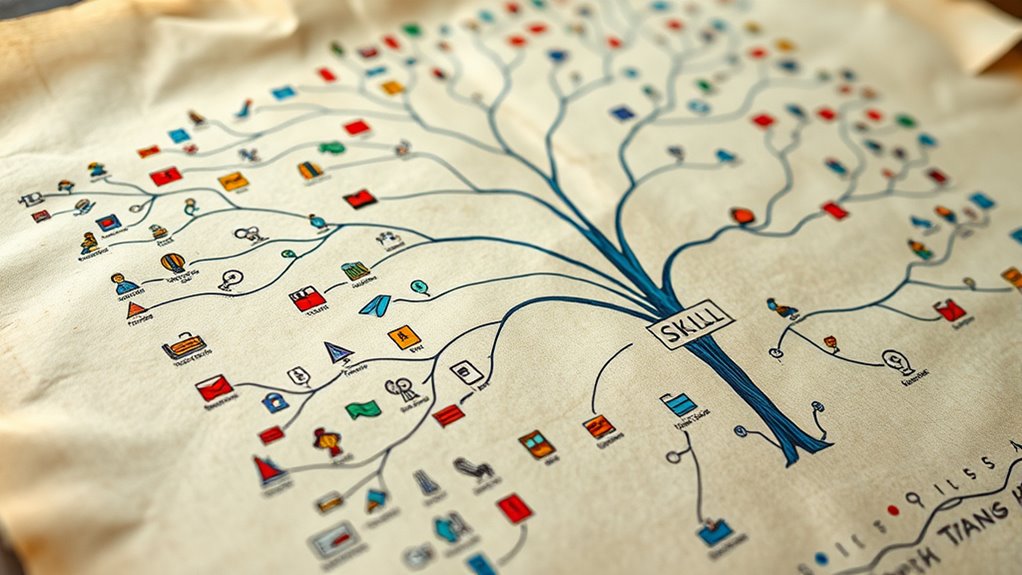

Skill trees are your personal roadmap for growth, guiding you through structured paths to unlock new abilities and customize your gameplay. They help you focus on specific skills or diversify for flexibility, giving you control over your character’s development. By making strategic choices, you shape your playstyle and unlock powerful combos along the way. Keep exploring to discover how skill trees can maximize your potential and tailor your gaming experience.
Key Takeaways
- Skill trees visually represent character progression, guiding players through structured development paths.
- They allow strategic allocation of skill points to customize and optimize gameplay style.
- Skill trees enable specialization, focusing on specific abilities like stealth, combat, or magic.
- They provide tangible goals and rewards, motivating players to explore different builds.
- Skill trees help map growth, ensuring deliberate development and unlocking advanced skills over time.

Have you ever wondered how players customize their characters’ abilities and optimize their gameplay? The secret often lies in skill trees, which act as maps guiding your growth and development within a game. Skill trees are structured systems that let you select and access new abilities, making your character more powerful, versatile, or specialized over time. They’re designed to give you control over your skill progression, allowing you to tailor your playstyle to suit your preferences. As you progress, you’ll navigate through learning paths—predefined routes within the skill tree—that help you focus on particular skills or talents, ensuring your character evolves in a way that matches your strategy.
Skill trees guide your growth, allowing tailored abilities and strategic character development within a game.
Understanding these learning paths is essential because they streamline your skill progression. Instead of randomly acquiring abilities, you follow specific routes that grant related skills, which work well together. For example, if you want to become a master of stealth, your learning paths might prioritize agility, silent movement, and backstab techniques. This focused approach minimizes wasted effort and maximizes your character’s potential in your chosen role. As you gain experience and access new nodes within the skill tree, you’ll see your options expand, revealing more advanced skills and combos that can turn the tide of a battle or complete a quest more efficiently.
Navigating a skill tree requires strategic thinking. You’ll need to decide whether to invest heavily in a particular learning path or diversify your skills to become more adaptable. Some skill trees reward specialization, where focusing on one area unlocks powerful abilities that make your character exceptional in certain situations. Others encourage breadth, giving you a wide range of skills that allow flexibility across different scenarios. Your choices directly influence your gameplay style, making each decision impactful. As you select skills, you’ll notice your skill progression accelerating—each new ability building upon the last—creating a sense of growth and mastery.
Progressing through a skill tree isn’t just about unlocking abilities; it’s about shaping your character’s identity within the game world. The more you invest in specific learning paths, the more your character evolves into a reflection of your strategic choices. This progression keeps gameplay engaging because it provides tangible goals and rewards, motivating you to explore different branches and experiment with different builds. Ultimately, skill trees serve as a dynamic roadmap for your journey, helping you map your growth and access your character’s full potential with deliberate, well-planned decisions.
Frequently Asked Questions
How Do I Prioritize Skills Within a Tree?
To prioritize skills within a tree, focus on skill importance first. Identify which skills will have the biggest impact on your goals, then plan your skill sequencing accordingly. Tackle foundational skills early, as they support more advanced ones later. By understanding which skills are essential and sequencing them logically, you guarantee steady progress and efficient growth, making your learning process more targeted and effective.
Can Skill Trees Be Customized for Individual Goals?
Yes, skill trees can be customized for your individual goals through personalized pathways. You can adapt the learning process to focus on skills that align with your aspirations, making your growth more targeted and efficient. By leveraging adaptive learning, the skill tree adjusts to your progress and needs, ensuring you stay on track and maximize your development. This customization helps you achieve your goals more effectively and keeps your learning journey engaging.
Are There Digital Tools to Design Skill Trees?
Yes, you can find digital tools to design skill trees, especially software platforms that focus on visual design. These tools let you create customizable and interactive skill maps, making it easier to visualize your growth pathways. You simply select a platform that suits your needs, such as mind-mapping or diagram software, and then tailor your skill tree to match your personal goals while enjoying a user-friendly visual design experience.
How Often Should I Update My Skill Tree?
You should update your skill tree regularly, ideally every few months, to reflect your skill assessment and evolving learning strategies. As you gain new knowledge or shift career goals, updating maintains your growth plan relevant and motivating. Review your progress, identify gaps, and adjust your paths accordingly. This consistent approach ensures you stay focused, maximize learning, and adapt to changing demands efficiently.
What Are Common Mistakes When Building Skill Trees?
You often make mistakes in career planning and team development by neglecting to prioritize skills that align with your long-term goals. Don’t focus too much on trendy skills or quick wins; instead, build a balanced skill tree that supports both personal growth and team needs. Avoid rushing through stages and skipping foundational skills. Regularly review and adjust your skill development plan to stay relevant and effective in your career journey.
Conclusion
As you advance along your skill tree, remember that growth is a graceful game of gradual gains. Embrace every experience as an exciting expedition, expanding your expertise with enthusiasm. With each new node navigated, you notice your knowledge nurturing and your confidence climbing. Keep cultivating your craft, carving a clear course through challenges. Skill trees symbolize your steady stride towards success—so stay focused, stay flexible, and let your learning landscape flourish with fearless, fulfilling forward movement.