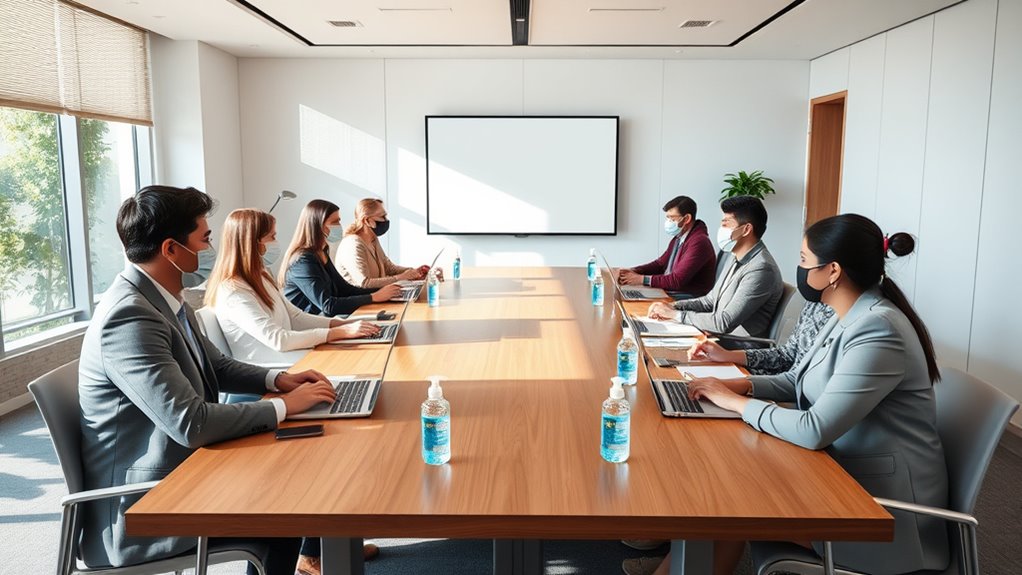

To make meetings work, you should prepare clear, structured agendas that set expectations and keep discussions focused. Engage participants actively, encourage input, and assign roles to maintain momentum. Communicate objectives and time limits upfront and follow up with summaries and action items. Good meeting hygiene transforms sessions into productive tools that respect everyone’s time, boost motivation, and move projects forward. Keep these practices in mind, and you’ll discover how to elevate your meetings even further.
Key Takeaways
- Prepare and distribute a clear agenda beforehand to set expectations and keep discussions focused.
- Encourage active participation from all attendees to foster engagement and diverse input.
- Define meeting objectives, roles, and time limits to maintain purpose and efficiency.
- Use visual aids and shared tools to enhance understanding and collaboration during the meeting.
- Follow up with summaries and action items to ensure accountability and progress.

Have you ever experienced a meeting that drags on without clear purpose or direction? It’s frustrating, wastes your time, and leaves everyone feeling unproductive. That’s where good meeting hygiene comes into play, and it starts with crafting effective virtual agendas. When you prepare a virtual agenda beforehand, you set clear expectations for what needs to be discussed. This keeps the meeting focused and guarantees that all topics are relevant and necessary. You avoid the common pitfall of rambling conversations or tangential discussions that often derail progress. A well-structured agenda acts like a roadmap, guiding the meeting from start to finish, and helps participants understand their roles and contributions. It also signals respect for everyone’s time, making the meeting more efficient and purposeful.
Attendee engagement is equally essential for successful meetings. When you actively involve participants, they stay attentive, contribute meaningful ideas, and feel valued. To boost engagement, you can ask specific questions, encourage input from quieter team members, or assign roles such as note-taker or timekeeper. Using interactive tools like polls or shared documents can also make the meeting more dynamic and participatory. When people are engaged, they’re less likely to multitask or tune out, which improves the overall quality of the discussion. Keep in mind that virtual meetings often suffer from disengagement because of distractions or the physical distance. That’s why it’s imperative to create a sense of connection and purpose. You can do this by starting with a quick check-in or icebreaker, which helps everyone feel more involved and present.
Another way to foster attendee engagement is by setting clear expectations at the outset. Let everyone know the meeting’s objectives, duration, and desired outcomes. When participants understand what they need to contribute, they’re more likely to stay focused and participate actively. Don’t forget to keep the meeting concise; long, drawn-out sessions tend to lose engagement regardless of how interesting the topic might be. Use visual aids or shared screens to maintain visual interest and clarity. Follow up with a summary or action items afterward, so everyone leaves knowing what’s next and how their contributions fit into the bigger picture. This reinforces the sense of purpose and accountability. Understanding the importance of effective communication can help prevent misunderstandings and ensure everyone is aligned.
Ultimately, good meeting hygiene hinges on the deliberate preparation of virtual agendas and fostering attendee engagement. When you do these things well, meetings become tools for progress rather than time sinks. You’ll find that your team feels more motivated, conversations are more productive, and your projects move forward with less friction. It’s about respecting everyone’s time and making sure each meeting counts.
Frequently Asked Questions
How Can I Ensure All Voices Are Heard During Meetings?
You can guarantee all voices are heard by actively listening and encouraging inclusive participation. Invite quieter team members to share their ideas and ask open-ended questions to foster dialogue. Use round-robin techniques or designated speaking turns to give everyone a chance to contribute. By creating a safe space for diverse perspectives, you promote engagement and make your meetings more productive and inclusive for everyone involved.
What Tools Best Facilitate Effective Virtual Meeting Hygiene?
Think of virtual collaboration tools as the heartbeat of your meetings. Platforms like Zoom, Microsoft Teams, and Slack facilitate seamless communication, ensuring everyone’s voice echoes clearly. Implementing meeting protocols within these tools—like shared agendas, chat functions, and recording options—keeps your virtual space organized. These tools act as your digital compass, guiding you toward effective virtual meeting hygiene and fostering inclusive, productive discussions that resonate beyond the screen.
How Do I Handle Dominant Personalities in Meetings?
To handle dominant personalities, you actively balance participation by politely steering the conversation to quieter members, ensuring everyone’s voice is heard. Manage conflicts by setting clear ground rules and gently redirecting overly dominant speakers. Use inclusive language like, “Let’s hear from others,” to promote equal input. This approach fosters a collaborative environment, prevents monopolizing discussions, and keeps the meeting productive and respectful for all participants.
What Are Some Signs of Ineffective Meeting Hygiene?
Think of meeting hygiene as a delicate garden that needs tending. Signs of ineffectiveness include vague meeting agendas, where goals aren’t clear, and poor time management, causing sessions to run over or feel unproductive. When discussions stray off-topic or participants zone out, it’s a red flag. You can fix this by setting clear agendas beforehand and sticking to allocated times, ensuring your meetings are efficient and meaningful.
How Can I Measure the Success of Meeting Hygiene Practices?
You can gauge the success of your meeting hygiene practices by tracking meeting metrics like duration, attendance, and task completion rates. Pay attention to participation diversity, ensuring all voices are heard. If meetings are concise, inclusive, and lead to clear outcomes, your practices are effective. Regularly solicit feedback to identify improvements, and adjust accordingly. These steps help ensure your meetings are productive and aligned with your team’s goals.
Conclusion
By practicing good meeting hygiene, you turn wasted hours into productive moments. Just like a messy room feels chaotic, poorly managed meetings drain your energy. But with clear agendas and focused discussions, you create a space where ideas thrive. When meetings are efficient, they’re like a well-tuned machine—powerful and smooth. So, embrace good habits, and watch how your team’s energy transforms from frustration to accomplishment. Because in the end, effective meetings make all the difference.