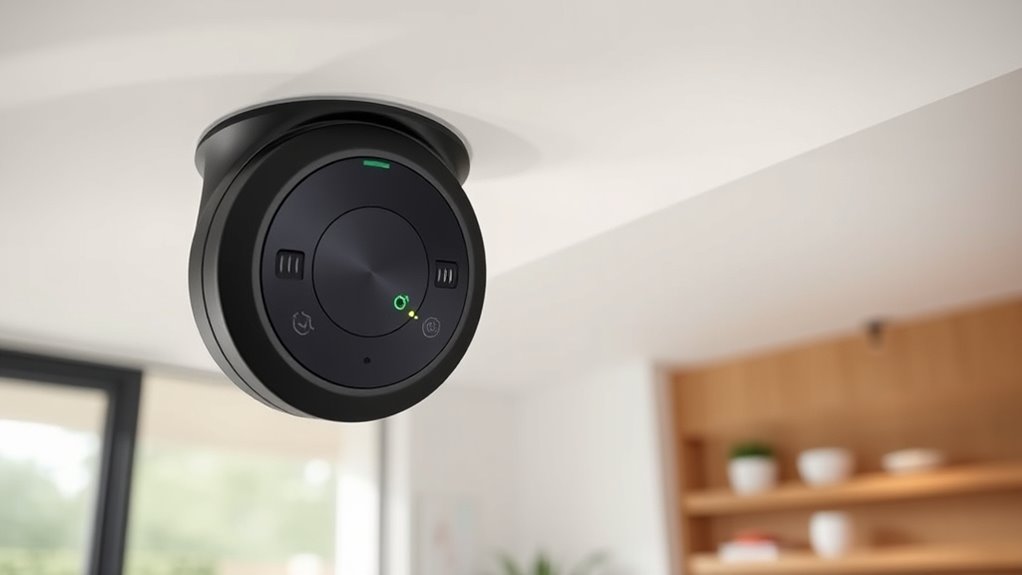

Smart smoke and CO detectors differ most in how they connect to your home, how they’re powered, and whether alerts reach your phone directly or through a compatible system. My best overall pick is the First Alert SC5 Battery-Powered Smart Smoke and Carbon Monoxide Alarm for shoppers who want app-connected protection without hardwiring. The Kidde Smart Smoke and Carbon Monoxide Detector with Ring suits households already using Ring, while the X-Sense SC06-W 6-Pack is a stronger fit when interconnected coverage across several rooms matters more than app features. The main tradeoffs are standalone convenience versus whole-home coordination, battery installation versus wiring, and direct alerts versus ecosystem dependence. Read on for the full comparison and guidance on choosing alarms that fit your home.

Get the little things that make your day delivered free with Prime
- Fast, free delivery on millions of items
- Prime Video, Amazon Music and more included
- Member-only deals all year
Key Takeaways
- The First Alert SC5 Battery-Powered model leads for flexible smart coverage; its battery power avoids hardwiring work, while its hardwired counterpart makes more sense where existing wiring is part of the plan.
- Ring compatibility is the deciding factor for the two Kidde Ring models. The battery-powered version suits homes where wiring is unavailable; the hardwired model adds a wired installation with AA battery backup.
- Multi-alarm coverage is a different priority from app connectivity. The X-Sense SC06-W 6-Pack and SC07-W 6-Pack emphasize interconnected coverage, while the SC07 single and five-pack offer a simpler way to outfit selected rooms.
- Pack size changes the value calculation. The Kidde battery-powered 3-Pack and X-Sense SC07 5-Pack can cover multiple locations, but buyers should match the included quantity to their home rather than choose by pack size alone.
- Several picks are not equivalent forms of smart protection. The X-Sense SC07 and Kidde battery-powered 3-Pack are combo alarms, but shoppers seeking app alerts or linked alarms should prioritize models whose listed features explicitly support those functions.
| First Alert SC5 Battery-Powered Smart Smoke and Carbon Monoxide Alarm |  | Best App-Connected Single Alarm | Brand: First Alert | Model: SMCO600NV | Alarm type: Smoke and carbon monoxide combination alarm | VIEW ON AMAZON | See Our Full Breakdown |
| X-Sense SC07 Smoke and Carbon Monoxide Detector Combo, 1-Pack |  | Best for Simple Standalone Protection | Model: SC07 | Detection: Smoke and carbon monoxide | Sensors: Photoelectric smoke sensor; electrochemical CO sensor | VIEW ON AMAZON | See Our Full Breakdown |
| X-Sense SC06-W 6-Pack Interconnected Smoke and Carbon Monoxide Detectors |  | Best for Whole-Home Wireless Alerts | Model: SC06-W | Pack size: 6 alarms | Detection: Smoke and carbon monoxide | VIEW ON AMAZON | See Our Full Breakdown |
| Kidde Smoke and Carbon Monoxide Detector, Battery Powered, 3-Pack |  | Best Value Multi-Pack for Voice Alerts | Model: 30CUDR-V | Pack size: 3 alarms | Detection: Smoke and carbon monoxide | VIEW ON AMAZON | See Our Full Breakdown |
| Kidde Smart Smoke and Carbon Monoxide Detector with Ring, Battery-Powered |  | Best for Ring and Alexa Households | Model: RGCUDR-RW | Detection: Smoke and carbon monoxide | Power: Two AA alkaline batteries, included | VIEW ON AMAZON | See Our Full Breakdown |
| First Alert SC5 Hardwired Smart Smoke and Carbon Monoxide Alarm |  | Best for Voice Alerts and Existing First Alert Wiring | Brand: First Alert | Model: SMCO600NV-AC | Alarm type: Combination smoke and carbon monoxide alarm | VIEW ON AMAZON | See Our Full Breakdown |
| Kidde Hardwired Smart Smoke and Carbon Monoxide Detector with App Alerts |  | Best for Low-Battery Phone Alerts | Brand: Kidde | Model: 30CUAR-W | Power: 120V AC hardwired | VIEW ON AMAZON | See Our Full Breakdown |
| Kidde Smart Smoke and CO Detector with Ring, Hardwire and AA Battery Backup |  | Best for Ring Households | Detection: Smoke and carbon monoxide | Power: Hardwired with AA battery backup | App notifications: Ring app alerts for smoke, CO, and low battery | VIEW ON AMAZON | See Our Full Breakdown |
| X-Sense SC07 Smoke and Carbon Monoxide Detector, 5-Pack |  | Best for Wiring-Free Basic Coverage | Brand: X-Sense | Model: SC07 | Quantity: Five detectors | VIEW ON AMAZON | See Our Full Breakdown |
| X-Sense SC07-W Interconnected Smoke and Carbon Monoxide Detectors, 6-Pack |  | Best for Whole-Home Wireless Interconnection | Brand: X-Sense | Model: SC07-W | Quantity: Six detectors | VIEW ON AMAZON | See Our Full Breakdown |
| smart smoke and co detector | Power | Model | Detection | Brand |
|---|---|---|---|---|
| First Alert SC5 Battery-Powere | Battery powered; 3V CR123A lithium batteries | SMCO600NV | — | First Alert |
| X-Sense SC07 Smoke and Carbon | Sealed lithium battery, rated for 10 years | SC07 | Smoke and carbon monoxide | — |
| X-Sense SC06-W 6-Pack Intercon | Battery powered; sealed battery rated for 10 years | SC06-W | Smoke and carbon monoxide | — |
| Kidde Smoke and Carbon Monoxid | Two AA alkaline batteries per alarm, included | 30CUDR-V | Smoke and carbon monoxide | — |
| Kidde Smart Smoke and Carbon M | Two AA alkaline batteries, included | RGCUDR-RW | Smoke and carbon monoxide | — |
| First Alert SC5 Hardwired Smar | Corded electric | SMCO600NV-AC | — | First Alert |
| Kidde Hardwired Smart Smoke an | 120V AC hardwired | 30CUAR-W | Smoke and carbon monoxide | Kidde |
| Kidde Smart Smoke and CO Detec | Hardwired with AA battery backup | — | Smoke and carbon monoxide | — |
| X-Sense SC07 Smoke and Carbon | Sealed lithium battery, designed for 10 years | SC07 | Photoelectric smoke and electrochemical carbon monoxide | X-Sense |
| X-Sense SC07-W Interconnected | Battery powered with sealed lithium battery designed for 10 years | SC07-W | — | X-Sense |
More Details on Our Top Picks
First Alert SC5 Battery-Powered Smart Smoke and Carbon Monoxide Alarm
For buyers who want alerts beyond the sound of an alarm, the First Alert SC5 is the clearest single-unit smart pick here. It sends smoke and CO notifications through the First Alert app, while voice warnings name the hazard and its location—helpful when several alarms are installed. Compatible alarms can sound together, unlike the standalone X-Sense SC07, though the SC5’s description does not specify a sealed 10-year battery like that model. Its CR123A lithium batteries also mean this is not a hardwired option. Precision Detection Technology is intended to reduce nuisance alarms while providing early warning, but buyers should check compatibility with existing devices before building around its interconnection feature. Choose it for phone alerts and spoken guidance, not for a whole-home pack in one purchase.
Pros:- Sends smoke and CO alerts through the First Alert app
- Voice warnings identify the type and location of danger
- Can interconnect with compatible alarms
- Low-battery notifications help flag maintenance needs
Cons:- Sold as a single alarm, so covering several rooms requires additional units
- Uses CR123A batteries rather than a stated sealed 10-year battery
- Interconnection depends on compatible alarms
Best for: Homeowners who want app notifications and spoken hazard-location alerts from a battery-powered combination alarm.
Not ideal for: Buyers seeking a multi-alarm kit, a stated 10-year sealed battery, or an alarm with no app or ecosystem compatibility checks.
- Brand:First Alert
- Model:SMCO600NV
- Alarm type:Smoke and carbon monoxide combination alarm
- Power:Battery powered; 3V CR123A lithium batteries
- Connectivity:First Alert app alerts; compatible with Google Nest Protect
- Interconnection:Works with compatible alarms
- Dimensions:5.75 × 1.6 × 5.75 in
- Weight:16 oz
Our verdict“Choose the First Alert SC5 if app alerts and spoken hazard details matter more than buying a multi-alarm pack or a sealed 10-year-battery model.”
X-Sense SC07 Smoke and Carbon Monoxide Detector Combo, 1-Pack
The X-Sense SC07 suits buyers who want smoke and CO detection without app setup, wiring, or battery changes. Its sealed 10-year lithium battery reduces routine maintenance, and the LCD gives a local readout that the voice-alert-equipped Kidde 30CUDR-V does not list. It also carries UL 217 and UL 2034 certifications. The tradeoff is isolation: this is a standalone alarm with no Wi-Fi, wireless interconnection, or base station. If one alarm sounds, other rooms will not get the linked warning offered by the X-Sense SC06-W six-pack. Wall or ceiling mounting avoids rewiring, but buyers outfitting a larger home should weigh the cost and effort of adding separate units. This is a straightforward fit for one room or a small space, not a connected whole-home system.
Pros:- Sealed lithium battery is rated for 10 years
- LCD provides an at-a-glance display
- Mounts on a wall or ceiling without hardwiring
- Certified to UL 217 and UL 2034
Cons:- Does not support Wi-Fi, wireless interconnection, or a base station
- Standalone operation limits coordinated alerts across rooms
- Sealed battery is not described as user-replaceable
Best for: Renters or homeowners who need one certified combination alarm with a long-life battery and a simple wall- or ceiling-mount installation.
Not ideal for: Households that want phone alerts or alarms in multiple rooms to sound together when one unit detects danger.
- Model:SC07
- Detection:Smoke and carbon monoxide
- Sensors:Photoelectric smoke sensor; electrochemical CO sensor
- Power:Sealed lithium battery, rated for 10 years
- Alarm volume:85 dB
- Display:LCD
- Installation:Standalone wall or ceiling mount; not hardwired
- Certifications:UL 217 and UL 2034
- Warranty:5-year quality warranty
Our verdict“Pick the SC07 for low-maintenance protection in a single location, but choose the SC06-W if you need alarms to communicate across rooms.”
X-Sense SC06-W 6-Pack Interconnected Smoke and Carbon Monoxide Detectors
For a larger home, the X-Sense SC06-W six-pack prioritizes coordinated alarms over phone connectivity. Its units wirelessly interconnect, so an alarm in one area can trigger the others—a meaningful step up from the standalone X-Sense SC07. Six alarms also make it easier to plan coverage across rooms without buying units one at a time, and each has a sealed 10-year battery to limit routine replacements. The compromise is that the network stops at the alarms: there is no Wi-Fi or base station for mobile notifications. Unlike the app-connected First Alert SC5, this kit cannot send alerts to a phone based on the supplied details. Its sealed battery also is not described as replaceable. Choose this pack when local, room-to-room warning matters more than remote monitoring.
Pros:- Six alarms provide a multi-room starting setup
- Wireless interconnection makes all units sound when one detects danger
- Sealed batteries are rated for 10 years
- Includes mounting hardware and needs no rewiring
Cons:- No Wi-Fi or base station for phone alerts
- Sealed battery is not described as replaceable
- Wireless interconnection does not provide remote monitoring
Best for: Households covering multiple rooms that want alarms to sound together without hardwiring or managing app connectivity.
Not ideal for: Buyers who need mobile notifications, a Wi-Fi-connected alarm network, or individually replaceable batteries.
- Model:SC06-W
- Pack size:6 alarms
- Detection:Smoke and carbon monoxide
- Sensors:Photoelectric and electrochemical
- Power:Battery powered; sealed battery rated for 10 years
- Interconnection:Wireless
- Alarm volume:85 dB
- Certifications:UL 217 and UL 2034
- Warranty:5-year quality warranty; lifetime technical support
Our verdict“Choose the SC06-W when you want six battery-powered alarms linked across rooms, and skip it if phone alerts are part of your safety plan.”
Kidde Smoke and Carbon Monoxide Detector, Battery Powered, 3-Pack
The Kidde 30CUDR-V three-pack offers a practical way to add combination alarms in several locations, with voice alerts that identify the hazard and an 85 dB alarm. It differs from the X-Sense SC06-W: Kidde supplies three units with replaceable AA batteries, while the X-Sense pack has six alarms that interconnect wirelessly and use sealed batteries. The Kidde description does not list wireless interconnection or app alerts, so this is better for individual room coverage than coordinated warnings across a home. Its design aims to reduce nuisance alarms from cooking or steam, which may suit alarms near busy kitchens, but it does not eliminate the need for sensible placement. The included batteries get installation started; they still need replacement every six months or when the low-battery warning sounds.
Pros:- Three alarms help cover several locations
- Voice alerts identify the type of hazard
- Includes two AA alkaline batteries per alarm
- Includes a 10-year limited warranty
Cons:- Batteries should be replaced every six months or when the low-battery alert sounds
- Wireless interconnection and app alerts are not listed
- Does not offer the six-unit coverage of the X-Sense SC06-W pack
Best for: Buyers who want three battery-powered smoke and CO alarms with spoken hazard warnings and replaceable batteries.
Not ideal for: Households that need phone alerts, interlinked alarms, or the longer maintenance interval of a sealed 10-year battery.
- Model:30CUDR-V
- Pack size:3 alarms
- Detection:Smoke and carbon monoxide
- Power:Two AA alkaline batteries per alarm, included
- Alarm volume:85 dB
- Alerts:Voice alerts and red LED indicator
- False-alarm design:Designed to reduce alarms from cooking or steam
- Standards:UL 217 10th Edition, UL 2034 5th Edition, and FCC
- Warranty:10-year limited warranty
Our verdict“Choose this Kidde three-pack for replaceable-battery alarms with spoken warnings, but favor the X-Sense SC06-W for linked whole-home alerts.”
Kidde Smart Smoke and Carbon Monoxide Detector with Ring, Battery-Powered
Among these battery-powered options, the Kidde detector with Ring is the strongest fit for buyers who want remote notifications rather than just a loud local alarm. It sends Ring app alerts for smoke, CO, and low battery, supports Alexa notifications, and can wirelessly interconnect with other Kidde alarms. That makes it more connected than the standalone X-Sense SC07 and a better match for Ring users than the Kidde 30CUDR-V three-pack, which lists voice alerts but no app access. The tradeoff is ecosystem dependence: optional 24/7 monitoring requires a Ring subscription, and the supplied specs do not promise monitoring without it. Two AA batteries avoid wiring but require eventual replacement. Choose this model for app notifications and compatible Kidde alarm links, not if you want a sealed long-life battery.
Pros:- Ring app provides smoke, CO, and low-battery notifications
- Supports notifications from Alexa-enabled devices
- Can wirelessly interconnect with other Kidde alarms
- Runs on included AA batteries without hardwiring
Cons:- Optional 24/7 monitoring requires a Ring subscription
- AA batteries require replacement over time
- App and Alexa features are less useful to buyers outside those ecosystems
Best for: Ring or Alexa households that want smoke, CO, and low-battery notifications on mobile devices from a battery-powered alarm.
Not ideal for: Buyers who want subscription-free 24/7 monitoring, a sealed 10-year battery, or a system independent of Ring and Alexa.
- Model:RGCUDR-RW
- Detection:Smoke and carbon monoxide
- Power:Two AA alkaline batteries, included
- Connectivity:Ring app notifications and wire-free interconnectivity
- Alexa support:Notifications from Alexa-enabled devices
- Interconnection:Wireless connection with other Kidde alarms
- Certification:UL 217 and FCC standards
- Optional monitoring:24/7 monitoring requires a Ring subscription
Our verdict“Pick this Kidde model if Ring alerts and wireless links to compatible Kidde alarms fit your home, and skip it if you want subscription-free monitoring.”
First Alert SC5 Hardwired Smart Smoke and Carbon Monoxide Alarm
The First Alert SC5 suits buyers who want a hardwired combination alarm with app notifications and clear spoken warnings. Its voice alerts identify both the hazard and its location, which can help household members respond without guessing which alarm has sounded. Compared with the Kidde Hardwired Smart Smoke and Carbon Monoxide Detector, the SC5 lists compatibility with Google’s Nest Protect Alarm and emphasizes interconnected alarms sounding together, while Kidde specifies low-battery app alerts and a 2.4 GHz Wi-Fi requirement. The SC5 also has a lithium battery backup for outages and sensing designed to reduce nuisance alarms. The main tradeoff is installation: it needs existing hardwiring or an electrician, so it is less flexible than the battery-powered X-Sense SC07-W. Choose it for a connected hardwired setup, not a no-wiring retrofit.
Pros:- Sends smoke and carbon monoxide alerts through the First Alert app
- Voice alerts identify the hazard and its location
- Battery backup maintains protection during power outages
- Interconnected alarms can sound when one alarm activates
Cons:- Requires hardwired installation, limiting use in homes without compatible wiring
- App connectivity depends on a compatible connected setup
Best for: Homeowners replacing an existing hardwired alarm who want app alerts, spoken hazard and location warnings, and battery backup.
Not ideal for: Renters or anyone without compatible hardwired alarm wiring, since installation may require electrical work.
- Brand:First Alert
- Model:SMCO600NV-AC
- Alarm type:Combination smoke and carbon monoxide alarm
- Power:Corded electric
- Backup battery:3V lithium battery pack
- Connectivity:First Alert app alerts; compatible with Google’s Nest Protect Alarm
- Dimensions:5.75 x 1.6 x 5.75 inches
- Weight:16 ounces
Our verdict“Choose the SC5 if you have hardwired alarms and value spoken location alerts alongside phone notifications.”
Kidde Hardwired Smart Smoke and Carbon Monoxide Detector with App Alerts
The Kidde Hardwired Smart Detector is a practical pick for households that want hazard alerts and a heads-up when backup batteries run low. It reports smoke, carbon monoxide, and low battery through app notifications, while voice alerts announce the detected hazard. That low-battery notice is a useful distinction from the First Alert SC5 Hardwired Alarm, whose listed features focus on voice location alerts and interconnection. Kidde also uses enhanced sensing intended to cut cooking-related false alarms, making it a fit for alarms near kitchens. Its limits are clear: it needs 120V hardwiring and a 2.4 GHz Wi-Fi network, so it is not a simple swap for every home or network. Compared with the battery-powered X-Sense SC07-W, it offers app notifications but gives up wiring-free installation.
Pros:- Sends app notifications for smoke, carbon monoxide, and low battery
- Voice alerts identify the detected hazard
- Two AA backup batteries provide power during outages
- Enhanced sensing is designed to reduce cooking-related false alarms
Cons:- Requires hardwired 120V installation
- Requires a 2.4 GHz Wi-Fi network for connectivity
Best for: Homeowners with existing 120V alarm wiring and 2.4 GHz Wi-Fi who want app notices for hazards and low batteries.
Not ideal for: Renters, homes without compatible wiring, or households using only 5 GHz Wi-Fi.
- Brand:Kidde
- Model:30CUAR-W
- Power:120V AC hardwired
- Backup batteries:Two AA batteries included
- Connectivity:2.4 GHz Wi-Fi
- Alerts:App notifications and voice alerts
- Detection:Smoke and carbon monoxide
- Certifications:UL 217, UL 2034, FCC
Our verdict“Pick this Kidde model if low-battery phone alerts matter and your home already has compatible wiring and Wi-Fi.”
Kidde Smart Smoke and CO Detector with Ring, Hardwire and AA Battery Backup
For a home already organized around Ring, this Kidde hardwired detector brings smoke, carbon monoxide, and low-battery alerts into the Ring app. It can also relay alerts from other hardwired alarms when paired with one smart detector, a useful way to extend awareness beyond the room where the connected unit sits. Unlike the Kidde Hardwired Smart Detector with App Alerts, this model centers on Ring integration and can work with Alexa-enabled devices. Its enhanced sensing aims to reduce cooking-related nuisance alarms, and AA backup batteries keep it powered during outages. The tradeoff is that basic app alerts do not require a subscription, but 24/7 monitoring does. It also needs hardwired installation, unlike the wireless X-Sense SC07-W, and is a less natural fit for households that do not use Ring.
Pros:- Sends smoke, CO, and low-battery alerts through the Ring app
- Can relay alerts from other hardwired alarms when paired with a smart unit
- Works with Alexa-enabled devices
- AA battery backup supports operation during power outages
Cons:- Requires hardwired installation
- 24/7 monitoring requires an optional Ring subscription
- Ring integration offers less value to households using other smart-home platforms
Best for: Ring users replacing a hardwired alarm who want smoke, CO, and low-battery notices in the Ring app.
Not ideal for: Renters, homes without compatible hardwiring, or buyers seeking monitoring without an optional subscription.
- Detection:Smoke and carbon monoxide
- Power:Hardwired with AA battery backup
- App notifications:Ring app alerts for smoke, CO, and low battery
- Smart home connectivity:Works with Alexa-enabled devices
- Interconnection:Can connect alerts from other hardwired alarms when paired with one smart detector
- Certification:UL 217 and FCC standards
- Monitoring:Optional Ring subscription for 24/7 monitoring
Our verdict“Choose this model if Ring is already your preferred alert system and you want connected coverage from hardwired alarms.”
X-Sense SC07 Smoke and Carbon Monoxide Detector, 5-Pack
The X-Sense SC07 five-pack prioritizes straightforward coverage over smart-home features. Each standalone alarm combines photoelectric smoke sensing with electrochemical CO detection, displays readings on an LCD, and uses a sealed battery designed for a 10-year life. With five units included and no rewiring needed, it suits buyers fitting alarms across several rooms or replacing older battery-powered units. That makes it simpler to install than the hardwired First Alert SC5, but it gives up the First Alert’s phone alerts and spoken location warnings. It also does not wirelessly interconnect, so an alarm sounding in one part of the home will not trigger the others. The six-pack X-Sense SC07-W addresses that gap with linked alarms, but still lacks Wi-Fi. Choose this pack when independent alarms and easy mounting matter more than connected alerts.
Pros:- Includes five combination smoke and CO detectors
- Sealed lithium batteries are designed to last 10 years
- Wall- or ceiling-mount installation requires no rewiring
- LCD display and separate smoke and CO sensing technologies
Cons:- No Wi-Fi, base station connection, or app notifications
- Alarms do not wirelessly interconnect to alert other rooms
Best for: Homeowners or landlords fitting several rooms who want battery-powered smoke and CO alarms without rewiring.
Not ideal for: Buyers who need phone alerts, wireless alarm-to-alarm communication, or a shared smart-home connection.
- Brand:X-Sense
- Model:SC07
- Quantity:Five detectors
- Detection:Photoelectric smoke and electrochemical carbon monoxide
- Power:Sealed lithium battery, designed for 10 years
- Connectivity:Standalone; no wireless interconnection, Wi-Fi, or base station connection
- Installation:Wall or ceiling mount; no rewiring required
- Certifications:UL 217 and UL 2034
- Display:LCD
Our verdict“Pick the SC07 five-pack for broad, wiring-free coverage if independent alarms are enough for your home.”
X-Sense SC07-W Interconnected Smoke and Carbon Monoxide Detectors, 6-Pack
The X-Sense SC07-W six-pack is the strongest fit here for buyers who want alarms in several rooms to sound together without running new wiring. Its units wirelessly interconnect across a stated range of up to 820 feet and support networks of up to 18 alarms, helping a household hear an alert beyond the room where smoke or CO is detected. Like the X-Sense SC07 five-pack, it uses sealed 10-year lithium batteries and does not need hardwired installation; unlike that standalone pack, it links the alarms. The tradeoff is that wireless interconnection is not the same as smart connectivity: there is no Wi-Fi or base station, so it cannot send phone alerts. Buyers who value app notifications may prefer the First Alert SC5, but will need compatible hardwiring for that option.
Pros:- Alarms wirelessly interconnect and sound together
- Supports up to 18 alarms with a stated range of up to 820 feet
- Sealed lithium batteries are designed for 10 years
- Battery-powered mounting avoids hardwiring
Cons:- Does not provide Wi-Fi, app alerts, or a base station connection
- Battery-powered rather than hardwired, which may not suit homes requiring hardwired alarms
Best for: Households covering multiple rooms that want alarms to sound together without wiring or replacing batteries regularly.
Not ideal for: Buyers who need phone notifications, Wi-Fi integration, a base station, or hardwired alarm connections.
- Brand:X-Sense
- Model:SC07-W
- Quantity:Six detectors
- Sensors:Photoelectric smoke and electrochemical carbon monoxide
- Power:Battery powered with sealed lithium battery designed for 10 years
- Wireless interconnection:Up to 820 feet; network capacity up to 18 alarms
- Alarm volume:85 dB
- Certifications:UL 217 and UL 2034; ETL listed
- Dimensions:5.7 x 5.7 x 2 inches
Our verdict“Choose the SC07-W six-pack when room-to-room alarm coordination matters more than phone alerts or smart-home integration.”

How We Picked
I ranked these smart smoke and CO detectors by how well their stated features solve different household needs: app alerts, power flexibility, interconnection, and the ability to cover several rooms without unnecessary complexity. I gave the First Alert SC5 Battery-Powered model the top spot because it pairs smart functionality with an installation option that does not depend on existing alarm wiring. Models with hardwired power can be a better fit during a wiring-compatible replacement, while Ring-connected Kidde alarms earn their place for homes already using that ecosystem.
I also weighed coverage and buying practicality, including whether a product is sold as a single alarm or a multi-unit pack and whether it is described as interconnected. That distinction matters: a large pack does not by itself establish that alarms communicate with one another, and a combo smoke-and-CO detector does not automatically provide smart alerts. The rankings favor the best match for a clear use case rather than treating every model as interchangeable. Buyers should confirm installation compatibility and the exact connectivity behavior in the product documentation before purchasing.
| smart smoke and co detector | Brand | Detection | Certifications |
|---|---|---|---|
| First Alert SC5 Battery-Powere | First Alert | — | — |
| X-Sense SC07 Smoke and Carbon | — | Smoke and carbon monoxide | UL 217 and UL 2034 |
| X-Sense SC06-W 6-Pack Intercon | — | Smoke and carbon monoxide | UL 217 and UL 2034 |
| Kidde Smoke and Carbon Monoxid | — | Smoke and carbon monoxide | — |
| Kidde Smart Smoke and Carbon M | — | Smoke and carbon monoxide | — |
| First Alert SC5 Hardwired Smar | First Alert | — | — |
| Kidde Hardwired Smart Smoke an | Kidde | Smoke and carbon monoxide | UL 217, UL 2034, FCC |
| Kidde Smart Smoke and CO Detec | — | Smoke and carbon monoxide | — |
| X-Sense SC07 Smoke and Carbon | X-Sense | Photoelectric smoke and electrochemical carbon monoxide | UL 217 and UL 2034 |
| X-Sense SC07-W Interconnected | X-Sense | — | UL 217 and UL 2034; ETL listed |
Factors to Consider When Choosing Smart Smoke And Co Detectors
Before choosing a detector, decide what kind of protection gap you are trying to close. A smart alarm can add remote notifications, but it cannot make an unsuitable location, incompatible wiring, or an incomplete coverage plan right. These factors help separate a convenient connected upgrade from a whole-home alarm plan.
Choose the Alert Path Before the Alarm
“Smart” can describe different alert routes, so check how notifications actually reach you. Some models connect through an app directly or through a supported platform, while others depend on a compatible hub or ecosystem. A Ring-compatible detector is most useful when your household already uses Ring and is comfortable managing alerts there; it may add friction for someone who wants a separate, platform-neutral setup. Check whether alerts require an account, Wi-Fi, a hub, or a subscription, and whether multiple household members can receive them. A phone notification is a backup layer, not a replacement for the alarm’s audible warning. Choose based on the connection you can maintain, not simply the word “smart.”
Match Power to the Installation You Have
Battery-powered alarms avoid the need to connect to existing household wiring, which can make them easier to place or replace. Hardwired models may suit homes already set up for wired alarms, but installation compatibility and local requirements still matter. A battery backup on a hardwired detector helps keep it powered during an outage; it does not remove the need to check and maintain that backup. A common mistake is buying a hardwired alarm based only on appearance without confirming its wiring and connector compatibility. If the installation calls for electrical work, consult a qualified professional rather than improvising. Decide on power first, then compare smart features among models that fit.
Separate Interconnection From Multi-Pack Coverage
A pack with several alarms gives you more units, but it does not automatically mean they are interconnected. Interconnected alarms can coordinate alerts across locations, which may help occupants hear an alarm from another part of a larger home. Multi-packs that do not specify this feature may still be useful for replacing several individual detectors, but they serve a different purpose. Check whether the product documentation describes wireless or wired linking, and whether all units in the planned setup can communicate. Also map alarm locations before ordering: an oversized pack can leave you with units that do not suit the intended rooms. Prioritize the coverage pattern your home needs over the headline unit count.
Plan Smoke and CO Coverage Separately
Combo detectors can reduce the number of devices on a ceiling or wall, but one product does not necessarily cover every location where separate alarms may be appropriate. Smoke and carbon monoxide risks can call for different placement choices, so check the manufacturer’s guidance and local building rules for each type of detection. Avoid assuming that a combo unit in one hallway automatically provides the right coverage for every floor or sleeping area. If your home already has working smoke alarms, identify where CO detection is missing before replacing everything. A room-by-room plan can also show whether combo alarms or a mix of detector types makes more sense. The aim is suitable placement and clear alerts, not simply fewer devices.
Compare Maintenance and Replacement Demands
Connected features add another task to the usual alarm upkeep: keeping the app, network connection, and account access working. Battery-powered models call for attention to battery status, while hardwired models still have backup power and testing needs. Before buying a large pack, check the manufacturer’s stated service life, replacement guidance, and how the device signals faults or low power. A detector that is easy to test and understand is often a better household choice than one with features no one will maintain. Make sure the person who handles home maintenance can access the app and identify which alarm sent an alert. Budget time for routine testing, even when notifications appear to be working.
Pay for Features That Solve a Real Problem
Spending more on smart connectivity is most worthwhile when remote alerts, platform integration, or linked alarms address a real need in your household. If you mainly need straightforward replacement alarms, a simpler combo model or practical multi-pack may be a better fit than a connected system. For a home with existing Ring devices, a Ring-compatible detector may reduce app fragmentation; without that ecosystem, its added integration may matter less. Likewise, hardwired construction is useful when it matches the installation, not merely because it sounds more permanent. Compare the complete setup, including any hub or account requirements, rather than judging one alarm in isolation. Select the least complicated option that covers your safety and notification needs.
Frequently Asked Questions
Should I choose the battery-powered or hardwired First Alert SC5?
Choose the battery-powered SC5 if you need an installation that does not rely on existing alarm wiring or want more flexibility about placement. The hardwired SC5 is the closer match for a home already equipped for compatible wired alarms, particularly when replacing an existing unit. Before ordering the hardwired model, confirm the connector and wiring requirements against your current setup and the manufacturer’s instructions. Do not assume that a hardwired alarm is a direct replacement for every wired detector. If the wiring is unfamiliar, get qualified help rather than modifying it yourself.
Are the Ring-compatible Kidde detectors a good choice if I do not use Ring?
They are most compelling when Ring is already part of your household’s connected-home setup and you want alarm alerts managed through that system. Without Ring, the integration may add little value compared with an alarm whose alert method better matches the devices and apps you already use. Check which Ring hardware or services are needed for the specific notifications you want before buying. Also consider whether every household member can access the relevant account and respond to alerts. If you want app alerts but do not want platform dependence, compare the First Alert smart models and review their connection requirements.
Does buying a six-pack mean the alarms will alert one another?
No. Pack size tells you how many detectors are included; it does not by itself confirm that they communicate or sound together. In this lineup, the X-Sense SC06-W and SC07-W are explicitly presented as interconnected models, while a multi-pack of another product should not be treated as linked unless its documentation says so. Check whether interconnection is wired or wireless, what models are compatible, and how the system behaves if one unit loses power. This distinction matters most in larger or multi-level homes where an alarm in one area may be hard to hear elsewhere.
Can one combo detector replace every smoke and CO alarm in my home?
Not necessarily. A combo detector senses both hazards at its location, but it does not provide coverage in rooms or on floors where no detector is installed. Placement recommendations for smoke and carbon monoxide can differ, and local rules or the manufacturer’s instructions may call for more than one device. Map the home and check required locations before deciding how many combo units to buy. If existing alarms cover smoke but leave gaps in CO detection, adding detectors in suitable locations may be more practical than replacing every alarm at once. Follow local requirements and product guidance for the final layout.
How should I choose between a single alarm and a multi-pack?
Start by counting the locations that need new or replacement alarms and checking which product type fits each one. The X-Sense SC07 single can suit a limited replacement, while the SC07 5-Pack or Kidde 3-Pack may simplify buying for several locations. For interconnected coverage, compare the specifically linked X-Sense multi-packs instead of assuming any larger bundle provides that behavior. Avoid buying extra units before confirming placement, compatibility, and the distinction between smoke-and-CO coverage and linked alarms. A small, accurate coverage plan is more useful than choosing a pack solely because it contains more detectors.
Conclusion
For most buyers seeking a flexible connected alarm, I recommend the First Alert SC5 Battery-Powered Smart Alarm as the best overall pick; choose its hardwired counterpart when compatible wiring is already in place. The X-Sense SC07 5-Pack is my best value direction for covering several locations with a straightforward combo-alarm format, while the Kidde Smart Smoke and CO Detector with Ring is the best premium-style fit for households that already rely on Ring. Beginners who want to avoid wiring work can start with the battery-powered First Alert SC5 or a single X-Sense SC07, depending on whether smart alerts are a priority. For specific needs, pick the X-Sense SC06-W or SC07-W when interconnected multi-alarm coverage is the main goal, and the Kidde hardwired Ring model when wired power, backup batteries, and Ring integration fit your setup. Confirm placement, compatibility, and alert requirements before buying; those details matter more than pack size alone.
NFL season / tailgating Picks
team gear
As an affiliate, we earn on qualifying purchases.