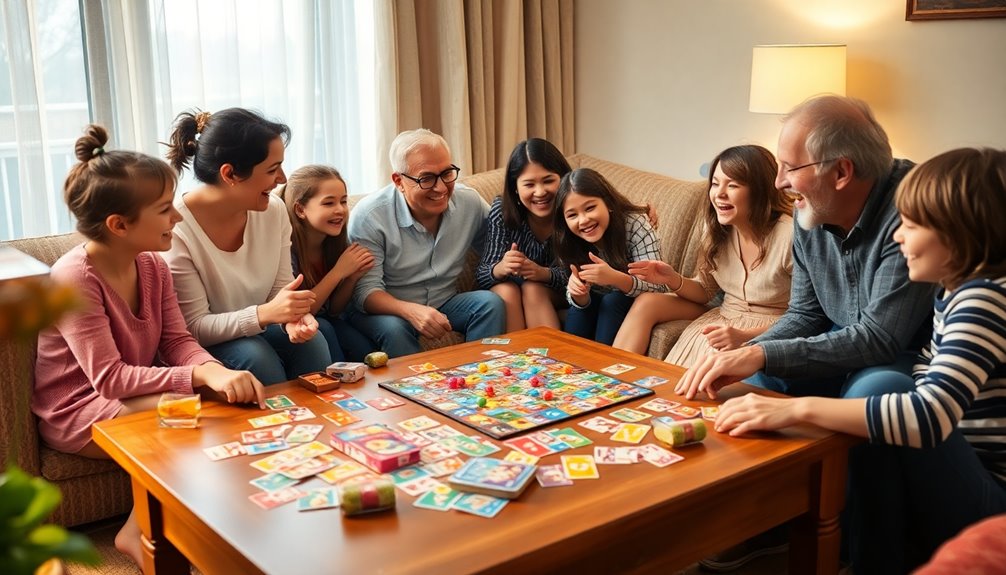

For most households, CATAN is the best overall board game for families because it offers shared strategy and meaningful choices for older kids and adults. Hedbanz is a lively pick for quick, social rounds, while Candy Land suits young children who are still learning how to play. The main tradeoff is between simple games that are easy to start and strategic games that reward repeat play but ask more of players. Family size, age gaps, reading ability, and tolerance for competition can all change which game works best. Read on for a breakdown of all 15 options and the households each one suits.

Get the little things that make your day delivered free with Prime
- Fast, free delivery on millions of items
- Prime Video, Amazon Music and more included
- Member-only deals all year
Key Takeaways
- CATAN stands out for families ready for strategy: it offers more player choice and replay potential than the mostly luck-driven classics, but younger children may need help with its decisions.
- Hedbanz and Tapple favor lively group interaction: both make conversation central, while Scrabble asks players to enjoy spelling and word-building.
- Candy Land, Trouble, and Sorry! are easier entry points: their accessible play suits younger or mixed-age groups, though luck has more influence than tactical planning.
- The two Connect 4 editions fill a similar quick-play role: compare the specific edition and included play options rather than buying both for variety.
- Do You Really Know Your Family? is a conversation choice, not a conventional strategy game: it suits households that enjoy personal prompts, but may be less comfortable for players who prefer gameplay over sharing.
| Sorry! Classic Board Game for Kids and Families, Ages 6+ |  | Best for Lighthearted Rivalry | Brand: Hasbro Gaming | Players: 2–4 | Recommended age: 6 years and up | VIEW ON AMAZON | See Our Full Breakdown |
| Hasbro Gaming Scrabble Classic Crossword Board Game |  | Best for Word-Loving Families | Brand: Hasbro Gaming | Players: 2–4 | Recommended age: 8 years and up | VIEW ON AMAZON | See Our Full Breakdown |
| Hasbro Jenga Game with Digital Die |  | Best for Active Family Play | Brand: Hasbro Gaming | Players: 1 or more | Recommended age: 6 years and up | VIEW ON AMAZON | See Our Full Breakdown |
| CATAN Board Game, 6th Edition |  | Best for Strategic Family Sessions | Edition: 6th Edition | Players: 3–4 | Recommended age: 10 years and up | VIEW ON AMAZON | See Our Full Breakdown |
| Spin Master Games Hedbanz Classic Edition Picture Guessing Game |  | Best for Larger, Lively Groups | Brand: Spin Master Games | Players: 2–6 | Recommended age: 6 years and up | VIEW ON AMAZON | See Our Full Breakdown |
| Hasbro Gaming Trouble Board Game for Kids, Ages 5 and Up |  | Best for Simple, Lively Competition | Age range: 5 years and up | Players: 2–4 | Edition: Classic Edition | VIEW ON AMAZON | See Our Full Breakdown |
| USAOPOLY Tapple Family Word Game |  | Best for Larger Groups and Wordplay | Age range: 8 years and up | Players: 2–8 | Playing time: 15 minutes | VIEW ON AMAZON | See Our Full Breakdown |
| Hasbro Gaming Candy Land Board Game for Kids, Ages 3 and Up |  | Best First Board Game | Recommended age: 3 years and up | Players: 2–4 | Estimated playing time: 15 minutes | VIEW ON AMAZON | See Our Full Breakdown |
| The Game of Life Board Game for Families and Kids Aged 8 and Up |  | Best for Family Decision-Making | Age range: 8 years and up | Players: 2–4 | Peg colors: 6 | VIEW ON AMAZON | See Our Full Breakdown |
| Hasbro Gaming Yahtzee Classic Dice Game |  | Best for Repeatable, Compact Play | Recommended age: 8 years and up | Players: 2 or more | Dice: 5 | VIEW ON AMAZON | See Our Full Breakdown |
| Mattel Games UNO Card Game |  | Best for Large Groups | Players: 2–10 | Recommended age: 7 years and up | Included components: 112 cards and instructions | VIEW ON AMAZON | See Our Full Breakdown |
| Monopoly Family Board Game for 2-6 Players, Ages 8 and Up |  | Best for Long Family Game Nights | Players: 2–6 | Recommended age: 8 years and up | Edition: Standard Edition | VIEW ON AMAZON | See Our Full Breakdown |
| Hasbro Gaming Connect 4 Strategy Board Game |  | Best for Two-Player Strategy | Players: 2 | Recommended age: 6 years and up | Playing time: 30 minutes | VIEW ON AMAZON | See Our Full Breakdown |
| Hasbro Connect 4 Game, 2025 Edition |  | Best Portable Head-to-Head Game | Edition: 2025 Edition | Players: 2 | Age range: Ages 6+ | VIEW ON AMAZON | See Our Full Breakdown |
| Do You Really Know Your Family? Family Card Game |  | Best for Family Conversation | Players: 3–8 | Recommended age: 8 years and up | Included components: Cards | VIEW ON AMAZON | See Our Full Breakdown |
| board games for familie | Players | Included components | Recommended age |
|---|---|---|---|
| Sorry! Classic Board Game for | 2–4 | Gameboard, 12 pawns, 45 cards, and instructions | 6 years and up |
| Hasbro Gaming Scrabble Classic | 2–4 | Gameboard, 100 wooden letter tiles, 4 wooden tile racks, drawstring letter bag, and game rules | 8 years and up |
| Hasbro Jenga Game with Digital | 1 or more | 54 hardwood blocks, stacking sleeve, and instructions | 6 years and up |
| CATAN Board Game | 3–4 | 19 terrain hexes, 6 sea frame pieces, 18 number discs, 4 player aids, 2 victory point tiles, 96 wooden player pieces, 2 card trays, 2 dice, 120 cards, and rules | 10 years and up |
| Spin Master Games Hedbanz Clas | 2–6 | 6 headbands, 6 headplates, 16 scoring badges, 1 timer, 69 picture cards, 3 sample question cards, and instructions | 6 years and up |
| Hasbro Gaming Trouble Board Ga | 2–4 | Gameboard, plastic game unit with Pop-O-Matic die roller, 16 pegs, and instructions | — |
| USAOPOLY Tapple Family Word Ga | 2–8 | Portable Tapple wheel with built-in timer, 36 cards, and instructions | — |
| Hasbro Gaming Candy Land Board | 2–4 | Gameboard, 4 gingerbread pawns, card deck, and instructions | 3 years and up |
| The Game of Life Board Game fo | 2–4 | — | — |
| Hasbro Gaming Yahtzee Classic | 2 or more | Yahtzee shaker, 5 dice, and 100 score cards | 8 years and up |
| Mattel Games UNO Card Game | 2–10 | 112 cards and instructions | 7 years and up |
| Monopoly Family Board Game for | 2–6 | — | 8 years and up |
| Hasbro Gaming Connect 4 Strate | 2 | Grid, 2 feet, slider bar, 21 red discs, 21 yellow discs, 4 blue Blocker discs, and instructions | 6 years and up |
| Hasbro Connect 4 Game | 2 | Grid and tray, 42 discs (21 red and 21 yellow), and game rules | — |
| Do You Really Know Your Family | 3–8 | Cards | 8 years and up |
More Details on Our Top Picks
Sorry! Classic Board Game for Kids and Families, Ages 6+
Sorry! suits families who want simple rules and plenty of direct interaction: players draw cards to move pawns, use slides, and send rivals back to start. That mix makes each turn easy to follow while giving players chances to change the race, unlike Scrabble, where word knowledge and spelling shape the competition. The comeback potential can keep a game lively, but it also means a pawn close to home can lose ground suddenly. That setback may be funny for some families and frustrating for children who prefer steady progress. With room for 2–4 players and a recommended age of six and up, it fits many family game nights, though it needs at least two people and offers less scope for planning than CATAN.
Pros:- Simple card-driven movement makes the rules approachable for children and adults.
- Slides and sending opponents back create lively changes in position.
- Supports two to four players, fitting small family groups.
- The race-to-home objective is easy to follow across age groups.
Cons:- A pawn can be sent back to start after substantial progress, which may frustrate some players.
- Requires at least two players.
- Offers less strategic depth than resource-building games such as CATAN.
Best for: Families with children six and up who enjoy quick-to-learn races, playful setbacks, and direct competition.
Not ideal for: Players who dislike losing progress to a card draw or families looking for a solo game or deeper strategy.
- Brand:Hasbro Gaming
- Players:2–4
- Recommended age:6 years and up
- Edition:Standard Edition
- Included components:Gameboard, 12 pawns, 45 cards, and instructions
- Language:English
- Model number:A5065
Our verdict“Choose Sorry! for an accessible family race with playful setbacks, but skip it if your group prefers steady progress or more strategic choices.”
Hasbro Gaming Scrabble Classic Crossword Board Game
Scrabble is the word-focused choice in this group: players build words from letter tiles, so each turn combines vocabulary, spelling, and decisions about where to place a word. Its wooden tiles and racks give everyone a clear, organized play area, while premium board squares reward thoughtful placement. Compared with Hedbanz, which relies on spoken yes-or-no questions and picture guessing, Scrabble is quieter and rewards letter knowledge more directly. That makes it a strong fit for families with older children who enjoy words, but a tougher match for younger readers or players with very different vocabularies. It supports two to four players and lists a 40-minute playing time; families seeking faster, more physical fun may prefer Jenga.
Pros:- Word-building gives vocabulary and spelling a central role in family play.
- Wooden tiles and four racks help keep pieces sorted during play.
- Premium board squares add placement decisions beyond simply making a long word.
- Team play and other ways to play can adapt the game to the group.
Cons:- The two-to-four-player limit does not suit larger gatherings without teams or turns between games.
- The recommended age of eight and up makes it less accessible to younger children.
- Word knowledge can create an uneven contest when players have different reading and vocabulary skills.
Best for: Families with children eight and up who enjoy spelling, vocabulary challenges, and a calmer game with room for team play.
Not ideal for: Families with younger children who are not yet comfortable forming words, or groups wanting a highly active, quick-turn game.
- Brand:Hasbro Gaming
- Players:2–4
- Recommended age:8 years and up
- Playing time:40 minutes
- Language:English
- Edition:Standard Edition
- Included components:Gameboard, 100 wooden letter tiles, 4 wooden tile racks, drawstring letter bag, and game rules
- Model number:F4204
Our verdict“Pick Scrabble for a family that enjoys words and thoughtful turns, but choose a picture or dexterity game if reading levels vary widely.”
Hasbro Jenga Game with Digital Die
Jenga with Digital Die brings a hands-on challenge to family game night: players remove and restack blocks while trying not to topple the tower. The digital die adds six challenges, including a race against the clock and playing with thumbs only, making this version less predictable than basic turn-taking games such as Sorry!. Its 54 hardwood blocks can also support solo play or a group, so it is more flexible about player count than Scrabble. The tradeoff is that the tower grows less stable as blocks are removed, so careful handling matters, and the extra challenges require a phone to scan a QR code or access the web app. Families wanting a screen-free activity may prefer classic Jenga play without the digital feature.
Pros:- Classic block-removal play puts a physical dexterity challenge at the center.
- The digital die offers six challenge variations for groups that want a change from standard rules.
- The 54 hardwood blocks allow solo or group play.
- A stacking sleeve supports tower setup and storage.
Cons:- Using the digital die requires a phone to scan a QR code or access the web app.
- The tower becomes increasingly unstable as blocks are removed.
- Physical dexterity and careful handling can matter more than in word or card games such as Scrabble.
Best for: Families with children six and up who enjoy dexterity challenges, short turns, and optional timed or movement-based rules.
Not ideal for: Screen-free households, players who find balancing challenges frustrating, or families who need a game that stays stable throughout play.
- Brand:Hasbro Gaming
- Players:1 or more
- Recommended age:6 years and up
- Included components:54 hardwood blocks, stacking sleeve, and instructions
- Model number:G1499
- Material:Wood blocks; product information also lists plastic
Our verdict“Choose this Jenga edition for tactile family play with optional challenges, but skip it if you want a fully screen-free game or dislike precarious balancing.”
CATAN Board Game, 6th Edition
CATAN is the strategy pick for families ready to spend more time planning: players gather and trade resources, build roads and settlements, and race to ten victory points on a modular island. The changing terrain layout supports replay, while trading gives players a reason to negotiate rather than simply wait for their turn. Compared with Sorry!, CATAN asks players to manage several goals and make longer-term choices; that adds depth, but also creates a steeper learning curve and a longer game. Its 60–90-minute sessions suit families who want a substantial game night, not a quick activity. The base game is limited to three or four players, unlike Hedbanz, which accommodates up to six; a separate extension is needed for five or six.
Pros:- Modular terrain creates varied board layouts across games.
- Resource gathering, trading, and construction give players several strategic choices.
- The race to ten victory points provides a clear shared objective.
- Includes wooden player pieces, cards, terrain hexes, and player aids for a full game setup.
Cons:- The 60–90-minute playing time is a substantial commitment compared with quicker family games.
- The base game supports only three or four players.
- The recommended age of ten and up and multiple resource choices make it less suited to younger or casual players.
Best for: Families with children ten and up who enjoy negotiation, resource planning, and a longer strategy game for three or four players.
Not ideal for: Families with younger children, limited time, or more than four players who do not want to add a separate extension.
- Edition:6th Edition
- Players:3–4
- Recommended age:10 years and up
- Playing time:60–90 minutes
- Language:English
- Genre:Strategy
- Included components:19 terrain hexes, 6 sea frame pieces, 18 number discs, 4 player aids, 2 victory point tiles, 96 wooden player pieces, 2 card trays, 2 dice, 120 cards, and rules
- Manufacturer:Asmodee
Our verdict“Choose CATAN for an older family group that wants trading and long-term planning, but pick a faster, simpler game for mixed ages or short sessions.”
Spin Master Games Hedbanz Classic Edition Picture Guessing Game
Hedbanz turns family play into a spoken guessing game: each player wears a headband with a picture card and asks yes-or-no questions to work out what they are. The rules are more immediate than Scrabble, since success does not depend on spelling or building words, and its support for 2–6 players makes it a better fit for a larger family group than CATAN’s base game. Picture guessing and the timer keep turns focused, while scoring badges give players a clear goal. The format is also its limit: the game centers on identifying picture cards, so families who want changing boards, resource choices, or a wider range of play may prefer CATAN or Jenga. It requires at least two players.
Pros:- Yes-or-no questions make the core game easy to grasp.
- Supports two to six players, accommodating larger family groups than CATAN’s base game.
- Picture cards and headbands create a shared, social activity without requiring word spelling.
- A timer and scoring badges provide structure for each round and the win condition.
Cons:- Requires at least two players and does not support solo play.
- Gameplay centers on guessing picture cards, which may feel repetitive to groups seeking varied mechanics.
- The timer can add pressure for players who prefer an unhurried pace.
Best for: Families with children six and up who want a social, spoken guessing game for two to six players and mixed reading abilities.
Not ideal for: Solo players, families who prefer strategy or word-building, or groups that tire quickly of picture-guessing rounds.
- Brand:Spin Master Games
- Players:2–6
- Recommended age:6 years and up
- Included components:6 headbands, 6 headplates, 16 scoring badges, 1 timer, 69 picture cards, 3 sample question cards, and instructions
- Model year:2023
- Edition:2029 Edition
Our verdict“Pick Hedbanz for an easy-to-start guessing game that fits a larger family group, but choose CATAN or Scrabble for deeper strategy or word play.”
Hasbro Gaming Trouble Board Game for Kids, Ages 5 and Up
Trouble suits families who want a quick race game with rules young children can grasp. Players move pegs by pressing the Pop-O-Matic roller, which keeps the die contained and adds a tactile moment to each turn. Compared with Candy Land, it gives players more direct interaction: landing on an opponent can send a peg back to start, making the race more dramatic but also more frustrating for children who dislike setbacks. The optional Power Up spaces add variety without replacing the familiar classic rules. Its appeal is straightforward rather than strategic; families looking for the choices of The Game of Life or the wordplay of Tapple should choose something else. Bumping a peg back can sting, and the provided information lists no manufacturer warranty.
Pros:- Simple race rules are accessible to younger players
- Pop-O-Matic roller keeps the die contained during play
- Optional Power Up spaces offer an alternate version
- Quick setup makes it easy to bring out for a short family game
Cons:- An opponent can send a peg back to the beginning, which may frustrate some children
- Movement relies on die rolls, leaving limited control over outcomes
- Manufacturer warranty is not provided in the supplied product details
Best for: Families with children aged five and up who want a familiar, low-prep race game with playful player interaction.
Not ideal for: Families whose younger players get upset by being sent back to start, or who want meaningful strategy and varied decisions.
- Age range:5 years and up
- Players:2–4
- Edition:Classic Edition
- Included components:Gameboard, plastic game unit with Pop-O-Matic die roller, 16 pegs, and instructions
- Gameplay options:Classic gameplay and optional Power Up spaces
- Model number:A5064
- Manufacturer:Hasbro
Our verdict“Choose Trouble for an easy-to-start family race with lively setbacks, but pick Candy Land for gentler play or The Game of Life for more decisions.”
USAOPOLY Tapple Family Word Game
Tapple is the strongest fit here for families who enjoy thinking out loud and playing in a larger group. Players name words that match a category, tap an unused letter, and beat a 10-second timer; with room for up to eight players, it scales beyond the four-player limit of Trouble and The Game of Life. The portable wheel stores the category cards, so it is easier to take along than a board-centered game such as Candy Land. Its 144 categories give repeat play a changing prompt, though the fast pace can leave younger or more reflective players feeling rushed. Unlike Yahtzee, where luck shapes the choices, Tapple puts the pressure on recall and quick responses. It needs batteries, and English-language content may not suit every household.
Pros:- Supports 2–8 players, accommodating larger family groups
- 144 categories provide a wide range of prompts
- Portable wheel stores the cards for easier packing
- Encourages vocabulary and quick word association
Cons:- The 10-second timer can be stressful for slower or younger players
- Requires batteries for the built-in timer
- English-language categories may limit access for some players
Best for: Families with children aged eight and up who like word games, host groups larger than four, or want a portable activity.
Not ideal for: Families with players who need extra thinking time, prefer language-light games, or do not want to manage batteries.
- Age range:8 years and up
- Players:2–8
- Playing time:15 minutes
- Categories:144 across 36 cards
- Included components:Portable Tapple wheel with built-in timer, 36 cards, and instructions
- Language:English
- Power source:Battery
- Materials:Paper and plastic
Our verdict“Pick Tapple for a portable, fast-paced word challenge that can include a crowd; choose Yahtzee if your family would rather weigh dice-roll choices than race to name words.”
Hasbro Gaming Candy Land Board Game for Kids, Ages 3 and Up
Candy Land is the clearest first-game choice in this group: children as young as three can follow the colored path without needing to read. Matching cards to spaces gives turns a simple structure and supports color recognition and turn-taking, while the roughly 15-minute playtime keeps the commitment modest. Compared with Trouble, it asks less of children’s number or movement skills and avoids sending a pawn back after an opponent lands on it. That makes it a gentler introduction, but also a less interactive game for older siblings and adults. Since movement depends on the card drawn, players have little say in their progress. Families seeking decisions or word challenges may get more out of The Game of Life or Tapple, but those are less suited to preschoolers.
Pros:- No reading is required to follow the color-matching rules
- Designed for children as young as three
- Supports color recognition, matching, and taking turns
- Includes instructions in English and Spanish
Cons:- Card draws determine movement, leaving little room for player choice
- Older children may find the simple gameplay less engaging
- Limited player interaction compared with Trouble
Best for: Households introducing board games to preschoolers who benefit from simple color matching and short turns.
Not ideal for: Families with older children seeking strategy, direct competition, or choices that affect the outcome.
- Recommended age:3 years and up
- Players:2–4
- Estimated playing time:15 minutes
- Included components:Gameboard, 4 gingerbread pawns, card deck, and instructions
- Instruction languages:English and Spanish
- Skills:Color recognition, matching, and taking turns
- Brand:Hasbro Gaming
Our verdict“Choose Candy Land as a gentle first board game for preschoolers, but move to Trouble or The Game of Life when children are ready for more interaction or decisions.”
The Game of Life Board Game for Families and Kids Aged 8 and Up
The Game of Life brings more choices and story to family play than the simpler races in Trouble and Candy Land. Players make life-path decisions, including whether to attend college, marry, or retire early, and can invest in hopes of growing their money. That gives older children more to discuss than simply moving a pawn, though some choices may challenge younger players in the recommended age group. Its 2–4 player limit makes it a better fit for a small household than Tapple, which accommodates up to eight. The changing turns and life events offer a different feel from game to game, but the supplied product details warn that repeat plays can feel repetitive. Choose it for family conversation and decision-making, not for compact or especially quick play.
Pros:- Life-path choices give players more to discuss than simple movement games
- Investment decisions add another layer beyond moving along the route
- Designed for family play with children aged eight and up
- Colored pegs give players a way to distinguish their pieces
Cons:- Some decisions may be difficult for younger children in the target age range
- Gameplay may feel repetitive after multiple plays
- Limited to 2–4 players, unlike the larger-group Tapple
Best for: Families with children aged eight and up who enjoy discussing choices and following a shared story across a small group.
Not ideal for: Households with children under eight, groups larger than four, or players who want a short, highly varied game.
- Age range:8 years and up
- Players:2–4
- Peg colors:6
- Featured decisions:College, marriage, and early retirement
- Investment option:Players can invest to grow their money
- Gameplay themes:Life decisions, money, and twists along the journey
Our verdict“Choose The Game of Life for older children who enjoy family discussion and branching choices, but favor Candy Land for preschoolers or Tapple for a larger group.”
Hasbro Gaming Yahtzee Classic Dice Game
Yahtzee makes sense for families who want a dice game that can be set up quickly and played in repeated turns. Each player rolls five dice up to three times per turn, choosing which combinations to keep across 13 scoring rounds. Those choices give it more tactical texture than the mostly luck-led movement in Candy Land, while chance still plays a large role. The shaker’s lid doubles as storage, keeping the small set of pieces together more neatly than a full board game such as The Game of Life. It works for two or more players, so it is flexible for different group sizes, but it does not offer Tapple’s word-based energy or broad category prompts. Score cards are consumable, and families must be comfortable with dice luck shaping results.
Pros:- Players choose which dice to keep, adding decisions to the rolls
- Suitable for two or more players
- Shaker lid doubles as storage for the dice
- Includes 100 score cards for repeated play
Cons:- Dice luck still has a strong effect on scoring opportunities
- Score cards may need replacing once used up
- The repeated scoring structure may feel less varied than Tapple’s changing categories
Best for: Families with children aged eight and up who want a compact, repeatable dice game with simple tactical choices.
Not ideal for: Players who dislike luck-based outcomes, want a story-driven board, or prefer games that do not use consumable score sheets.
- Recommended age:8 years and up
- Players:2 or more
- Dice:5
- Rounds per player:13
- Rolls per turn:Up to 3
- Score cards:100
- Included components:Yahtzee shaker, 5 dice, and 100 score cards
- Material:Plastic
Our verdict“Choose Yahtzee for compact, repeatable play with small tactical choices; opt for Tapple for wordplay or The Game of Life for a more story-led family session.”
Mattel Games UNO Card Game
UNO is the easiest fit for a mixed-size family gathering: it supports 2–10 players, takes little setup, and asks players to match colors or numbers while action cards keep turns changing. Compared with Connect 4, which is built for a head-to-head match, UNO lets a larger group play together; unlike Monopoly, it does not center on a long property-building session. Graphic symbols help players distinguish colors, a useful accessibility feature, and the three customizable Wild Cards let families change up play. The tradeoff is that the game relies heavily on card draws, so players looking for deeper planning may prefer Scrabble or CATAN. The deck is also less suited to families with children younger than seven, and the listed product data notes no manufacturer warranty.
Pros:- Supports 2–10 players, making it more flexible for group size than Connect 4.
- Matching colors and numbers makes the core rules quick to teach.
- Graphic symbols help identify colors for color-blind players.
- Three customizable Wild Cards allow families to vary the rules.
Cons:- Card draws and action cards can make outcomes feel more luck-driven than Scrabble or CATAN.
- The recommended age is seven and up, so it may not suit younger children.
- The listed product information does not include a manufacturer warranty.
Best for: Families who want a portable, quick-to-teach card game that can include a large group and a range of ages seven and up.
Not ideal for: Families seeking a strategy-heavy game, or those with children under seven who may not be ready for the recommended age.
- Players:2–10
- Recommended age:7 years and up
- Included components:112 cards and instructions
- Accessibility:Graphic symbols help identify card colors
- Customizable cards:3 Wild Cards
- Language:English
- Model number:GDJ85
Our verdict“Choose UNO when you want a simple, easy-to-carry game that can bring a large family group into one round.”
Monopoly Family Board Game for 2-6 Players, Ages 8 and Up
Monopoly suits families who want a substantial, competitive session, with property purchases, trades, and chance and community cards that can shift who is ahead. Its estimated two-hour playing time sets it apart from faster choices such as UNO or Connect 4; that longer arc gives deals and setbacks room to matter, but makes it a poor choice for a short weeknight slot. The game supports two to six players, though its negotiation and rule load tend to work better with a group ready to stay engaged. It is listed for ages eight and up, and younger players may need help following the rules and managing property decisions. The eight included tokens offer player choice, but the standard edition’s familiar format may feel less fresh to families who already own Monopoly.
Pros:- Property buying, selling, and trading give players meaningful choices throughout the game.
- Chance and community cards can change the course of play.
- Supports two to six players, giving it a wider group range than two-player Connect 4.
- Eight tokens offer several player-piece choices.
Cons:- The estimated playing time is around 120 minutes, making it much longer than UNO or Connect 4.
- Rules and property decisions can be difficult for some younger children.
- The game may be less satisfying with a small or disengaged group.
Best for: Families with school-age children and several players who enjoy trading, competition, and setting aside a long block of time for game night.
Not ideal for: Families with a short attention span, limited time, or younger children who may struggle with the rules and extended play.
- Players:2–6
- Recommended age:8 years and up
- Edition:Standard Edition
- Estimated playing time:120 minutes
- Included tokens:8
- Language:English
- Genre:Family
Our verdict“Pick Monopoly for an engaged group that enjoys negotiation and has time for a long, competitive game.”
Hasbro Gaming Connect 4 Strategy Board Game
This Connect 4 edition is the pick for a focused two-player match, especially for families who want a simple goal with extra tactical options. The familiar task of lining up four checkers gains a twist from four blue Blocker discs, which can interrupt a line or help create a route to victory. That added choice makes it a more strategic head-to-head option than the 2025 Connect 4 edition, whose listed appeal centers on portability and score tracking. The grid supports vertical, horizontal, and diagonal lines, so players must watch several directions at once. Its limit is clear: it only accommodates two players, while UNO can include a much larger group. Small pieces also call for care around young children, despite the recommended age of six and up.
Pros:- Four Blocker discs add tactical choices beyond standard Connect 4 play.
- Players can form lines vertically, horizontally, or diagonally.
- A familiar objective makes it approachable for children ages six and up.
- The set includes the grid, discs, slider bar, and instructions.
Cons:- It is limited to two players, unlike UNO or Monopoly.
- Small discs may pose a choking hazard for young children.
- The plastic grid and pieces need a clear surface and storage after play.
Best for: Families looking for a compact, head-to-head game for siblings or an adult and child who enjoy thinking ahead.
Not ideal for: Families who want everyone to play together, or households with toddlers who could access the small discs.
- Players:2
- Recommended age:6 years and up
- Playing time:30 minutes
- Included components:Grid, 2 feet, slider bar, 21 red discs, 21 yellow discs, 4 blue Blocker discs, and instructions
- Dimensions:10.98 × 10.51 × 1.61 inches
- Weight:16 ounces
- Material:Plastic
- Batteries:Not required
Our verdict“Choose this version for two players who want classic Connect 4 with extra blocking tactics rather than a group game.”
Hasbro Connect 4 Game, 2025 Edition
The 2025 Connect 4 edition is the more travel-ready choice for families who want a quick two-player contest. Its grid folds into a carrying case, with disc storage and built-in score trackers; that makes it easier to bring along and pack away than the other Connect 4 edition, which adds Blocker discs instead of highlighting integrated travel storage. The core objective remains straightforward: drop colored discs and connect four, so children ages six and up can get into a match without learning a long rule set. The tradeoff is that it stays a strictly two-player game and offers no listed tactical variation like the Blocker discs in the other version. Small discs can also go missing, although the built-in storage helps keep them together between games.
Pros:- Folds into a carrying case with a handle for easier transport.
- Built-in storage keeps the discs with the game between sessions.
- Score trackers make it easy to record wins across multiple matches.
- The familiar Connect 4 goal is accessible to players ages six and up.
Cons:- Only two players can play at a time.
- Small discs can still be lost if they are not returned to the storage area.
- It does not include the Blocker discs featured in the other Connect 4 edition.
Best for: Families who need a self-storing, portable game for two children or an adult and child to play on trips or at home.
Not ideal for: Families who want a game for three or more players, or who prefer extra tactical rules over portability.
- Edition:2025 Edition
- Players:2
- Age range:Ages 6+
- Included components:Grid and tray, 42 discs (21 red and 21 yellow), and game rules
- Storage:Foldable carrying case with handle and disc storage
- Scorekeeping:Built-in score trackers
- Model number:G1500
Our verdict“Pick the 2025 edition when easy transport and built-in storage matter more than extra strategic pieces or group play.”
Do You Really Know Your Family? Family Card Game
Do You Really Know Your Family? is less about board-game tactics and more about getting relatives talking. Trivia questions and silly challenges give players prompts to share opinions, guess answers, and laugh together, making it a different kind of family-night pick from the competitive property play of Monopoly or the tactical back-and-forth of Connect 4. It suits three to eight players, so it can include a small group but not a two-player pairing. The cards are easy to learn and the tin is portable, which helps when the game needs to travel or fit into a casual gathering. Its appeal depends on players enjoying personal questions and playful challenges; families who want a clear winner through strategic decisions may get more from Scrabble or CATAN.
Pros:- Trivia prompts and silly challenges encourage conversation across ages.
- Easy-to-learn card play suits casual family gatherings.
- Supports three to eight players, making it useful for small and medium groups.
- The portable tin makes the card game easy to carry and store.
Cons:- It requires at least three players, so it does not work for a two-player family night.
- Players who dislike personal questions or group challenges may not enjoy its central format.
- It offers less strategic decision-making than Scrabble or CATAN.
Best for: Families with children ages eight and up, teens, and adults who enjoy sharing answers and doing silly challenges in a group of three to eight.
Not ideal for: Two-player households or families who prefer strategy, competition, or a game with a clearly defined tactical path to winning.
- Players:3–8
- Recommended age:8 years and up
- Included components:Cards
- Material:Cardstock
- Container:Tin
- Language:English
- Dimensions:2 × 4.7 × 6.7 inches
- Battery required:No
Our verdict“Choose this card game when shared stories and playful group interaction matter more than tactical competition.”

How We Picked
I ranked these board games for families by how well they bring different ages and experience levels to the same table. My main criteria were age accessibility, clarity of rules, time and effort needed to get a session going, interaction among players, and whether choices or varied prompts give families a reason to return. I also considered how well each game fits a particular household need, such as early play, word challenges, quick rounds, or more involved strategy.
The ranking favors versatility across family situations over novelty or complexity alone. CATAN leads for groups with older children and adults who want strategic decisions; games such as Hedbanz and Tapple rank well for easy social play, while simpler classics remain useful for younger players. Similar entries are judged by their distinct fit rather than treated as interchangeable: the two Connect 4 editions, for example, call for an edition-level comparison, not a claim that both are must-haves. No single game suits every age range, so drawbacks and likely mismatches count in the order.
Factors to Consider When Choosing Board Games For Families
Choosing among family games is less about finding one title for every occasion and more about matching play style to the people who will actually sit down together. Use these factors to narrow the field before choosing a box.
Match the Game to the Youngest Regular Player
Use the youngest person expected to play regularly as your starting point, then check whether the game asks for reading, arithmetic, or abstract planning beyond their current comfort. A published age guideline is a useful signal, but it does not account for every child’s pace or a family’s willingness to coach. If adults need to simplify rules every turn, the game may lose its appeal for them too. For a wide age gap, choose rules that let younger players participate meaningfully rather than only move a token when told. A common mistake is buying for the oldest child and assuming younger siblings will catch up during play. Keep more demanding games as a separate option for the nights when the group is ready for them.
Choose Your Preferred Kind of Interaction
Family games can create very different table moods: wordplay rewards language skills, guessing games invite chatter, and strategy games ask players to plan and compete. Decide whether your group wants a shared laugh, a calm challenge, or a contest with clear winners before choosing a theme. Conversation-led games can help a family connect, but personal prompts may not suit every age or household. Word games may feel satisfying to confident readers and frustrating to players who dislike spelling pressure. Do not assume that a game labeled for families will appeal equally to everyone; a quick conversation about preferred play styles can prevent a mismatched gift.
Account for Time, Setup, and Attention
The length of a game affects whether it gets played on a school night, during a visit, or only on a free afternoon. Check how much setup and rule explanation the group will tolerate, not just the advertised play format. Younger children and occasional players often do better when a round starts quickly and the goal stays visible. Longer, more involved play can be rewarding when everyone has time to settle in, but a game that outlasts attention may be abandoned before its best decisions appear. Think about interruptions too: a family that pauses often may prefer a game that is easy to resume. A compact, familiar option can earn more table time than a demanding favorite that rarely fits the schedule.
Balance Luck, Skill, and Sibling Dynamics
Luck can keep a simple game accessible, while strategic choices give experienced players more control and room to improve. A strong blend depends on how your family handles winning and losing: a very competitive game may bring out enthusiasm in one group and arguments in another. For younger or less experienced players, chance can reduce the advantage held by adults, though it can also make careful decisions feel less rewarding. If siblings have very different skills, look for a format where everyone gets meaningful turns and setbacks do not remove a player from the fun. Avoid equating more strategy with better family play. The right balance is the one that keeps the group willing to play again.
Think About Replay Variety Before Buying Similar Games
Several games in this roundup fill overlapping roles, including quick classic play and head-to-head connection games. Before adding another, ask what new experience it brings: a different skill, a new group size, a fresh conversation style, or a distinct level of challenge. Owning multiple games with the same basic rhythm can be useful if one is easier for younger children, but it may not broaden family game night much. A theme can attract a child initially, while varied decisions or prompts tend to matter more after several sessions. Check edition details when two products share a name or central mechanism, since a newer label alone does not tell you what has changed. Choose the title that fills a real gap rather than collecting near-duplicates.
Prioritize Fit Over Complexity or Box Appeal
A large board, familiar characters, or a busy theme can catch a child’s attention, but those details do not guarantee that the rules will suit the household. Consider storage space, how many people usually play, and whether the game still works when only a few family members are available. If a game depends on a particular group mood—such as enjoying word challenges or personal questions—it may be a better occasional pick than the household staple. Paying for greater complexity makes sense when the family wants deeper choices and will make time for them; it is less useful if the group prefers short, low-pressure rounds. Think about who will explain and manage the game, too. The best fit is the one your family can start and enjoy without turning game night into a chore.
Frequently Asked Questions
Which of these games works best when children and adults have very different skill levels?
Start by deciding whether your group wants a mostly chance-based game or one where adults can use more advanced tactics. Candy Land, Trouble, and Sorry! offer simpler entry points, while a social guessing format such as Hedbanz can shift attention from age-based strategy to playful conversation. CATAN gives experienced players more decisions, so younger children may need support to keep the game moving. A family with a large age gap may benefit from keeping one accessible choice and one more demanding choice available. That lets players pick by energy and age mix rather than forcing every gathering into the same level of challenge.
Is CATAN a good first family strategy game?
CATAN can suit a family moving beyond straightforward, luck-led games, especially when older children and adults enjoy planning and negotiation. It asks players to follow several connected decisions, so it may feel like too much for younger children or people who want rules explained in a few minutes. A patient adult can help first-time players understand choices without making the game for them. If your household rarely plays games, a simpler title may be a smoother first purchase. Choose CATAN when the group wants a shared challenge and has enough time to learn it together.
Should I buy both Connect 4 editions?
Not automatically: the two entries share a familiar head-to-head connection-game premise, so buying both may add less variety than choosing a game with a different style. Compare the edition details, included features, and intended play options to see whether the newer version changes how your household would use it. If you want a quick, direct contest, one suitable edition may cover that role. Add another only if its distinct features matter to your family or you need a separate set for another location. For a more varied game shelf, pairing one Connect 4 version with a word or group conversation game will usually broaden the play experience.
What should I pick for a family that dislikes long rules explanations?
Look toward games with a clear, visible goal and a short path from opening the box to taking a turn. Candy Land, Trouble, and Connect 4 are more approachable choices for groups that want to get playing quickly, while Hedbanz or Tapple can work when the group enjoys prompts and fast conversation. A simple game can still feel repetitive if your family plays it often, so weigh speed against variety. Avoid choosing a more involved strategy game just because adults expect it to be more rewarding. If a game takes too long to teach, it may be saved for a night when everyone has the patience to learn.
How do I choose between word games and conversation games for a mixed-age group?
Think about what kind of participation feels comfortable for everyone. Scrabble and Tapple center on vocabulary and quick word recall, which can appeal to readers but may put pressure on younger players or anyone who dislikes spelling challenges. Hedbanz uses guessing and clues, while Do You Really Know Your Family? focuses on personal prompts and shared knowledge. Conversation games are not automatically easier: some players may prefer a clear puzzle over talking about themselves. Choose the format your family is most likely to enjoy together, and keep another style on hand for gatherings with different ages or moods.
Conclusion
Best overall: choose CATAN if your family includes older children and adults who want a strategic game with replay potential. Best for beginners: Candy Land, Trouble, or Sorry! make sense when straightforward rules and younger players lead the decision. For a lively, social pick, I’d choose Hedbanz; for word-focused rounds, consider Tapple or Scrabble based on whether your group prefers speed or a more sustained crossword challenge. Best for specific needs: Do You Really Know Your Family? suits households that welcome personal conversation, while either Connect 4 edition fits quick head-to-head play. The best value depends on the game your family will return to, not how many boxes share the same role. Pick for your usual age mix, available time, and preferred table mood, and use those needs to decide which tradeoffs are worth making.