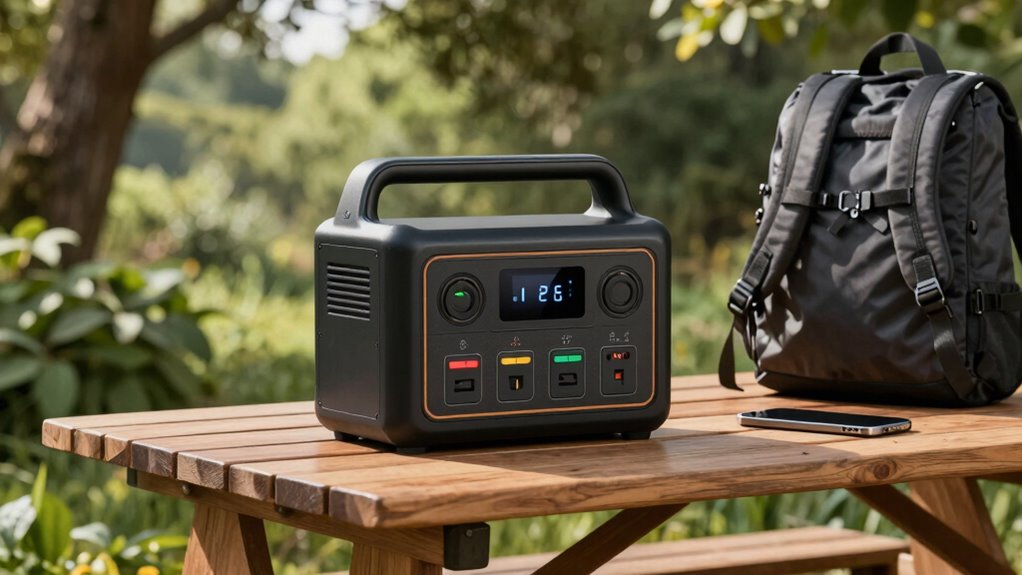

For keeping laptops, cameras, and phones charged on the road, the Jackery Explorer 300 stands out as the best portable power station for travel, thanks to a smart balance of capacity, weight, and reliable AC output in a carry-on-friendly frame. If you want more runtime for the money, the GRECELL 330W (230.88Wh) delivers strong outlet versatility at a lower capacity tier, while the BLUETTI Elite 10 Mini is the pick for minimalist packers who only need phone and tablet top-ups. The core tradeoff in this category is straightforward: capacity versus portability, since anything above roughly 300Wh starts fighting with your luggage weight limit. Battery chemistry matters too, with LiFePO4 models like the DaranEner 192Wh lasting far more charge cycles but often weighing more per watt-hour. Continue reading for the full breakdown of all nine models, who each one suits, and which ones I’d skip.

Get the little things that make your day delivered free with Prime
- Fast, free delivery on millions of items
- Prime Video, Amazon Music and more included
- Member-only deals all year
Complete the kit


Key Takeaways
- The 90Wh class (MARBERO 88Wh, Daran 89.6Wh, and the generic 89.6Wh PD model) is best treated as a phone-and-tablet tier — fine for a weekend city trip, but not enough for a laptop-heavy work trip.
- The Jackery Explorer 300 and EnginStar 296Wh landed at the top of the ranking because their ~300Wh capacity hits the practical ceiling for carry-on-friendly travel weight while still running a laptop all day.
- Pure sine wave AC output was the biggest hidden differentiator: the HOWEASY 120W and MARBERO can power small AC devices, but their surge limits rule out anything with a motor or compressor.
- LiFePO4 chemistry (DaranEner 192Wh, Daran 89.6Wh) traded higher weight per watt-hour for a rated lifespan several times longer than the standard lithium-ion models — better for frequent travelers than occasional ones.
- USB-C PD wattage varied widely, from 100W on the PD-focused 89.6Wh models down to slower ports on budget units — if you charge a modern laptop over USB-C, the port matters more than the AC outlet rating.
| BLUETTI Elite 10 Mini Portable Power Station, 128Wh 200W Solar Generator |  | Best Premium Compact Pick | Capacity: 128 Wh | AC Output: 200 W | Battery Type: LiFePO4 with BMS protection | VIEW ON AMAZON | See Our Full Breakdown |
| Jackery Explorer 300 Portable Power Station (292Wh) |  | Best Overall | Capacity: 292 Wh | Output: 300 W continuous, 600 W surge | Battery Chemistry: LiFePO4 | VIEW ON AMAZON | See Our Full Breakdown |
| EnginStar Portable Power Station, 300W, 296Wh |  | Best Value Pick | Capacity: 296 Wh | AC Output: 300 W, 2 pure sine wave 110V outlets | Battery: Lithium-ion, 1,000+ cycles | VIEW ON AMAZON | See Our Full Breakdown |
| DaranEner Portable Power Station, 192Wh LiFePO4 Battery |  | Best Durability in a Mid-Size | Capacity: 192 Wh | Battery Chemistry: LiFePO4, 3,500+ cycles | AC Output: 300 W (600 W surge), 2 outlets | VIEW ON AMAZON | See Our Full Breakdown |
| HOWEASY Portable Power Station 120W (240W Peak) Solar Generator |  | Best Ultralight Pick | Capacity: 88 Wh | Output: 120 W (240 W peak) | Weight: 2.3 lbs | VIEW ON AMAZON | See Our Full Breakdown |
| Portable Power Station 89.6 Wh 100W PD USB-C with AC Outlet (100W, 200W Peak) |  | Best Carry-On Travel Pick | Battery Capacity: 89.6 Wh | Battery Type: LiFePO4 | Weight: 2.5 lbs | VIEW ON AMAZON | See Our Full Breakdown |
| Daran Portable Power Station 89.6Wh LiFePO4 Battery 100W (200W Peak) with AC Outlets & PD Fast Charging |  | Best for Quiet Indoor and Overnight Use | Capacity: 89.6 Wh | Battery Type: LiFePO4 | Output Power: 100W (200W peak) | VIEW ON AMAZON | See Our Full Breakdown |
| Portable Power Station 330W GRECELL 230.88Wh Solar Generator |  | Best for Camping and Road Trips | Capacity: 230.88 Wh | Continuous Output: 330 W (600W surge) | Battery Type: Lithium with upgraded BMS | VIEW ON AMAZON | See Our Full Breakdown |
| MARBERO Portable Power Station 88Wh, 120W Surge, Solar Generator 24,000mAh |  | Best Budget Emergency Backup | Capacity: 88 Wh (24,000mAh) | Surge Power: 120 W | Weight: 3.2 lbs | VIEW ON AMAZON | See Our Full Breakdown |
| portable power station for travel | Capacity | Weight |
|---|---|---|
| BLUETTI Elite 10 Mini Portable | 128 Wh | 4 lb |
| Jackery Explorer 300 Portable | 292 Wh | 7.1 lbs |
| EnginStar Portable Power Stati | 296 Wh | 6.5 lbs |
| DaranEner Portable Power Stati | 192 Wh | 5.73 lbs |
| HOWEASY Portable Power Station | 88 Wh | 2.3 lbs |
| Portable Power Station 89.6 Wh | — | 2.5 lbs |
| Daran Portable Power Station 8 | 89.6 Wh | 2.54 lbs |
| Portable Power Station 330W GR | 230.88 Wh | — |
| MARBERO Portable Power Station | 88 Wh (24,000mAh) | 3.2 lbs |
More Details on Our Top Picks
BLUETTI Elite 10 Mini Portable Power Station, 128Wh 200W Solar Generator
Among the sub-130Wh options in this lineup, the BLUETTI Elite 10 Mini stands out for its fast 70-minute AC recharge — something no competitor here comes close to matching. While the HOWEASY 88Wh beats it slightly on weight, the BLUETTI counters with a built-in 10ms UPS function and 350W bypass output, which means laptops and cameras keep running through a power flicker without missing a beat. The Bluetooth app control lets me-style travelers monitor charge status remotely, and the warm/cool/SOS lighting runs up to 50 hours. The tradeoff is real, though: a single AC outlet and roughly two hours of runtime at full load make this a short-trip companion, not a base-camp power source. You’re paying a premium for speed and refinement over raw capacity.
Pros:- Full AC recharge in roughly 70 minutes is the fastest in this lineup
- Built-in 10ms UPS with 350W bypass keeps sensitive devices running through outages
- Under 4 lb and airline-approved for carry-on travel
- Bluetooth app control plus three LED lighting modes including SOS
Cons:- Only one AC outlet restricts powering multiple AC devices at once
- About 2 hours of runtime at full 200W load — capacity is the limiting factor
Best for: Frequent flyers and weekend travelers who want airline-approved capacity, fast top-ups, and UPS protection for a laptop and camera gear
Not ideal for: Anyone planning multi-day off-grid trips — 128Wh runs dry quickly, and the single AC outlet limits simultaneous device use
- Capacity:128 Wh
- AC Output:200 W
- Battery Type:LiFePO4 with BMS protection
- Weight:4 lb
- UPS Function:10 ms response, 350 W bypass
- Recharge Time:~70 min via 150 W AC
- Solar Input:100 W
Our verdict“This pick makes the most sense for travelers who prioritize rapid recharging and device protection over sheer capacity.”
Jackery Explorer 300 Portable Power Station (292Wh)
The Jackery Explorer 300 earns the top spot because it balances capacity, portability, and longevity better than anything else here. Its 292Wh capacity is more than double the BLUETTI Elite 10 Mini, yet it still packs into a backpack at 7.1 lb — a reasonable penalty for doubling your runtime. The standout differentiator is the LiFePO4 chemistry rated for 4,000+ cycles; compared with the EnginStar 296Wh, which uses standard lithium-ion rated at just over 1,000 cycles, the Jackery should keep holding useful capacity after years of trips. Add a 100W USB-C PD port for modern laptops and solar charging to 80% in under three hours, and it covers the widest range of travel scenarios. The main gap: the solar panel costs extra, and 300W-class output still won’t run kettles or induction cooktops.
Pros:- LiFePO4 battery rated for 4,000+ cycles outlasts standard lithium-ion rivals
- 292Wh capacity powers laptops, drones, and CPAP machines through a weekend
- Fast solar charging — 80% in roughly 2.8 hours with a 100W panel
- Full port spread: 2 AC, 100W USB-C PD, 2 USB-A, and a 120W car port
Cons:- Solar panel is sold separately
- 600W surge ceiling rules out power-hungry appliances
- Cannot ship to PO Box addresses
Best for: Campers and road-trippers who need enough capacity for laptops, drones, or a CPAP machine across a long weekend
Not ideal for: Buyers on a strict budget or those needing to run appliances above 300W — a larger station would serve better
- Capacity:292 Wh
- Output:300 W continuous, 600 W surge
- Battery Chemistry:LiFePO4
- Cycle Life:4,000+ cycles to 70% capacity
- Weight:7.1 lbs
- Ports:2 AC, 1 USB-C PD (100W), 2 USB-A, 1 car port
- Solar Recharge:80% in ~2.8 hours with 100W panel
Our verdict“The most well-rounded choice for travelers who want long-term battery durability and enough capacity for real trips.”
EnginStar Portable Power Station, 300W, 296Wh
Matched against the Jackery Explorer 300, the EnginStar 296Wh delivers nearly identical capacity for noticeably less outlay, which is why it takes the value slot. It carries the same dual pure sine wave AC outlets, three charging methods, and enough juice for phones, cameras, and a laptop recharge or two. Where the savings show up is in the details: the USB-C port tops out at 18W — a fraction of the Jackery’s 100W PD — so modern laptops will charge slowly or not at all from USB, and the 1,000-cycle lithium-ion battery will age faster than the Jackery’s LiFePO4 cell. Recharging is also slower, at 65W maximum input versus the Jackery’s faster solar and wall options. Still, compared with the smaller DaranEner 192Wh, the EnginStar offers more runtime per dollar, making it a sensible pick when budget matters most.
Pros:- 296Wh capacity with dual pure sine wave AC outlets at an accessible price point
- Three recharge options: wall outlet, car socket, and compatible 12–25V solar panel
- Light 6.5 lb build with regulated 12V/24V DC outputs for gear like portable fridges
- BMS protection covers short-circuit, overcharge, and overload scenarios
Cons:- 18W USB-C output is inadequate for fast-charging modern laptops
- Standard lithium-ion battery rated at just over 1,000 cycles ages faster than LiFePO4 alternatives
Best for: Budget-conscious campers and emergency-prep buyers who want near-300Wh capacity and dual AC outlets without paying premium-brand prices
Not ideal for: USB-C laptop owners — the 18W USB-C output is too slow for meaningful laptop charging; also short on longevity compared with LiFePO4 rivals
- Capacity:296 Wh
- AC Output:300 W, 2 pure sine wave 110V outlets
- Battery:Lithium-ion, 1,000+ cycles
- USB-C Output:18 W
- Max Charging Speed:65 W (80% in 2 hours)
- Weight:6.5 lbs
- Warranty:12 months limited
Our verdict“The smart pick when you want Jackery-level capacity for less, as long as you accept slower USB charging and a shorter battery lifespan.”
DaranEner Portable Power Station, 192Wh LiFePO4 Battery
The DaranEner 192Wh carves out its niche as the middleweight that refuses to die: its LiFePO4 battery is rated for 3,500+ cycles, dwarfing the EnginStar’s 1,000-cycle lithium-ion and putting it in the same longevity league as the Jackery Explorer 300 — at a smaller size and lower capacity. With six simultaneous output ports, including a 60W PD USB-C and two 18W QC 3.0 USB-A ports, it handles a phone, camera, drone battery, and a laptop simultaneously, which the HOWEASY 88Wh simply can’t manage for long. A 600W surge rating also gives it headroom for devices with punchy startup draws. The compromises are twofold: 192Wh means one to two laptop charges rather than a weekend of power, and the solar panel and car cable ship separately, so factor those in before hitting the trail.
Pros:- LiFePO4 chemistry rated for 3,500+ cycles for years of reliable use
- Six output ports including 60W PD USB-C charge multiple devices simultaneously
- 600W surge capacity handles devices with high startup draws
- Built-in LED flashlight with SOS mode for emergencies
Cons:- 192Wh capacity limits it to short trips or light device loads
- Solar panel and car charging cable are sold separately
Best for: Travelers who want a multi-year battery investment in a 5.7 lb package for charging several small devices at once
Not ideal for: Extended off-grid users — 192Wh capacity runs out well before a long weekend ends, and appliances above 300W are off the table
- Capacity:192 Wh
- Battery Chemistry:LiFePO4, 3,500+ cycles
- AC Output:300 W (600 W surge), 2 outlets
- USB-C:60 W PD
- Simultaneous Devices:6 ports total
- Solar Input:60 W DC maximum
- Weight:5.73 lbs
Our verdict“This model is better suited to buyers who value battery lifespan and multi-device charging over maximum capacity.”
HOWEASY Portable Power Station 120W (240W Peak) Solar Generator
At 2.3 lb with a hidden handle, the HOWEASY is the lightest option in this roundup — barely a third the weight of the Jackery Explorer 300 — and that’s the entire point. For backpackers counting ounces, the trade is straightforward: you give up most capacity (88Wh versus the Jackery’s 292Wh) in exchange for something that vanishes into a daypack. What’s surprising is the eight-port layout, including two AC outlets and a USB-C port, which outnumbers the port selection on stations twice its size, so a phone, headlamp, and camera battery can all charge at once. Compared with the similar-capacity MARBERO 88Wh, the HOWEASY’s dual AC outlets give it a genuine edge. Just don’t push it: the 120W output ceiling means laptops with big chargers or anything with a heating element will trip it instantly, and runtime for AC devices is measured in minutes, not hours.
Pros:- Featherweight 2.3 lb build with a hidden carry handle
- Eight output ports, including two AC outlets, on a tiny frame
- Three recharge methods: AC, solar, and car charger
- Built-in LED light with SOS and flash modes for camp use
Cons:- 88Wh capacity provides very short runtime for AC-powered devices
- 120W output ceiling excludes most laptop chargers and anything with a heating element
Best for: Backpackers, day hikers, and festival-goers who need phone, headlamp, and small-camera charging at the lowest possible weight
Not ideal for: Laptop users and anyone running devices above 120W — the output ceiling and 88Wh capacity can’t keep up
- Capacity:88 Wh
- Output:120 W (240 W peak)
- Weight:2.3 lbs
- Ports:8 total (2 AC, 1 USB-C, 3 USB-A, 2 DC)
- Recharging:AC, solar, or car charger
- Cycle Life:1,500+ cycles
- Dimensions:6.6 x 3 x 4 in
Our verdict“The right pick when weight is the deciding factor and your power needs stop at phones, lights, and small cameras.”
Portable Power Station 89.6 Wh 100W PD USB-C with AC Outlet (100W, 200W Peak)
The R101 Lite stands out for being one of the few power stations in this roundup that is genuinely airline carry-on friendly. At 2.5 lbs and roughly the footprint of a large coffee cup, it slips into a personal item where the GRECELL 330W would demand real suitcase space. The 65W two-way USB-C charging is the headline feature here: recharging the unit from a laptop charger in about 1.3 hours is faster than most competitors, including the similarly sized MARBERO 88Wh, which needs two hours to reach just 80%.
The tradeoff for that portability is capacity. Compared with the Jackery Explorer 300‘s 292Wh, this 89.6Wh battery will recharge a laptop two or three times rather than running a camp kitchen. Also note the AC outlets shut off automatically below 9% charge, and the solar panel is sold separately, so off-grid ambitions require an extra purchase.
Pros:- TSA-approved coffee-cup size and 2.5 lb weight make it the most truly portable option in this lineup
- 65W two-way USB-C PD recharges the unit fully in about 1.3 hours from a laptop charger
- LiFePO4 chemistry offers dramatically longer lifespan than the standard lithium cells in the GRECELL or MARBERO
- Seven ports including dual 100W AC outlets cover laptops, phones, and small electronics simultaneously
Cons:- AC outlets shut off automatically when the battery drops below 9%, cutting off usable runtime at low charge
- Solar charging requires a separately purchased panel, adding cost for off-grid use
Best for: Frequent flyers and city-hopping travelers who need TSA-compliant laptop and phone backup in a carry-on
Not ideal for: Weekend campers running lights, fans, and a CPAP all night — the 89.6Wh capacity runs dry quickly under multi-device loads
- Battery Capacity:89.6 Wh
- Battery Type:LiFePO4
- Weight:2.5 lbs
- AC Output:100W each (x2, 200W peak)
- USB-C Output:100W (Port 1), 30W (Port 2)
- Total Ports:7
- AC Recharge Time:~1.3 hours to 100%
- Solar Recharge:~2.2 hours to 100% (40W panel, sold separately)
Our verdict“If your power station needs to survive airport security and fit under a seat, this is the pick — just don’t expect it to power a campsite.”
Daran Portable Power Station 89.6Wh LiFePO4 Battery 100W (200W Peak) with AC Outlets & PD Fast Charging
What separates the Daran from the near-identical R101 Lite is its fanless design. While the GRECELL 330W relies on dual cooling fans that hum through the night in a tent or bedroom, this unit runs completely silent, which makes it the better choice for CPAP users and hotel-room overnight charging. It matches the R101 Lite on nearly every other metric — same 89.6Wh LiFePO4 battery, same seven-port layout, same coffee-cup footprint — but adds a claimed 3500+ charge cycles, meaning it should outlast the standard lithium packs from MARBERO and Jackery by years of daily use.
Recharging from 0-80% in 1.5 hours beats the MARBERO’s pace, though it trails the R101 Lite’s full-charge speed. The 100W output ceiling is the real limitation: like other sub-100Wh units here, hair dryers, kettles, and power tools are simply out of reach, and neither cables nor a solar panel ship in the box.
Pros:- Completely silent fanless operation, unlike the fan-cooled GRECELL 330W
- 3500+ cycle LiFePO4 battery lifespan far exceeds standard lithium chemistry units
- Fast 0-80% recharge in 1.5 hours
- Seven output ports in a 2.54 lb backpack-friendly frame
Cons:- No charging cables or solar panel included in the box
- 100W continuous ceiling rules out anything beyond laptops, phones, and small devices
Best for: Light sleepers and CPAP users who need silent bedside or tent-cabin power without fan noise
Not ideal for: Anyone hoping to run small appliances like a mini-fridge or electric blanket — 100W continuous output won’t cut it
- Capacity:89.6 Wh
- Battery Type:LiFePO4
- Output Power:100W (200W peak)
- Weight:2.54 lbs
- Output Ports:2x AC, 2x USB-C, 2x USB-A, 1x DC5521
- Charging Time:1.5 hours (0-80%)
- Life Cycles:3500+
Our verdict“The pick for travelers who value silence and battery longevity over raw power — ideal at the bedside, not built for the kitchen.”
Portable Power Station 330W GRECELL 230.88Wh Solar Generator
Once your travel plans include a campsite rather than an airport gate, the GRECELL pulls ahead of the sub-100Wh trio. Its 230.88Wh capacity is more than double the R101 Lite or Daran, and its 330W pure sine wave output with 600W surge means it can actually run a small fan, string lights, or a CPAP humidifier — devices that would trip the MARBERO’s 80W ceiling instantly. Built-in MPPT solar charging is another advantage for road-trippers: pair it with a panel and you have a self-sustaining setup the carry-on-sized units can’t match for endurance.
The tradeoffs are predictably physical. This is a heavier, bulkier unit than the coffee-cup darlings, so backpackers counting grams will feel it, and the dual cooling fans make it noticeably less quiet than the fanless Daran overnight. It also falls well short of the Jackery Explorer 300’s 292Wh capacity if runtime is your single priority.
Pros:- 330W continuous output with 600W surge handles small appliances the sub-100W units cannot
- MPPT solar charging plus AC and car-outlet recharging makes it a true off-grid option
- 230.88Wh capacity more than doubles the Daran or R101 Lite for multi-day trips
- 60W USB-C PD charges laptops at nearly full speed
Cons:- Heavier and bulkier than the sub-100Wh picks, making it impractical for carry-on or backpacking
- Dual cooling fans produce noise the fanless Daran avoids during overnight use
Best for: Car campers and road-trippers who need to run lights, fans, laptops, and CPAP devices across a weekend
Not ideal for: Ultralight backpackers and air travelers — this capacity class is too heavy and too large for carry-on luggage
- Capacity:230.88 Wh
- Continuous Output:330 W (600W surge)
- Battery Type:Lithium with upgraded BMS
- USB-C PD Output:60 W
- AC Outlets:1 (330 W)
- Total Ports:6
- Charging Methods:AC, solar (MPPT), car outlet
Our verdict“The right middle ground for travelers who drive to their destination and need real appliance power without a full-size generator.”
MARBERO Portable Power Station 88Wh, 120W Surge, Solar Generator 24,000mAh
The MARBERO makes the list as the low-cost entry point for travelers who want a basic emergency buffer rather than a serious power solution. Its strongest card is pass-through charging: you can leave it plugged in at home and it stays topped up and ready to grab during an outage — something to check carefully on cheaper rivals. The built-in flashlight with SOS mode also gives it a genuine emergency-preparedness angle that the Daran’s basic LED can’t match. With eight ports, it covers more connection types than the GRECELL’s six.
But this is the weakest performer here in raw power terms. An 80W rated output (120W surge) means even some laptop chargers and small appliances will exceed it, while the Daran and R101 Lite handle 100W comfortably. Its 2-hour recharge to 80% trails both, the plastic casing feels less rugged than metal-bodied competitors, and like most budget units it lacks the LiFePO4 longevity of the Daran or R101 Lite.
Pros:- Pass-through charging lets it double as an always-ready home emergency unit
- Built-in multi-level flashlight with SOS mode adds genuine emergency value
- Eight total ports offer the widest connection variety in this batch
- Compact 3.2 lb frame with an ergonomic carry handle
Cons:- 80W rated output is the lowest here and struggles with demanding laptop chargers
- Plastic casing feels less durable than metal-bodied competitors
Best for: Budget-minded travelers and households wanting a grab-and-go emergency kit for phones, lights, and flashlight duty
Not ideal for: Laptop-heavy travelers or anyone running small appliances — the 80W ceiling is the lowest in this lineup
- Capacity:88 Wh (24,000mAh)
- Surge Power:120 W
- Weight:3.2 lbs
- Dimensions:6.5 x 4.6 x 3.1 in
- Output Ports:8 total (AC, DC, USB, USB-C PD)
- Recharge Time:2 hours (0-80% via adapter)
- Lighting:3 brightness levels + SOS mode
Our verdict“A sensible budget emergency light-and-charge kit, but power-hungry travelers should spend up for the Daran or GRECELL.”

How We Picked
I evaluated every model through one specific lens: what it’s like to actually carry and use while traveling. That meant weighing four factors above all else. First, watt-hours per pound — a station you leave behind because it’s too heavy is worthless on a trip. Second, outlet versatility, including whether the AC inverter is pure sine wave, what the USB-C PD wattage is, and whether the surge rating can handle a laptop brick or camera charger. Third, battery chemistry and cycle life, since LiFePO4 units hold their value better across years of trips. Fourth, recharging flexibility — solar input, wall charging speed, and whether it can top up from a car port.
The ranking reflects a hierarchy: models around 230–300Wh that stay under carry-on-friendly weight lead the list because they cover the widest range of real travel scenarios. Mid-capacity LiFePO4 units follow, rewarded for longevity but marked down for weight. The sub-100Wh class rounds out the bottom of the ranking — not because they’re bad products, but because their role is narrower, limited to short trips and small devices.
Factors to Consider When Choosing Portable Power Station For Travel
Before locking in a specific model, it helps to understand the broader patterns in this category — the mistakes travelers make, the specs that matter more than marketing suggests, and where extra money actually buys something useful.
Match Watt-Hours to Your Actual Trip, Not Your Imagination
The most common mistake is buying capacity for a fantasy scenario. A weekend city trip charging two phones and a camera needs roughly 60–100Wh; a remote work week with a laptop, drone, and headlamps burns through 250Wh per day or more. My advice: list every device you’d realistically charge, look up its battery size, and multiply — don’t guess. Anything above 300Wh crosses into territory where weight and airline restrictions become real problems, which is why this roundup focuses on the sub-300Wh class. Also remember that usable capacity is lower than the sticker number, since inverter losses typically eat 10–15% of stored energy. A 100Wh unit won’t deliver a full 100Wh to your devices.
Airline and Battery Rules Can Void Your Purchase
Most airlines allow lithium batteries under 100Wh in carry-on baggage without approval, which is exactly why the 88–100Wh models in this roundup exist — they’re the largest class you can fly with worry-free. Units between 100Wh and 160Wh usually require airline approval, and anything larger generally can’t fly at all. If your travel regularly includes flights, this single rule should shape your decision more than any spec sheet. Note that batteries must go in carry-on, never checked luggage, under nearly every airline policy. Train and road travelers face no such limits, which is why a 300Wh model makes sense for van trips but a poor choice for a frequent flyer. Buying a big station and leaving it home defeats the purpose entirely.
Inverter Type and Surge Ratings Matter More Than Total Watts
Shoppers fixate on the headline wattage, but the inverter’s quality determines what you can actually run. Pure sine wave output cleanly powers sensitive electronics like laptops and camera chargers, while modified sine wave can cause buzzing, heat, or long-term damage in some devices. Surge capacity is equally overlooked: a device rated at 150W running might briefly draw 300W at startup, tripping a low-budget inverter even though the math looks fine on paper. Devices with motors, compressors, or heating elements are the usual culprits, and honestly, most travel-class stations shouldn’t attempt them at all. Treat these units as electronics chargers, not appliance backups. If you think you’ll need a travel kettle or hair dryer, no model in this capacity class will satisfy you — that’s a different product category.
Battery Chemistry: Cycle Life Versus Weight
Nearly every model here uses either standard lithium-ion (NMC) or lithium iron phosphate (LiFePO4). LiFePO4 typically rates for 2,000–3,000 charge cycles versus roughly 500–800 for NMC, meaning it can last five to ten years of regular use instead of two or three. The tradeoff is energy density: LiFePO4 units weigh noticeably more per watt-hour, which you feel in a backpack. Frequent travelers who log many trips per year will come out ahead with LiFePO4 despite the weight penalty. Occasional vacation travelers may never hit the cycle limit of a cheaper NMC unit, making the chemistry premium poor value. Also check the rated discharge behavior in cold weather if you camp — NMC generally handles freezing temperatures better than LiFePO4.
Recharge Speed Shapes Daily Use More Than You Expect
A station that takes eight hours to recharge from the wall can’t support back-to-back travel days, and slow solar charging undermines off-grid plans entirely. Look for wall recharge times under three hours for a travel unit — several models in this roundup hit that, and it’s the difference between topping up during breakfast and restructuring your day around a recharge. USB-C input charging is an underrated feature, letting you refill the station from the same charger as your laptop and cutting cable clutter. Solar input ratings vary from token to genuinely useful; anything under 30W of solar input is more of an emergency trickle than a real off-grid strategy. If you plan solar seriously, budget for a panel too, since almost none of these ship with one.
Where Extra Money Actually Buys Something
Stepping up in price within this category buys three things: faster recharging, better battery management electronics, and more refined build quality — not necessarily more capacity. Established brands also tend to maintain firmware support and honor warranties more smoothly, which matters for a product you’ll own for years. Where spending more doesn’t help: paying for capacity you’ll never use, or for massive inverter wattage when your real load is a 65W laptop charger. The budget tier in this roundup covers genuinely capable small units, but read the fine print on warranty length — some inexpensive brands offer one year versus three or five from bigger names. Skip paid extras like proprietary expansion batteries or branded solar panels unless the ecosystem matches your existing gear.
Frequently Asked Questions
Can I take any of these power stations on a plane?
Only the sub-100Wh models — the MARBERO 88Wh, the Daran 89.6Wh, and the generic 89.6Wh PD unit — fly without airline approval under standard lithium battery rules, and all batteries must travel in carry-on, never checked bags. Units between 100Wh and 160Wh usually need airline consent in advance, which is a hassle most travelers skip. Everything above 160Wh in this roundup, including the Jackery 300 and EnginStar 296Wh, is effectively ground-travel-only. If you fly frequently, a small sub-100Wh station for the flight plus wall charging at your destination is the more practical strategy than fighting airline policy.
Will a 90Wh power station charge my laptop, or do I need the 300Wh models?
It depends on your laptop and how often you work unplugged. A 90Wh station can fully recharge a typical ultrabook one to two times, or a power-hungry workstation laptop roughly half a charge — fine for a weekend with light use, inadequate for a full remote-work day. The 300Wh class handles three to five laptop charges plus phones and cameras, which covers a full workday off-grid. Also check the USB-C PD wattage: a 100W PD port charges a modern laptop at full speed, while a 60W port slows charging on larger machines. If your laptop is your primary device on trips, size up rather than regretting it.
Is LiFePO4 worth the extra weight for travel?
LiFePO4 chemistry, found in the DaranEner 192Wh and Daran 89.6Wh here, typically rates for several thousand charge cycles versus several hundred for standard lithium-ion, so the battery degrades far slower over years of trips. That longevity only pays off if you travel often — someone taking two trips a year may never exhaust even a standard chemistry battery before upgrading. The penalty is weight, since LiFePO4 stores less energy per pound, and every ounce matters in a backpack. My rule: frequent or full-time travelers should lean LiFePO4; occasional vacationers can save money and weight with standard lithium-ion. Cold-weather campers should also note that LiFePO4 can charge poorly below freezing.
What can I realistically run off the AC outlet on these travel stations?
Treat the AC outlets on all nine models as electronics chargers, not appliance outlets. Laptop bricks, camera battery chargers, drones, small fans, string lights, and CPAP machines (with the right model) are all fair game. Anything with a heating element — kettles, hair dryers, irons — draws 1,000W or more and will instantly trip every unit here, most of which peak between 200W and 600W surge. Devices with motors can also spike at startup beyond their running wattage, so check surge ratings before plugging in a mini-fridge or pump. If your travel kit includes heated gear or cooking appliances, you need a much larger power station than anything in this class.
Do I need to buy a solar panel too, or is wall charging enough?
If your trips involve hotels, hostels, or any access to outlets, wall charging alone is genuinely sufficient — several models here recharge in a few hours, and you can top up overnight like a phone. Solar becomes worth the cost only when you’ll be off-grid for multiple days: camping, overlanding, or festivals where outlets don’t exist. A practical solar setup needs at least a 60–100W panel to recharge a 300Wh station within a sunny day; the small input limits on some budget units make solar more of an emergency trickle. Panels also add packing weight and need direct sun for hours, so they’re a poor fit for city travelers. Buy the station first, and only add solar after a trip where you actually ran out of power.
Conclusion
The right pick comes down to what kind of traveler you are. For best overall, the Jackery Explorer 300 earns the top spot — its 292Wh capacity covers laptops, cameras, and phones for a full day while staying light enough to actually carry, with an outlet layout that suits almost any travel kit. The EnginStar 296Wh is my best value pick, matching the Jackery’s capacity class at a friendlier price with slightly rougher execution. For beginners or anyone wanting the simplest possible device, the BLUETTI Elite 10 Mini strips the category down to grab-and-go basics, while the MARBERO 88Wh is the best first unit for flyers since it clears airline battery limits without any paperwork. The GRECELL 330W works best as the premium capability pick for road trippers who want the most output in this weight class. Finally, the DaranEner 192Wh LiFePO4 suits frequent travelers who will rack up enough charge cycles to make its long-life battery worth the extra weight. Whatever you choose, match the watt-hours to your real trips — the best portable power station for travel is the one that ends up in your bag, not sitting at home because it was too heavy.
Columbus Day / Indigenous Peoples' Day Picks
long weekend sales
As an affiliate, we earn on qualifying purchases.