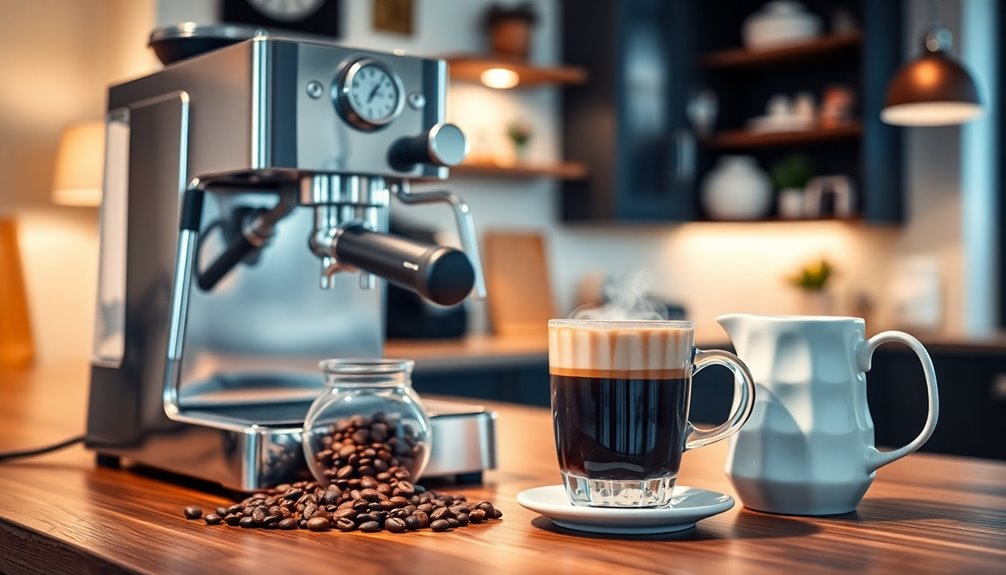

Choosing the right espresso machine brand can feel overwhelming due to the variety of options and features available. The Breville brand stands out for its combination of performance and user-friendly design, making it the best overall choice. De’Longhi offers excellent versatility for those wanting a range of models from beginner to premium, while Gaggia is known for durable, commercial-grade machines. The main tradeoffs in this category often come down to price versus feature set, with some brands prioritizing advanced controls and others focusing on simplicity. Keep reading to see how these brands compare across key factors, so you can pick the best fit for your coffee routine.

Get the little things that make your day delivered free — and shop member deals
- Fast, free delivery on millions of items
- Access to Prime Big Deal Days deals on October 6–7
- Prime Video, Amazon Music and more included
Key Takeaways
- The top brands balance ease of use with advanced features, but few excel equally in both areas.
- Breville consistently offers high-quality machines with intuitive controls, making it ideal for most coffee enthusiasts.
- De’Longhi provides a wide range of options, from entry-level to high-end, catering to different budgets and needs.
- Durability and build quality vary significantly; brands like Gaggia are more robust but often come at a higher price.
- Price often correlates with features—more expensive brands tend to offer more automation and customization.






More Details on Our Top Picks
Breville Barista Pro Espresso Machine BES878BSS, Brushed Stainless Steel
The Breville Barista Pro stands out for its combination of speed, precision, and customization, making it ideal for serious home baristas who want professional results without frequent trips to a coffee shop. Its ThermoJet heating system delivers near-instant heat-up, outpacing models like the Breville Bambino, which takes longer to reach optimal temperature. The integrated grinder with dose control allows for maximum flavor extraction, while the intuitive LCD makes operation straightforward—though some familiarity with espresso techniques enhances the experience. The main tradeoff is its high power consumption and relatively small bean hopper, which might be less suitable for households with heavy daily use or limited counter space. Overall, this machine offers premium features for dedicated enthusiasts willing to invest time and energy into craft brewing.
Pros:- Fast heat-up time with ThermoJet system
- Integrated grinder with precise dose control
- User-friendly LCD interface with progress animations
- Manual microfoam milk texturing for latte art
Cons:- High power consumption at 1680 Watts
- Limited capacity with a 1/2 lb bean hopper
- Requires familiarity with espresso making for best results
Best for: Home baristas seeking a feature-rich, fast, and customizable espresso experience
Not ideal for: Casual users or those with limited space who prefer simpler, more compact machines
- Capacity:1/2 lb Bean Hopper, 67 oz Water Tank
- Power:1680 Watts
- Voltage:120 Volts
- Included Accessories:Single & Dual Wall Filter Baskets, Razor Dose Trimming Tool, Milk Jug, Cleaning Kit, Water Filter
- Features:Dose Control Grinding, Low Pressure Pre-infusion, ThermoJet Heating, PID Temperature Control, LCD Display, Adjustable Grind Control, 1/2 & 2 Cup Volumetric Control
Our verdict“This pick is best suited for dedicated home baristas who prioritize speed, customization, and professional-quality espresso at home.”
De’Longhi La Specialista Arte Evo Espresso Machine – Compact Cold Brew Coffee Maker with Grinder, Milk Steamer & Tamping Tools
The De’Longhi La Specialista Arte Evo offers a versatile approach to home brewing, blending espresso, cold brew, and milk-based drinks in a compact design. Unlike dedicated espresso machines like the Breville Bambino, this model includes a built-in burr grinder with 8 adjustable settings, enabling fresh grinding for each shot. Its active temperature control and preset recipes simplify preparation, appealing to users who want a range of coffee styles without extra equipment. The cold brew feature is relatively uncommon in this class, adding unique value, though it may be less precise than dedicated cold brew setups. Its complexity, with multiple features, might challenge newcomers, and its high price could deter casual users. Still, it provides a broad array of functions for those who want to experiment without cluttering their kitchen.
Pros:- Built-in burr grinder with 8 settings for fresh coffee
- Fast cold brew in under 5 minutes with proprietary tech
- Includes a professional barista toolkit for consistent results
- Compact and stylish for modern kitchens
Cons:- Complex operation may be challenging for beginners
- Cold brew feature is less common and might be less precise
- High price point for casual users
Best for: Coffee lovers who want a multi-functional machine capable of espresso, cold brew, and milk drinks without multiple gadgets
Not ideal for: Beginners or those who prefer straightforward machines, as its feature set can be overwhelming
- Built-in Burr Grinder:Yes
- Grind Settings:8
- Steam Wand:Yes
- Cold Brew Technology:Yes
- Barista Kit:Included
- Pump Pressure:15 bar
- Active Temperature Control:Yes
Our verdict“This machine excels for users seeking versatility and multiple brewing options in a compact form factor, though it demands a learning curve.”
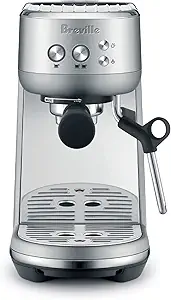
Breville Bambino Espresso Machine BES450BSS, Brushed Stainless Steel
The Breville Bambino offers a straightforward entry point into espresso making, emphasizing ease and speed. Its thermojet system heats up in just 3 seconds, making it ideal for busy mornings. The 54mm portafilter and automatic steam wand simplify milk texturing, making it accessible for newcomers who want decent results without extensive barista skills. Compared to the Barista Pro, it sacrifices some customization and advanced control, but it compensates with a smaller footprint and lower price. This machine is less suited for those wanting detailed tuning or high-volume use, but it’s a reliable starter that delivers quality espresso with minimal fuss.
Pros:- Fast heat-up time in just 3 seconds
- Automatic steam wand for milk texturing
- Compact design fits small kitchens
- Easy to operate for beginners
Cons:- Limited to 110-120V, may need voltage converter elsewhere
- Less customization and control than higher-end models
- Smaller capacity may not suit frequent heavy use
Best for: Beginners and casual users who want quick, consistent espresso without complexity
Not ideal for: Experienced baristas or enthusiasts seeking advanced features or high capacity
- Power:1560 Watts
- Voltage:110-120 Volts
- Portafilter Size:54mm
- Milk Texturing:Automatic steam wand
- Heat-up Time:3 seconds
- Warranty:1 Year Limited
Our verdict“This machine makes the most sense for newcomers looking for quick, reliable espresso without the bells and whistles.”
Breville Barista Express Impress Espresso Machine BES876BSS, Brushed Stainless Steel
The Breville Barista Express Impress elevates home espresso with intelligent dosing, assisted tamping, and a built-in conical burr grinder, making it ideal for those who want consistency with minimal effort. Its automatic dosing and tamping streamline the process, compared to the manual controls of the Barista Pro, appealing to users who prefer convenience without sacrificing quality. The 25 grind settings and precise temperature control with Thermocoil ensure accurate extraction. However, its complex setup and larger footprint might be daunting for beginners or those with limited space. Despite the higher price, it offers a more automated experience for serious enthusiasts who value repeatability and efficiency in their espresso routine.
Pros:- Automatic dosing and assisted tamping for consistent results
- Built-in conical burr grinder with 25 grind settings
- Precise temperature control with Thermocoil system
- Powerful steam wand for microfoam milk
Cons:- Complex setup process may challenge beginners
- Relatively large size requires ample counter space
- Higher price point may deter casual buyers
Best for: Home baristas who value automation, consistency, and a semi-automatic experience
Not ideal for: Users seeking a simple, plug-and-play machine or those with limited space
- Capacity:250g bean hopper, 2L water tank
- Grind Settings:25
- Portafilter Size:54mm
- Included Accessories:Stainless steel milk jug, filter baskets, water filter holder, trimming tool, cleaning tablets
Our verdict“This pick suits motivated users who want consistent, automated espresso with less manual effort, accepting the larger size and setup complexity.”
De’Longhi Classic Signature Espresso Machine
The De’Longhi Classic Signature offers a sleek, compact design with a reliable 15-bar Italian pump, making it suitable for users who want a straightforward machine that produces high-quality espresso. Its Thermoblock technology ensures quick and stable temperature control, comparable to the Breville Bambino, but with a more traditional aesthetic. The adjustable steam wand allows for milk frothing, though it offers fewer preset options than more advanced models. This machine is less suited for those seeking extensive customization or integrated grinders, as it is designed mainly for quick, quality espresso and milk drinks. Its simplicity makes it ideal for small kitchens or users who prefer a classic look and feel.
Pros:- Excellent pressure for high-quality espresso
- Fast, stable temperature with Thermoblock technology
- Sleek, space-efficient stainless steel design
- Adjustable steam wand for milk frothing
Cons:- Limited to espresso and milk drinks; no built-in grinder
- Preset recipes lack customization options
- No advanced features for seasoned baristas
Best for: Connoisseurs who want stylish, reliable espresso with easy operation
Not ideal for: Users wanting built-in grinders or extensive customization
- Pump Pressure:15-bar
- Temperature Control:Thermoblock
- Steam Wand:Adjustable 2-setting
- Design:Sleek, compact stainless steel
Our verdict“This machine offers a stylish, simple solution for those who prioritize quick, quality espresso in a compact form.”
De’Longhi Dedica Duo Compact Espresso Machine – Cold Brew Coffee Maker with Milk Frother Wand
The De’Longhi Dedica Duo stands out for combining hot and cold drink capabilities within a remarkably compact footprint, making it ideal for small kitchens. Its quick brew times and professional steam wand for latte art offer café-quality beverages without taking up much space. Compared to the Gaggia RI9380/46, which boasts a more robust build and commercial features, the Dedica Duo sacrifices some durability and advanced controls for sleekness and ease of use. Its digital touch display simplifies operation for casual users, but those unfamiliar with espresso might face a learning curve. The absence of a built-in grinder means users need to prepare ground coffee separately, which could be inconvenient. Tradeoffs include limited capacity and features, but overall, it suits buyers prioritizing style and versatility in a small package.
Pros:- Compact and stylish Italian design
- Brews both hot and cold beverages quickly
- Includes a professional steam wand for latte art
Cons:- Limited to small kitchen spaces due to size
- No built-in grinder, requiring separate preparation
- Some learning curve for new users
Best for: Urban dwellers or small-space owners wanting versatile coffee options with a sleek design
Not ideal for: Coffee enthusiasts seeking a machine with integrated grinder and extensive customization, or commercial settings
- Presets:Espresso, Double Espresso, Cold Brew
- Pressure:9-bar
- Heating Technology:Advanced Thermoblock
- Steam Wand:My LatteArt steam wand
- Dimensions:5.9 inches wide
- Finish:Stainless Steel
Our verdict“This pick is best for those who need a space-efficient, versatile machine that delivers café-quality drinks with style.”
Gaggia RI9380/46 E24 Espresso Machine, Brushed Stainless Steel
The Gaggia RI9380/46 offers a solid, professional-grade experience thanks to its durable steel housing and commercial features. Its 9-bar extraction pressure and 58mm portafilter ensure authentic espresso with rich flavor, rivaling small cafes. Compared to the De’Longhi Dedica Duo, which emphasizes compactness and user-friendliness, the Gaggia leans toward durability and precision, but it comes with a steeper learning curve and higher price point. Its complex setup and manual operation make it better suited for experienced home baristas or small commercial use, rather than casual users. The steel build promises longevity, yet the weight and setup complexity can be daunting for beginners. Tradeoffs include a less intuitive experience, but it rewards with high-quality, commercial-level espresso.
Pros:- Durable solid steel construction
- High-quality 9-bar extraction for rich espresso
- Commercial-grade portafilter and steam wand
Cons:- Expensive for casual or occasional use
- Complex setup and operation for beginners
- Heavy and less portable
Best for: Experienced home baristas or small café owners seeking durability and authentic espresso quality
Not ideal for: Casual users or those new to espresso who prefer simple, plug-and-play machines
- Housing Material:Steel
- Made in:Italy
- Extraction Pressure:9 Bar
- Portafilter Size:58mm
- Features:Commercial Three Way Solenoid Valve, Commercial Steam Wand
Our verdict“This machine is perfect for those prioritizing durability and authentic coffee, willing to handle a steeper learning curve.”
De’Longhi Magnifica Evo Automatic Espresso & Coffee Machine with Auto Milk Frother, Built-in Grinder & Auto-Clean Function
The De’Longhi Magnifica Evo excels at delivering a wide variety of drinks with minimal effort, thanks to its automatic features and built-in grinder. Its seven one-touch recipes, including iced coffee, position it as a versatile choice for households that want different beverages at the push of a button. Compared with the Hamilton Beach 15 Bar, which offers a larger water reservoir and higher pump pressure, the Magnifica Evo emphasizes customization and ease of use with its 13 grinder settings and auto-clean system. However, its advanced features come with a learning curve and potentially higher maintenance costs. The automatic milk frother simplifies making lattes but may not satisfy purists who prefer manual control. Tradeoffs include complexity and maintenance, but it compensates with convenience and variety.
Pros:- Multiple one-touch drink options for convenience
- Precise grinding with 13 settings for flavor control
- Automatic milk frothing with LatteCrema system
Cons:- Complex operation for first-time users
- Potentially high maintenance costs due to advanced features
- Requires regular cleaning and descaling
Best for: Home users who want a high degree of automation and drink variety without manual effort
Not ideal for: Traditional espresso lovers who prefer manual brewing or minimal machine complexity
- Model:ECAM29084SB
- Color:Silver
- Grinder Settings:13
- Features:Auto Milk Frother, Built-in Grinder, Auto-Clean
- Number of Recipes:7
Our verdict“This machine is ideal for those seeking a fully automatic, versatile coffee experience with minimal effort.”
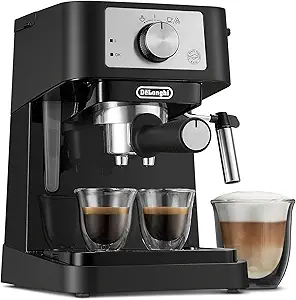
De’Longhi Stilosa Manual Espresso Machine
The De’Longhi Stilosa offers a straightforward, manual approach to espresso making, emphasizing control over every shot. Its 15-bar pump delivers sufficient pressure for authentic espresso, while the manual steam wand allows for textured milk. Compared to super-automatic models like the Magnifica Evo, the Stilosa demands more user involvement but provides a more hands-on experience. It’s ideal for enthusiasts who enjoy learning the craft or want to fine-tune their drinks, but it might frustrate beginners or those seeking quick results. Its compact size and included accessories make it accessible, yet it lacks a built-in grinder, requiring pre-ground beans. Tradeoffs include manual operation and no automatic features, but it produces authentic espresso with real control.
Pros:- Manual steam wand for textured milk
- Includes essential accessories like tamper and filters
- Compact and stylish design
Cons:- Requires manual operation and technique
- No built-in grinder, adding extra prep work
- Limited to espresso and milk-based drinks
Best for: Home baristas who want manual control and enjoy the craft of espresso making
Not ideal for: Casual drinkers or busy households seeking a quick, automated coffee routine
- Pump Pressure:15 Bar
- Boiler Material:Stainless Steel
- Includes:Portafilter, tamper, two filters
- Steam Wand:Manual
- Size:Compact
Our verdict“Perfect for those who want to perfect their espresso skills with manual control and authentic results.”
Hamilton Beach 15 Bar Espresso Machine with Milk Frother, 2-Cup Capacity, 50 oz Water Reservoir, Black
The Hamilton Beach 15 Bar Espresso Machine offers solid performance for those wanting to brew two cups at once, making it suitable for households or small offices. Its powerful 15-bar pump ensures authentic espresso extraction, while the included milk frother supports creamy cappuccinos and lattes. Compared with the De’Longhi Stilosa, which emphasizes manual control, the Hamilton Beach provides a straightforward, fully automatic experience, appealing to users who prefer less involvement. Its large 50 oz water tank reduces refilling frequency, but the absence of detailed dimensions and manual steaming can be limiting for more advanced users. The machine’s compatibility with ground coffee and pods adds flexibility, but the lack of advanced customization may disappoint espresso connoisseurs. Tradeoffs include simplicity over control, but convenience remains its strength.
Pros:- Powerful 15-bar pump for authentic espresso
- Brews 2 cups simultaneously
- Includes milk frother for cappuccinos and lattes
Cons:- Limited dimension details provided
- Requires manual steaming effort
- Less suited for advanced customization
Best for: Families or small groups seeking quick, easy double servings of espresso and milk drinks
Not ideal for: Serious espresso hobbyists who want manual control and detailed customization
- Coffee Maker Type:Espresso Machine
- Operation Mode:Fully Automatic
- Wattage:1050 watts
- Output Pressure:15 Bars
- Input Types:Ground, Pods
- Capacity:50 Fluid ounces
Our verdict“This is a practical choice for households needing quick double servings with ease.”
Breville Barista Express Espresso Machine BES870XL, Brushed Stainless Steel
The Breville Barista Express BES870XL stands out for its integrated grinder, offering a seamless path from beans to espresso without needing separate equipment. Compared with the Breville Bambino, which lacks a grinder, this model provides fresher grounds and more control over flavor extraction. However, its relatively high power consumption and complex setup can be intimidating for beginners, making it less ideal for casual users who want quick, straightforward coffee. The precise temperature control and manual milk texturing support professional-quality drinks, but the larger footprint and higher price point mean it’s better suited to serious enthusiasts rather than those seeking simplicity or affordability. This pick makes sense for home users who want a comprehensive machine that can develop their barista skills, despite the learning curve.
Pros:- Integrated grinder simplifies workflow with fresh grounds
- Precise temperature control enhances coffee flavor
- Manual milk texturing enables latte art
- Adjustable grind size offers customization
Cons:- High power consumption increases electricity use
- Complex setup can be overwhelming for beginners
- Price may be prohibitive for casual users
Best for: Familiar home baristas ready to invest time learning espresso craft and who want an all-in-one solution.
Not ideal for: Casual coffee drinkers or small kitchens where space and ease of use are priorities, as the setup is complex and the machine is bulky.
- Capacity:1/2 lb Bean Hopper
- Water Tank:67 oz
- Power:1600 Watts
- Voltage:120 Volts
- Included:Stainless Steel Portafilter, Filter Baskets, Milk Jug, Cleaning Tools
- Warranty:1 Year Limited
Our verdict“This machine is ideal for dedicated home baristas seeking a full-featured, customizable espresso experience despite its complexity.”
How We Picked
These products were evaluated based on performance, usability, build quality, maintenance requirements, and overall value. I prioritized brands that offer consistent quality, innovative features, and positive user feedback. Products were ranked by how well they balance ease of use with advanced functionalities, catering to both beginners and experienced users. Consideration was also given to price points, warranty support, and versatility across different coffee preferences. This approach ensures that the list reflects options suitable for a range of budgets and needs, making the comparison meaningful for diverse buyers.Factors to Consider When Choosing Espresso Machine Brands
Choosing an espresso machine brand involves considering several factors that impact your daily brewing experience. Beyond brand reputation, it’s vital to think about features like ease of use, maintenance, and whether the machine offers automation or manual controls. A good brand should provide reliable performance and good after-sales support. Understanding your own skill level and coffee preferences can help you avoid overspending on unnecessary features or ending up with a machine that’s too complex for your routine. Let’s explore the key factors to keep in mind when selecting an espresso machine brand.Performance and Brewing Quality
The core of any espresso machine is the quality of the coffee it brews. Look for brands that consistently produce stable pressure and temperature, which are essential for a good shot. Higher-end brands tend to offer better temperature stability and more precise pressure control, resulting in richer, more consistent espresso. Cheaper models might save money upfront but often sacrifice shot quality or consistency, especially if they lack features like PID temperature control. Evaluating user reviews and expert testing can reveal which brands truly deliver on performance over time.
Ease of Use and Automation
Ease of use varies widely among brands, with some offering fully automatic machines and others favoring manual controls. For beginners, brands with intuitive interfaces, programmable options, and minimal setup are preferable. Conversely, more experienced users might prefer manual machines that allow for greater control over brewing variables. Consider whether you want features like one-touch espresso, auto-milk frothing, or customizable settings. Overly complex machines can be frustrating if you’re just starting out, so match the brand’s interface to your comfort level.
Build Quality and Durability
Durability hinges on materials and construction quality. Brands like Gaggia and Breville tend to use sturdy stainless steel components, which resist wear and tear better over time. Cheaper models may use plastics or lower-quality parts that can break or degrade faster. Think about your long-term needs—if you plan to use the machine daily, investing in a more durable model makes sense. Also, check warranty coverage to gauge the brand’s confidence in its build quality and the support they offer if repairs are needed.
Maintenance and Cleaning
Regular cleaning and maintenance are essential to keep an espresso machine performing well. Some brands incorporate features like auto-cleaning cycles, descaling alerts, and easily accessible parts, which simplify upkeep. Manual machines may require more hands-on cleaning but often have fewer complex components to maintain. Consider whether the brand offers readily available replacement parts and detailed maintenance instructions. Proper maintenance extends the lifespan of your machine and ensures consistently good espresso shots.
Price and Value
Price points vary widely, with entry-level machines costing a few hundred dollars and premium models reaching into the thousands. While higher-priced machines often provide more automation, better build quality, and advanced features, they may not be necessary for casual users. Conversely, budget brands can still deliver good espresso but often lack consistency or durability. Assess what features you truly need and balance that against your budget, aiming for a machine that offers the best value for your intended use and long-term investment.
Frequently Asked Questions
Should I prioritize a fully automatic espresso machine or a semi-automatic one?
If you prefer convenience and consistency, a fully automatic machine simplifies brewing with one-touch operation and built-in grinders or milk frothers. However, if you enjoy more control over the brewing process and want to experiment with variables like grind size and tamping pressure, a semi-automatic or manual machine provides that flexibility. Your choice depends on how involved you want to be in each shot and your willingness to learn the nuances of espresso making.
Are more expensive brands always better for espresso quality?
Higher price often correlates with better build quality, stability, and advanced features, which can improve shot consistency and ease of use. However, this isn’t a guarantee that a more expensive machine will produce superior espresso for everyone. Some mid-range brands offer excellent performance suited for home use without the hefty price tag. Consider your skill level, preferences, and budget—sometimes a well-chosen mid-range machine hits the perfect balance of quality and value.
How important is brand reputation when choosing an espresso machine?
Brand reputation can be a helpful indicator of overall quality, support, and product longevity. Established brands like Breville, De’Longhi, and Gaggia have proven track records and extensive user feedback, which can reduce the risk of dissatisfaction. However, newer or less-known brands might offer innovative features or better prices. Always research reviews and warranty support regardless of brand, focusing on real-world performance and customer service to make an informed decision.
What features are essential for a beginner to look for?
Beginners should prioritize machines that offer straightforward operation, such as simple controls, clear instructions, and automatic functions like milk frothing and shot volume. Machines with preset options reduce the learning curve and help produce consistently good espresso. Durability and ease of maintenance are also important, so look for brands that provide accessible parts and clear cleaning instructions. Investing in a user-friendly machine can make the learning process enjoyable rather than frustrating.
Is it worth paying extra for a machine with built-in grinders?
Built-in grinders add convenience by streamlining the brewing process and ensuring your beans are freshly ground for each shot. However, they can also increase the cost and complexity of maintenance, such as cleaning grinder burrs. If you want the best flavor and control over grind size, a dedicated grinder paired with a manual or semi-automatic espresso machine might offer more flexibility and longevity. Decide based on your budget, space, and how much you value convenience versus customization.
Conclusion
For most home users, the Breville brand offers the best overall experience, combining performance, ease of use, and durability. Those on a budget or seeking simplicity might prefer models from De’Longhi or Hamilton Beach. If you want a machine that lasts and performs at a professional level, Gaggia provides robust options for serious enthusiasts. Beginners should consider automated or semi-automatic models with straightforward interfaces, while experienced baristas may prioritize manual control and customization features. Matching your skill level, coffee preferences, and budget will help you select the ideal espresso machine brand for 2026.
NFL season / tailgating Picks
team gear
As an affiliate, we earn on qualifying purchases.