

The best decision-making books turn abstract advice into tools you can use when choices feel difficult or uncertain. My best overall pick is Decisive, which offers a practical process for improving choices in both life and work. How to Decide is a strong alternative for hands-on exercises, while Thinking in Bets suits readers who must act without complete information. The main tradeoff is between accessible, repeatable methods and broader books that explain the psychology or theory behind decisions. Read on for the full breakdown and guidance on choosing the approach that fits you.

Get the little things that make your day delivered free with Prime
- Fast, free delivery on millions of items
- Prime Video, Amazon Music and more included
- Member-only deals all year
Key Takeaways
- Decisive stands out as the most balanced starting point because it focuses on a repeatable process for everyday and workplace choices rather than one narrow decision type.
- How to Decide and Smart Choices lean toward practical methods, while Thinking, Fast and Slow offers a deeper look at the biases that can distort judgment.
- Thinking in Bets is a distinct choice for uncertain situations: it separates the quality of a decision from whether its outcome happened to be favorable.
- The Decision Book and Mental Models emphasize portable thinking frameworks, but readers may need to decide for themselves which model fits a particular problem.
- The lineup ranges from approachable guides for overthinking and everyday choices to management-focused collections and analytical texts; the best fit depends more on your decision context than on seeking one universal formula.
| How to Decide: Simple Tools for Making Better Choices |  | Best for Practical Decision Tools | Title: How to Decide: Simple Tools for Making Better Choices | ASIN: B088P4XLVB | Type: Book | VIEW LATEST PRICE | See Our Full Breakdown |
| Better Decisions, Fewer Regrets: 5 Questions to Help You Determine Your Next Move |  | Best for Regret-Aware Choices | Title: Better Decisions, Fewer Regrets: 5 Questions to Help You Determine Your Next Move | ASIN: 0310537088 | Format: Book | VIEW LATEST PRICE | See Our Full Breakdown |
| HBR’s 10 Must Reads on Decision-Making, Updated and Expanded |  | Best for Business and AI Perspectives | Title: HBR’s 10 Must Reads on Decision-Making, Updated and Expanded | ASIN: B0GGJJDZSB | Type: Book collection | VIEW LATEST PRICE | See Our Full Breakdown |
| The Overthinker’s Guide to Making Decisions: How to Make Decisions Without Losing Your Mind | 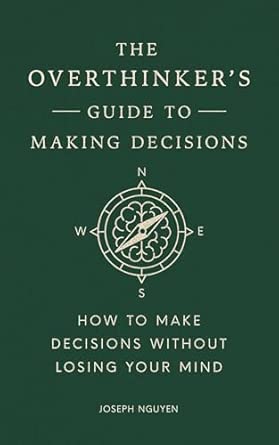 | Best for Overthinkers | Title: The Overthinker’s Guide to Making Decisions: How to Make Decisions Without Losing Your Mind | ASIN: B0DXD7TML1 | Author: Joseph Nguyen | VIEW LATEST PRICE | See Our Full Breakdown |
| The Art of Thinking Clearly |  | Best for Spotting Faulty Reasoning | Title: The Art of Thinking Clearly | ASIN: 0062219693 | Type: Book | VIEW LATEST PRICE | See Our Full Breakdown |
| Smart Choices: A Practical Guide to Making Better Decisions |  | Best for a Structured Decision Process | Title: Smart Choices: A Practical Guide to Making Better Decisions | ASIN: 1633691047 | Product type: Book | VIEW LATEST PRICE | See Our Full Breakdown |
| Decisive: How to Make Better Choices in Life and Work |  | Best for Choices Across Work and Personal Life | Title: Decisive: How to Make Better Choices in Life and Work | ASIN: B00B3Z5QFK | Product type: Book | VIEW LATEST PRICE | See Our Full Breakdown |
| The Decision Book: Fifty Models for Strategic Thinking |  | Best for a Browseable Model Toolkit | Title: The Decision Book: Fifty Models for Strategic Thinking | ASIN: 0393652378 | Product type: Book | VIEW LATEST PRICE | See Our Full Breakdown |
| The 6 Pillars of Decision Making: 65 Techniques and Strategies for Smart, Strategic Choices |  | Best for a Technique-Rich Strategic Guide | Title: The 6 Pillars of Decision Making: 65 Techniques and Strategies for Smart, Strategic Choices | ASIN: 1961398176 | Format: Book | VIEW LATEST PRICE | See Our Full Breakdown |
| Thinking, Fast and Slow |  | Best for Understanding How Judgment Works | Title: Thinking, Fast and Slow | ASIN: 0374533555 | Product type: Book | VIEW LATEST PRICE | See Our Full Breakdown |
| Critical Thinking: A Guide to Systematic Problem Solving, Strategic Decision Making, and Analytical Reasoning |  | Best for Structured Analysis | Subject: Critical thinking | Problem-solving approach: Systematic problem solving | Decision focus: Strategic decision-making | VIEW LATEST PRICE | See Our Full Breakdown |
| Leadership Strategy: The Art and Science of Decision-Making |  | Best for Leadership Decisions | Subject: Leadership strategy | Decision focus: Decision-making | Stated approach: Art and science of decision-making | VIEW LATEST PRICE | See Our Full Breakdown |
| Mental Models: 30 Thinking Tools for Better Decision-Making and Problem-Solving |  | Best for a Toolkit Approach | Subject: Mental models | Number of thinking tools: 30 | Decision focus: Better decision-making | VIEW LATEST PRICE | See Our Full Breakdown |
| Thinking in Bets: Making Smarter Decisions When You Don’t Have All the Facts |  | Best for Decisions Under Uncertainty | Subject: Decision-making under uncertainty | Information conditions: Incomplete information | Core approach: Thinking in probabilities | VIEW LATEST PRICE | See Our Full Breakdown |
| The Art and Science of Decision-Making: Mastering Critical Thinking and Problem-Solving for Enhanced Productivity and Success |  | Best for Productivity-Minded Readers | Subject: Decision-making | Additional focus: Critical thinking | Problem-solving: Included | VIEW LATEST PRICE | See Our Full Breakdown |
| decision-making book | Title | ASIN | Subject | Format |
|---|---|---|---|---|
| How to Decide: Simple Tools fo | How to Decide: Simple Tools for Making Better Choices | B088P4XLVB | Decision-making | — |
| Better Decisions | Better Decisions, Fewer Regrets: 5 Questions to Help You Determine Your Next Move | 0310537088 | Decision-making | Book |
| HBR’s 10 Must Reads on Decisio | HBR’s 10 Must Reads on Decision-Making, Updated and Expanded | B0GGJJDZSB | Decision-making | — |
| The Overthinker’s Guide to Mak | The Overthinker’s Guide to Making Decisions: How to Make Decisions Without Losing Your Mind | B0DXD7TML1 | Decision-making | Book |
| The Art of Thinking Clearly | The Art of Thinking Clearly | 0062219693 | Decision-making and clear thinking | — |
| Smart Choices: A Practical Gui | Smart Choices: A Practical Guide to Making Better Decisions | 1633691047 | — | — |
| Decisive: How to Make Better C | Decisive: How to Make Better Choices in Life and Work | B00B3Z5QFK | — | — |
| The Decision Book: Fifty Model | The Decision Book: Fifty Models for Strategic Thinking | 0393652378 | — | — |
| The 6 Pillars of Decision Maki | The 6 Pillars of Decision Making: 65 Techniques and Strategies for Smart, Strategic Choices | 1961398176 | — | Book |
| Thinking | Thinking, Fast and Slow | 0374533555 | — | — |
| Critical Thinking: A Guide to | — | — | Critical thinking | Not specified in the provided product data |
| Leadership Strategy: The Art a | — | — | Leadership strategy | Not specified in the provided product data |
| Mental Models: 30 Thinking Too | — | — | Mental models | Not specified in the provided product data |
| Thinking in Bets: Making Smart | — | — | Decision-making under uncertainty | Not specified in the provided product data |
| The Art and Science of Decisio | — | — | Decision-making | Not specified in the provided product data |
More Details on Our Top Picks
How to Decide: Simple Tools for Making Better Choices
How to Decide is the clearest fit here for readers who want usable tools to apply when a choice is in front of them. Its focus on simple methods suggests a more hands-on route than The Art of Thinking Clearly, which centers on spotting faulty reasoning. That makes this a natural pick for people who want help moving from uncertainty to a choice, rather than a tour of thinking errors.
The tradeoff is that the supplied information gives no detail about the specific tools, examples, or structure, so readers seeking a named framework or a detailed subject focus have little to judge in advance. Compared with Better Decisions, Fewer Regrets, its description also offers less clarity about the method. I’d choose it for a practical, general-purpose starting point, not for a clearly documented specialty.
Pros:- Its stated focus is practical tools rather than decision theory alone
- The simple-tools framing suits readers who prefer actionable guidance
- Addresses making better choices broadly, without a stated niche
- Offers a useful contrast to books focused on cognitive errors or regret
Cons:- The available description does not identify the tools or explain how they work
- No author, format, or other details are supplied here
- Readers cannot tell from the provided information how much depth or example-based guidance it offers
Best for: Readers who want a general-purpose book centered on simple tools for making everyday choices
Not ideal for: Buyers who need a clearly specified framework, detailed contents, or a book focused on business or leadership decisions
- Title:How to Decide: Simple Tools for Making Better Choices
- ASIN:B088P4XLVB
- Type:Book
- Subject:Decision-making
- Stated focus:Simple tools for making better choices
- Specific tools listed:Not provided
Our verdict“Choose this if you want a broadly applicable, tool-focused starting point and are comfortable with limited detail about its method.”
Better Decisions, Fewer Regrets: 5 Questions to Help You Determine Your Next Move
Better Decisions, Fewer Regrets gives its approach a defined shape: five questions intended to help readers evaluate options and choose a next move. That makes it easier to understand what kind of guidance to expect than How to Decide, whose supplied description does not specify its tools. The regret-focused framing also suits readers who replay past choices or feel pressure to get every decision right.
The limitation is its stated reliance on a five-question approach. Readers who want a broad survey of decision research may prefer HBR’s 10 Must Reads on Decision-Making, Updated and Expanded, while those more interested in faulty reasoning may get a closer match from The Art of Thinking Clearly. The available description does not identify the questions or provide examples, so the method’s fit is hard to judge before reading.
Pros:- The five-question premise gives the book a clear, bounded method
- Directly addresses both evaluating options and choosing a next move
- The regret angle speaks to readers who dwell on past choices
- Its stated approach is easier to identify than the unspecified tools in How to Decide
Cons:- The provided description does not list the five questions
- A question-based approach may feel narrow to readers wanting a wider range of frameworks
- No author or further format details are supplied in the provided product data
Best for: Readers who want a defined set of questions for evaluating personal choices and reducing regret
Not ideal for: Readers seeking a research anthology, a detailed analytical toolkit, or a clearly described account of the five questions before choosing
- Title:Better Decisions, Fewer Regrets: 5 Questions to Help You Determine Your Next Move
- ASIN:0310537088
- Format:Book
- Subject:Decision-making
- Stated framework:Five questions
- Stated goal:Evaluate options and determine a next move
Our verdict“Pick this for a focused, regret-aware decision process built around five questions rather than a broad collection of frameworks.”
HBR’s 10 Must Reads on Decision-Making, Updated and Expanded
HBR’s 10 Must Reads on Decision-Making, Updated and Expanded is the strongest match here for readers who want multiple perspectives rather than one author’s single method. Its collection format brings together articles on decision-making, including a featured piece on the value of human judgment in the age of AI. Compared with How to Decide, which is framed around simple tools, this anthology is better suited to readers interested in organizational thinking and contemporary business questions.
That breadth comes with a tradeoff: a collection can feel less unified than a book organized around one repeatable process, such as Better Decisions, Fewer Regrets. The supplied information confirms the article format and AI focus but does not name the other contributors or spell out the full selection. I’d favor it for workplace discussion and varied viewpoints, not as the most direct guide for a single personal choice.
Pros:- Uses a collection of articles to present multiple decision-making perspectives
- Includes a featured article about human decision-making in the age of AI
- Its business-oriented framing distinguishes it from the personal-choice focus of Better Decisions, Fewer Regrets
- The updated and expanded edition title signals a revised collection
Cons:- An anthology may offer less continuity than a single-framework guide
- The supplied description does not identify the full article lineup
- Its business emphasis may be less relevant to readers focused on private, everyday decisions
Best for: Managers, business readers, and discussion groups seeking varied perspectives on organizational decisions and human judgment alongside AI
Not ideal for: Readers who want one step-by-step method for personal choices or need the full article list before selecting a book
- Title:HBR’s 10 Must Reads on Decision-Making, Updated and Expanded
- ASIN:B0GGJJDZSB
- Type:Book collection
- Content format:Harvard Business Review articles
- Subject:Decision-making
- Edition description:Updated and expanded
- Featured article focus:The value of human decision-making in the age of AI
- Named featured contributors:Martin Reeves, Mihnea Moldoveanu, and Adam Job
Our verdict“Choose this collection if you want workplace-oriented perspectives, including a human-judgment-and-AI angle, rather than one personal decision formula.”
The Overthinker’s Guide to Making Decisions: How to Make Decisions Without Losing Your Mind
The Overthinker’s Guide to Making Decisions speaks directly to a particular obstacle: getting stuck in analysis until choosing feels exhausting. That makes it a more targeted option than How to Decide, whose description promises simple tools but does not identify a specific reader problem. The title’s emphasis on making decisions without losing your mind positions this book for people who need help with the mental loop around a choice, not just a menu of decision techniques.
That focus can also limit its appeal. Readers looking for a clearly enumerated method may find Better Decisions, Fewer Regrets easier to assess from its five-question premise, while business readers may prefer the range of perspectives in HBR’s 10 Must Reads on Decision-Making, Updated and Expanded. The provided details do not explain the book’s exercises or framework, so I’d treat it as a focused match for overthinking rather than a proven all-purpose guide.
Pros:- Targets overthinking as a distinct barrier to making decisions
- Its title makes the intended reader especially clear
- Offers a more specific problem focus than the general framing of How to Decide
- Lists Joseph Nguyen as the author
Cons:- The provided description does not specify its method, exercises, or structure
- Its narrow focus may not satisfy readers seeking a broad decision-making reference
- No detailed contents or further product specifications are provided
Best for: Readers who routinely second-guess choices and want a book specifically framed around reducing decision-related overthinking
Not ideal for: Readers who want a documented step-by-step framework, a business anthology, or detailed information about exercises before buying
- Title:The Overthinker’s Guide to Making Decisions: How to Make Decisions Without Losing Your Mind
- ASIN:B0DXD7TML1
- Author:Joseph Nguyen
- Format:Book
- Subject:Decision-making
- Stated focus:Making decisions without becoming overwhelmed by overthinking
Our verdict“This is the most direct fit for readers whose main decision problem is overthinking, provided they do not need a clearly described framework upfront.”
The Art of Thinking Clearly
The Art of Thinking Clearly is the strongest choice in this group for readers who want to examine how faulty reasoning can distort decisions. That gives it a different job from Better Decisions, Fewer Regrets, which offers a five-question route for evaluating choices, and from The Overthinker’s Guide to Making Decisions, which targets getting stuck in thought. Here, the stated emphasis is clearer thinking and recognizing reasoning errors.
The supplied product information, though, is sparse: it describes the book as research-backed but gives no examples, structure, or specific reasoning errors. I would not assume it functions as a step-by-step decision manual from that description alone. Compared with HBR’s 10 Must Reads on Decision-Making, Updated and Expanded, it appears to offer a single-book focus rather than a collection of business articles, but the available data does not establish how broad or detailed its guidance is.
Pros:- Directly addresses faulty reasoning as a source of poor choices
- The stated research-backed framing may appeal to evidence-minded readers
- Offers a distinct focus from the question-based approach in Better Decisions, Fewer Regrets
- Its clear-thinking theme suits readers seeking to examine how they reason
Cons:- The supplied description does not name specific reasoning errors or examples
- No decision process or exercise format is described
- The available product data is too limited to judge the book’s depth or organization
Best for: Readers who want to become more alert to faulty reasoning when making everyday or professional choices
Not ideal for: Buyers who need a clearly listed framework, practical exercises, or a detailed contents overview before choosing
- Title:The Art of Thinking Clearly
- ASIN:0062219693
- Type:Book
- Subject:Decision-making and clear thinking
- Stated focus:Recognizing faulty reasoning
- Description claim:Research-backed guidance
Our verdict“Choose this if your priority is recognizing faulty reasoning, but look elsewhere for a clearly documented step-by-step decision process.”
Smart Choices: A Practical Guide to Making Better Decisions
Smart Choices is the most direct fit here for readers who want a practical framework for working through a decision rather than a broad study of how people think. Its stated focus on making better decisions gives it a clear, applied role beside Thinking, Fast and Slow, which is more oriented toward understanding judgment and bias. That distinction makes this a sensible pick for someone facing recurring choices at work or in personal planning and wanting a repeatable way to frame them.
The limitation is that the available details do not specify its methods, examples, or level of depth, so I can’t confidently recommend it for readers seeking a particular technique or evidence-heavy treatment. Compared with The Decision Book, it also has no stated collection of models to browse. Choose it for practical focus; skip it if you want a clearly itemized toolkit.
Pros:- Directly focused on making better decisions
- Practical orientation may suit readers seeking applied guidance
- The title signals relevance to a range of decision-making situations
Cons:- No specific methods or examples are provided in the available product details
- The scope and depth are difficult to judge from the supplied information
Best for: Readers who want a practical guide centered on improving everyday and workplace decisions
Not ideal for: Readers who need a clearly described set of exercises, models, or research details before choosing a decision-making book
- Title:Smart Choices: A Practical Guide to Making Better Decisions
- ASIN:1633691047
- Product type:Book
- Stated focus:Making better decisions
- Approach:Practical guide
- Detailed methods:Not specified in supplied product data
Our verdict“Choose Smart Choices if you want a practical decision-making guide, but pick The Decision Book if a stated collection of models matters more.”
Decisive: How to Make Better Choices in Life and Work
Decisive has the clearest stated breadth in this group: its focus spans choices in both life and work. That makes it a strong match for readers who want a single decision-making book to apply across career questions, personal plans, and everyday tradeoffs. Compared with Smart Choices, whose supplied description emphasizes practical decision-making without naming its scope, Decisive explicitly connects the subject to both settings.
The tradeoff is that the product details provided here don’t describe its framework, exercises, or research, so buyers can’t judge how hands-on or analytical it is from this information alone. It also may be less suited to readers seeking a compact set of strategic models, which The Decision Book explicitly offers. Choose this for broad life-and-work relevance, not for a confirmed model-by-model reference.
Pros:- Explicitly addresses decisions in both life and work
- Broad scope can serve readers with varied decision-making needs
- The title sets a clear practical aim of improving choices
Cons:- The supplied product information does not identify its decision-making framework
- No examples, exercises, or research details are specified
Best for: Readers dealing with a mix of career, workplace, and personal choices who want one book addressing both
Not ideal for: Readers who want a clearly specified collection of decision tools or a detailed account of the book’s method before buying
- Title:Decisive: How to Make Better Choices in Life and Work
- ASIN:B00B3Z5QFK
- Product type:Book
- Stated subject:Making better choices
- Stated scope:Life and work
- Detailed framework:Not specified in supplied product data
Our verdict“Choose Decisive for a book explicitly aimed at choices in both personal life and work; choose The Decision Book for a stated set of strategic models.”
The Decision Book: Fifty Models for Strategic Thinking
The Decision Book stands apart by putting a defined quantity of material up front: 50 models for strategic thinking. That makes it the most reference-like choice in this set, suited to readers who want multiple ways to frame a problem rather than a single guide to better choices. Compared with Smart Choices, whose supplied description gives no specific tools, its model count offers a more concrete reason to choose it.
The breadth also creates a tradeoff: a collection of models may be better for scanning and selecting an approach than for following one continuous decision process. The product information doesn’t describe the models or explain how deeply each is covered, so readers seeking a tightly guided method may prefer The 6 Pillars of Decision Making, which is described as a guide to techniques and strategies. Pick this for variety, not guaranteed step-by-step instruction.
Pros:- Provides a stated collection of 50 models
- Explicitly connects the models to strategic thinking
- A varied toolkit may help readers approach problems from different angles
Cons:- A large model collection may offer less continuity than a single structured method
- The supplied details do not identify the models or their level of explanation
Best for: Curious readers, managers, and students who want a collection of strategic-thinking models to consult across different problems
Not ideal for: Readers who prefer one detailed, sequential method or need to know the specific models and exercises before choosing
- Title:The Decision Book: Fifty Models for Strategic Thinking
- ASIN:0393652378
- Product type:Book
- Number of models:50
- Stated focus:Strategic thinking
- Decision-making focus:Yes
Our verdict“Choose The Decision Book if you want a broad collection of strategic-thinking models rather than one clearly specified decision process.”
The 6 Pillars of Decision Making: 65 Techniques and Strategies for Smart, Strategic Choices
The 6 Pillars of Decision Making is the most explicitly technique-focused option in this batch: the description promises 65 techniques and strategies and names data, logical judgment, and calculated risks as key themes. That gives buyers a clearer picture of its subject matter than the sparse details for Decisive or Smart Choices. It may suit readers who want decision-making guidance tied to analysis as well as risk.
Its stated range is a strength, but 65 techniques may feel like a lot for someone who wants one simple routine to use repeatedly. The description also doesn’t list the techniques or explain how the six pillars organize them. Compared with The Decision Book, which offers 50 models for strategic thinking, this title more directly foregrounds data and calculated risk. Choose it for that emphasis, while recognizing the supplied details leave its teaching style unclear.
Pros:- States a substantial set of 65 techniques and strategies
- Explicitly emphasizes data and logical judgment
- Includes calculated risk-taking as part of its decision-making focus
- Connects strategic choices with designing the life the reader wants
Cons:- The supplied description does not name the 65 techniques
- The six-pillar structure and depth of instruction are not explained
Best for: Professionals and planners who want a wide selection of techniques with an explicit emphasis on data, judgment, and calculated risk
Not ideal for: Readers seeking a short, single-process guide or a fully described list of methods before purchasing
- Title:The 6 Pillars of Decision Making: 65 Techniques and Strategies for Smart, Strategic Choices
- ASIN:1961398176
- Format:Book
- Number of pillars:6
- Number of techniques and strategies:65
- Stated themes:Data, logical judgment, and calculated risks
- Stated aim:Support smart, strategic choices and help readers design the life they want
Our verdict“Choose this book if data-informed judgment and calculated risk are priorities; choose Smart Choices if you want a simpler practical framing.”
Thinking, Fast and Slow
Thinking, Fast and Slow earns a distinct place for readers who want to examine the mental processes behind judgment, rather than start with a stated toolkit of decision techniques. That makes it a useful counterpoint to The 6 Pillars of Decision Making, whose description specifically highlights data, logical judgment, and calculated risks. A reader interested in why people make choices as they do may find this angle more appealing than a guide organized around techniques.
The tradeoff is that the supplied product data gives no description of its methods, structure, or practical exercises, so I can’t claim it offers a step-by-step system. It may also be less direct for someone who simply wants a ready-to-use set of models, a role The Decision Book states more clearly. Choose it for interest in judgment and thinking; skip it if your priority is a clearly itemized action toolkit.
Pros:- Offers a distinct judgment-focused angle within this lineup
- May appeal to readers seeking to understand thinking behind choices
- Provides a contrast to technique- and model-led guides
Cons:- No description of its methods or structure was supplied
- Practical exercises and an actionable decision process are not specified
Best for: Readers interested in the thinking and judgment behind decisions, rather than only a list of practical techniques
Not ideal for: Readers who need a clearly described, step-by-step decision process or a stated collection of models and exercises
- Title:Thinking, Fast and Slow
- ASIN:0374533555
- Product type:Book
- Stated topic:Thinking and decision-making
- Detailed description:Not provided in supplied product data
- Format details:Not provided in supplied product data
Our verdict“Choose Thinking, Fast and Slow for an interest in judgment and thought processes; choose The 6 Pillars for an explicitly technique-led guide.”
Critical Thinking: A Guide to Systematic Problem Solving, Strategic Decision Making, and Analytical Reasoning
Critical Thinking suits readers who want a deliberate process for breaking down problems before choosing a course of action. Its focus on systematic problem solving, strategic decisions, analytical reasoning, and logical fallacies gives it a broader toolkit than a book centered on just one decision challenge. Compared with Thinking in Bets, which emphasizes uncertainty and probability, this guide appears better aimed at evaluating arguments and organizing a problem; it offers less clearly defined guidance for decisions where outcomes are hard to predict. The description does not specify exercises, examples, or a step-by-step framework, so readers seeking a proven practice routine may need more detail before choosing it. I’d shortlist it for analytical readers, but favor How to Decide for explicitly practical choice-making tools.
Pros:- Addresses systematic problem solving alongside decision-making
- Includes analytical reasoning as a foundation for evaluating options
- Covers logical fallacies that can distort judgment
- Connects strategic decisions with structured analysis
Cons:- The available description does not identify specific exercises or practical examples
- No details are provided about the book’s format, length, or level of depth
- Its focus is less clearly tailored to probability and uncertainty than Thinking in Bets
Best for: Readers who want to examine arguments, spot logical fallacies, and apply systematic reasoning to work or personal problems
Not ideal for: Readers seeking detailed exercises, a clearly described decision framework, or specific methods for handling uncertain outcomes
- Subject:Critical thinking
- Problem-solving approach:Systematic problem solving
- Decision focus:Strategic decision-making
- Reasoning focus:Analytical reasoning
- Additional topic:Identifying logical fallacies
- Format:Not specified in the provided product data
Our verdict“Choose this guide if your main goal is to reason through problems and arguments more systematically, rather than focus chiefly on uncertain outcomes.”
Leadership Strategy: The Art and Science of Decision-Making
Leadership Strategy is the most role-specific choice here: its stated subject is decision-making through the lens of leadership strategy. That makes it a more natural fit for managers and team leads than Mental Models, whose 30 thinking tools are presented as a general-purpose problem-solving resource. The title’s pairing of art and science signals an interest in both judgment and analysis, but the available description gives no examples of the methods, leadership situations, or decision frameworks inside. That lack of detail makes it difficult to judge how actionable the book is, particularly compared with How to Decide, whose promise is explicitly practical tools for choices. I’d consider this for a leadership-focused reading list, while readers who need clearly outlined techniques may prefer a book with more specific details.
Pros:- Places decision-making in a leadership strategy context
- Signals attention to both judgment and analytical decision-making
- Has a more focused audience than general-purpose reasoning guides
Cons:- The available product details do not identify specific frameworks or techniques
- No examples of leadership situations or organizational decisions are described
- The supplied information does not clarify its format, length, or level of detail
Best for: Managers, team leads, and aspiring leaders looking for a book explicitly centered on strategic decision-making in leadership
Not ideal for: Readers who want named frameworks, practical exercises, or a clearly described method before selecting a decision-making book
- Subject:Leadership strategy
- Decision focus:Decision-making
- Stated approach:Art and science of decision-making
- Intended context:Leadership
- Specific frameworks:Not specified in the provided product data
- Format:Not specified in the provided product data
Our verdict“Pick this if leadership strategy is your main decision-making challenge, but choose a more explicitly tool-focused book if you need a defined method.”
Mental Models: 30 Thinking Tools for Better Decision-Making and Problem-Solving
Mental Models offers a menu of 30 thinking tools for readers who want multiple ways to approach decisions and problems. That breadth distinguishes it from Thinking in Bets, which concentrates on reasoning under uncertainty: this book is positioned as a collection of models for decision-making, logical analysis, and problem-solving rather than a single central lens. A toolkit can help readers match an approach to the question at hand, but the description does not name the models or explain how they are taught. That makes it harder to tell whether the material is introductory, detailed, or supported by examples. Compared with How to Decide, it appears less focused on a single practical decision process. I’d choose it for variety, not for a clearly specified step-by-step method.
Pros:- Presents 30 thinking tools rather than relying on a single stated model
- Connects mental models with decision-making and logical analysis
- Includes problem-solving as a core application
Cons:- The provided description does not name the 30 models
- No details are supplied about examples, exercises, format, or length
- The breadth of the toolkit may be less useful to readers seeking one explicit decision process
Best for: Curious readers who want a range of conceptual tools to apply across different decisions and problem-solving situations
Not ideal for: Readers who prefer one clearly explained decision process or need to know the book’s examples, format, and level of detail in advance
- Subject:Mental models
- Number of thinking tools:30
- Decision focus:Better decision-making
- Reasoning focus:Logical analysis
- Additional application:Problem-solving
- Format:Not specified in the provided product data
Our verdict“Choose this for a broad collection of thinking tools, and favor a process-led guide if you want a single method to follow.”
Thinking in Bets: Making Smarter Decisions When You Don’t Have All the Facts
Thinking in Bets is the clearest fit for readers who must decide before they have complete information. It frames choices through probability and the idea that outcomes can teach something about a decision without proving the decision was good or bad. That focus sets it apart from Critical Thinking, which is described around systematic problem solving, argument analysis, and logical fallacies. This book’s stated emphasis is narrower, but that can be an advantage when work, investing, or everyday choices involve uncertain results. Its description does not specify exercises or a full decision checklist, so readers looking for a broad toolkit may prefer Mental Models or How to Decide. I’d rank it highest for uncertainty, not as a general guide to every kind of choice.
Pros:- Directly addresses decisions made without complete information
- Uses probability as a lens for evaluating choices
- Encourages learning from decision outcomes
- Has a clearly differentiated focus compared with general reasoning guides
Cons:- Its uncertainty-centered approach is narrower than a general decision-making toolkit
- The provided description does not specify exercises or a formal checklist
- Readers focused on identifying logical fallacies may find Critical Thinking more directly aligned
Best for: Readers making consequential choices with incomplete information who want to think probabilistically and learn from outcomes
Not ideal for: Readers seeking a broad survey of critical-thinking skills, logical fallacies, or a clearly stated step-by-step decision checklist
- Subject:Decision-making under uncertainty
- Information conditions:Incomplete information
- Core approach:Thinking in probabilities
- Learning focus:Learning from decision outcomes
- Additional focus:Making smarter decisions
- Format:Not specified in the provided product data
Our verdict“Choose this when uncertainty is the central challenge; for broader analytical skills, look to Critical Thinking instead.”
The Art and Science of Decision-Making: Mastering Critical Thinking and Problem-Solving for Enhanced Productivity and Success
The Art and Science of Decision-Making links decision-making with critical thinking, problem-solving, and the goal of improving productivity. That combination may appeal to readers who see better choices as part of their work habits, while Thinking in Bets is more specifically aimed at choices under uncertainty and Critical Thinking foregrounds systematic analysis. The title promises a wide scope, but the supplied description does not identify particular techniques or show how the book connects decisions to productivity. That leaves its practical depth less clear than the named 30 thinking tools in Mental Models. I’d treat it as a possible fit for readers drawn to the productivity angle, rather than a proven pick for a particular decision challenge. Those who want a defined method may prefer a more specifically described guide.
Pros:- Combines decision-making with critical thinking
- Includes problem-solving as a stated focus
- Explicitly connects its subject to productivity and success
Cons:- The provided description does not name specific techniques or frameworks
- No examples clarify how decision-making connects to productivity
- Its broad scope is less defined than the focused uncertainty approach in Thinking in Bets
Best for: Work-focused readers interested in connecting critical thinking and problem-solving with productivity goals
Not ideal for: Readers who need a named framework, specific decision scenarios, or evidence from the product description of a defined practical method
- Subject:Decision-making
- Additional focus:Critical thinking
- Problem-solving:Included
- Stated goal:Enhanced productivity and success
- Specific methods:Not specified in the provided product data
- Format:Not specified in the provided product data
Our verdict“Consider this if productivity is part of your decision-making goal, but choose a more clearly specified guide when you need concrete tools.”

How We Picked
I compared the 15 books by the kind of decision support they offer: usable processes, explanations of judgment and bias, tools for uncertainty, and frameworks for work or leadership. I also considered how clearly a reader can apply the ideas to a real choice, how much background knowledge each approach appears to ask for, and whether the book offers a focused method or a broad collection of concepts. Those distinctions matter because a book that explains why people make errors may not give the same step-by-step help as a practical decision guide.
The order gives priority to books with a clear, broadly useful approach, then places more specialized, reference-oriented, or theory-heavy options according to who is most likely to benefit from them. Decisive earns the overall lead for its broad life-and-work focus; practical guides such as How to Decide and Smart Choices are close alternatives for readers who want structured tools. Books centered on leadership, critical thinking, mental models, or decision psychology rank better for readers with those specific needs, but may be less suitable as a first and only guide.
| decision-making book | Subject | Format |
|---|---|---|
| How to Decide: Simple Tools fo | Decision-making | — |
| Better Decisions | Decision-making | Book |
| HBR’s 10 Must Reads on Decisio | Decision-making | — |
| The Overthinker’s Guide to Mak | Decision-making | Book |
| The Art of Thinking Clearly | Decision-making and clear thinking | — |
| Smart Choices: A Practical Gui | — | — |
| Decisive: How to Make Better C | — | — |
| The Decision Book: Fifty Model | — | — |
| The 6 Pillars of Decision Maki | — | Book |
| Thinking | — | — |
| Critical Thinking: A Guide to | Critical thinking | Not specified in the provided product data |
| Leadership Strategy: The Art a | Leadership strategy | Not specified in the provided product data |
| Mental Models: 30 Thinking Too | Mental models | Not specified in the provided product data |
| Thinking in Bets: Making Smart | Decision-making under uncertainty | Not specified in the provided product data |
| The Art and Science of Decisio | Decision-making | Not specified in the provided product data |
Factors to Consider When Choosing Best Decision-making Books
Before choosing a title, decide what is going wrong in your own decision process. Some readers need a simple routine to move past indecision; others want to spot bias, compare complex options, or make better calls when outcomes are uncertain. These distinctions can matter more than choosing the book with the broadest-sounding title.
Choose Between a Process and an Explanation
A practical process helps when you have a choice in front of you and need a way to compare options, identify missing information, or settle on a next step. An explanatory book focuses more on how judgment works and why people fall into predictable traps. The common mistake is buying a theory-heavy title and expecting it to function like a workbook. Before choosing, ask whether you want a method to follow this week or a stronger conceptual foundation to use over time. If you want both, start with the practical guide and add a psychology-focused book later. That sequence can make abstract ideas easier to connect to decisions you actually face.
Match the Book to the Decisions You Make
A reader weighing personal choices may get more from a general decision framework than from a management collection. A manager making team or organizational calls may prefer material that addresses leadership, strategy, and group judgment. Readers dealing with uncertain outcomes may need a different lens: the decision can be sound even when chance produces a poor result. Avoid choosing solely by a title that promises better decisions in general; check whether the book’s examples and tools match your context. A mismatch can make useful advice feel remote or hard to apply. Your recurring decisions are a better guide than the size of the book’s claim.
Think About How Much Structure You Need
Some books present a defined sequence of questions or steps, while others offer a set of models to select from. A structured approach can be reassuring if you tend to overthink, but it may feel restrictive when a problem is unusual or fast-moving. A model-based book gives you more choice, though it asks you to identify which tool fits and how to use it. Do not assume that a larger number of frameworks means better guidance. Look for a level of structure that helps you move forward without treating every decision as a major project. For routine choices, a lightweight method may be easier to keep using.
Decide Whether You Want a Reference or a Read-Through
A collection of essays, models, or techniques can work well as a reference when you return to it for a particular problem. A single, connected argument may be more useful if you want ideas to build from one chapter to the next. Readers sometimes choose a reference-style book expecting a guided course, then find that they must create their own learning path. Before buying, consider whether you prefer to browse by topic or follow one sustained explanation. This also affects how much repetition you want: collections may revisit related themes from different angles, while a focused book can develop one central approach. Pick the format you are more likely to revisit.
Pay for Depth Only When You Will Use It
A more analytical or specialized book can reward readers who want to study decision-making in depth, but complexity is not automatically a benefit. If your immediate goal is to stop postponing ordinary choices, a dense treatment of psychology or strategic reasoning may be more than you need. On the other hand, readers who make high-stakes professional decisions may want a broader foundation than a short, quick-start guide provides. Consider the time and attention you can give the book, not just the subject’s importance. A focused guide can be the better first step, with a deeper title reserved for questions that keep recurring. This avoids collecting theory without building a usable habit.
Look for Tools You Can Reuse After Finishing
The best book for you should leave behind something practical: a checklist, a way to compare options, a prompt for testing assumptions, or a framework you can recall under pressure. A memorable concept is useful, but it may not change behavior unless you know when to apply it. As you choose, ask how the book’s ideas might fit into your existing routine, such as planning meetings or reviewing a major choice. Avoid trying to adopt every technique at once; too many tools can add friction instead of clarity. Choose one or two methods to practice first, then expand if they help. Reusability is a better sign of fit than the number of ideas on the page.
Frequently Asked Questions
Which decision-making book is the best starting point if I have not read one before?
I would start with Decisive if you want a general approach that applies to both life and work. It is a stronger first pick than a specialized leadership or theory-focused title when you are still figuring out what kind of decision help you need. If you prefer exercises and direct tools, How to Decide may suit you better. Choose the book whose format you are more likely to use, rather than trying to cover every school of thought at once. You can add a book on bias or uncertainty after you identify a specific gap.
Should I choose a practical guide or a book about decision-making psychology?
Choose a practical guide when you need a repeatable way to work through an active choice. Choose a psychology-focused book when you want to recognize how bias, intuition, or assumptions shape your judgment. The two types solve different problems: knowing why people make mistakes does not always tell you what step to take next. If you are unsure, begin with a practical process, then read about judgment to understand where that process can fail. This pairing can be more useful than expecting one book to provide both a complete theory and a ready-made routine.
What should I read if I make decisions without knowing how they will turn out?
Thinking in Bets is the clearest fit in this group for decisions made under uncertainty. Its key appeal is the distinction between making a reasonable choice with the information available and getting a favorable result. That distinction can help readers learn from outcomes without treating every bad result as proof of poor judgment. A general framework such as Decisive can complement it by helping structure the choice itself. If uncertainty is rare in your day-to-day decisions, a broader practical guide may be a better first purchase.
Are collections of models or essays better than one step-by-step decision method?
Neither format is better for every reader. A step-by-step method can reduce hesitation by giving you a clear sequence, while collections such as model-based or essay-oriented books offer a wider range of lenses. The tradeoff is that a collection may leave you responsible for choosing and adapting the right tool. If you want immediate direction, start with a focused method; if you already have a process and want to broaden your thinking, a collection may add more. Your tolerance for selecting among frameworks is a useful deciding factor.
Do I need a separate book for work decisions and personal decisions?
Not necessarily: some general guides address both, making them a sensible first choice if your decisions span several parts of life. A specialized leadership or strategy title may add value when your work involves team, organizational, or high-stakes professional choices. The risk of buying only a workplace-focused book is that its examples may not transfer cleanly to personal dilemmas. If your main challenge is the same across settings—such as overthinking or handling incomplete information—a general guide may cover more ground. Add a specialized title only when your work decisions call for tools the broader books do not address.
Conclusion
For one broadly useful starting point, I recommend Decisive as the best overall choice. Readers seeking practical tools can compare How to Decide with Smart Choices; the right best-value pick depends on whether they prefer hands-on exercises or a structured guide to making choices. For beginners who feel stuck or overthink ordinary decisions, The Overthinker’s Guide to Making Decisions offers the most directly targeted premise. Readers willing to spend more time with theory may prefer Thinking, Fast and Slow as a premium-style, depth-first choice, while Thinking in Bets is my specific recommendation for uncertain outcomes. Choose based on the decision problem you face most often, not on the hope that a single book will solve every kind of choice.