Attention training helps you sharpen focus and stay present through mindfulness exercises, meditation, and breath awareness, boosting mental clarity over time. In contrast, relaxation techniques provide quick stress relief by calming your body and lowering cortisol through practices like deep breathing and muscle relaxation. Both methods improve mental health but serve different purposes—attention training builds long-term resilience, while relaxation offers immediate relief. Keep exploring to discover how combining these strategies can benefit your overall well-being.
Key Takeaways
- Attention training enhances focus and awareness through mindfulness practices, while relaxation techniques aim to quickly reduce stress and physical tension.
- Attention training develops sustained mental clarity and emotional regulation over time, whereas relaxation methods provide immediate calming effects.
- Both strategies influence mental states but differ in mechanisms: attention training controls thought focus, relaxation techniques calm the nervous system.
- Combining attention training and relaxation methods offers a balanced approach to long-term mental resilience and short-term stress relief.
- Attention training is ideal for improving focus and emotional stability, while relaxation techniques are effective for instant tension reduction.
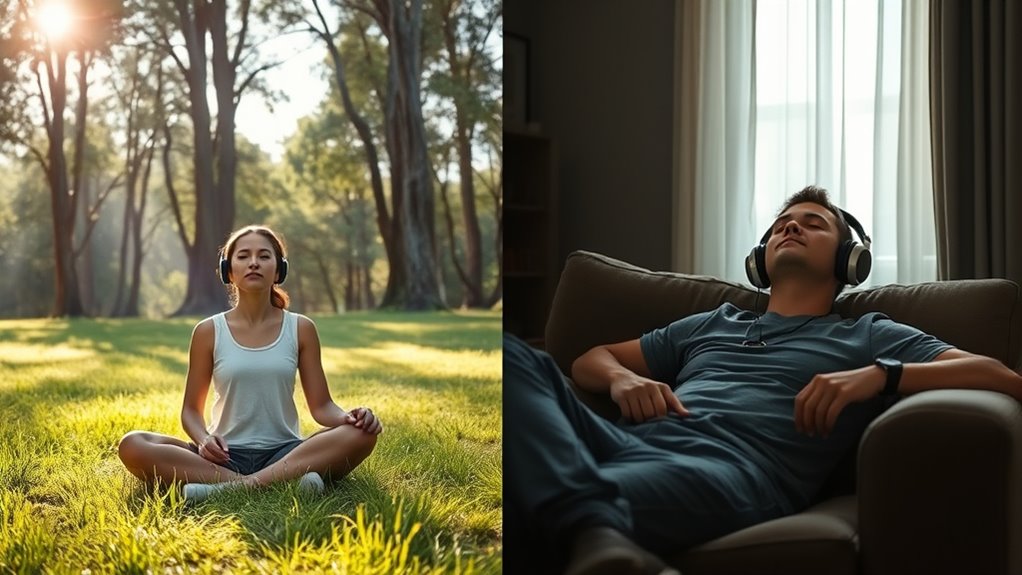
Have you ever wondered whether training your attention is more effective than simply relaxing? It’s a common question, especially when you’re trying to find the best way to manage stress and boost your mental well-being. When you focus on attention training, you often engage in mindfulness practices that aim to sharpen your focus and increase your awareness of the present moment. These practices include meditation, breath awareness, or guided exercises designed to help you notice your thoughts and feelings without judgment. By doing so, you develop a stronger ability to control where your mind wanders, which can lead to improved concentration and emotional regulation. On the other hand, relaxation techniques are all about calming your mind and body, often through activities like progressive muscle relaxation, deep breathing, or taking time out to unwind. These methods are effective stress reduction techniques that help lower your heart rate, decrease cortisol levels, and promote a sense of calm.
When you incorporate mindfulness practices into your routine, you actively train your attention. Instead of letting your mind drift aimlessly or become overwhelmed by worries, you learn to anchor it in the present. This intentional focus not only reduces stress but also enhances your mental clarity over time. The act of paying close attention to your breath or sensations in your body helps you stay grounded, which can be especially useful during challenging situations. Conversely, relaxation techniques may not directly train your attention, but they provide immediate relief from stress. They work by shifting your focus away from racing thoughts or tension, helping your nervous system to settle down. You might find that after a few minutes of deep breathing or muscle relaxation, your mind feels clearer and more at ease. Additionally, incorporating attention training into your daily routine can strengthen your capacity to manage distractions and improve your overall focus throughout the day.
Both approaches serve important roles in mental health management. Attention training through mindfulness practices cultivates a long-term skill—your ability to stay present and focused, which can reduce anxiety and improve overall resilience. Stress reduction techniques, however, often serve as quick, effective tools to instantly ease tension and restore calm. If you’re trying to decide which to prioritize, consider your goals. If you want sustained mental clarity and emotional stability, working on attention training might be more beneficial. But if you need immediate relief from stress, relaxation methods can be your go-to. Ultimately, combining these strategies can give you a well-rounded approach, helping you stay calm while also strengthening your ability to focus and stay present in everyday life.
Frequently Asked Questions
Can Attention Training Replace Relaxation Techniques Completely?
Attention training can’t fully replace relaxation techniques because both serve different purposes. While attention training improves focus and cognitive restructuring, mindfulness meditation enhances awareness and reduces stress. You might find combining these approaches more effective for managing anxiety or improving mental health. Relaxation techniques like deep breathing or progressive muscle relaxation still play a crucial role in calming your mind, complementing attention training rather than being replaced by it.
Which Method Is More Effective for Anxiety Management?
You’ll find that mindfulness meditation and cognitive restructuring are more effective for managing anxiety than relying solely on relaxation techniques. These methods help you address the root causes of anxiety by changing your thought patterns and increasing awareness. While relaxation can calm immediate symptoms, combining it with attention training, mindfulness, and cognitive restructuring offers a more thorough approach, empowering you to handle anxiety more effectively over time.
Are There Age Restrictions for Practicing Attention Training or Relaxation?
Did you know that children as young as four can benefit from attention training? Age restrictions are minimal, but developmental considerations and healthcare guidelines suggest tailoring techniques to suit different ages. For young kids, simple games work best, while adults and seniors can handle more advanced practices. Always consult healthcare professionals to guarantee the method matches your age and needs, making these practices safe and effective for everyone.
How Long Does It Take to See Benefits From Each Method?
You might start noticing benefits from mindfulness during relaxation within a few weeks, but it varies depending on your consistency. Relaxation techniques can show improvements in stress levels in just a few sessions, often within days. Regular practice, even just 10-15 minutes daily, helps speed up your relaxation timeline. For attention training, benefits may take several weeks to a couple of months, as your focus and cognitive control gradually improve.
Can These Techniques Be Combined for Better Results?
Think of your mind as a garden; combining techniques is like planting diverse flowers for a richer bloom. You can definitely merge attention training with relaxation, creating a synergy that enhances mindfulness integration. This technique synergy helps deepen focus while calming your thoughts. By blending these methods, you accelerate your progress, making your mental growth more resilient and balanced. Experiment with both, and you’ll find a harmonious routine that boosts your overall well-being.
Conclusion
As you choose between attention training and relaxation, imagine yourself standing at a crossroads, the sun warm on your face. With attention training, you sharpen your focus like a steady lighthouse beam cutting through fog, guiding your mind clearly. With relaxation, you sink into a gentle river’s flow, calming every ripple. Whichever path you take, picture yourself embracing the calm or clarity, knowing each step brings you closer to inner peace and mental strength.