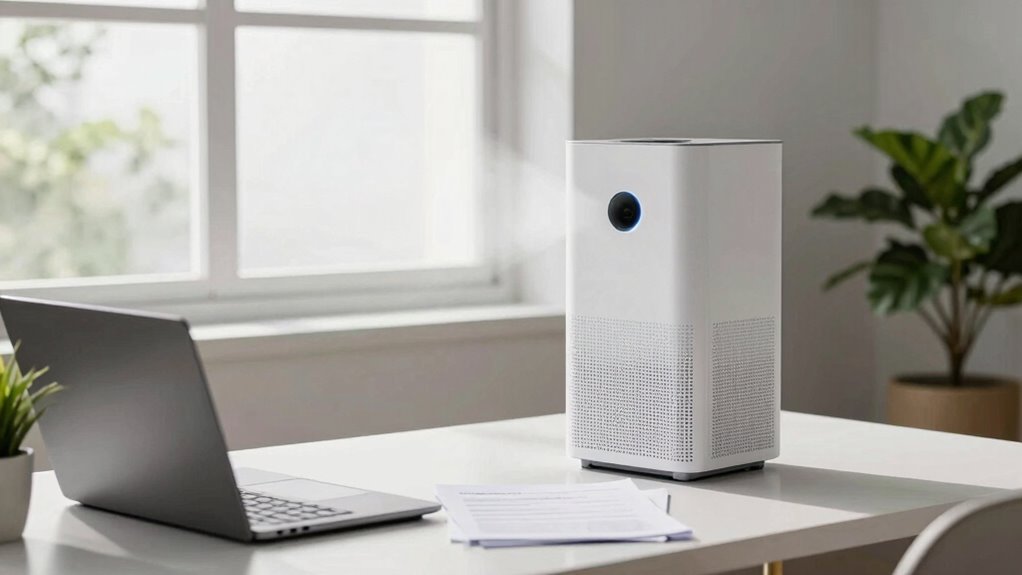

An air purifier can markedly improve your workspace by filtering out dust, allergens, and airborne pollutants, creating a cleaner and healthier environment. It helps reduce allergy symptoms, headaches, and fatigue, so you stay focused and comfortable. Plus, many models operate quietly and mask background noise, fostering concentration and calm. Properly maintained, they also manage humidity and odors, making your workspace more pleasant. Keep exploring to discover how the right air purifier can transform your work experience even further.
Key Takeaways
- Air purifiers improve air quality by filtering dust, allergens, and pollutants, promoting a healthier workspace.
- They operate quietly and may include white noise features to minimize distractions.
- Advanced models regulate humidity and neutralize odors, enhancing comfort and mental clarity.
- Proper selection and maintenance ensure effective air circulation and filtration for optimal workspace health.
- Overall, they boost focus, reduce fatigue, and support well-being in work environments.
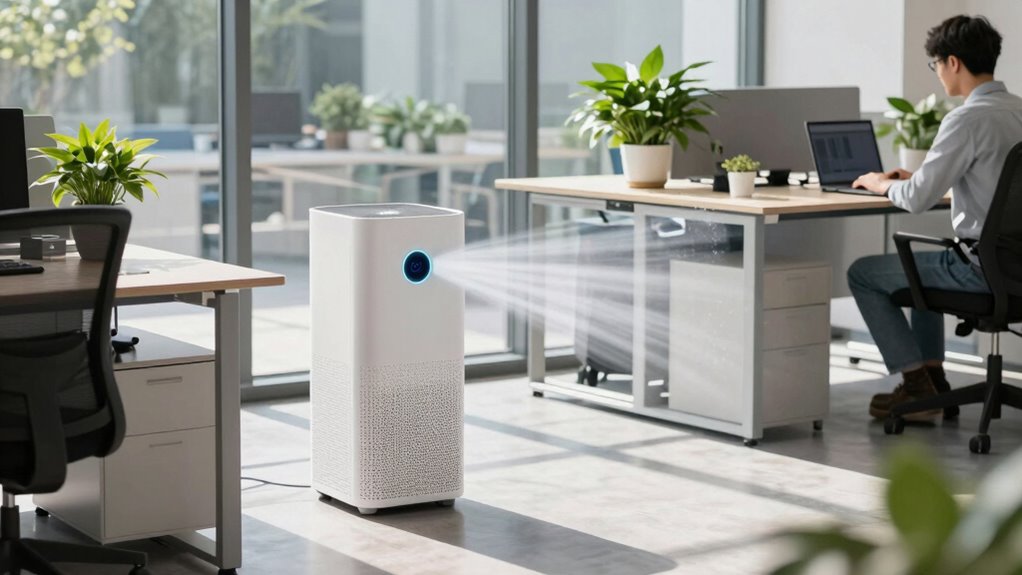
Creating a healthy workspace is essential for productivity and well-being, and an air purifier can play a crucial role in achieving that. When you spend long hours at your desk, the quality of the air around you directly impacts your focus, energy levels, and overall health. Poor air quality can leave you feeling sluggish, cause headaches, or worsen allergy symptoms. An air purifier helps improve the air by filtering out dust, allergens, pet dander, and airborne pollutants, creating a cleaner environment that supports your concentration and comfort throughout the day.
A healthy workspace boosts focus and well-being through cleaner air and improved comfort.
But an often-overlooked benefit of an air purifier is its influence on noise levels. Many models operate quietly, producing minimal sound, which means they won’t distract you during critical tasks or meetings. In fact, some purifiers come equipped with white noise features that can mask background sounds, helping you to focus better in noisy environments. This dual function—cleaning the air silently while masking disruptive sounds—enhances your overall workspace experience, allowing you to work more efficiently without constant interruptions.
Moreover, maintaining good air quality isn’t just about filtering out pollutants; it also involves managing humidity and reducing odors, both of which can influence your comfort and mental clarity. An air purifier with advanced features can regulate humidity levels and neutralize unpleasant smells, preventing them from becoming distractions or sources of discomfort. When the air feels fresh and clean, your mind stays sharper, and you’re less likely to feel fatigued or irritable during your workday. Additionally, air quality plays a vital role in overall health and productivity, emphasizing the importance of proper air management in your workspace. A well-maintained environment can also contribute to mental clarity and reduce stress associated with poor air conditions. Regular maintenance and choosing the right device can prevent the accumulation of microplastics in dust, which are increasingly recognized as potential health hazards.
Investing in the right air purifier means paying attention to the size of your workspace and the device’s filtration system. A purifier suited for your room size will effectively improve air quality without overworking or underperforming. Additionally, choosing a model with noise-reducing capabilities ensures that you gain the benefits of cleaner air without the distraction of constant hums or buzzing sounds. This balance allows you to focus on your tasks without feeling overwhelmed by background noise or compromised air quality. Proper air circulation is also essential to ensure the filtered air spreads evenly throughout your workspace, maximizing the benefits of your investment.
Frequently Asked Questions
Do Air Purifiers Remove All Types of Workplace Odors?
No, air purifiers don’t remove all types of workplace odors. They excel at improving air quality and reducing common odors like smoke or pet smells, but some stubborn scents, such as chemical fumes or cooking odors, may require specialized filters or ventilation. For effective odor elimination, choose an air purifier with activated carbon filters, and make sure it’s properly sized for your workspace to maximize air quality and create a fresher environment.
How Often Should Air Filters Be Replaced in an Office Setting?
Think of your air purifier as a diligent garden keeper—its filters need regular tending. For guaranteed filter maintenance, replace filters every 3 to 6 months, depending on usage and air quality. This replacement frequency keeps your workspace fresh and the purifier humming smoothly. Ignoring this schedule is like letting weeds overrun your garden; stay proactive to promote clean, healthy air flows steadily through your office environment.
Can Air Purifiers Help Reduce Workplace Allergies Effectively?
Yes, air purifiers can effectively reduce workplace allergies by targeting allergy triggers. They use advanced air filtration technology, like HEPA filters, to capture dust, pollen, pet dander, and mold spores. By continuously filtering the air, you create a healthier environment, which can minimize allergy symptoms and improve overall comfort at work. Investing in a good air purifier helps you breathe easier and stay more productive throughout the day.
Are There Specific Air Purifiers Recommended for Electronic Equipment Areas?
Yes, some air purifiers are specifically recommended for electronic equipment areas. Look for models with high air purifier compatibility, guaranteeing they effectively filter dust, smoke, and airborne particles without releasing ozone or other harmful byproducts, which can affect electronic device safety. Choose units with activated carbon filters and HEPA filters to protect sensitive equipment while maintaining a clean, healthy workspace. Always verify manufacturer guidelines to ensure compatibility with your electronic environment.
Do Noise Levels of Air Purifiers Affect Work Productivity?
Yes, noise levels of air purifiers can affect your work productivity. If an air purifier creates a noise disturbance, it might distract you, reduce concentration, and slow down your tasks. To prevent productivity impact, choose a model with quiet operation or adjustable settings. Keeping noise levels low ensures a peaceful workspace, allowing you to focus better and maintain efficiency while enjoying cleaner, healthier air.
Conclusion
In short, investing in an air purifier can truly breathe new life into your workspace. By filtering out pollutants and improving air quality, you’ll find that productivity and comfort soar. Don’t let the dust settle on your potential—sometimes, a small change makes a big difference. With cleaner air, you’re better equipped to tackle your tasks head-on. After all, it’s often the little things that make the biggest impact.