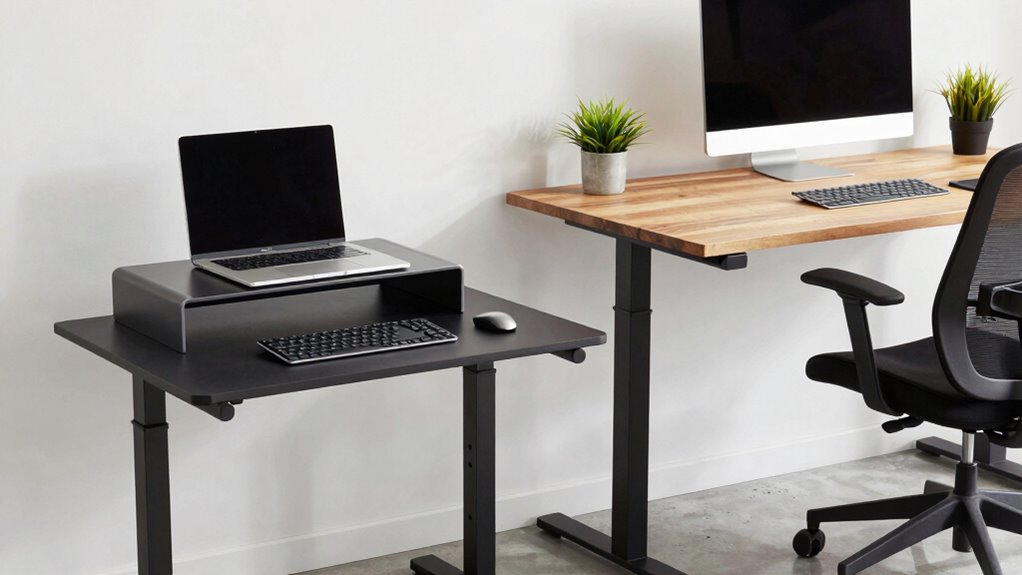

If you’re looking for a quick, budget-friendly way to improve your workspace, a desk converter might be the better fit, as it easily adjusts your existing desk for sitting or standing. However, if you want a more permanent solution and enough space, a full standing desk provides long-term ergonomic benefits and helps you stay organized. Consider your workspace, budget, and health goals—continue for detailed insights to help make the best choice for you.

Get the little things that make your day delivered free — and shop member deals
- Fast, free delivery on millions of items
- Access to Prime Big Deal Days deals on October 6–7
- Prime Video, Amazon Music and more included
Key Takeaways
- Desk converters are more affordable and flexible, ideal for quick ergonomic upgrades on existing desks.
- Full standing desks offer a permanent solution, supporting better long-term posture and workspace organization.
- Converters are suitable for users needing frequent posture changes and tight budgets.
- Standing desks are better for those seeking a dedicated, stable workstation and long-term ergonomic benefits.
- Choice depends on workspace size, budget, and whether a temporary or permanent ergonomic improvement is desired.
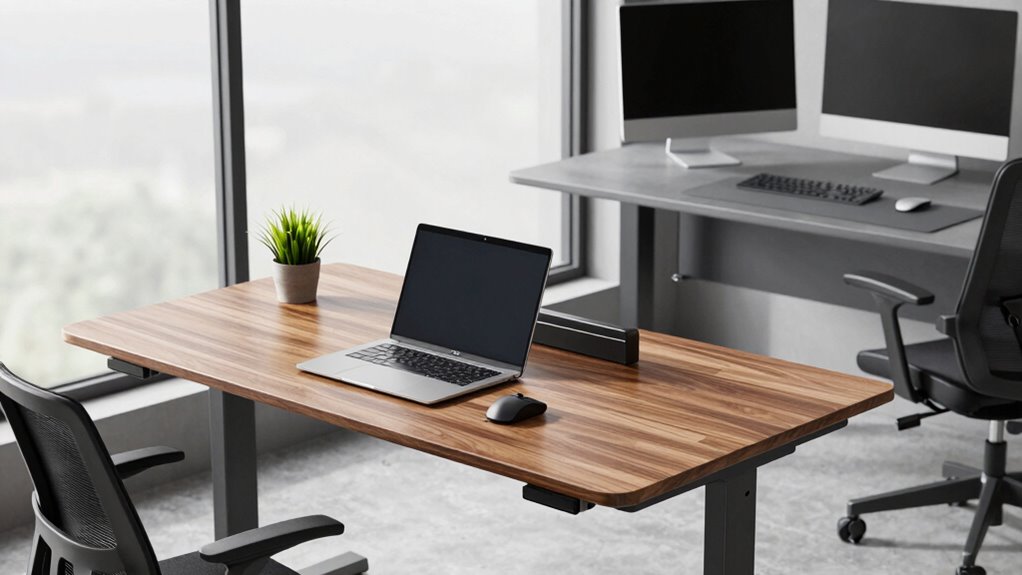
When choosing the best way to make your workspace more ergonomic, you’ll find two popular options: desk converters and standing desks. Both aim to reduce the strain of sitting all day, but they serve different needs and preferences. Desk converters sit on top of your existing desk, allowing you to easily switch between sitting and standing without much disruption. Standing desks, on the other hand, are standalone units that replace your traditional desk, giving you a dedicated space for standing work. Understanding the ergonomic benefits of each can help you decide which fits your lifestyle better.
Choosing between desk converters and standing desks depends on your workspace needs and budget.
Desk converters are a flexible and affordable choice for many. They allow you to elevate your keyboard, mouse, and monitor, promoting better posture and reducing neck and back strain. Because they sit atop your current desk, you don’t have to invest in a completely new setup, making them a cost-effective solution. The ergonomic benefits are significant if you often switch between sitting and standing, as they encourage movement and prevent prolonged static postures. Plus, you can adjust them easily to different heights, ensuring your workspace remains comfortable. On the downside, some converters can be bulky, limiting the space for other work essentials, and they might not provide the same stability or height range as a full standing desk. Additionally, choosing the right setup involves considering ergonomic principles to maximize comfort and health benefits.
Standing desks offer a more permanent ergonomic upgrade. They usually feature adjustable height settings, allowing you to find the perfect position for working comfortably throughout the day. Standing desks can be more ergonomic in the long run because they eliminate the need to constantly lift and adjust a converter. They also free up desk space, providing a clean, organized workspace. The ergonomic benefits include better posture, increased activity levels, and reduced risks associated with prolonged sitting. However, standing desks tend to be more expensive upfront, especially high-quality models. The price comparison shows that while they require a larger initial investment, many users find the health benefits and durability justify the cost.
Ultimately, your choice depends on your budget and workspace needs. If you want a quick, affordable option with good ergonomic benefits, a desk converter is probably your best bet. If you’re ready to make a more permanent change and invest in a dedicated workstation, a standing desk might be the better fit. Both options promote healthier work habits, but understanding their differences helps you choose the solution that aligns with your daily routine and budget.
Frequently Asked Questions
Which Option Is More Cost-Effective Long-Term?
A desk converter is more cost-effective long-term because it offers ergonomic benefits without the hefty price of a full standing desk. You can easily adjust it to different heights, reducing strain and improving comfort. Plus, it preserves aesthetic appeal by fitting seamlessly on your existing desk. Over time, you’ll save money on space and customization, making a desk converter a smart, budget-friendly choice for ergonomic health and style.
How Do Desk Converters Impact Workspace Organization?
Desk converters help you keep your workspace organized by offering ergonomic benefits and enhancing aesthetic appeal. They easily switch between sitting and standing positions, reducing clutter and freeing up space on your desk. With a sleek design, they add a modern touch to your setup, making your workspace look tidy and inviting. Plus, their portability allows you to adjust your organization as needed, promoting a more efficient and visually appealing environment.
Are There Size Limitations for Desk Converters?
Size limitations for desk converters depend on your workspace and needs. You’ll want a converter that comfortably fits your desk, allowing easy movement and setup. While larger models offer ergonomic benefits with more surface area, they may pose portability concerns, making them less convenient if you need to move or store your converter frequently. Measure your desk carefully, and choose a size that balances comfort, convenience, and ergonomic benefits.
Can Both Options Support Different User Heights Comfortably?
Yes, both options can support different user heights comfortably, especially when you choose adjustable models. Adjustable desk converters and full standing desks offer ergonomic benefits by allowing you to customize height for proper posture, reducing strain. Plus, they contribute to aesthetic appeal by creating a sleek, modern look in your workspace. Whether you prefer a compact converter or a full desk, both can enhance comfort and style tailored to your needs.
Which Option Requires Less Maintenance and Adjustment?
They say “less is more,” and in this case, desk converters require less maintenance and adjustment than full standing desks. You’ll find they’re easier to set up, move, and fine-tune, offering ergonomic benefits without the hassle. Plus, their sleek design often boosts aesthetic appeal, fitting seamlessly into most workspaces. So, if you want simplicity and style with fewer upkeep worries, a desk converter is your best bet.
Conclusion
Ultimately, choosing between desk converters and full standing desks depends on your needs, your space, and your budget. Both options promote movement, reduce sedentary time, and improve comfort—if you know what to look for. Whether you prefer the flexibility of a converter or the stability of a full desk, the goal remains the same: to stand more, sit less, and stay healthier. Make your choice, embrace the change, and enjoy the benefits of a more dynamic workspace.
Products Worth Considering
adjustable desk converter for standing desk
As an affiliate, we earn on qualifying purchases.
As an affiliate, we earn on qualifying purchases.