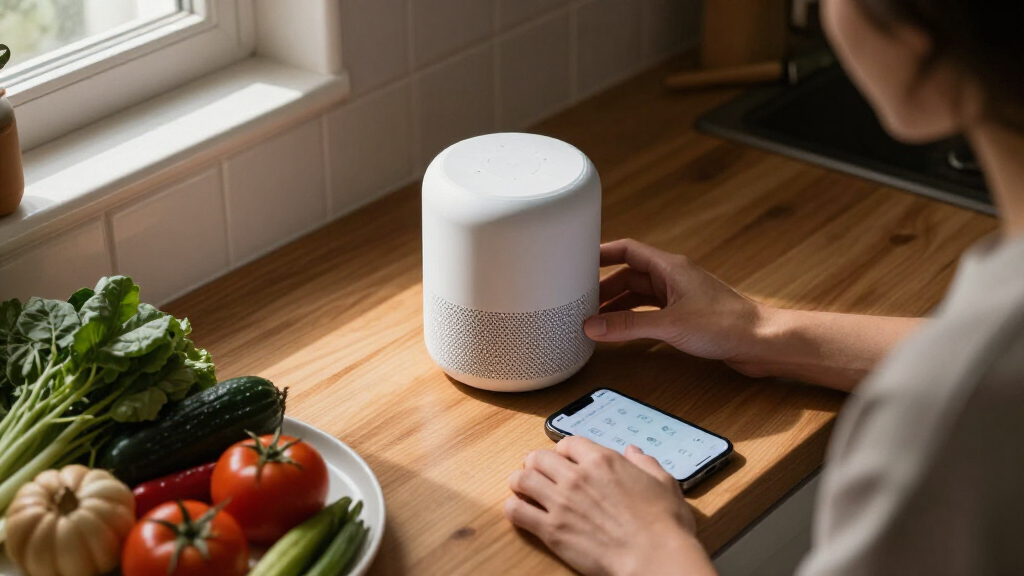

The best smart home devices make everyday routines easier without adding setup headaches or locking you into a system that does not fit your home. I rank the TP-Link Tapo S505 Matter Smart Light Switch as the best overall pick for its built-in, wall-switch control and Matter support; the TP-Link Tapo Matter Smart Plug Mini stands out for flexible plug-in automation, while the Amazon Echo Show 15 suits homes that want a large shared display. The main tradeoffs are compatibility, installation effort, and how much control you want from one ecosystem. A smart plug is quick to add, while a switch or thermostat can take more planning and may depend on your wiring and platform. Read on for the full breakdown and help matching a device to your home.

Get the little things that make your day delivered free — and shop member deals
- Fast, free delivery on millions of items
- Access to Prime Big Deal Days deals on October 6–7
- Prime Video, Amazon Music and more included
Key Takeaways
- The Tapo S505 switch is the strongest all-around fit when you want smart lighting control at the wall and Matter compatibility; it calls for more installation planning than a plug.
- The Tapo Matter Smart Plug Mini offers a flexible starting point for automating existing appliances, while the four-pack plugs are better suited to outfitting several outlets at once.
- Amazon’s Echo devices serve different roles: the Echo Dot is a compact voice-first hub, the Echo Spot is tailored to bedside use, and Echo Show displays add screens for shared or personal spaces.
- Device compatibility matters more than brand name alone: Matter options can bridge supported ecosystems, but buyers still need to check their controller, network, and feature support.
- Smart plugs, bulbs, switches, and thermostats solve different problems; a plug cannot replace a wall switch, and a thermostat purchase should start with HVAC compatibility.
| TP-Link Tapo S505 Matter Smart Light Switch, 2-Pack | 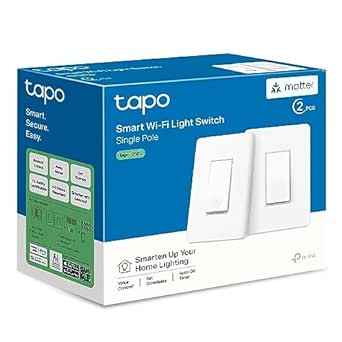 | Best for Cross-Platform Lighting | Model: Tapo S505 | Pack size: 2 switches | Switch type: Single-pole, one-way | VIEW LATEST PRICE | See Our Full Breakdown |
| Kasa Smart Plug HS103P4, 4-Pack |  | Best for Straightforward Plug-In Control | Model: HS103P4 | Pack size: 4 plugs | Connectivity: 2.4 GHz Wi-Fi | VIEW LATEST PRICE | See Our Full Breakdown |
| Amazon Echo Spot Smart Alarm Clock with Alexa, Black |  | Best Smart Alarm Clock | Display: 2.83-inch touchscreen, 240 x 320 pixels | Dimensions: 4.5 x 4.1 x 4.4 inches | Weight: 14.3 oz | VIEW LATEST PRICE | See Our Full Breakdown |
| Amazon Echo Dot (5th Gen) Smart Speaker, Deep Sea Blue |  | Best for Alexa Voice Control | Generation: 5th Gen | Dimensions: 3.9 x 3.9 x 3.5 inches | Weight: 10.7 oz | VIEW LATEST PRICE | See Our Full Breakdown |
| GHome Smart Plug, 4-Pack | 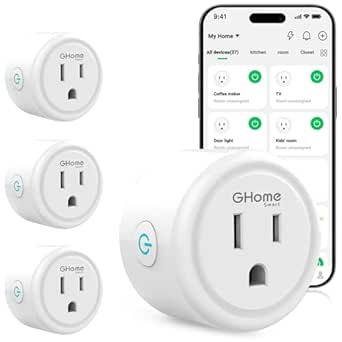 | Best for Grouped App Control | Model: WP3 | Quantity: 4 plugs | Connectivity: 2.4 GHz Wi-Fi; Bluetooth or Wi-Fi setup | VIEW LATEST PRICE | See Our Full Breakdown |
| Amazon Smart Plug |  | Best for Simple Alexa Setups | Dimensions: 3.2 × 1.5 × 2.2 in | Weight: 3.1 oz | Input: 120 VAC, 60 Hz, 15 A max | VIEW LATEST PRICE | See Our Full Breakdown |
| Amazon Echo Show 15 (2nd Gen) 15.6-Inch Full HD Smart Display with Fire TV and Alexa |  | Best for Whole-Home Smart Control | Display: 15.6-inch, 1920 × 1080 | Dimensions: 16.1 × 10.1 × 1.4 in | Weight: 4.96 lb | VIEW LATEST PRICE | See Our Full Breakdown |
| Linkind Smart Wi-Fi LED Bulbs with Alexa and Google Home | 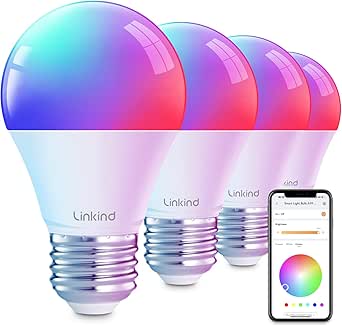 | Best for Flexible Smart Lighting | Bulb shape and base: A19, E26 | Wattage: 9 W | Brightness: 800 lumens | VIEW LATEST PRICE | See Our Full Breakdown |
| TP-Link Tapo Matter Smart Plug Mini, 15A/1800W, 3-Pack |  | Best for Multi-Platform Homes | Pack size: 3 plugs | Maximum current: 15 A | Maximum wattage: 1800 W | VIEW LATEST PRICE | See Our Full Breakdown |
| Amazon Echo Show 5 Smart Display with Alexa, Cloud Blue |  | Best Compact Smart Display | Display: 5.5 inches | Camera: 2 MP | Smart assistant: Alexa | VIEW LATEST PRICE | See Our Full Breakdown |
| Linkind Matter Smart Plug, 4-Pack | 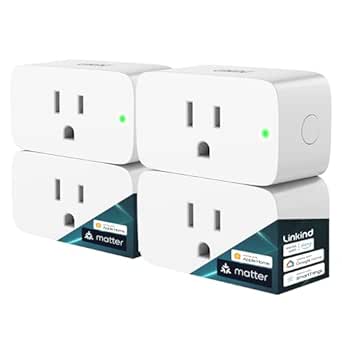 | Best for Multi-Platform Homes | Quantity: 4 plugs | Connectivity: Matter, 2.4 GHz Wi-Fi, IPv6 | Voice assistants: Apple Home/Siri, Amazon Alexa, Google Assistant, SmartThings | VIEW LATEST PRICE | See Our Full Breakdown |
| Amazon Basics Smart Plug, Alexa-Compatible, 4-Pack | 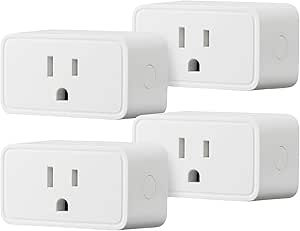 | Best for Alexa Beginners | Quantity: 4 plugs | Compatibility: Amazon Alexa only | Wi-Fi: 2.4 GHz | VIEW LATEST PRICE | See Our Full Breakdown |
| Amazon Smart Thermostat, Works with Alexa and Ring |  | Best for Alexa-Based Climate Control | Model number: S6ED3R | Size: 3.56 × 3.56 × 0.84 in | Weight: 3.86 oz | VIEW LATEST PRICE | See Our Full Breakdown |
| Govee Smart Plugs, Wi-Fi and Bluetooth, 4-Pack |  | Best for Bluetooth-Assisted Setup | Quantity: 4 plugs | Connectivity: Bluetooth and 2.4 GHz Wi-Fi | Voice assistants: Amazon Alexa, Google Assistant | VIEW LATEST PRICE | See Our Full Breakdown |
| EIGHTREE Smart Wi-Fi Plug, 15A, 4-Pack | 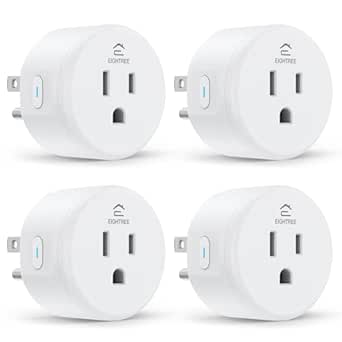 | Best for SmartThings Without a Hub | Pack size: 4 plugs | Model: ET01 | Connectivity: 2.4 GHz Wi-Fi | VIEW LATEST PRICE | See Our Full Breakdown |
| smart home device | Connectivity | Dimensions |
|---|---|---|
| TP-Link Tapo S505 Matter Smart | Matter, Wi-Fi | — |
| Kasa Smart Plug HS103P4 | 2.4 GHz Wi-Fi | 1.57 x 1.5 x 2.62 inches |
| Amazon Echo Spot Smart Alarm C | — | 4.5 x 4.1 x 4.4 inches |
| Amazon Echo Dot | — | 3.9 x 3.9 x 3.5 inches |
| GHome Smart Plug | 2.4 GHz Wi-Fi; Bluetooth or Wi-Fi setup | 2.1 x 2.1 x 1.1 inches |
| Amazon Smart Plug | — | 3.2 × 1.5 × 2.2 in |
| Amazon Echo Show 15 | — | 16.1 × 10.1 × 1.4 in |
| Linkind Smart Wi-Fi LED Bulbs | 2.4 GHz Wi-Fi and Bluetooth | — |
| TP-Link Tapo Matter Smart Plug | Matter, Wi-Fi, and Bluetooth | — |
| Amazon Echo Show 5 Smart Displ | — | — |
| Linkind Matter Smart Plug | Matter, 2.4 GHz Wi-Fi, IPv6 | — |
| Amazon Basics Smart Plug | — | 2.7 × 2.1 × 1.5 in |
| Amazon Smart Thermostat | — | — |
| Govee Smart Plugs | Bluetooth and 2.4 GHz Wi-Fi | — |
| EIGHTREE Smart Wi-Fi Plug | 2.4 GHz Wi-Fi | 1.96 × 1.96 × 2.03 in |
More Details on Our Top Picks
TP-Link Tapo S505 Matter Smart Light Switch, 2-Pack
The Tapo S505 is the strongest fit here for buyers who want smart lighting controlled at the wall, rather than adding a plug to each lamp. Matter support connects it with Apple Home, Alexa, Google Home, and SmartThings, giving it broader platform flexibility than the Alexa- and Google-focused Kasa HS103P4. App, touch, and voice controls, plus schedules and timers, let household members use the lights without relying on one phone. Local network control is another plus for responsive control within the home. The tradeoff is the installation: this is a hardwired switch that requires a neutral wire, compatible single-pole wiring, and 2.4 GHz Wi-Fi. Buyers who want a simple setup should choose a plug such as the Kasa instead; electrical work may call for an electrician.
Pros:- Matter support spans four major smart home platforms.
- Wall, app, and voice control suit different household habits.
- Local network control and multi-admin access support shared use.
- Two switches are included, with guided installation and scheduling.
Cons:- Requires a neutral wire and compatible single-pole wiring.
- Installation involves electrical work and may require an electrician.
- Requires a 2.4 GHz Wi-Fi network.
Best for: Homeowners replacing single-pole wall switches who want Matter lighting control across Apple Home, Alexa, Google Home, or SmartThings.
Not ideal for: Renters, homes without a neutral wire, or anyone seeking a no-tools smart lighting setup.
- Model:Tapo S505
- Pack size:2 switches
- Switch type:Single-pole, one-way
- Connectivity:Matter, Wi-Fi
- Compatible platforms:Apple Home, Amazon Alexa, Google Home, Samsung SmartThings
- Wiring requirement:Neutral wire required
- Wi-Fi requirement:2.4 GHz
- Certification:UL
Our verdict“Choose the Tapo S505 for hardwired lighting and broad Matter compatibility, but pick a smart plug if you want an easier installation.”
Kasa Smart Plug HS103P4, 4-Pack
The Kasa HS103P4 is a practical choice for controlling existing lamps and small appliances without changing wiring or adding a hub. Its four-plug set can cover several rooms, while the Kasa app provides remote control, schedules, and countdown timers. Setup over 2.4 GHz Wi-Fi is simpler than installing the hardwired Tapo S505, though this plug does not offer the Tapo’s Matter-based reach across Apple Home and SmartThings. Voice control is limited to Alexa and Google Assistant, so it suits households already using those assistants better than buyers building a mixed-platform setup. The 1,800-watt maximum gives it a higher stated capacity than the GHome four-pack, but buyers still need to check that each connected device is appropriate for a smart plug.
Pros:- Four plugs provide control in multiple rooms.
- Works with Alexa and Google Assistant without a hub.
- App offers remote control, schedules, and countdown timers.
- UL certified, with a stated maximum wattage of 1,800 W.
Cons:- Requires a 2.4 GHz Wi-Fi network.
- Does not list Matter or Apple Home compatibility.
- Adds a plug at the outlet and may not suit every appliance.
Best for: Alexa or Google Assistant households that want app-based control and schedules for several lamps or compatible appliances.
Not ideal for: Buyers who need Matter or Apple Home support, or who want to control hardwired ceiling lights at the wall.
- Model:HS103P4
- Pack size:4 plugs
- Connectivity:2.4 GHz Wi-Fi
- Voice assistants:Amazon Alexa, Google Assistant
- Operating voltage:120 V AC
- Maximum wattage:1,800 W
- Dimensions:1.57 x 1.5 x 2.62 inches
- Certification:UL certified
- Warranty:2 years
Our verdict“Pick the Kasa four-pack for hub-free Alexa or Google control of several plug-in devices, not for broad Matter integration.”
Amazon Echo Spot Smart Alarm Clock with Alexa, Black
The Echo Spot combines an alarm clock, compact touchscreen, speaker, and Alexa control in one bedside device. Its 2.83-inch display can show the time, weather, and song titles, while voice commands can operate compatible smart home devices—handy for setting a routine without reaching for a phone. Compared with the Echo Dot (5th Gen), the Spot gives key information a screen and clock-focused interface; the Dot is the simpler pick for rooms where voice and audio matter more than a display. The Spot’s built-in speaker handles music, podcasts, and audiobooks, but its small screen and single full-range driver are not substitutes for a larger smart display or a dedicated sound system. Its eero extension feature also depends on a compatible router and setup.
Pros:- Customizable touchscreen presents time, weather, and song information.
- Alexa can control compatible smart home devices and routines.
- Built-in speaker plays music, podcasts, and audiobooks.
- Can extend a compatible eero network when configured with an eero router.
Cons:- Small display is less suited to viewing content than a larger smart display.
- eero extension requires a compatible router, account linking, and setup.
- Some Alexa skills and services may require a subscription.
Best for: Alexa households wanting a bedside clock that can show time and weather and control compatible smart home devices by voice.
Not ideal for: Buyers who want a larger screen for viewing content, stronger standalone audio, or smart home control beyond Alexa-compatible devices.
- Display:2.83-inch touchscreen, 240 x 320 pixels
- Dimensions:4.5 x 4.1 x 4.4 inches
- Weight:14.3 oz
- Camera:None
- Wi-Fi:Dual-band 802.11a/b/g/n/ac, 2.4 and 5 GHz
- Bluetooth:A2DP audio streaming and AVRCP voice control
- Speaker:1.73-inch full-range built-in speaker
- eero Built-in:Up to 1,000 sq. ft. additional coverage with a compatible eero router
- Recycled materials:36%
Our verdict“Choose the Echo Spot for a screen-equipped Alexa alarm clock; choose the Echo Dot if you do not need a display.”
Amazon Echo Dot (5th Gen) Smart Speaker, Deep Sea Blue
The Echo Dot (5th Gen) makes the most sense when a room needs an always-available Alexa voice interface, not a screen. It handles alarms, timers, music, podcasts, and compatible smart home controls, while built-in motion and temperature sensors can inform routines—capabilities that give it a more active smart-home role than a basic speaker. Compared with the Echo Spot, the Dot trades visible time and weather for a compact, screen-free design. It also lists Matter compatibility alongside Wi-Fi and Bluetooth Low Energy Mesh, making it a flexible addition to an Alexa-centered setup. Its mono 1.6-inch speaker is designed for everyday listening rather than room-filling stereo, and eero network extension only applies when paired with a compatible router.
Pros:- Motion and temperature sensors can support smart home routines.
- Matter, Wi-Fi, and Bluetooth Low Energy Mesh compatibility.
- Alexa supports alarms, timers, and voice control of compatible devices.
- Can extend a compatible eero network when properly configured.
Cons:- No display for checking the time or weather at a glance.
- Mono speaker is less suited to stereo or room-filling audio.
- eero extension needs a compatible router and setup; some services may cost extra.
Best for: Alexa users who want voice control, alarms, and sensor-driven routines in a bedroom, kitchen, or other small room.
Not ideal for: People who want a display, stereo playback from one device, or smart home control without relying on Alexa-compatible services.
- Generation:5th Gen
- Dimensions:3.9 x 3.9 x 3.5 inches
- Weight:10.7 oz
- Driver:1.6-inch full-range
- Playback channels:Mono
- Audio bandwidth:62 Hz–19 kHz
- Wi-Fi:Dual-band 802.11a/b/g/n/ac, 2.4 and 5 GHz
- Smart home compatibility:Wi-Fi, Bluetooth Low Energy Mesh, Matter
- Color:Deep Sea Blue
Our verdict“Pick the Echo Dot for screen-free Alexa control and sensor-based routines, while the Echo Spot suits buyers who want a bedside display.”
GHome Smart Plug, 4-Pack
The GHome Smart Plug four-pack stands out for buyers who want to group outlets and control them through more than one app. The plugs work with Alexa and Google Assistant, and the GHome, Smart Life, or Tuya apps offer remote control, schedules, timers, and device sharing. That app choice and group-control emphasis set it apart from the Kasa HS103P4, which is a more straightforward option for Alexa and Google households. Setup is less direct than the Kasa route: each plug must first connect through the GHome app and network before voice-assistant control is available. The stated maximum is 1,200 W, below the Kasa’s 1,800 W, so buyers should check appliance requirements carefully. It also depends on 2.4 GHz Wi-Fi and does not include a hub.
Pros:- Four plugs support control across multiple outlets.
- Works with Alexa and Google Assistant after app setup.
- Supports schedules, timers, grouping, and device sharing.
- No hub required; ETL and FCC certifications are listed.
Cons:- Requires 2.4 GHz Wi-Fi.
- GHome app and network setup must come before Alexa or Google Home use.
- Maximum wattage of 1,200 W is lower than the Kasa HS103P4’s stated 1,800 W.
Best for: Households that want to group several compatible plug-in devices and share control through Alexa, Google Assistant, or supported apps.
Not ideal for: Buyers who want the simplest voice-assistant setup, need a higher stated wattage limit, or require Matter support.
- Model:WP3
- Quantity:4 plugs
- Connectivity:2.4 GHz Wi-Fi; Bluetooth or Wi-Fi setup
- Voice assistants:Amazon Alexa, Google Assistant
- Apps:GHome, Smart Life, Tuya
- Operating voltage:120 V
- Maximum wattage:1,200 W
- Dimensions:2.1 x 2.1 x 1.1 inches
- Certifications:ETL, FCC
Our verdict“Choose GHome if app-based grouping and shared control matter more than the Kasa plug’s higher stated wattage and simpler assistant setup.”
Amazon Smart Plug
Simple Alexa control is the reason I’d choose this plug: it adds schedules, timers, routines, and voice commands to a compatible device without a separate hub. Its compact body is designed to leave the other outlet available, a useful advantage over bulkier plugs. Compared with the TP-Link Tapo Matter Smart Plug Mini, though, this is a narrower choice: it works with Alexa only, while Tapo supports multiple smart home platforms and local Matter control when internet service is down. The Amazon plug also needs a connected appliance with a physical on/off switch, so it cannot give every device smart control. It reconnects to Alexa after power or Wi-Fi outages, but its 2.4 GHz-only Wi-Fi and indoor-only rating limit where it fits.
Pros:- Works with Alexa without a separate smart home hub
- Supports voice control, routines, timers, and schedules
- Compact design is intended to leave the second outlet free
- Reconnects to Alexa after power or Wi-Fi outages
Cons:- Compatible with Alexa only
- Requires 2.4 GHz Wi-Fi and does not support 5 GHz
- Works only with compatible devices that have a physical on/off switch
Best for: Alexa households that want to schedule a lamp or other compatible appliance without adding a hub.
Not ideal for: Apple Home, Google Home, or SmartThings users, and anyone who needs a plug for outdoor use or a device without a physical on/off switch.
- Dimensions:3.2 × 1.5 × 2.2 in
- Weight:3.1 oz
- Input:120 VAC, 60 Hz, 15 A max
- Maximum output:15 A
- Wi-Fi:2.4 GHz, 802.11 b/g/n; no 5 GHz support
- Usage:Indoor only
- Compatibility:Alexa only; compatible device must have a physical on/off switch
- Warranty:1-year limited warranty
Our verdict“Choose this plug for straightforward Alexa routines, but pick the TP-Link Tapo Matter Smart Plug Mini if you need broader platform support.”
Amazon Echo Show 15 (2nd Gen) 15.6-Inch Full HD Smart Display with Fire TV and Alexa
The 15.6-inch screen gives this Echo Show a role beyond a bedside assistant: it can put family widgets, video calls, Fire TV, and smart home controls in one prominent place. Support for Zigbee, Matter, and Thread also makes it a more capable control point than the smaller Amazon Echo Show 5, which is better suited to quick checks and calls from a nightstand. The tradeoff is footprint: at 16.1 inches wide and nearly five pounds, this model needs a suitable counter or wall location rather than a spare corner. A camera shutter and camera-off control offer privacy options, while the included remote helps with Fire TV use. Some services may involve additional fees, and ad-hoc Wi-Fi networks are not supported.
Pros:- Large Full HD screen supports landscape and portrait orientation
- Combines Fire TV with customizable family organization widgets
- Supports Zigbee, Matter, and Thread devices
- Camera shutter and camera-off control provide privacy options
Cons:- Large size and 4.96 lb weight require a substantial placement area
- Some skills and services may require subscriptions or additional fees
- Does not support ad-hoc Wi-Fi networks
Best for: Households that want a shared display for family organization, entertainment, video calls, and control of Matter, Zigbee, or Thread devices.
Not ideal for: Buyers with limited counter or wall space, or anyone seeking a small, low-profile display mainly for bedside information.
- Display:15.6-inch, 1920 × 1080
- Dimensions:16.1 × 10.1 × 1.4 in
- Weight:4.96 lb
- Camera:13 MP with shutter
- Audio:Two 2-inch woofers and two 0.6-inch tweeters
- Wi-Fi:Wi-Fi 6E; tri-band, dual-antenna MIMO
- Smart home support:Zigbee, Matter, and Thread Border Router
- Processor:Octa-core SoC with Amazon AZ2 neural network engine
- Included accessories:Alexa Voice Remote (2024), batteries, 30 W power adapter, and 5 ft cord
Our verdict“Pick the Echo Show 15 if you want a shared smart home and media hub, and choose the Echo Show 5 if compact placement matters more.”
Linkind Smart Wi-Fi LED Bulbs with Alexa and Google Home
For buyers who want lighting scenes rather than just remote on-and-off control, these color-changing A19 bulbs offer a broader set of adjustments than a smart plug can provide. You can tune white light from 1800K to 6500K, choose colors, dim through the app or voice control, and group bulbs for shared schedules. Unlike the Amazon Smart Plug, they work with both Alexa and Google Home and need no hub. The limitation is that setup uses 2.4 GHz Wi-Fi and Bluetooth, and the bulbs are not compatible with traditional dimmer switches. Their 800-lumen output suits many everyday fixtures, but buyers seeking a simple, platform-flexible way to automate lamps without changing bulbs may prefer the TP-Link Tapo Matter Smart Plug Mini instead.
Pros:- Works with Alexa and Google Home without a hub
- Offers color control, tunable white, and dimming
- Includes music sync, preset scenes, schedules, and group control
- Rated for 25,000 hours of use
Cons:- Initial setup requires 2.4 GHz Wi-Fi and Bluetooth
- Not compatible with traditional dimmer switches
- Indoor use only
Best for: Alexa or Google Home users who want app-controlled color, adjustable white light, and schedules in standard indoor fixtures.
Not ideal for: People using traditional dimmer switches, fixtures that need a different bulb shape or base, or households relying on 5 GHz Wi-Fi for device setup.
- Bulb shape and base:A19, E26
- Wattage:9 W
- Brightness:800 lumens
- Color:16 million colors
- Color temperature:1800K–6500K
- Color rendering index:90
- Connectivity:2.4 GHz Wi-Fi and Bluetooth
- Compatibility:Alexa and Google Home
- Lifespan:25,000 hours
Our verdict“Choose these bulbs for customizable Alexa or Google Home lighting, but use a smart plug if you only need to schedule an existing lamp.”
TP-Link Tapo Matter Smart Plug Mini, 15A/1800W, 3-Pack
The Matter support is the main reason I’d rank this three-pack ahead of single-platform plugs for homes that mix assistants or may change platforms later. It works with Apple Home, Alexa, Google Home, and SmartThings, and its local Matter control can keep working when the internet is offline. That gives it a practical advantage over the Amazon Smart Plug, which is restricted to Alexa. Compact construction helps preserve access to adjacent outlets, and schedules and timers cover the everyday routines most buyers want from a plug. The catch is that setup still depends on 2.4 GHz Wi-Fi; Matter does not remove that band limitation. If a home uses only Alexa and needs just one outlet controlled, the simpler Amazon plug may be enough.
Pros:- Matter support spans Apple Home, Alexa, Google Home, and SmartThings
- Local control can continue when internet service is offline
- Compact design helps avoid blocking adjacent outlets
- Three plugs provide scheduling, timers, app, and voice control across several devices
Cons:- Supports 2.4 GHz Wi-Fi only
- Matter features depend on a compatible smart home platform and setup
Best for: Households using Apple Home, Alexa, Google Home, or SmartThings that want several compact plugs with local Matter control.
Not ideal for: Buyers whose Wi-Fi setup does not support 2.4 GHz, or Alexa-only households that need just one basic smart plug.
- Pack size:3 plugs
- Maximum current:15 A
- Maximum wattage:1800 W
- Operating voltage:120 V AC
- Connectivity:Matter, Wi-Fi, and Bluetooth
- Wi-Fi band:2.4 GHz
- Compatible platforms:Apple Home, Amazon Alexa, Google Home, and Samsung SmartThings
- Certification:UL certified
- Warranty:2-year limited warranty
Our verdict“Choose the Tapo three-pack for a multi-platform home or offline local control; the Amazon Smart Plug is a simpler fit for Alexa-only use.”
Amazon Echo Show 5 Smart Display with Alexa, Cloud Blue
The 5.5-inch display makes the Echo Show 5 a compact Alexa screen for a bedside table or small counter, where it can show news, weather, photos, and compatible camera feeds. Its camera supports video calls, and the shutter plus mic/camera-off button give buyers direct privacy controls. Compared with the Echo Show 15, it takes far less space but offers a much smaller screen and lacks that model’s listed Zigbee, Matter, and Thread support. It still handles compatible smart home devices through Alexa, so it can suit buyers who want a small control point rather than a shared household dashboard. The 2 MP camera is modest, and some camera or smart home features depend on compatible devices.
Pros:- Compact screen fits bedside tables and smaller counters
- Shows news, weather, photos, and compatible camera feeds
- Built-in camera supports video calls
- Includes a camera shutter and mic/camera-off button
Cons:- 2 MP camera provides limited video-call resolution
- Some camera and smart home features require compatible devices
- Small screen is less suited to shared family organization than the Echo Show 15
Best for: Alexa users who want a small bedside or countertop display for quick updates, video calls, and control of compatible smart home devices.
Not ideal for: Households wanting a large shared dashboard, advanced smart home hub support, or higher-resolution video calls.
- Display:5.5 inches
- Camera:2 MP
- Smart assistant:Alexa
- Color:Cloud Blue
- Recycled materials:Fabric made from 100% post-consumer recycled polyester yarn; aluminum made from 100% recycled aluminum
- Packaging:100% recyclable
Our verdict“Choose the Echo Show 5 for Alexa updates and calls in a compact space, but opt for the Echo Show 15 when screen size and broader device support matter more.”
Linkind Matter Smart Plug, 4-Pack
Cross-platform flexibility is the main reason I rank the Linkind set ahead of Alexa-only options like the Amazon Basics Smart Plug. Matter support connects it with Apple Home, Alexa, Google Home, and SmartThings, which suits households using more than one ecosystem or planning to change platforms later. Scheduling, timers, remote control, and local LAN communication also give these plugs useful day-to-day control, including when internet access drops.
The tradeoff is setup: most platforms need a Matter-certified hub or controller, while the AiDot app can work without one. Linkind also requires 2.4 GHz Wi-Fi and IPv6, so network compatibility deserves a check before buying. Its 15A/1800W capacity and overload and short-circuit protection make it a more capable choice than the lower-rated Govee set, but the extra compatibility can mean more setup than a simple Alexa plug.
Pros:- Matter support spans Apple Home, Alexa, Google Home, and SmartThings
- 15A/1800W capacity with short-circuit and overload protection
- Schedules, timers, remote control, and local LAN communication
- AiDot app can operate without a hub
Cons:- Most supported platforms require a Matter-certified hub or controller
- Requires both 2.4 GHz Wi-Fi and IPv6
- More setup requirements than the Alexa-only Amazon Basics plugs
Best for: Households that use Apple Home, Google Home, Alexa, or SmartThings and want one plug set that can fit a Matter-based setup.
Not ideal for: Buyers seeking the simplest Alexa-only setup, or anyone without compatible 2.4 GHz Wi-Fi, IPv6, or a Matter controller for their preferred platform.
- Quantity:4 plugs
- Connectivity:Matter, 2.4 GHz Wi-Fi, IPv6
- Voice assistants:Apple Home/Siri, Amazon Alexa, Google Assistant, SmartThings
- Current:15 A
- Power capacity:1800 W
- Plug type:Type A
- Certifications:FCC, ETL
Our verdict“I’d choose Linkind for a mixed-platform smart home, provided my preferred platform has a compatible Matter controller.”
Amazon Basics Smart Plug, Alexa-Compatible, 4-Pack
For a home already organized around Alexa, I’d put the Amazon Basics Smart Plug ahead of more flexible options for straightforward setup. It connects through the Alexa app without a separate hub or third-party app, then handles remote switching, voice commands, and schedules—including sunrise and sunset routines. That simplicity is its clearest advantage over the Linkind Matter Smart Plug, which supports more platforms but can require a Matter controller.
The limitation is just as clear: Alexa is the only supported ecosystem. These plugs are a poor match for a household that wants Apple Home, Google Home, or SmartThings control, and they need 2.4 GHz Wi-Fi. Their compact design helps keep a neighboring outlet usable, making this four-pack practical for lamps and other compatible household devices. I’d choose it for uncomplicated Alexa routines, not as a flexible foundation for a changing smart home.
Pros:- Works directly through the Alexa app without a hub or third-party app
- Supports voice commands and scheduled routines, including sunrise and sunset
- Compact body can leave a nearby outlet available
- Four plugs suit controlling several devices around the home
Cons:- Compatible with Amazon Alexa only
- Requires 2.4 GHz Wi-Fi
- Offers less platform flexibility than the Matter-enabled Linkind set
Best for: Alexa households that want app and voice control for lamps or other compatible devices without adding a hub or another app.
Not ideal for: People who use Apple Home, Google Home, or SmartThings, or who want a plug set that can move between ecosystems.
- Quantity:4 plugs
- Compatibility:Amazon Alexa only
- Wi-Fi:2.4 GHz
- Plug type:Type B
- Amperage:15 A
- Dimensions:2.7 × 2.1 × 1.5 in
- Warranty:1-year limited warranty
Our verdict“I’d pick this set for Alexa users who value uncomplicated setup over broader smart-home compatibility.”
Amazon Smart Thermostat, Works with Alexa and Ring
Unlike the smart plugs in this roundup, the Amazon Smart Thermostat changes how a home manages heating and cooling, so I rank it as the dedicated climate-control pick. It combines schedules with Alexa app control and automatic adjustments based on presence and temperature. Ring app support and an energy dashboard add useful ways to manage comfort and monitor settings, while vacation and emergency heat modes give it more control options than any plug here.
The compatibility check matters more than the app features: it supports most 24V HVAC systems, not 110–240V systems, and needs a C-wire or a separately sold power adapter kit. It also uses 2.4 GHz Wi-Fi only; voice commands require a separate Alexa-enabled device. Compared with the Amazon Basics plug, this is a more involved installation with a much broader effect on household routines, so I’d verify the wiring and HVAC system before choosing it.
Pros:- Supports schedules and automatic adjustments based on presence and temperature
- Alexa app and Ring app control
- Includes vacation mode, emergency heat mode, humidity sensing, and an energy dashboard
- Guided app-based installation and ENERGY STAR certification
Cons:- Requires a C-wire or separately sold power adapter kit
- Not compatible with 110–240V HVAC systems
- Uses 2.4 GHz Wi-Fi only, and voice control needs a separate Alexa device
Best for: Homeowners with a compatible 24V HVAC system who want scheduled and app-based climate control within Alexa or Ring.
Not ideal for: Renters or buyers with 110–240V systems, no C-wire or power adapter, or no separate Alexa device for voice control.
- Model number:S6ED3R
- Size:3.56 × 3.56 × 0.84 in
- Weight:3.86 oz
- HVAC compatibility:Most 24V systems; not compatible with 110–240V systems
- Power requirement:C-wire or separately sold power adapter kit
- Wi-Fi:2.4 GHz, 802.11 b/g/n; no 5 GHz support
- Features:Schedules, humidity sensing, emergency heat mode, vacation mode, energy dashboard, and automatic air filter ordering
- Certifications:ENERGY STAR, ECOLOGO Gold
Our verdict“I’d choose this thermostat for a compatible 24V home seeking Alexa-centered climate scheduling, after checking wiring and system compatibility.”
Govee Smart Plugs, Wi-Fi and Bluetooth, 4-Pack
The Govee Smart Plugs suit buyers who want a no-hub set with both Bluetooth and Wi-Fi, plus Alexa and Google Assistant voice control. The Govee Home app can group plugs and set schedules, making it easier to manage several connected devices together than treating each one as a separate control. Compared with the Amazon Basics Smart Plug, Govee is the more flexible choice for homes using Google Assistant as well as Alexa.
There is a specification wrinkle I would not ignore: the listed amperage conflicts, with the specifications stating 11 A and the description stating 10 A. That is lower than the 15A Linkind and Amazon Basics options, so I’d check suitability for the intended appliance rather than assume equal capacity. The plugs also require 2.4 GHz Wi-Fi and do not offer Matter support. This is a useful app-centered option, but the rating discrepancy makes it less straightforward to match to a load.
Pros:- Works with Amazon Alexa and Google Assistant
- Bluetooth and 2.4 GHz Wi-Fi connectivity
- Govee Home app supports schedules and group control
- No hub required
Cons:- Amperage is listed as both 10 A and 11 A across the product information
- Does not support 5 GHz Wi-Fi
- Lower stated amperage than the 15A Linkind and Amazon Basics plugs
Best for: Alexa or Google Assistant households that want app-based group control and Bluetooth as an additional connection option.
Not ideal for: Buyers needing a clearly stated 15A plug, Matter support, or confidence in the load rating without resolving conflicting product information.
- Quantity:4 plugs
- Connectivity:Bluetooth and 2.4 GHz Wi-Fi
- Voice assistants:Amazon Alexa, Google Assistant
- Amperage:Conflicting product data: 11 A in specifications; 10 A in description
- Plug type:Type B
- App:Govee Home
- Certifications:ETL, FCC
Our verdict“I’d consider Govee for app-based group control with Alexa or Google, but only after confirming the amperage suits the devices I plan to connect.”
EIGHTREE Smart Wi-Fi Plug, 15A, 4-Pack
SmartThings integration without a hub gives the EIGHTREE set a distinct place among these plugs. It also supports Alexa and Google Assistant, with remote switching, voice commands, timers, and schedules through the Smart Life app. That makes it broader than the Alexa-only Amazon Basics Smart Plug, while avoiding the Matter-controller requirement that can come with the Linkind option. Bluetooth-assisted setup is another practical help when adding plugs through the app.
The tradeoff is that Smart Life is part of the setup, and the plugs rely on 2.4 GHz Wi-Fi rather than offering Matter or 5 GHz support. The listed 15A/1800W capacity matches the Linkind’s stated capacity, but this model is a less platform-agnostic choice. I’d pick it for someone who already uses Smart Life or SmartThings and wants a compact four-pack; buyers seeking a simpler Alexa-only route may prefer Amazon Basics.
Pros:- Works with SmartThings, Amazon Alexa, and Google Assistant
- 15A and 1800W maximum capacity
- Supports remote control, voice control, timers, and schedules
- Compact design and Bluetooth-assisted app setup
Cons:- Requires the Smart Life app to set up voice control
- Supports 2.4 GHz Wi-Fi only
- Lacks the Matter support offered by the Linkind set
Best for: SmartThings users who want four compact plugs with Alexa and Google Assistant control, timers, and schedules without a separate hub.
Not ideal for: Buyers who want Matter-based cross-platform portability, do not want to use the Smart Life app, or need 5 GHz Wi-Fi.
- Pack size:4 plugs
- Model:ET01
- Connectivity:2.4 GHz Wi-Fi
- Compatible assistants:Amazon Alexa, Google Assistant
- Smart home integration:SmartThings
- Maximum wattage:1800 W
- Dimensions:1.96 × 1.96 × 2.03 in
- Certifications:ETL, FCC
Our verdict“I’d choose EIGHTREE for a SmartThings household that accepts Smart Life setup and wants a compact, hub-free four-pack.”

How We Picked
I ranked these 15 smart home devices by how well each addresses a common household need, then weighed setup demands, everyday usability, compatibility, and how easily it can fit into a broader smart home. I gave extra consideration to devices that offer clear control options without asking buyers to rebuild their existing setup. For plugs, the comparison focused on practical automation, rated electrical capacity where specified, and whether the product is a single unit or multipack. For speakers and displays, I considered their usefulness as voice-control points and how well their form factor suits a particular room.
The order reflects versatility and likely usefulness across different homes, not a claim that every device belongs in one system. The Tapo S505 ranks first because it adds direct, built-in lighting control and Matter support, though its installation needs make it less casual than a plug. The Tapo Matter plug follows for flexible automation with broader platform potential; Echo devices earn distinct places for voice and screen-based control. Budget-oriented plug multipacks and app-specific options rank lower because their value depends more heavily on ecosystem fit, while the thermostat is a focused choice for buyers who have confirmed HVAC compatibility.
Factors to Consider When Choosing Smart Home Devices
Before choosing among these smart home devices, start with the task you want to automate and the systems already in your home. A low-friction plug may be the right first step, but adding several devices can expose network, compatibility, and control preferences that are easy to overlook. These factors help separate a convenient purchase from a device that creates more maintenance than value.
Match the Device to the Job
Decide whether you need to automate a lamp, control a ceiling fixture, manage room temperature, or add voice and screen access. Plugs work with suitable appliances that have a physical on/off state, but they do not dim lights or replace a wall control. Smart bulbs offer app-based lighting features, though a wall switch turned off can cut their power and make them unreachable. A smart switch keeps a familiar control point, but installation may involve wiring and checking the existing circuit. Buying for the task first prevents paying for features that do not solve your actual problem.
Check Ecosystem and Matter Support
Do not treat a compatibility label as a promise that every feature works in every app. Matter can help compatible devices work across supported platforms, but setup still depends on the controller, network, and features each manufacturer exposes. Alexa-focused products may be straightforward in an Alexa household, while multi-platform homes should verify the exact device listing for each service they use. Check whether remote control, schedules, voice commands, and any energy data are available through your preferred app. This small check can prevent building a collection that requires several separate control routines.
Plan for Wi-Fi, Hubs, and Network Limits
Smart devices may use Wi-Fi, Bluetooth, or a supported smart-home protocol, and those choices affect setup and day-to-day reliability. Confirm network requirements before buying multipacks, especially if your router separates network bands or your home has weak coverage in the rooms you want to automate. Some devices rely on a compatible hub or controller for particular functions, even when basic setup appears simple. Adding many direct Wi-Fi devices can also make a crowded network harder to manage. Start with one device in the intended room before expanding to a larger set.
Treat Electrical and HVAC Fit as a First Step
A smart switch and thermostat are not universal replacements for their standard counterparts. Check wiring, load limits, and installation requirements before choosing a wall switch, and use a qualified electrician if the work falls outside your comfort level. For a thermostat, confirm the heating and cooling system type, wiring, and any required power arrangement against the manufacturer’s compatibility guidance. A product listing that names a voice assistant does not confirm that the hardware fits your home. Spending time on compatibility checks is more useful than selecting by app features alone.
Choose Between a Single Device and a Multipack
Multipacks can make it easier to automate several lamps or appliances, but only if you have a clear plan for where each unit will go. Check outlet spacing and device size so a plug does not block a neighboring socket or sit awkwardly behind furniture. A smaller first purchase limits unused hardware if you later discover that an appliance is not suited to plug-based control. Multipacks make more sense when the same device type will serve several similar tasks. For mixed needs, a single plug plus a switch or bulb may be more useful than a larger bundle of identical plugs.
Think About Everyday Control and Privacy
Consider who will use the device and how they prefer to control it: a wall switch, phone app, voice command, routine, or display. Voice-first devices suit hands-free requests, while a screen can make calendars, controls, or household information easier to see at a glance. Displays and microphones also raise placement and privacy preferences, so review available camera or microphone controls and choose a location that feels comfortable. Shared homes may benefit from visible controls that do not depend on one person’s phone. The best setup is one household members can use consistently, not simply the one with the most features.
Frequently Asked Questions
Should I start with a smart plug, a smart bulb, or a smart switch?
Choose based on what you want to control and how much installation work you accept. A smart plug is usually the simplest trial for a lamp or appliance that can safely be switched by cutting power. A smart bulb makes sense when you want lighting features such as app-based dimming, but its wall switch needs to remain on. A smart switch gives household members a familiar control point and can manage the fixture at the wall, though wiring and circuit fit need checking. If you are unsure, automate one low-stakes lamp before committing to a whole-room setup.
Does Matter mean these devices will work with every smart-home platform?
No. Matter support improves cross-platform compatibility, but the device, controller, network, and desired functions all need to be supported. Some features may appear in one platform’s app and not another, and setup can still require a compatible controller or hub. Check the manufacturer’s current compatibility details for the exact model rather than relying on the Matter label alone. If your household already uses one assistant, confirm that the device works well there before choosing it for a second platform.
Can I use a smart plug with any appliance?
No; a smart plug is suited to devices that can safely operate when power is restored and whose electrical demands stay within the plug’s rating. Check the appliance’s instructions and the plug’s capacity before connecting anything, especially equipment with heating elements, motors, or high power draw. A plug also cannot provide features such as variable speed or temperature control unless the appliance itself supports them. For an uncertain or safety-sensitive device, consult its manufacturer rather than relying on a general smart-home compatibility claim. A plug is best treated as an on/off control, not a universal controller.
What should I check before buying a smart thermostat?
Start with your HVAC system type and the wires present at the existing thermostat. Confirm the exact system and wiring compatibility using the thermostat maker’s checker or installation documentation, including any power requirements. Also check whether your heating and cooling equipment has features that a basic thermostat may not control. Voice-assistant support does not guarantee that the thermostat can connect to your system. If the wiring or system type is unclear, get a qualified installer’s advice before purchasing.
Is an Echo display a better smart-home controller than an Echo speaker?
It depends on whether visual information is useful in the room where it will sit. An Echo speaker is a simpler voice-control point for commands, questions, and routines, while a display adds a screen for compatible controls and other visual content. The Echo Spot is more suited to a bedside role; the Echo Show 5 uses a compact display, and the Echo Show 15 offers a larger shared surface. A display takes more space and may not add much if household members mainly use voice commands. Pick the screen size and placement around daily use rather than assuming a display controls every device more effectively.
Conclusion
For most buyers who want a more integrated lighting upgrade, I recommend the TP-Link Tapo S505 Matter Smart Light Switch as the best overall, provided the wiring and installation suit the home. The Tapo Matter Smart Plug Mini is my best value-style flexible pick for automating compatible appliances without changing a wall fixture, while the Kasa Smart Plug four-pack makes sense when several simple outlets need control. For beginners already using Alexa, the Amazon Smart Plug is a straightforward place to start; choose an Echo Dot if voice control is the bigger need. Buyers wanting a premium shared screen should look at the Echo Show 15, while bedside users may prefer the Echo Spot. For specific needs, choose Linkind bulbs for smart lighting features and the Amazon Smart Thermostat only after confirming HVAC fit. Pick the device that solves one clear household task, then expand once its platform and controls work for you.
Halloween Picks
halloween
As an affiliate, we earn on qualifying purchases.