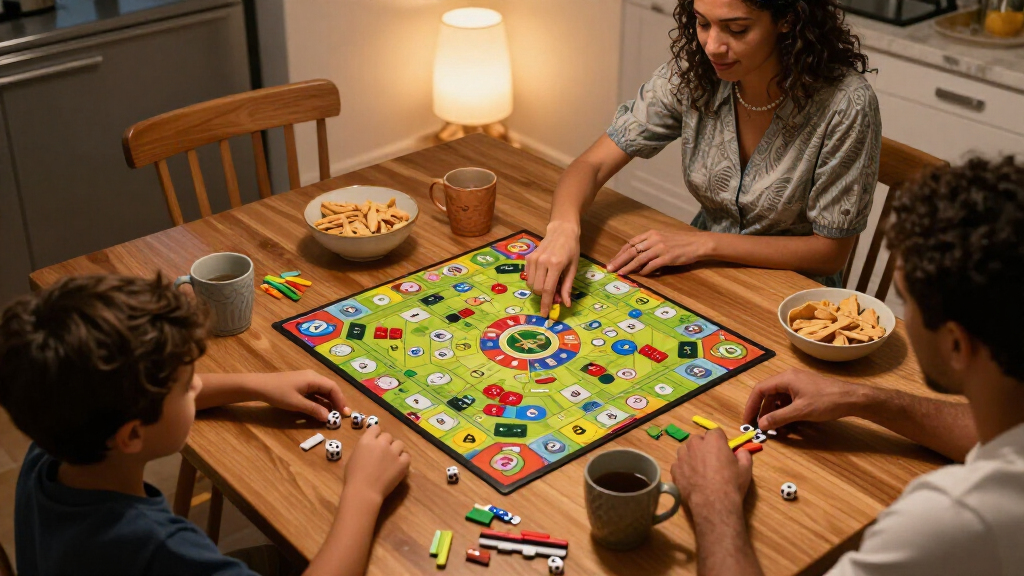

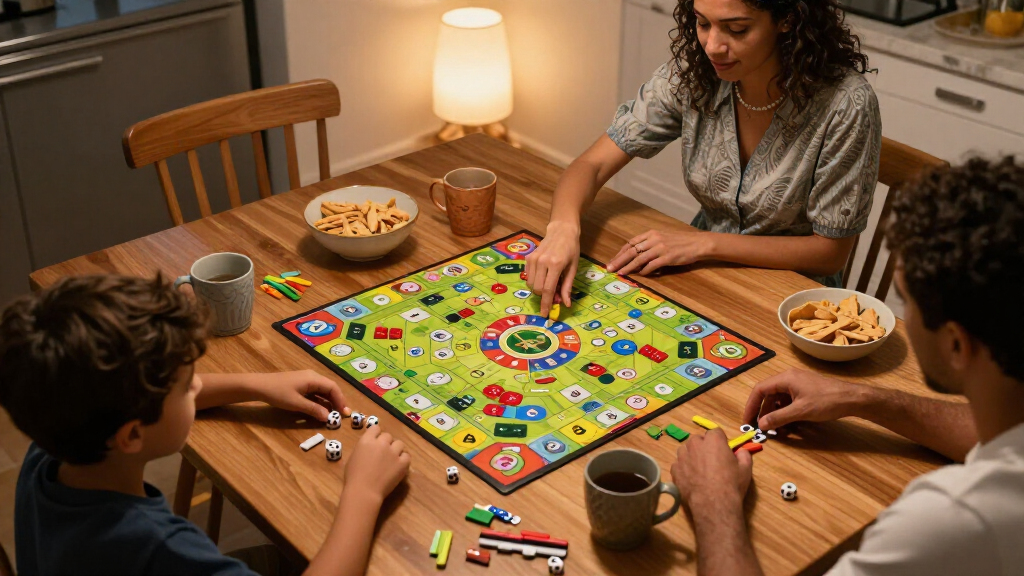
The best board game for family game night is one everyone at the table actually wants to play — and that usually means Taco Cat Goat Cheese Pizza, which lands as my top overall pick because it takes thirty seconds to learn, plays in under ten minutes, and works for ages five through adult without anyone feeling left out. If your crew skews older and loves loud, chaotic energy, Herd Mentality delivers big-group laughs, while Do You Really Know Your Family? is the standout for mixed-age households that want conversation rather than competition. The main tradeoff in this category is setup time versus payoff: quick card games get played constantly but can feel repetitive, while word and trivia games create richer moments but demand more patience from younger kids. Age gaps are the other sticking point — a game that thrills a teenager can bore a six-year-old within minutes. I ranked these fifteen titles on how well they hold a whole family’s attention, not just how clever they look on the shelf. Keep reading for the full breakdown.

Get the little things that make your day delivered free with Prime
- Fast, free delivery on millions of items
- Prime Video, Amazon Music and more included
- Member-only deals all year
Key Takeaways
- Speed of play was the single biggest differentiator: games that finish in under fifteen minutes (Taco Cat Goat Cheese Pizza, Tapple, Blank Slate) ranked higher because families actually replay them on the same night.
- Party games rated for teens and up (You Laugh You’re Out, Taboo, Guess the Gibberish, Grab The Mic) consistently exclude younger siblings — they only make sense if your youngest player is 12 or older.
- The classic push-your-luck titles (Sorry!, Trouble, Connect 4) remain the safest picks for ages 5–8, but adults will tire of them faster than kids will, so they work best as secondary games rather than the headline pick.
- Personal-discovery games (Do You Really Know Your Family?, Our Family Is So Weird) produced the most cross-generational conversation but have limited replay value once the deck cycles through.
- Component quality barely affects enjoyment in this category — the cheapest card game here outperformed the most elaborate board because rules simplicity, not production value, drives family game night success.
| Spin Master Hedbanz Picture Guessing Game, 2nd Edition |  | Best for Mixed Ages | Edition: 2nd edition | Players: 2–6 | Recommended age: 6 years and up | VIEW LATEST PRICE | See Our Full Breakdown |
| You Laugh, You’re Out Charades Party Card Game for Ages 14+ |  | Best for Big, Lively Gatherings | Players: 4 or more | Recommended age: 14+ | Prompt cards: 125 | VIEW LATEST PRICE | See Our Full Breakdown |
| Hasbro Connect 4 Game with Carrying Case and Score Trackers |  | Best Portable Two-Player Game | Players: 2 | Recommended age: 6 years and up | Discs: 42 total: 21 red and 21 yellow | VIEW LATEST PRICE | See Our Full Breakdown |
| Do You Really Know Your Family? Family Card Game |  | Best for Family Conversation | Game type: Family card game | Age range: Kids ages 8 and up, teens, and adults | Included components: Cards | VIEW LATEST PRICE | See Our Full Breakdown |
| Sorry! Classic Board Game for Kids Ages 6 and Up |  | Best for Playful Rivalry | Recommended age: 6 years and up | Game type: Family board game | Pawns per player: 4 | VIEW LATEST PRICE | See Our Full Breakdown |
| Hasbro Gaming Trouble Board Game for Kids, Ages 5 and Up, 2–4 Players |  | Best for Young Kids | Players: 2–4 | Recommended age: 5 and up | Die roller: Pop-O-Matic bubble | VIEW LATEST PRICE | See Our Full Breakdown |
| Hasbro Gaming Yahtzee Dice Game |  | Best Classic Dice Game | Players: 2 or more | Recommended age: 8 and up | Game type: Dice game | VIEW LATEST PRICE | See Our Full Breakdown |
| Herd Mentality Family Party Board Game |  | Best for Big Groups | Players: 4–20+ | Playing time: 20 minutes | Recommended age: 10 years and up | VIEW LATEST PRICE | See Our Full Breakdown |
| Blank Slate Party Game |  | Best Word-Matching Party Game | Players: 3–8 | Recommended age: 8+ | Playing time: Approximately 30 minutes | VIEW LATEST PRICE | See Our Full Breakdown |
| Taco Cat Goat Cheese Pizza Card Game |  | Best Travel Pick | Players: 2–8 | Recommended age: 7 years and up | Game duration: 10–15 minutes | VIEW LATEST PRICE | See Our Full Breakdown |
| USAOPOLY The Original Tapple Word Game |  | Best Fast-Paced Word Game | Age range: 8+ | Brand: USAOPOLY | Included components: Portable Tapple wheel with built-in timer, 36 cards with 144 categories, instructions | VIEW LATEST PRICE | See Our Full Breakdown |
| WHAT DO YOU MEME? Guess the Gibberish Family Card Game |  | Best Travel Pick | Players: 2 or more | Recommended age: 12+ | Cards: 400 | VIEW LATEST PRICE | See Our Full Breakdown |
| Hasbro Gaming Taboo Classic Party Word Guessing Game for Ages 13+ |  | Best for Large Groups | Players: 4 or more | Recommended age: 13 years and up | Cards: 212 | VIEW LATEST PRICE | See Our Full Breakdown |
| Grab The Mic Karaoke Party Game |  | Most Interactive Pick | Brand: Lucky Egg | Players: 2–12 | Recommended age: 8+ | VIEW LATEST PRICE | See Our Full Breakdown |
| Our Family Is So Weird: A Family Card Game |  | Best for Family Bonding | Players: 3 or more | Recommended age: 14+ | Contents: 150 prompt cards, 6 dry-erase boards, 6 dry-erase markers | VIEW LATEST PRICE | See Our Full Breakdown |
| board games for family game night | Recommended age | Players |
|---|---|---|
| Spin Master Hedbanz Picture Gu | 6 years and up | 2–6 |
| You Laugh | 14+ | 4 or more |
| Hasbro Connect 4 Game with Car | 6 years and up | 2 |
| Do You Really Know Your Family | — | — |
| Sorry! Classic Board Game for | 6 years and up | — |
| Hasbro Gaming Trouble Board Ga | 5 and up | 2–4 |
| Hasbro Gaming Yahtzee Dice Gam | 8 and up | 2 or more |
| Herd Mentality Family Party Bo | 10 years and up | 4–20+ |
| Blank Slate Party Game | 8+ | 3–8 |
| Taco Cat Goat Cheese Pizza Car | 7 years and up | 2–8 |
| USAOPOLY The Original Tapple W | — | — |
| WHAT DO YOU MEME? Guess the Gi | 12+ | 2 or more |
| Hasbro Gaming Taboo Classic Pa | 13 years and up | 4 or more |
| Grab The Mic Karaoke Party Gam | 8+ | 2–12 |
| Our Family Is So Weird: A Fami | 14+ | 3 or more |
More Details on Our Top Picks
Spin Master Hedbanz Picture Guessing Game, 2nd Edition
Hedbanz gives a family a shared guessing game that younger players can join without needing to read long prompts or plan several moves ahead. Each player wears a picture card and asks yes-or-no questions, so the fun comes from narrowing down possibilities together. Its 2–6 player range makes it easier to fit a small family than You Laugh, You’re Out, which needs at least four people and is aimed at older players. The headbands and themed picture cards add a playful visual hook, though the question format can feel repetitive once familiar cards return. It also needs a group willing to take turns asking and answering; families looking for a head-to-head strategy match may prefer Connect 4. This is a strong pick when age flexibility and easy-to-follow turns matter most.
Pros:- Simple question-based turns are accessible to younger players
- Supports 2–6 players, fitting small family groups
- Picture cards and themed headbands make clues visible and playful
- Includes a timer and scoring badges for structured rounds
Cons:- Repeated picture cards and the same question format can make sessions feel similar
- Requires at least two players and active group participation
Best for: Families with children six and older who want a light, spoken guessing game that adults can play alongside them
Not ideal for: Families seeking a quiet two-player strategy game or players who tire quickly of yes-or-no guessing
- Edition:2nd edition
- Players:2–6
- Recommended age:6 years and up
- Headbands:6 themed headbands
- Picture cards:69
- Scoring badges:16
- Timer:1
- Sample question cards:3
Our verdict“Choose Hedbanz for an easy mixed-age guessing game; pick Connect 4 if your family would rather compete in a focused strategy match.”
You Laugh, You’re Out Charades Party Card Game for Ages 14+
You Laugh, You’re Out turns a family get-together into a performance challenge: players act out prompts, try to make others laugh, and risk losing tokens when they crack up. That physical, social energy sets it apart from Do You Really Know Your Family?, which centers on questions and conversation rather than acting. With 125 prompt cards, it has room for varied rounds, and the sand timer gives each challenge a clear pace. The tradeoff is a narrower audience: its 14+ age guidance and four-player minimum make it a poor fit for younger children or a small family night. It also depends on players being comfortable performing and joking in front of one another. Choose it when the group is large, outgoing, and ready for noisy play; for a calmer mixed-age table, Hedbanz is a better fit.
Pros:- Prompts encourage active participation and group laughter
- 125 cards offer variety across repeated gatherings
- Laugh tokens give the challenge a clear consequence
- A sand timer keeps turns moving
Cons:- Requires at least four players
- Age guidance of 14+ excludes younger children
- Performance-based play can feel uncomfortable for shy guests
Best for: Families with teens and adults who regularly gather in groups of four or more and enjoy acting out prompts
Not ideal for: Families with younger children, two- or three-player households, or guests who dislike performing for a group
- Players:4 or more
- Recommended age:14+
- Prompt cards:125
- Laugh tokens:36
- Timer:1 sand timer
- Game format:Charades party card game
Our verdict“Pick this for a large, outgoing teen-and-adult gathering; choose Do You Really Know Your Family? for a more conversation-led evening.”
Hasbro Connect 4 Game with Carrying Case and Score Trackers
Connect 4 with Carrying Case and Score Trackers is the most direct head-to-head option in this batch: players drop discs into a grid and try to line up four, then use the built-in trackers to follow a match of four rounds. Its folding case stores the discs, which makes packing up easier than managing separate pieces from Sorry!. The roughly five-minute rounds also suit families who want a quick contest between longer group games. The main limitation is the fixed two-player format, so it cannot involve a whole family at once the way Hedbanz can. The four-round match adds a little structure, but players still need to track the overall wins. This pick makes the most sense for siblings, a parent and child, or travel; larger groups will need another game ready.
Pros:- Rules are easy to grasp for players ages six and up
- Folding case stores the discs and has a carrying handle
- Built-in sliding trackers help follow wins across rounds
- Approximately five-minute rounds fit short play windows
Cons:- Supports only two players
- A full match requires tracking wins across four rounds
- The familiar grid format offers less variety than question or party games
Best for: Families who want a compact, quick two-player contest for siblings, parent-child play, or travel
Not ideal for: Families looking for one game everyone can play together, since it is limited to two players
- Players:2
- Recommended age:6 years and up
- Discs:42 total: 21 red and 21 yellow
- Grid and tray:Included
- Storage:Folds into a carrying case with a handle; discs store inside
- Score tracking:Built-in sliding score trackers
- Round duration:Approximately 5 minutes
- Match format:First player to win four rounds is the champ
Our verdict“Choose Connect 4 for quick portable face-offs, and pick Hedbanz when you need a game that accommodates a wider family group.”
Do You Really Know Your Family? Family Card Game
Do You Really Know Your Family? uses questions and silly challenges to get relatives talking, making it a natural choice when the goal is shared stories as much as competition. Its ages 8 and up guidance spans children, teens, and adults, while the card format keeps setup simple. Compared with You Laugh, You’re Out, this game puts less emphasis on physical performance, so it can suit a family that prefers conversation over acting. The tradeoff is that its appeal depends on people enjoying personal questions and sharing responses; it may fall flat with a quiet group or relatives who prefer tactical choices. The supplied details also list cards but no player count or card total, so the size and pacing of a session are less clear. Choose this over Connect 4 when table conversation matters more than a two-player contest.
Pros:- Combines questions with silly challenges for varied interaction
- Designed for children ages eight and up, teens, and adults
- Card format is easy to learn and play
- Encourages conversation and shared family memories
Cons:- Question-led play may not suit relatives who prefer less personal or more strategic games
- Player count and card quantity are not specified in the supplied product details
Best for: Families with children eight and older who enjoy sharing stories and answering playful questions around the table
Not ideal for: Families seeking defined strategy, a specified short play time, or a game that does not prompt personal conversation
- Game type:Family card game
- Age range:Kids ages 8 and up, teens, and adults
- Included components:Cards
- Material:Cardstock
- Number of packs:1
- Set name:Single set
- Manufacturer:ASM Holdings LLC
- Model number:91533
Our verdict“Choose this for a family that wants conversation and shared memories, while Connect 4 is a clearer fit for focused competitive play.”
Sorry! Classic Board Game for Kids Ages 6 and Up
Sorry! is the pick for families who want a race with direct interference: card draws move pawns toward home, while slides and sending an opponent back can suddenly change who is ahead. That swingy competition gives it more tactical friction than Connect 4, where players focus on arranging discs in a grid, but it can also make a lead feel fragile. Players must get three pawns home to win, which gives each turn a clear goal without requiring a long rulebook. The same setbacks that create dramatic reversals can frustrate children who dislike losing progress. Product details specify the age and pawn goals but do not give a player count or round length, so families should check the game box for those details. Choose this over the gentler guessing games when your group enjoys playful rivalry and can take setbacks in stride.
Pros:- Card draws create changing movement choices
- Sending opponents back adds direct interaction and comeback chances
- The race-to-home objective is easy to understand
- Suitable for children and adults
Cons:- Opponents can erase progress by sending pawns back to the start
- The supplied details do not specify player count or game duration
Best for: Families with children six and older who enjoy competitive races and can handle setbacks without losing interest
Not ideal for: Players who become frustrated when an opponent can send their pawns back to the start
- Recommended age:6 years and up
- Game type:Family board game
- Pawns per player:4
- Pawns to get home to win:3
- Movement:Draw cards to move pawns
- Special movement:Slides can send opponents’ pawns back to the start
Our verdict“Choose Sorry! for a family that likes swingy, competitive races; choose Connect 4 for a more contained two-player strategy match.”
Hasbro Gaming Trouble Board Game for Kids, Ages 5 and Up, 2–4 Players
Trouble earns its spot as the pick for families with younger children, thanks to a 5-and-up age rating that most games in this roundup can’t match. Where Sorry! offers similar chase-around-the-board action, Trouble pulls ahead for little ones because the Pop-O-Matic bubble eliminates loose dice — a small design choice that means fewer lost pieces and fewer arguments over suspicious rolls. The optional Power Up Spaces mode adds a layer of decision-making that grows with your kids, something a pure-luck game like Taco Cat Goat Cheese Pizza doesn’t attempt. The tradeoff is a narrow player cap: with a 2–4 player limit, it won’t absorb the cousins at a big family gathering the way Herd Mentality can.
Pros:- Pop-O-Matic bubble keeps the die contained and rolls fair
- Optional Power Up Spaces mode adds strategy for older kids
- Rules are simple enough for a 5-year-old to learn in minutes
- Quick setup makes it easy to fit into a school-night game session
Cons:- Caps out at 4 players, excluding bigger families or playdates
- Core gameplay is heavily luck-driven, so repeated plays can feel samey
Best for: Families with children aged 5–8 who want a race game with no reading required and no dice to lose
Not ideal for: Larger family gatherings — the 4-player ceiling leaves people out, and adults may find the gameplay shallow
- Players:2–4
- Recommended age:5 and up
- Die roller:Pop-O-Matic bubble
- Game modes:Classic gameplay or Power Up Spaces
- Play setting:Indoor
- Brand:Hasbro Gaming
Our verdict“If your game night includes players who can’t yet read fluently, this is the most forgiving and durable entry point in the lineup.”
Hasbro Gaming Yahtzee Dice Game
Yahtzee remains the gold standard for scorepad dice games, and it fills a role nothing else in this roundup covers: quiet, head-to-head scoring strategy with almost no setup. Compared with the frantic reflex-based pace of Taco Cat Goat Cheese Pizza, Yahtzee rewards patience — deciding whether to chase a full house or bank a small straight is a genuine strategic choice, not just luck, even though the dice still govern outcomes. The open player count (2 or more) also makes it more flexible than Trouble’s 4-player cap. The tradeoff is that score tracking involves paperwork, which slows things down and can frustrate younger kids who’d rather be slapping cards than doing arithmetic.
Pros:- Scales to any number of players, from a quiet duo to a full table
- Blends dice luck with real decisions about which combinations to chase
- Tiny component count makes it easy to store and travel with
- Rules are familiar to most adults, so teaching time is minimal
Cons:- Manual score sheets slow the pace and will eventually run out
- Dice luck can swing games hard, frustrating strategic players
Best for: Families who enjoy relaxed, score-based competition and want a game that scales to any group size
Not ideal for: Households with kids under 8 or players who dislike bookkeeping — the scoring sheet is half the game
- Players:2 or more
- Recommended age:8 and up
- Game type:Dice game
- Scoring:Combination-based scorepad
- Brand:Hasbro Gaming
- Format:Compact box
Our verdict“For families who want a calm, scalable game night staple with real decisions, this classic still beats the newer party games on this list.”
Herd Mentality Family Party Board Game
Herd Mentality is the group-size champion of this roundup, handling 4 to 20+ players when most picks here — Trouble at 4, Blank Slate at 8 — hit hard ceilings. Its core loop is simple: guess what the majority will answer, match the herd, collect cows; land alone with the pink cow of doom and you’re penalized until someone else takes it. That mechanic makes it a better icebreaker than Blank Slate, because there’s no writing or wordplay barrier — Grandma and a 10-year-old can compete evenly. The tradeoff is depth: rounds are light and quick at around 20 minutes, and families wanting strategy should look to Yahtzee instead. It also needs at least 4 players to function at all.
Pros:- Extraordinarily scalable player count for 4 to 20+ players
- Under-30-minute play time fits between dinner and bedtime
- No skill barrier — mixed-age groups compete on equal footing
- Kids Edition includes 20 extra family-friendly questions
Cons:- Unplayable with fewer than 4 players
- Shallow replay value for groups that prefer strategy over laughs
Best for: Extended families and party hosts who need one game that keeps 8, 15, or 20 people laughing together
Not ideal for: Small households of 2–3 people — the herd mechanic collapses without a real majority to read
- Players:4–20+
- Playing time:20 minutes
- Recommended age:10 years and up
- Genre:Family, Party
- Edition:Kids Edition
- Contents:Main game with 20 extra questions
- Brand:Big Potato
Our verdict“When the whole extended family shows up, nothing else in this lineup absorbs the crowd as gracefully as this does.”
Blank Slate Party Game
Blank Slate occupies a smart middle ground between Herd Mentality’s big-group chaos and quieter two-player games: it works for 3 to 8 players and rewards thinking like your family. Completing a word cue and hoping someone else wrote the same answer creates those how did you pick that? moments that make game nights memorable. The 500 word cues across 250 double-sided cards give it more built-in longevity than a single-box party game, and the eight dry-erase slates mean no consumable paper — a clear advantage over Yahtzee’s finite scorepads. The drawback is the matching mechanic itself: if your group’s vibes don’t align, rounds can stall, and it needs at least 3 players, ruling out couples’ game night.
Pros:- 500 word cues across 250 double-sided cards offer strong replay value
- Reusable dry-erase slates replace throwaway paper
- Scales well from small families to 8-player gatherings
- Rounds finish in about 30 minutes
Cons:- Requires a minimum of 3 players to work at all
- Fun depends heavily on the group clicking — mismatched thinkers get shut out
Best for: Families and friend groups of 4–8 who enjoy wordplay and discovering how differently they think
Not ideal for: Two-player households or groups who dislike word games — the whole mechanic depends on shared vocabulary
- Players:3–8
- Recommended age:8+
- Playing time:Approximately 30 minutes
- Word cues:500
- Included components:Scoreboard, 8 dry-erase slates, 250 double-sided word cue cards, rules
- Genre:Family, party, word
- Language:English
- Brand:USAopoly
Our verdict“This is the pick for families who love word games and want more replay depth than a one-note party game provides.”
Taco Cat Goat Cheese Pizza Card Game
Nothing in this roundup travels like Taco Cat Goat Cheese Pizza — it’s a deck of cards that fits in a jacket pocket, versus board-boxed options like Trouble or Yahtzee. The chant-and-slap mechanic delivers 10–15 minute rounds that keep kids and grandparents equally engaged, and the surprise action cards prevent the loop from going stale too quickly. Compared with Herd Mentality, it works at far smaller counts — 2 players can play a real game — making it a rare roundup option for one-on-one time with a child. The honest tradeoff: it’s a reflex game. Players who can’t or won’t slap quickly, including some grandparents and very young kids, may feel excluded when the pile gets competitive.
Pros:- Deck-of-cards portability beats every boxed game in this lineup
- Works as a genuine two-player game, not just a group activity
- 10–15 minute rounds suit short attention spans and tight schedules
- Action cards add twists that keep the chant loop from wearing thin
Cons:- Slap mechanic rewards fast reflexes and can leave slower players behind
- Requires constant alertness — it’s a poor wind-down game before bedtime
Best for: Families who game on the go — road trips, restaurants, vacations — and want a two-player-capable filler game
Not ideal for: Players with slow reaction times or anyone who dislikes physical slap-style games — they’ll lose every round
- Players:2–8
- Recommended age:7 years and up
- Game duration:10–15 minutes
- Format:Compact card game
- Skills exercised:Concentration, pattern recognition, reflexes
Our verdict“For families whose game nights happen in cars, waiting rooms, and vacation rentals, this pocket deck is the most practical pick here.”
USAOPOLY The Original Tapple Word Game
Tapple earns its spot as the purest adrenaline pick in this lineup. The self-contained wheel with a built-in ten-second timer means no scoring pads, no batteries, and almost no setup — a big contrast to Taboo, which needs a full team-based table and at least four people to function. With 144 categories tucked inside the wheel itself, it plays in tight rounds that keep kids as young as eight fully engaged. Compared with Guess the Gibberish, the pacing is punchier and the age floor far lower. The honest tradeoff: the ticking timer stresses some players out, and word-game skeptics may find the format repetitive after several rounds.
Pros:- Ten-second rounds keep energy high and games short
- All-in-one wheel stores its own cards for travel
- 144 categories provide strong replayability
- Works for players as young as 8
Cons:- Ten-second timer creates real pressure that some players find stressful
- Format can feel repetitive across many sessions
Best for: Families with mixed ages (8 and up) who want quick, loud rounds with zero setup
Not ideal for: Households with players who freeze under time pressure or dislike word games
- Age range:8+
- Brand:USAOPOLY
- Included components:Portable Tapple wheel with built-in timer, 36 cards with 144 categories, instructions
- Game type:Party game
- Edition:Standard Edition
- Model year:2022
- Warranty:No warranty
Our verdict“This is the pick for families who want a portable, low-prep word game that delivers chaos in ten-second bursts.”
WHAT DO YOU MEME? Guess the Gibberish Family Card Game
For game nights that happen in the car, at a campsite, or crammed into a vacation rental, Guess the Gibberish is the most packable option here. A deck of 400 cards and a small sand timer is the entire game — noticeably lighter to haul than Tapple’s plastic wheel or Grab The Mic’s board and tokens. The decoding gameplay generates big laughs with almost no rules explanation. The catch is the 12+ age recommendation, which excludes younger siblings that Tapple and Grab The Mic happily accommodate, and decoding nonsense phrases genuinely requires strong reading and vocabulary skills.
Pros:- 400 cards give the deck long-term variety
- Deck-and-timer format fits in a bag for travel
- Rules take under a minute to learn
- Clue hints on card backs help struggling players
Cons:- 12+ age floor leaves out younger kids
- Needs at least two players, so no solo practice
Best for: Families with tweens and teens who game on road trips or at gatherings
Not ideal for: Families with children under 12, since the wordplay demands strong reading skills
- Players:2 or more
- Recommended age:12+
- Cards:400
- Timer:1-minute sand timer
- Includes:Gameplay instructions
- Game type:Word-decoding party game
Our verdict“A compact, laugh-heavy choice for teen-and-up families whose game nights travel with them.”
Hasbro Gaming Taboo Classic Party Word Guessing Game for Ages 13+
Taboo is the team-game heavyweight of this lineup, built around the social chaos of shouting clues while a rival watches for slip-ups. With 848 Guess words across 212 cards, it outlasts every card game here in raw content — Guess the Gibberish offers 400 cards but shallower rounds, and Tapple is strictly every-player-for-themselves. The included squeaker and scorepad give it a tactile, party-host feel the smaller games lack. The tradeoffs are structural: you need at least four players, the 13+ recommendation is firm, and the optional online timer and buzzer assume someone has a phone handy.
Pros:- 848 Guess words give exceptional replay depth
- Physical timer, squeaker, and scorepad included
- Optional online tools add timer and buzzer flexibility
- Team format scales well for big family gatherings
Cons:- Minimum of 4 players excludes smaller households
- Online tools require a smartphone
- 13+ age recommendation excludes younger kids
Best for: Families and teen gatherings of four or more who love loud, team-based clue-giving
Not ideal for: Small households of two or three, since the team format can’t really function
- Players:4 or more
- Recommended age:13 years and up
- Cards:212
- Guess words:848
- Included accessories:Sand timer, squeaker, scorepad
- Optional online tools:Timer, buzzer, scorepad
- Game type:Team word-guessing party game
Our verdict“The obvious choice when the whole extended family shows up and you want a game that fills a room.”
Grab The Mic Karaoke Party Game
Where every other game here stays seated, Grab The Mic gets the whole table singing. Racing to snatch the foam microphone and belt out a lyric matching a card word makes it the most physical entry in this roundup — closer to charades energy than to Tapple’s quiet word recall. The 2–12 player range and 8+ age floor make it the widest-reaching option for mixed-age families, beating both Taboo and Guess the Gibberish on flexibility. Multiple game modes add variety the single-format games can’t match. The real drawback: if your family doesn’t share a mental jukebox, turns stall, and shy players may dread their moment at the mic.
Pros:- Multiple game modes keep repeat sessions fresh
- Scales from 2 to 12 players
- Accessible to kids as young as 8
- Physical, high-energy format gets everyone moving
Cons:- Gameplay collapses if players can’t recall lyrics under pressure
- Requires a willingness to sing out loud
Best for: Musical, outgoing families with kids and adults who actually know song lyrics
Not ideal for: Quiet families or non-music households, since the game depends entirely on recalling lyrics
- Brand:Lucky Egg
- Players:2–12
- Recommended age:8+
- Word cards:120 cards with 250 words
- Included components:Word cards, foam microphone, game board, player tokens, and instructions
- Material:Cardboard
- Model:LE24
Our verdict“Pick this when your family knows every word to every chorus and wants a game that proves it.”
Our Family Is So Weird: A Family Card Game
This one earns its role by doing something no guessing game here attempts: it’s about your actual family. Voting on which relative best fits each prompt sparks the arguments and storytelling that Do You Really Know Your Family? also chases, but the dry-erase boards make answers visible at once and reusable session after session. Compared with Guess the Gibberish or Tapple, there’s no timer pressure and no vocabulary skill barrier — the fun comes purely from your family’s own dynamics. The tradeoffs: it needs at least three players to work, the 14+ age recommendation reflects some edgier prompts, and families who prefer strategy will find zero game mechanics here.
Pros:- Prompts generate genuine family conversation and laughter
- Dry-erase boards and markers are reusable
- No timer pressure, so play stays relaxed
- Simple rules work for any gathering
Cons:- Requires at least 3 players
- 14+ age floor excludes most kids
- No strategic depth for players who want real gameplay
Best for: Families with teens who love inside jokes, roasting each other, and long conversations
Not ideal for: Families with younger kids under 14, or groups who want actual strategy over discussion
- Players:3 or more
- Recommended age:14+
- Contents:150 prompt cards, 6 dry-erase boards, 6 dry-erase markers
- Winning condition:First player to collect 7 cards
- Game type:Family discussion and voting card game
Our verdict“Choose this when the point of game night is learning what your family really thinks of each other.”
How We Picked
I evaluated each game against four family-specific criteria. First, learning curve: a game night title fails immediately if explaining the rules takes longer than a round of play, so anything needing more than five minutes of setup or teaching lost ground. Second, age-range flexibility: I prioritized games that a six-year-old, a tween, and two adults could play together without handicaps or forced teams, since mixed-age households are the norm. Third, replayability: games that feel fresh on the tenth play ranked above one-trick experiences, even clever ones. Fourth, energy fit: some families want raucous shouting matches, others want calm wind-down games, so I sorted picks by the mood they create rather than treating loud as better.
The ranking order reflects how many of those four criteria each game satisfies simultaneously. Games that work for nearly every family, every age, and every energy level sit at the top. Niche picks that excel in one dimension — like Grab The Mic for karaoke-loving households or Yahtzee for fans of slow, scored rounds — earned lower slots not because they are weaker games, but because they demand the right audience to shine.
Factors to Consider When Choosing Board Games For Family Game Night
Choosing a family game is less about finding the objectively best title and more about matching a game to your specific table. These are the factors that actually predict whether a box gets loved or forgotten.Your Youngest Player Sets the Ceiling
The most common buying mistake is picking a game for your oldest child and hoping the youngest keeps up. Age ratings on the box are honest about reading level, dexterity, and social content — a 14+ party game like Taboo genuinely falls flat with a nine-year-old, not because of content but because the wordplay moves too fast. A better approach is to buy one game your youngest can play fully and one the family grows into. Also watch for hidden literacy requirements: some games labeled 8+ still expect fluid reading, which frustrates early readers. If your spread spans more than about four years, team-based or word-association games bridge the gap better than trivia.
Play Time Should Match Your Real Evening
Families consistently overestimate how much time they have. A 45-minute game becomes 70 minutes with rules explanation, snack breaks, and one meltdown, and then it never leaves the shelf again. Games in the 10–20 minute range get played repeatedly, which matters because repetition is where inside jokes and family traditions form. Longer scored games like Yahtzee still earn their place, but treat them as destination nights, not defaults. If you are building a small collection, start with two short games and one longer one rather than three medium-length titles that fit no occasion.
Elimination Mechanics Cause Real Problems
Many classic family games eliminate players mid-round, leaving young kids with nothing to do while everyone else finishes. Games where everyone stays in until the end — cooperative games, simultaneous-answer games like Herd Mentality, or race games like Trouble — keep the whole table engaged. If you love an elimination-style game, look for fast rounds so eliminated players wait minutes, not half an hour. This single mechanic causes more game-night blowups than difficulty does. Parents of sore losers should weight this heavily.
Luck Versus Skill Determines Who Wins
A game that adults always win stops being fun for kids within three sessions, and a game of pure luck bores strategic players just as fast. The sweet spot for families is mostly luck with small skill levers — knowing when to bump an opponent in Sorry!, choosing which word category to play in Tapple. Pure-chance games like Trouble are genuinely great for ages 5–7 precisely because a five-year-old can beat a parent legitimately. As kids hit 9 or 10, they start wanting their decisions to matter, and that is the right moment to add word and deduction games. Mixing one luck-heavy and one skill-leaning game in a night satisfies both needs.
Party Games Age Out Fast
Meme-based and pop-culture games feel hilarious the first year and dated the third, because their content is anchored to a moment. Evergreen mechanics — word guessing, charades, dice rolling — stay playable for a decade. If budget is limited, favor evergreen structure over trendy themes. The exception is when the theme itself is the point, like family-inside-joke games, where the personal content never goes stale. Also check expansion availability: games with card expansions effectively cost less per year of ownership.
Group Size Limits You Before Anything Else
A game capped at four players quietly excludes someone in a five-person household, and most classic board games cap at four. Party card games usually handle six to ten, which makes them better defaults for bigger families or when friends visit. Before buying, count your realistic table: include the grandparent who watches, because spectator-friendly games pull them in too. If your group size swings between three and eight, prioritize flexible-count games with team modes. Two-player fallback matters as well — many family games claim two-player support but genuinely need four or more to work.
Frequently Asked Questions
What is the best board game for a family with kids of very different ages?
Simultaneous-play games handle age gaps better than turn-based ones, because younger kids never sit waiting for older, faster players. Taco Cat Goat Cheese Pizza and Herd Mentality both work this way — everyone reacts at once, so a six-year-old and a teenager are genuinely equals. Tapple is another strong option since kids can pick easy categories while adults challenge themselves. What tends to fail is trivia and wordplay designed for adults, where a younger child needs a permanent teammate and starts feeling like a passenger. If your spread is more than five or six years, expect to own two games rather than one perfect one.
Are classic games like Sorry! and Trouble still worth buying in 2026?
Yes, but with the right expectations: they are ideal first games for the five-to-eight window and less exciting after that. Push-your-luck race games teach turn-taking, counting, and losing gracefully, which is exactly what that age group needs, and their nostalgia value keeps grandparents engaged too. The catch is that adults find them repetitive after many plays, and sibling conflict over bumped pieces is a real feature, not a bug. Treat them as foundational games your family outgrows rather than lifelong staples. Trouble’s Pop-O-Matic still solves the dice-rolling-across-the-room problem better than any modern alternative.
How many games does a family actually need for a good game night rotation?
Three to five well-chosen games beat a shelf of twenty. A healthy rotation covers three moods: one fast, loud opener like Taco Cat Goat Cheese Pizza; one conversation-driven game such as Do You Really Know Your Family?; and one longer strategic or scored game like Yahtzee for nights when everyone wants to settle in. Beyond five games, choice paralysis sets in and the same two get played anyway. Rotate one new game in every few months rather than buying in batches, and retire games that have gone two months unplayed without guilt.
Do party games rated 13+ or 14+ work for younger kids if parents help?
Usually not, and the reason is speed rather than content. Games like Taboo and You Laugh You’re Out require quick verbal fluency and social timing that younger kids lack, so even with a parent on their team they end up watching rather than playing. Content is occasionally a factor too, particularly with meme games, so check whether the humor assumes teen references. A better workaround is to modify rules — extend timers, allow hints, or play in teams with one adult and one kid per team — but accept that the experience is diluted. If your youngest is under 10, buy for them and let the teens be good sports; the reverse almost never works.
Are card-based games a worse value than traditional boxed board games?
Card games often deliver more plays per dollar precisely because they are simple, fast, and portable — but there are real tradeoffs. Cards wear out with heavy use, bend with spills, and small decks get lost card by card until the game breaks, so sleeve fragile favorites or store them carefully. Board games with sturdy boards and dice survive rough handling and spilled drinks better and often become hand-me-downs. What matters more than format is whether the game earns repeated plays: an elaborate $40 board played twice is worse value than a $12 card game played a hundred times. Match format to your family’s habits, not to how substantial the box feels.
Conclusion
For most families, Taco Cat Goat Cheese Pizza is the best overall pick — it is the rare game that a five-year-old, a teen, and two tired parents can all play happily in the same ten-minute round, and it costs about as much as a pizza topping. Best value goes to Blank Slate, which packs enormous replayability into a small, inexpensive package. Herd Mentality is my best premium-feeling party pick for bigger families who want belly laughs over quiet strategy, with a moo-trigger mechanic kids adore. For beginners — meaning families with players aged five to seven — Trouble and Connect 4 are the safest first games ever made, though plan to outgrow them. For specific needs: choose Do You Really Know Your Family? if you want conversation starters with grandparents, Yahtzee for slower scored evenings with tweens and up, Taboo or Guess the Gibberish for teen-heavy households, and Tapple when you need a fast word game that builds spelling confidence. Whatever you pick, buy for your youngest player and your real evening length, and the box will stay in rotation for years.
Fall Picks
fall essentials
As an affiliate, we earn on qualifying purchases.