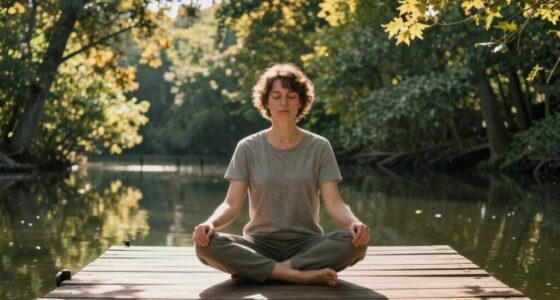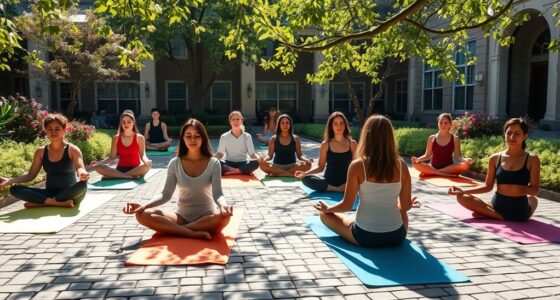

When life feels fast, you can stay grounded by focusing on your senses—notice the texture, sounds, or your breath to reconnect with the present moment. Practice deep breathing: inhale through your nose, hold, then exhale slowly to calm your mind. Create a calming environment with gentle lighting and contrast to foster relaxation. Incorporating regular mindfulness and grounding techniques helps you slow down and regain clarity. Keep exploring these methods to strengthen your ability to stay centered even during chaos.
Key Takeaways
- Practice deep breathing exercises to slow your mind and reduce feelings of overwhelm.
- Use mindfulness techniques to focus on your senses and stay present in the moment.
- Create a calming environment with appropriate lighting and contrast to promote relaxation.
- Regularly pause and observe your surroundings to reconnect with clarity and calmness.
- Incorporate grounding routines like meditation or sensory awareness to maintain stability amid chaos.

Have you ever felt overwhelmed by how quickly life moves around you? One moment, you’re caught up in a whirlwind of responsibilities, deadlines, and endless to-do lists, and the next, you’re struggling just to keep pace. During these times, it’s easy to feel lost or disconnected from yourself. That’s when grounding techniques become essential. One effective way to slow down and regain clarity is through mindfulness practices. These involve paying close attention to what’s happening in the present moment without judgment. You might start by focusing on your senses—feeling the texture of an object, listening to the sounds around you, or noticing the sensation of your breath. Mindfulness helps you step out of the chaos and reconnect with a sense of calm. Practicing mindfulness techniques regularly can deepen your ability to stay centered during stressful times. Additionally, understanding the importance of contrast ratio in visual clarity can help you recognize moments when your environment might be affecting your focus. Recognizing how lighting and contrast influence mood can also help you design a space conducive to relaxation and mindfulness. Creating a calming environment can significantly enhance your grounding efforts. Deep breathing is another powerful tool in your grounding arsenal. When life feels fast, your mind can race along with it, fueling anxiety or stress. Taking slow, deliberate breaths helps to calm your nervous system and anchor you in the here and now. Try inhaling deeply through your nose for a count of four, holding that breath for a count of four, then slowly exhaling through your mouth for another four counts. Repeat this process several times. This simple exercise can immediately reduce feelings of overwhelm and bring your focus inward. As you practice deep breathing regularly, you’ll find it easier to manage stressful moments and maintain a sense of stability amid chaos. Moreover, incorporating energy-efficient models like solar heaters can help create a more balanced environment that supports your well-being. Recognizing how contrast and lighting influence mood can also help you design a space conducive to relaxation and mindfulness.
Frequently Asked Questions
Can Staying Grounded Improve Mental Health During Stressful Times?
Yes, staying grounded can considerably improve your mental health during stressful times. When you practice mindfulness, you boost your emotional resilience, helping you manage overwhelming feelings better. By staying present and focused, you reduce anxiety and prevent stress from spiraling out of control. Incorporating simple mindfulness practices into your daily routine can strengthen your ability to stay calm, centered, and emotionally balanced, even when life feels chaotic.
Are There Specific Activities That Help Maintain Grounding Quickly?
Think of your mind as a ship steering through rough seas—you need anchors to stay steady. Breathing exercises help you anchor quickly, calming your nervous system in moments of chaos. Sensory awareness keeps you rooted, by focusing on the present—feeling textures, hearing sounds, or smelling scents. These simple activities act as your quick anchors, helping you regain calm and clarity when life speeds up and you need to stay grounded.
How Long Does It Take to Feel More Centered After Practicing Grounding?
Typically, you can start feeling more centered within a few minutes of practicing mindfulness exercises and sensory awareness. When you focus on your breath, notice your surroundings, or engage your senses, your mind begins to settle. Regular practice speeds up this process, making it easier to stay grounded during hectic moments. With time, you’ll notice these techniques become quicker and more effective, helping you regain balance swiftly whenever life feels overwhelming.
Can Grounding Techniques Be Effective for Children or Teenagers?
Yes, grounding techniques can be very effective for children and teenagers. You might worry they’re too young for mindfulness, but child mindfulness exercises like deep breathing or sensory activities help them manage stress. Teen relaxation techniques, such as guided imagery or grounding walks, promote calmness and focus. Engaging them in simple, age-appropriate practices can teach valuable skills for staying centered, even during chaotic moments.
Is It Necessary to Meditate to Stay Grounded During Busy Periods?
No, you don’t need to meditate to stay grounded during busy periods. Practicing mindful breathing helps you stay present and calm, while taking nature walks offers an invigorating reset. Both techniques are simple, effective ways to reconnect with yourself amid hectic moments. You can incorporate these into your routine easily, ensuring you remain centered and resilient without the need for formal meditation.
Conclusion
As you pause to breathe, you notice a gentle breeze catching a fallen leaf—reminding you that even in life’s chaos, small moments anchor you. Sometimes, the universe whispers secrets in these quiet instances, guiding you back to your center. When life feels like it’s rushing past, trust that these coincidences are signals to slow down and reconnect. Embrace these fleeting moments—they’re the universe’s way of helping you stay grounded amidst the fast-paced whirl.
Products Worth Considering
As an affiliate, we earn on qualifying purchases.