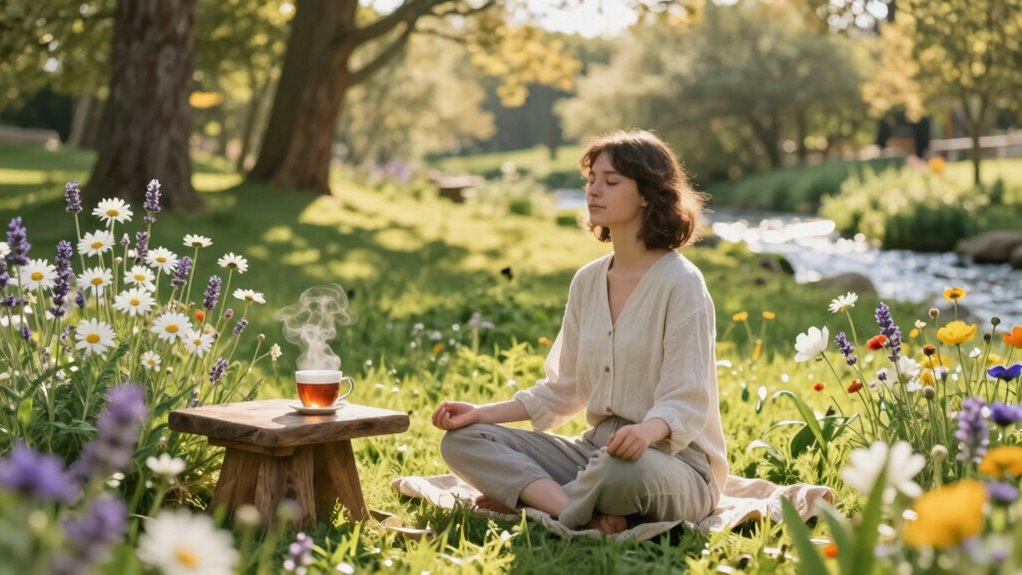
Mindfulness in real life means actively paying attention to your daily activities. You might eat slowly, savoring each bite and noticing textures and smells. Take a moment to appreciate nature or your surroundings, feeling the ground beneath your feet. Before starting tasks, set a positive intention or focus on kindness, patience, or curiosity. By staying present and intentionally engaging with your environment and routines, you’ll cultivate calm and clarity—if you want to explore more, keep going.
Key Takeaways
- Paying full attention to everyday activities like eating, walking, or cleaning without distraction or judgment.
- Practicing gratitude daily by intentionally appreciating simple moments or things.
- Using sensory awareness to stay present, such as feeling textures or noticing breath during tasks.
- Incorporating environmental mindfulness by engaging with nature and sustainable practices.
- Setting clear intentions before actions to foster deliberate, meaningful, and mindful routines.
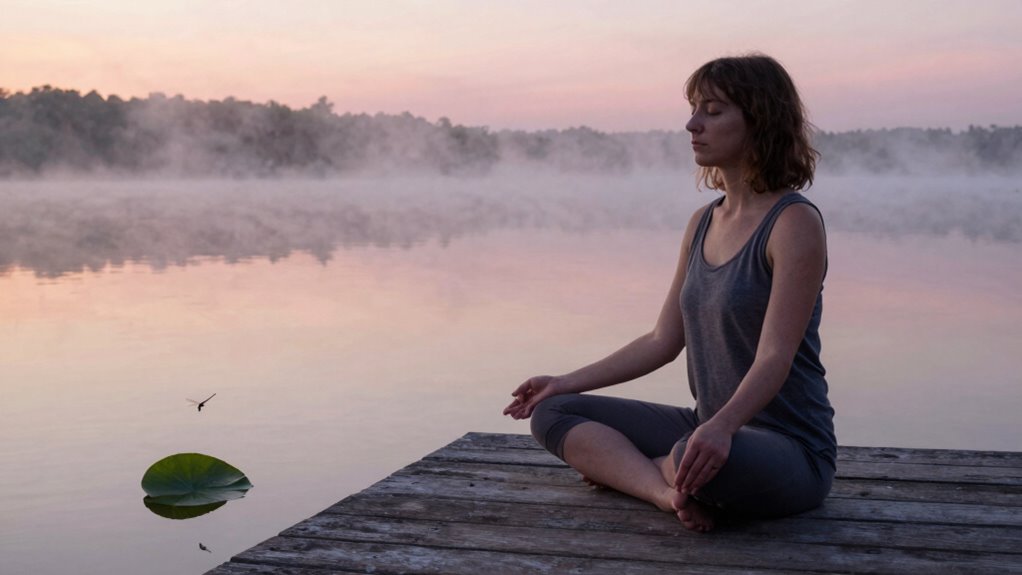
Have you ever wondered how mindfulness can genuinely fit into your daily routine? It’s not about making huge changes or dedicating hours to meditation; instead, it’s about bringing awareness and intention to everyday moments. For example, mindful eating is a straightforward way to practice mindfulness. When you sit down for a meal, take a moment to notice the colors, textures, and smells of your food. Chew slowly, savoring each bite, instead of rushing through your meal. This simple act helps you reconnect with your body’s hunger cues and appreciate your nourishment, turning eating into a moment of presence rather than mindless consumption.
Incorporating daily gratitude into your routine can also ground you in mindfulness. Each day, take a few seconds to reflect on what you’re thankful for. It can be as simple as appreciating a warm cup of coffee, a kind word from a friend, or the comfort of your home. When you cultivate a habit of daily gratitude, you shift your focus from what’s lacking to what’s abundant in your life. This practice fosters a sense of contentment and helps you stay present, reducing stress and negative thinking. Additionally, understanding the importance of natural elements like plants and outdoor scenery can further enhance your mindfulness practice by creating a more calming environment.
Mindfulness isn’t confined to specific moments; it can be woven into your entire day. As you go about your tasks, pay attention to your breath and physical sensations. Feel the sensation of your feet on the ground when walking, or notice the feeling of your hands as they type or fold laundry. By anchoring yourself in sensory experiences, you stay more connected to the present rather than getting lost in worries or regrets. Furthermore, cultivating an awareness of well-drained soil and sustainable practices in your surroundings can support a mindful attitude toward the environment and your personal well-being. Recognizing the importance of natural elements can help foster a more mindful and calming environment.
Another way to bring mindfulness into your daily routine is by setting intentions before starting tasks. Whether you’re about to work, exercise, or engage in conversation, pause for a moment to set an intention — like focusing on kindness, patience, or curiosity. This mental step can transform routine activities into opportunities for mindfulness, making your actions more deliberate and meaningful.
Ultimately, mindfulness in real life is about integrating awareness into the fabric of your day. It’s not about perfection but consistency. Small practices like mindful eating and daily gratitude gradually reshape how you experience each moment. Over time, these habits help you develop a greater sense of calm, clarity, and connection with yourself and the world around you.
Frequently Asked Questions
Can Mindfulness Be Practiced While Multitasking?
Yes, you can practice mindfulness while multitasking by intentionally focusing on your task awareness, even with divided attention. Instead of letting your mind wander, pause briefly and notice the sensations, sounds, or feelings associated with what you’re doing. This helps you stay present, manage stress, and improve focus. Mindfulness isn’t about doing one thing perfectly but about bringing intentional awareness to each moment, even amid multiple tasks.
How Long Does It Take to See Real Benefits?
You can start noticing tangible benefits from mindfulness in just a few weeks, but it’s like planting a seed—you need patience for it to grow. Regular practice, even a few minutes daily, can considerably improve your mental clarity and stress levels over time. The key is consistency; the longer you dedicate yourself to mindfulness, the more profound its impact becomes. Typically, noticeable changes appear within 4 to 8 weeks.
Is Mindfulness Effective for Children or Teenagers?
Mindfulness is effective for children and teenagers, helping them develop emotional regulation and focus. By practicing mindful eating, they learn to become more aware of their hunger and fullness cues, reducing overeating. It also encourages them to pause and reflect before reacting emotionally, improving coping skills. With consistent practice, young people can experience increased calmness and resilience, making mindfulness a valuable tool for their emotional well-being and overall development.
What Are Common Challenges When Starting Mindfulness Practice?
Starting mindfulness is like steering a winding river—you’ll face unexpected currents. Common challenges include falling for mindfulness misconceptions, such as thinking it’s about clearing your mind completely, and beginner pitfalls like impatience or trying too hard. You might struggle with staying present or feel frustrated when progress seems slow. Remember, persistence is key. Embrace the journey, accept setbacks, and trust that each small step helps you build a stronger, steadier flow of awareness.
Can Mindfulness Help With Specific Mental Health Issues?
Mindfulness therapy can considerably help with specific mental health issues by improving emotional regulation. When you practice mindfulness, you learn to observe your thoughts and feelings without judgment, which helps reduce anxiety and depression. By regularly engaging in mindfulness, you develop better coping skills, manage stress more effectively, and create a sense of calm. This approach empowers you to handle emotional challenges with greater resilience and awareness.
Conclusion
As you weave mindfulness into your daily tapestry, it becomes the steady heartbeat beneath life’s chaos. Like a gentle current guiding a boat through shifting tides, being present anchors you amidst storms. Each mindful breath is a ripple spreading calm, each moment a brushstroke on your life’s canvas. Embrace this dance of awareness, letting it lead you home—where peace blooms quietly, and every breath whispers the promise of now.