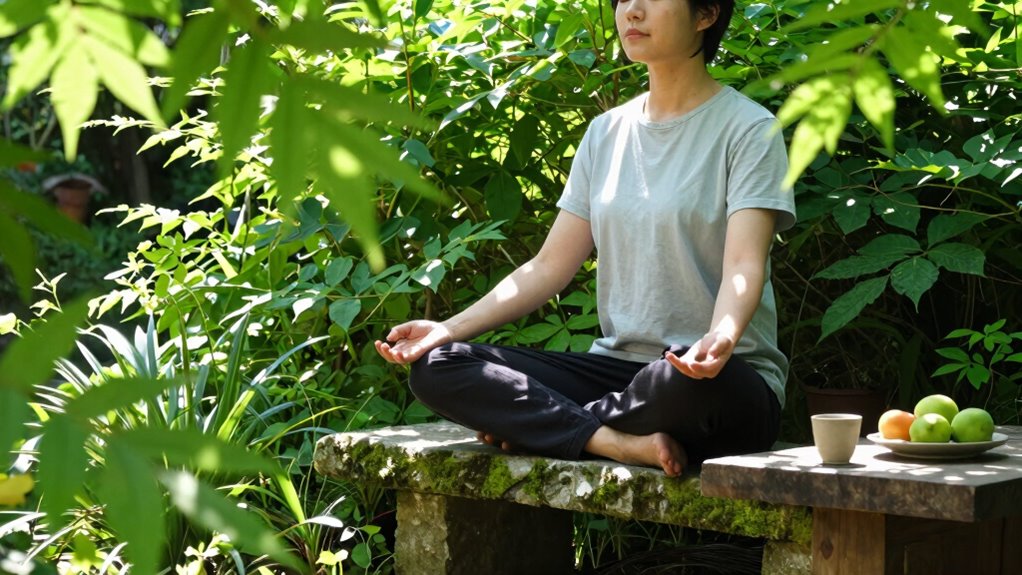
Practicing mindfulness doesn’t have to be complicated. You can start by paying attention to small moments, like savoring your food or focusing on your breath during pauses. Simply slow down and notice what’s happening around you—sounds, textures, or sensations—without judgment. Use everyday routines, like walking or washing your hands, as opportunities to stay present. Keep it gentle and regular, and you’ll discover simple ways to incorporate mindfulness into your day. If you continue, you’ll find even more easy techniques to stay grounded.
Key Takeaways
- Focus on simple, present-moment awareness during everyday activities like walking or eating.
- Use brief breathing pauses to reset and ground yourself throughout the day.
- Practice non-judgmental observation of sensations, thoughts, and feelings without striving for perfection.
- Incorporate natural elements and surroundings into your mindfulness routine for deeper connection.
- Remember that mindfulness is about gentle awareness, not complex techniques or routines.

Have you ever wondered how to stay present amid life’s chaos? Practicing mindfulness doesn’t have to be complicated. It’s about intentionally bringing your attention to the here and now, without trying to change or judge what you notice. One simple way to begin is with mindful eating. Instead of rushing through meals or eating on autopilot, slow down and focus on each bite. Pay attention to the texture, taste, and aroma of your food. Notice how your mouth feels as you chew and how your stomach reacts as you eat. This practice helps ground you in the present moment and cultivates gratitude for the nourishment you’re providing your body. It’s not about being perfect; it’s about creating a gentle awareness that can be carried into other parts of your day.
Another easy technique to incorporate into your routine is breath awareness. Throughout the day, take short pauses to focus solely on your breath. You don’t need any special tools or environment—just sit comfortably and observe your inhalations and exhalations. Feel the air move in and out of your nose or mouth. Notice the rise and fall of your chest or belly. If your mind wanders, gently bring your focus back to your breath without judgment. Breath awareness acts as an anchor, calming your nervous system and helping you detach from overwhelming thoughts or external distractions. It’s especially effective during stressful moments, as it offers a quick reset, grounding you in the present. Additionally, understanding concepts like contrast ratio can help you appreciate how subtle differences in your environment influence your perception and mindfulness practice. Recognizing the importance of natural elements in your surroundings can deepen your connection to the present moment. Being mindful of how your environment impacts your senses can further enrich your awareness and foster a greater sense of calm. Incorporating mindfulness techniques that leverage your awareness of natural elements, such as observing the changing light or sounds around you, can enhance your practice. You don’t have to set aside large blocks of time to practice mindfulness. Even a few minutes here and there can make a difference. For example, when you’re walking, tune into the sensation of your feet touching the ground. When you’re washing your hands, pay attention to the feel of water and soap. These small moments of mindful awareness build your capacity to stay present in everyday life. Over time, they become habits that support mental clarity and emotional stability. Remember, mindfulness isn’t about achieving a state of perfect calm or clearing your mind completely. It’s about noticing what’s happening right now and accepting it without resistance. With consistent effort, you’ll find that staying present becomes easier and more natural, even amid chaos.
Frequently Asked Questions
Can Mindfulness Be Practiced During Stressful Situations?
Yes, you can practice mindfulness during stressful situations to aid stress reduction and emotional regulation. Focus on your breath, taking slow, deep inhales and exhales. Notice your surroundings or your body’s sensations without judgment. This simple act helps shift your attention away from stressors, calming your mind. By practicing mindfulness in stressful moments, you create a practical tool to manage emotions and foster resilience, even in challenging times.
Is Mindfulness Effective Without Meditation?
Ever wonder if you need meditation to be mindful? The answer is no. Mindfulness techniques can be seamlessly integrated into your daily routines, making them effective without meditation. You can practice simply by paying attention to your breath, eating slowly, or noticing your surroundings. These small, conscious acts help you stay present and reduce stress. Isn’t it empowering to realize you can cultivate mindfulness anytime, anywhere?
How Long Should I Practice Mindfulness Daily?
You should aim for about 10 to 15 minutes of mindfulness techniques daily. Consistency is key, so even short daily practices add up over time. Focus on your breath, sensations, or surroundings during your daily practice to build awareness without stress. If you’re busy, break it into a few minutes throughout the day. This steady routine helps you stay present and reduces overwhelm, making mindfulness a natural part of your life.
Can Mindfulness Improve Sleep Quality?
Yes, mindfulness can considerably improve your sleep quality. By practicing mindfulness, you enhance your sleep hygiene, making it easier to relax and fall asleep. Incorporate simple relaxation techniques like deep breathing or body scans before bed to calm your mind. Regular mindfulness practice reduces stress and quiets racing thoughts, helping you create a peaceful, restful environment. A few mindful moments nightly can transform your sleep and elevate overall well-being.
Is Mindfulness Suitable for Children and Teens?
Yes, mindfulness is suitable for children and teens. You can introduce mindfulness in schools through simple activities, helping students develop focus and emotional regulation. As a parent, practicing mindfulness for parents can set a positive example and foster a calm environment at home. Keep practices age-appropriate and fun, gradually increasing their mindfulness skills, so young people can enjoy the benefits without feeling overwhelmed or confused.
Conclusion
Practicing mindfulness doesn’t have to be complicated or time-consuming. Just take a moment to breathe, notice your surroundings, and be present in the now. Remember, it’s about quality, not quantity—small, intentional pauses can make a big difference. So, why not start today and see how simple mindfulness can be? The path to a calmer, clearer mind is just a breath away—are you ready to take that first step?