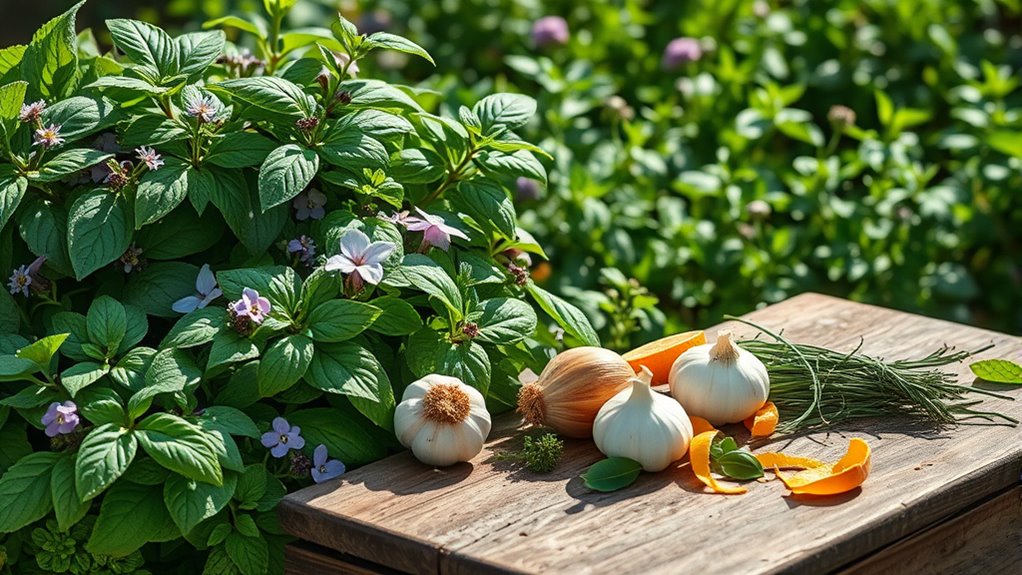

To master natural pest deterrents in just 7 days, start by learning pest habitats and behaviors to target hotspots early. Use homemade sprays like garlic, chili, or vinegar solutions, and incorporate companion planting with herbs and flowers to repel pests naturally. Encourage beneficial insects by providing habitat features and avoiding chemicals. Install physical barriers and traps to protect vulnerable plants. Stay consistent with garden monitoring, and if you keep exploring, you’ll discover how to create a resilient, pest-free space.
Key Takeaways
- Learn pest habitats and behaviors to identify hotspots early and target interventions effectively.
- Use natural repellents like neem oil, garlic extracts, and essential oils to deter pests safely.
- Incorporate companion planting and beneficial insects to naturally reduce pest populations.
- Install physical barriers and traps to prevent pest entry and monitor pest hotspots regularly.
- Maintain healthy soil and proper watering practices to boost plant resilience against pests.
Understanding Common Garden Pests and Their Habitats
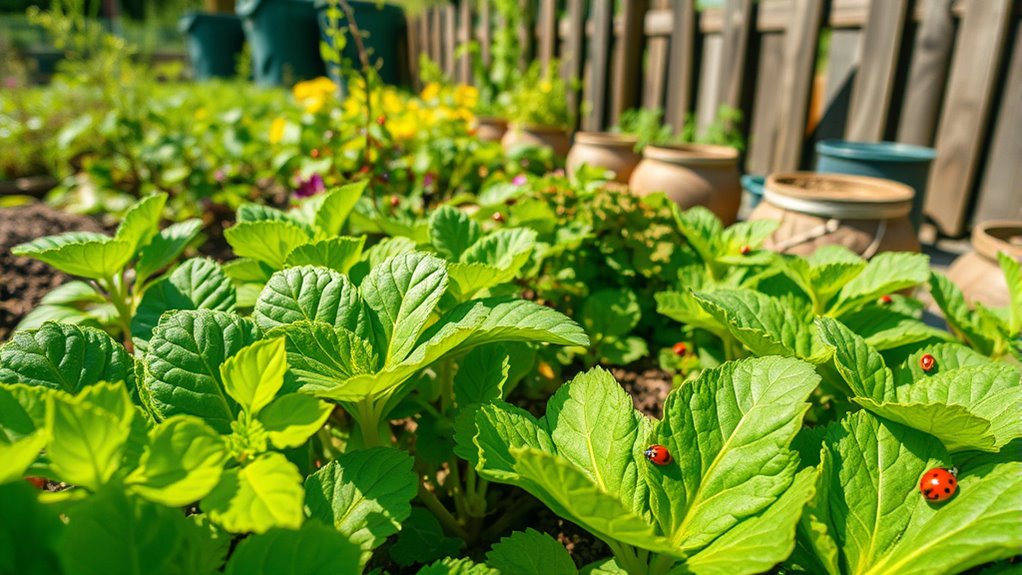
Have you ever wondered which pests are most likely to invade your garden and where they tend to hide? Knowing their pest habitat is key to effective natural control. For example, aphids often cluster on new growth and undersides of leaves, showing their pest behavior of feeding on plant sap. Slugs prefer damp, shady areas near soil or mulch, actively seeking moist environments. Carrots and root vegetables attract wireworms, which burrow underground, making soil disturbance a sign of their pest activity. Understanding these habits helps you target pest hotspots early. Recognizing pest behavior, like leaf-chewing or feeding at night, allows you to anticipate infestations. By identifying where pests hide and how they behave, you can better protect your garden naturally.
Selecting the Right Natural Repellents for Your Garden

Choosing the right natural repellents is essential for effectively protecting your garden without relying on chemicals. Herbal remedies, like neem oil or garlic extracts, can deter pests while being safe for your plants and the environment. Organic sprays made from essential oils such as peppermint, eucalyptus, or citronella also work well to repel insects naturally. When selecting repellents, consider the specific pests you’re targeting and the plants you’re protecting. Some herbal remedies are more effective against certain insects, so research their suitability for your garden’s needs. Always test new repellents on a small area first to ensure they won’t harm your plants. By choosing the right combination of herbal remedies and organic sprays, you create a safe, eco-friendly barrier that keeps pests at bay.
Creating DIY Pest Deterrent Sprays With Kitchen Ingredients

You can easily create effective pest deterrent sprays right in your kitchen using common ingredients. These homemade sprays serve as simple, natural solutions for keeping pests at bay without harsh chemicals. Kitchen remedies like vinegar, garlic, hot peppers, and dish soap are powerful ingredients for DIY pest deterrents.
- Mix vinegar with water and a few drops of dish soap for a versatile spray that repels ants and flies.
- Blend crushed garlic or hot peppers with water to create a spicy, pungent deterrent.
- Combine citrus peels with water to make a invigorating, pest-repelling spray.
- Use a mixture of neem oil and water for added protection against various pests.
These homemade sprays are budget-friendly, easy to prepare, and safe for your family and pets.
Implementing Companion Planting to Naturally Deter Pests
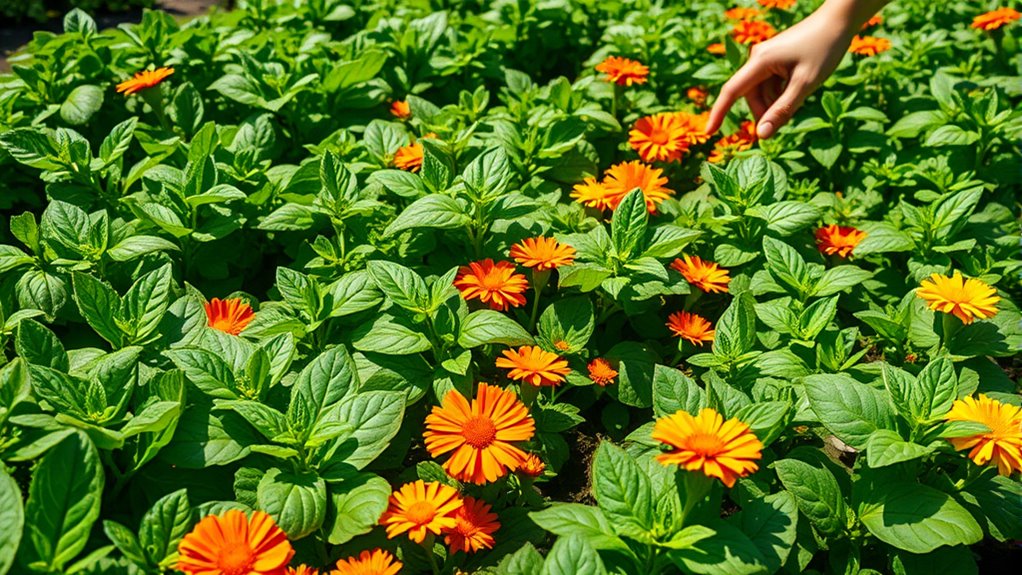
You can enhance your garden’s pest resistance by pairing beneficial plants together. Certain combinations naturally repel pests and protect your crops without chemicals. By choosing the right pest-repellent companion crops, you’ll create a healthier, more resilient garden.
Beneficial Plant Combinations
Implementing companion planting involves pairing specific plants to create natural pest barriers in your garden. Choosing beneficial plant combinations enhances pest deterrence and boosts plant health. Flower combinations, like marigolds with tomatoes, attract pollinators and repel pests. Aromatic pairing, such as basil near peppers, confuses insects and reduces infestations. You can also plant nasturtiums alongside cucumbers to deter aphids naturally. Additionally, herbs like dill and cilantro attract beneficial insects that prey on pests. These strategic pairings foster a balanced garden ecosystem, reducing the need for chemical interventions. Thoughtful plant combinations not only protect your crops but also add visual appeal and fragrance, making your garden more inviting. Focus on these beneficial plant combinations to strengthen your pest management naturally.
Pest-Repellent Companion Crops
Pest-repellent companion crops are an effective natural strategy to keep pests at bay and protect your garden. By planting herbs and other beneficial plants around your vegetables, you create herbaceous barriers that disrupt pest pathways and reduce infestations. These companion plants, such as marigolds or basil, emit scents that repel common pests, minimizing the need for chemical controls. Incorporate crop rotation to prevent pests from establishing a foothold, as changing plant locations disrupts pest life cycles. Companion planting not only deters pests but also improves soil health and yields. Be strategic about placement, ensuring pest-repellent crops are close enough to protect your main crops while allowing room for growth. Together, herbaceous barriers and crop rotation form a powerful, natural pest management system.
Encouraging Beneficial Insects to Maintain Pest Balance

Encouraging beneficial insects to thrive in your garden can naturally help control pest populations and promote a healthy ecosystem. By supporting pollinator attraction and habitat diversification, you create an environment where helpful insects flourish. To do this, plant a variety of native flowers and flowering herbs that provide nectar and pollen. Avoid using broad-spectrum pesticides that harm beneficial insects. Creating diverse habitats with logs, bare soil, or brush piles offers shelter and breeding sites. You can also include flowering plants that bloom at different times, ensuring a continuous food source. These practices attract beneficial insects like ladybugs and predatory beetles, which keep pests in check while maintaining overall garden health. Encouraging these insects is a simple, effective step toward natural pest management.
Establishing Physical Barriers and Traps for Pest Control

To keep pests at bay, you can install physical barriers like row covers or fencing around your garden. Choosing effective trap designs helps catch and monitor pests early, reducing their impact. By combining these methods, you create a strong defense that minimizes the need for chemical controls.
Installing Physical Barriers
Installing physical barriers is one of the most effective ways to keep pests out of your garden or home. You can use materials like wire mesh or row covers to create a strong defense. Wire mesh keeps pests like rodents and larger insects at bay, while row covers prevent flying insects and moths from reaching your plants. When installing, make sure the barriers are snug and secure around vulnerable areas. Also, check for gaps or tears regularly and repair them promptly. Proper placement is key: cover your vegetable beds, fruit trees, and flower patches. Keep barriers at least a few inches above the ground to prevent pests from crawling underneath. With these simple steps, you’ll markedly reduce pest intrusion naturally.
Effective Trap Design
Designing effective traps is essential for controlling pests without relying on chemicals. First, choose the right trap materials, such as plastic, metal, or biodegradable options, that suit your target pest and environment. Use sturdy, non-toxic materials to guarantee durability. Proper trap placement is crucial; position traps near pest hotspots like entry points, feeding areas, or along pathways. Place traps at different heights depending on the pest’s behavior—ground level for crawling insects, elevated for flying ones. Regularly check and maintain your traps, removing captured pests and resetting them as needed. Strategic trap design, combining suitable materials and thoughtful placement, maximizes pest capture while minimizing effort. This approach helps you create an effective, chemical-free pest management system.
Monitoring and Maintaining Your Garden’s Pest-Resistant Ecosystem

Regularly monitoring your garden is essential to maintaining its pest-resistant balance. Keep an eye on plant health, pests, and soil conditions to catch issues early. Healthy soil boosts plant resilience, so focus on soil health by adding compost and avoiding compacting the soil. Use proper watering techniques—deep, infrequent watering encourages strong roots and reduces pest attractants. Check plants for signs of pests or disease, removing affected leaves promptly. Maintain beneficial insects like ladybugs and pollinators to naturally control pests. Regularly inspecting your garden helps you identify problems before they escalate, ensuring your ecosystem stays balanced. Incorporate these practices into your routine to sustain a thriving, pest-resistant garden. Staying vigilant is key to long-term success.
Frequently Asked Questions
How Long Do Natural Pest Deterrents Typically Last Before Needing Reapplication?
Natural pest deterrents usually last between a few days to a couple of weeks before needing reapplication. Application longevity depends on environmental factors like rain, wind, and sunlight, which can break down or wash away the repellents. You should check your deterrents regularly and reapply as needed to maintain effectiveness. In general, lighter, consistent applications work best for keeping pests at bay without overuse.
Can Natural Pest Control Methods Harm Beneficial Insects?
Natural pest control methods can harm beneficial insects if you’re not careful, but focusing on beneficial insect safety helps maintain a pest control balance. You should avoid broad-spectrum repellents and target specific pests to protect helpful insects like bees and ladybugs. Using selective methods guarantees you control pests effectively without disrupting the ecosystem. Always observe your garden closely and adjust your approach to keep a healthy, balanced environment.
Are Natural Pest Repellents Effective Against All Types of Garden Pests?
Natural pest repellents aren’t effective against all garden pests because their effectiveness depends on pest specificity. You can improve results by maintaining plant diversity, which attracts beneficial insects and disrupts pest populations. While some repellents work well for certain pests, others may require different strategies. You’ll find that combining natural repellents with diverse planting creates a balanced ecosystem that minimizes pest damage without harming beneficial insects.
What Are Signs of Overusing Natural Pest Deterrents in the Garden?
You might notice pests becoming resistant or your plants showing signs of stress when overusing natural deterrents. Coincidentally, frequent applications can lead to pest resistance, making repellents less effective. Additionally, over-application can stress your plants, causing yellowing or wilting. Keep an eye out for these signs, and remember, moderation is key. Adjust your pest control methods to prevent building resistance and ensure your garden stays healthy and thriving.
How Do Weather Conditions Impact the Effectiveness of Natural Pest Deterrents?
Weather conditions substantially impact the effectiveness of natural pest deterrents. High humidity effects can cause repellents like neem oil or garlic spray to break down faster, reducing their potency. Temperature influence also matters; extreme heat can cause sprays to evaporate quickly, while cold weather can slow their action. To maximize results, apply deterrents during favorable weather, avoiding overly humid or hot days for better pest control.
Conclusion
By understanding pests and using natural deterrents, you can create a thriving, healthy garden without harmful chemicals. From DIY sprays to beneficial insects, every step helps you build a balanced ecosystem. Are you ready to transform your garden into a pest-resistant paradise? With consistent effort and smart choices, you’ll master natural pest control in just seven days. So, why not start today and enjoy a more vibrant, pest-free garden tomorrow?