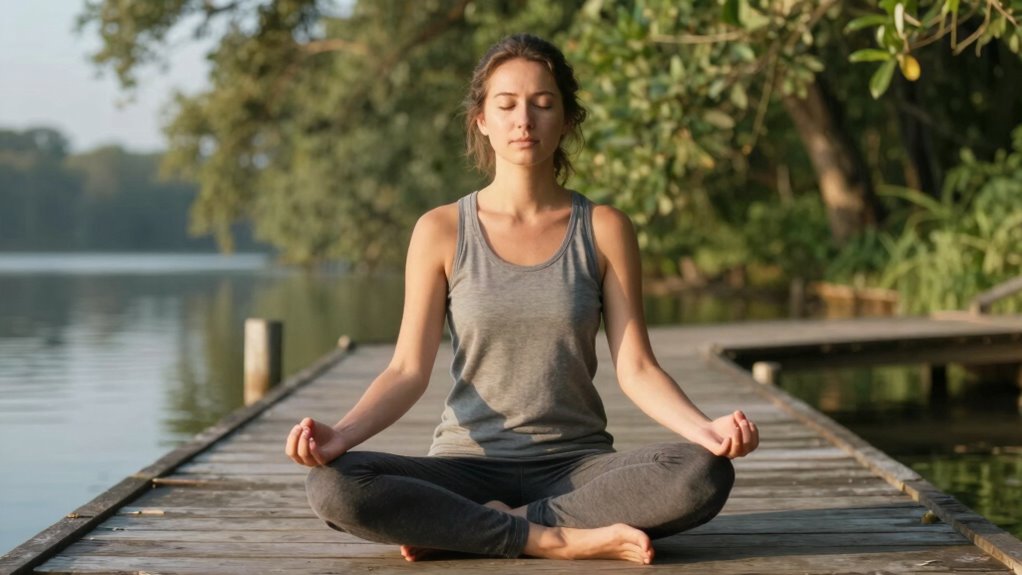

Mindfulness improves your emotional control by helping you stay present and aware of your feelings without rushing to judge or react. It encourages you to observe emotions with curiosity, creating space to respond thoughtfully instead of impulsively. Breathing exercises and meditation strengthen your ability to calm your nervous system and recognize emotional triggers early. Over time, these practices foster emotional balance, resilience, and compassion—if you keep exploring these techniques, you’ll discover even more ways to manage your emotions effectively.

Get the little things that make your day delivered free with Prime
- Fast, free delivery on millions of items
- Prime Video, Amazon Music and more included
- Member-only deals all year
Key Takeaways
- Mindfulness enhances emotional awareness, enabling individuals to recognize feelings before reacting impulsively.
- It promotes present-moment focus, reducing emotional reactivity triggered by past or future worries.
- Regular practice strengthens brain regions involved in emotional regulation through neuroplasticity.
- Mindfulness techniques like breathing exercises calm the nervous system during emotional surges.
- Cultivating non-judgmental observation helps create space for thoughtful responses rather than automatic reactions.
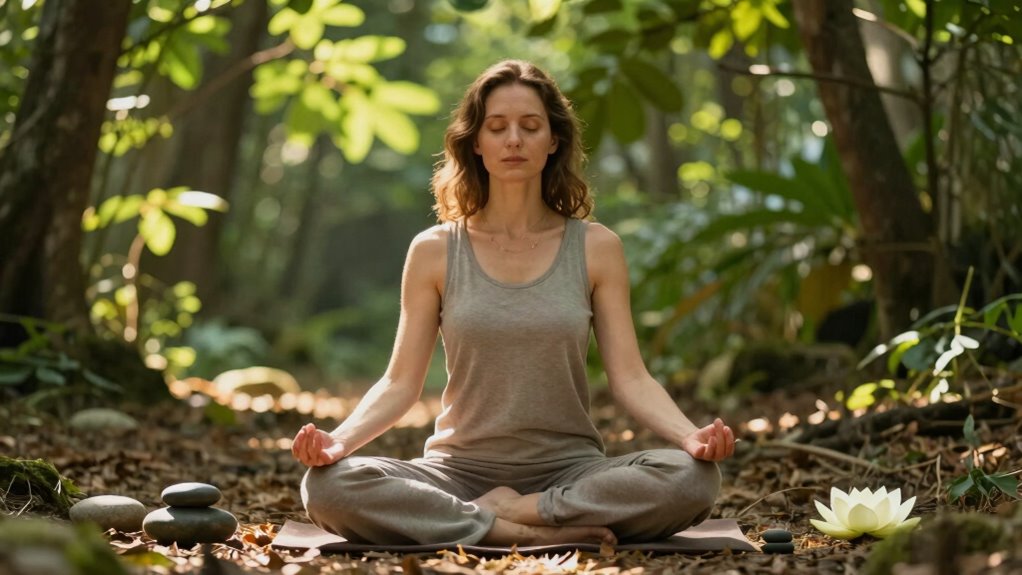
Mindfulness plays a vital role in managing emotions, helping you stay present and aware of your feelings without immediate judgment or reaction. When you practice mindfulness, you learn to observe your emotional experiences with openness and curiosity, rather than letting them overwhelm you. This awareness gives you the space to respond thoughtfully instead of reacting impulsively. One effective way to cultivate this mindfulness is through breathing exercises. By paying close attention to your breath—feeling the air enter and leave your body—you anchor yourself in the present moment. Slow, deliberate breathing can calm your nervous system, reduce stress, and create a sense of stability when emotions run high. Over time, these breathing exercises become a go-to tool for calming intense feelings, giving you a pause before responding.
Practicing mindful breathing helps calm your nerves and creates space for thoughtful responses during emotional moments.
In addition to breathing exercises, meditation techniques serve as powerful methods to deepen your emotional control. When you meditate, you focus your attention on a specific object, thought, or sensation, such as your breath or a calming word. This practice trains your mind to stay centered, even when external circumstances or internal feelings become turbulent. As you meditate regularly, you strengthen your capacity to observe emotions without immediately reacting to them. You develop a mental clarity that allows you to recognize emotional triggers early, giving you the chance to choose your response instead of defaulting to impulsive reactions. Incorporating mindfulness practices into your routine can also improve your overall emotional resilience and help you respond more adaptively to stressful situations. Recognizing how your brain processes emotions is key to understanding the impact of emotional regulation techniques like mindfulness.
Practicing mindfulness through meditation and breathing exercises also helps you recognize patterns in your emotional responses. You might notice that certain situations trigger anger or anxiety more often than others. With this awareness, you can prepare yourself to handle those moments more skillfully, using techniques like grounding exercises or gentle self-inquiry. This process can be enhanced by understanding the science of emotional regulation, which explains how mindfulness influences brain activity related to emotions. Moreover, understanding the role of neuroplasticity can motivate you to maintain consistent practice, as it shows how your brain can change and adapt over time. Additionally, cultivating a regular mindfulness practice can foster a sense of emotional balance, making it easier to remain calm in challenging moments. Over time, this process enhances your emotional resilience, making it easier to navigate difficult feelings without becoming overwhelmed. Mindfulness encourages a compassionate attitude toward yourself, which reduces shame or self-criticism when emotions are intense.
Ultimately, incorporating mindfulness into your daily routine transforms how you relate to your feelings. It’s not about suppressing emotions but understanding them better. Breathing exercises and meditation techniques serve as practical tools that help you stay grounded and present. As you develop this skill, you’ll find it easier to maintain emotional balance, even amidst life’s inevitable ups and downs. With consistent practice, mindfulness becomes a natural part of your life, empowering you to respond to emotions with clarity, patience, and control.
Frequently Asked Questions
Can Mindfulness Help With Severe Emotional Disorders?
Yes, mindfulness can help with severe emotional disorders by boosting your emotional resilience and reducing stress. When you practice mindfulness, you learn to observe your thoughts and feelings without judgment, which allows you to manage intense emotions better. Over time, this practice can decrease anxiety and depression symptoms, helping you regain control. While it’s not a cure, mindfulness is a valuable tool that supports your emotional stability and coping skills.
How Long Does It Take to See Emotional Control Benefits From Mindfulness?
You might start noticing emotional control benefits from mindfulness within a few weeks, but timing expectations vary. Consistent practice enhances emotional awareness, helping you respond more calmly to stressors. Some people see improvements as early as two weeks, while others may need a couple of months. The key is regular practice, patience, and focusing on increasing your emotional awareness, which gradually strengthens your ability to manage emotions effectively.
Are There Specific Mindfulness Techniques for Anger Management?
Yes, there are specific mindfulness techniques for anger management. You can start with breathing exercises to calm your mind and body, taking slow, deep breaths when anger rises. Additionally, practicing a body scan helps you become aware of physical tension and emotional triggers. By regularly using these techniques, you gain better control over your anger, responding more thoughtfully instead of reacting impulsively.
Does Mindfulness Training Require Professional Guidance?
Mindfulness training is like learning to ride a bike—you can start with self-guided practice or online courses. You don’t necessarily need professional guidance, especially if you’re comfortable exploring on your own. Many online courses offer structured lessons that fit your schedule. However, if you’re dealing with deep emotional issues, a professional can provide tailored support. Ultimately, both methods can help you build emotional control effectively.
Can Mindfulness Replace Traditional Therapy for Emotional Issues?
Mindfulness meditation can complement traditional therapy but shouldn’t replace it entirely for emotional issues. It helps build emotional resilience, allowing you to manage stress and emotions better. While regular practice can improve your emotional well-being, complex issues often require professional guidance. Combining mindfulness with therapy offers a balanced approach, empowering you to develop healthier emotional responses while addressing underlying concerns with expert support.
Conclusion
Practicing mindfulness helps you gain better emotional control, much like a steady boat steering through choppy waters. When you stay present and aware, you learn to respond rather than react, smoothing out your emotional turbulence. Over time, this practice strengthens your ability to handle stress and setbacks with greater ease. Just as a skilled sailor reads the wind, mindfulness allows you to read your emotions and steer through life’s storms with calm and clarity.
Products Worth Considering
As an affiliate, we earn on qualifying purchases.