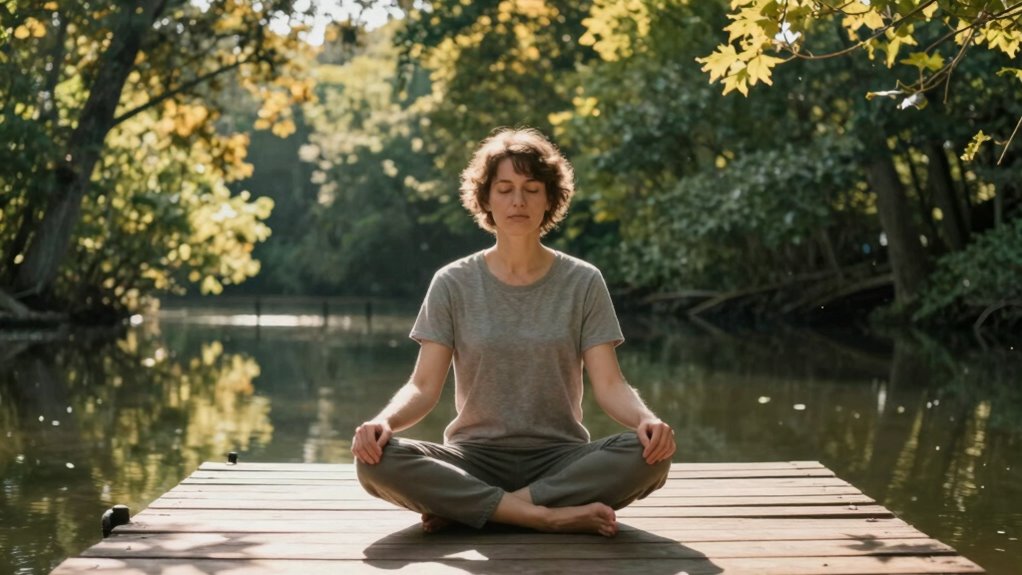

Mindfulness helps you make better choices by boosting your awareness of the present moment, allowing you to recognize thoughts, feelings, and sensations before reacting. It gives you a pause, so you can respond thoughtfully rather than impulsively. By observing emotions without judgment and staying grounded in your environment, you can manage impulses and patterns more effectively. If you stay engaged, you’ll discover more ways mindfulness can enhance your decision-making skills.

Get the little things that make your day delivered free with Prime
- Fast, free delivery on millions of items
- Prime Video, Amazon Music and more included
- Member-only deals all year
Key Takeaways
- Mindfulness increases present-moment awareness, allowing better evaluation before reacting.
- It enhances emotional regulation, preventing impulsive decisions driven by strong feelings.
- Mindfulness strengthens impulse control, helping choose healthier, goal-aligned actions.
- It improves self-awareness, enabling recognition of reactive patterns and thoughtful responses.
- Mindfulness fosters environmental awareness, using cues to anticipate triggers and make conscious choices.

Mindfulness is a powerful tool that can help you make better choices by bringing your attention to the present moment. When you practice mindfulness regularly, you become more aware of your thoughts, feelings, and physical sensations without immediately reacting to them. This heightened awareness allows you to pause before acting, giving you the chance to choose responses that align with your values and goals. One of the key ways mindfulness improves decision-making is through emotional regulation. Instead of letting intense emotions overwhelm you, mindfulness helps you observe these feelings from a distance. You recognize when you’re feeling anger, frustration, or anxiety, and instead of reacting impulsively, you learn to accept these emotions without judgment. This acceptance creates space for rational thought, enabling you to respond thoughtfully rather than impulsively. As a result, you’re less likely to make hasty decisions driven solely by emotion.
Mindfulness helps you observe emotions without judgment, creating space for thoughtful, rational responses over impulsive reactions.
Impulsivity often leads to choices you might regret later, but mindfulness strengthens your impulse control. When you’re mindful, you develop the ability to pause and evaluate your options before acting. For example, if you’re faced with a tempting but unhealthy snack, mindfulness helps you notice the craving without immediately giving in. Instead of succumbing to impulsive urges, you acknowledge the craving and choose a healthier alternative or decide to wait until you’re genuinely hungry. This pause can prevent impulsive behaviors that derail your long-term goals, whether it’s related to health, finances, or relationships. Over time, as you cultivate mindfulness, you notice patterns of impulsivity and learn to manage them more effectively. Additionally, understanding the importance of natural environments can further enhance your mindfulness practice by grounding you in the present moment. Engaging with these environments can deepen your awareness and reinforce your mindfulness skills. Recognizing the impact of visual and sensory stimuli in your surroundings can help you fine-tune your focus and stay centered during challenging situations. Developing an awareness of environmental cues can also help you anticipate and respond to triggers more proactively. Incorporating mindfulness exercises into your routine can further strengthen your ability to stay present and focused throughout the day.
Practicing mindfulness also boosts your capacity for self-awareness, which is essential for making conscious choices. When you’re aware of your habitual reactions, you can challenge them and choose differently. For instance, if you tend to snap at others when you’re stressed, mindfulness helps you recognize those triggers early. Instead of reacting defensively, you can take a deep breath and respond calmly. This practice not only improves your relationships but also reinforces your ability to make thoughtful, intentional choices in all areas of life. Developing this awareness can also help you identify thought patterns that may influence your behavior in unhelpful ways.
In essence, mindfulness empowers you to respond rather than react. It enhances emotional regulation and impulse control, making it easier for you to navigate complex situations with clarity and calmness. Over time, this leads to better decision-making, greater self-control, and a more deliberate approach to living your life. By integrating mindfulness into your daily routine, you can create a foundation for wiser, more intentional choices that support your well-being and personal growth.
Frequently Asked Questions
Can Mindfulness Reduce Impulsive Decision-Making?
Yes, mindfulness can reduce your impulsive tendencies by improving emotional regulation. When you’re mindful, you become more aware of your thoughts and feelings, giving you space to pause before reacting. This awareness helps you recognize impulsive urges early, making it easier to choose a more thoughtful response. Over time, practicing mindfulness trains your brain to manage emotions better, leading to more deliberate decisions instead of impulsive ones.
How Long Does It Take to See Benefits From Mindfulness?
You can start noticing benefits from mindfulness within just a few days to a few weeks, depending on your consistency. The mindfulness duration needed varies, but regular practice—around 10 to 20 minutes daily—accelerates the benefits timeline. As you stick to your routine, you’ll likely see improved focus, reduced stress, and better decision-making. Stay patient and committed, and you’ll experience these positive changes sooner rather than later.
Is Mindfulness Effective for All Types of Choices?
Mindfulness is remarkably effective for all types of choices, big or small. It boosts your emotional regulation and stress management, helping you pause and process feelings before acting. By practicing mindfulness regularly, you develop a clearer, calmer mind, making it easier to navigate decisions thoughtfully. Whether you’re choosing what to eat or how to handle conflicts, mindfulness equips you with the mental mastery needed for better, balanced choices.
Can Mindfulness Practice Improve Long-Term Decision Skills?
Yes, practicing mindfulness meditation can improve your long-term decision skills. As you develop emotional regulation through regular mindfulness, you become better at managing impulses and evaluating situations calmly. This increased awareness helps you make more thoughtful, deliberate choices over time. Consistent mindfulness practice strengthens your ability to stay present, reducing impulsivity and enhancing your capacity for strategic thinking, which ultimately leads to smarter, more balanced decisions in the long run.
Are There Specific Mindfulness Techniques for Better Choices?
Did you know practicing mindfulness can increase decision clarity by 30%? You can try meditation exercises, focusing on your breath, to sharpen awareness. Breathing techniques, like deep inhales and slow exhales, help calm your mind and reduce impulsiveness. By regularly incorporating these methods, you develop a clearer perspective and make better choices, especially in stressful situations. These simple techniques strengthen your self-control and foster thoughtful decision-making.
Conclusion
By practicing mindfulness, you become more aware of your thoughts and feelings, helping you make clearer, more intentional choices—like steering a ship through calm waters. It’s not about perfection, but progress; each moment of awareness is a step toward better decisions. When you embrace mindfulness, you’ll find your choices become more aligned with your true values. Just as a compass guides a traveler, mindfulness guides you to a more balanced and fulfilling life.
Products Worth Considering
As an affiliate, we earn on qualifying purchases.