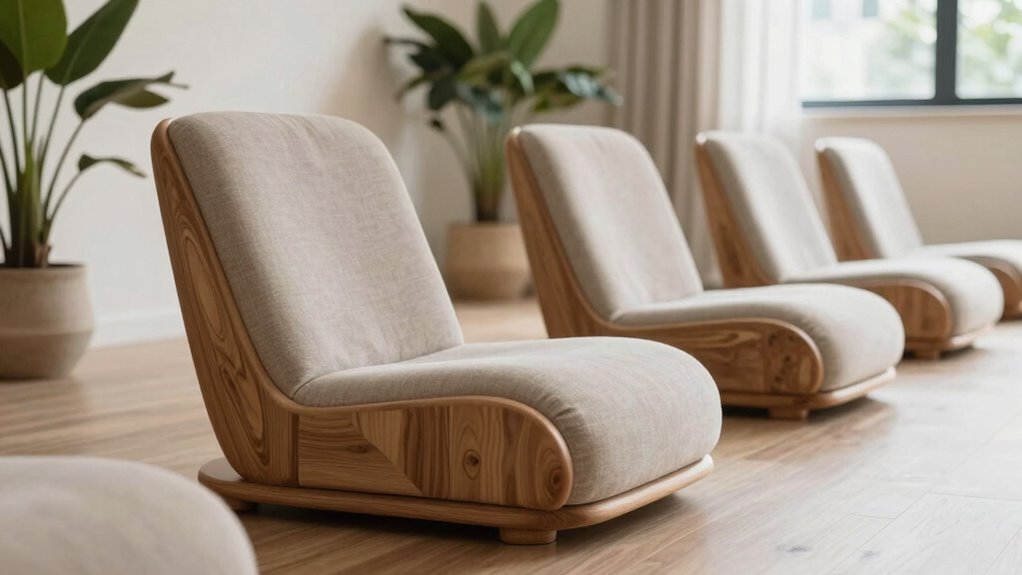

A well-designed meditation chair helps you maintain proper posture, reducing back and neck strain and fostering relaxation. Its ergonomic features, like a gently curved backrest and slight tilt, support your natural spine alignment and encourage open-chested breathing. Durable, high-quality materials guarantee stability and comfort during longer sessions, enabling you to focus fully on your practice. By choosing the right chair, you can deepen your mindfulness and turn meditation into a truly restorative experience—if you keep exploring, you’ll find even more ways to improve your routine.
Key Takeaways
- Ergonomic design supports proper posture, reducing discomfort and enabling longer, more focused meditation sessions.
- Durable, high-quality materials ensure stability and longevity, fostering consistent practice without distractions.
- Supportive furniture promotes better breathing and relaxation, enhancing overall meditation quality.
- Eco-friendly materials and ethical manufacturing reflect a mindful approach that aligns with meditation values.
- Well-designed chairs help deepen mindfulness by minimizing physical barriers and encouraging mental tranquility.
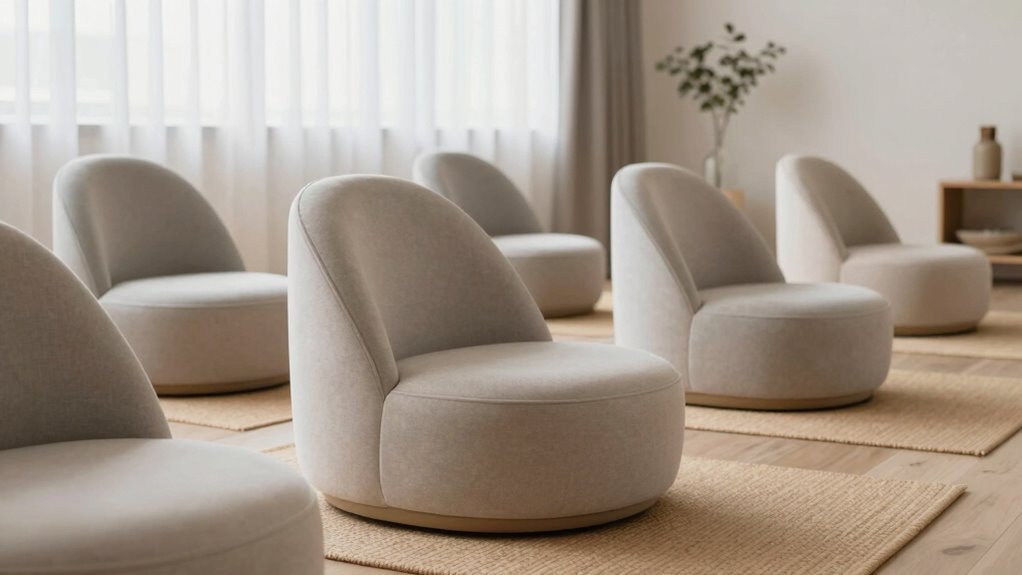
Practicing meditation can be much more comfortable and effective when you have the right chair. The right meditation chair supports your posture, helps you stay relaxed, and allows you to focus fully on your practice. One of the most important factors in choosing a chair is its ergonomic design. An ergonomic chair is crafted to promote proper alignment of your spine, reducing strain on your back and neck. When your body is supported correctly, you can settle into meditation more easily, without constant adjustments or discomfort. Look for chairs with a gently curved backrest that follows the natural shape of your spine, and consider one with a slight tilt to encourage an open chest and relaxed shoulders. The ergonomic design isn’t just about comfort; it’s about creating an environment that helps you maintain focus and stay present during your meditation sessions. Additionally, selecting a chair with ergonomic features can significantly enhance your overall comfort and support during practice. Material durability is another key aspect to think about when selecting a meditation chair. You want a chair that can withstand regular use without losing its shape or comfort. High-quality materials like sturdy hardwood, reinforced metal frames, or durable fabric upholstery ensure longevity. A well-made chair remains supportive over time, so you don’t have to worry about replacing it frequently. Durable materials also contribute to safety, giving you confidence that the chair won’t wobble or break during your practice. Whether you prefer a minimalist wooden design or a cushioned seat with a sturdy base, choosing a product built with material durability in mind guarantees that your investment will serve you well for years to come. Additionally, the combination of ergonomic design and durable materials creates a meditation chair that’s both comfortable and reliable. It encourages you to adopt a consistent practice by removing physical barriers like discomfort or instability. Properly supportive furniture can also enhance your overall experience by promoting better breathing and posture. From the brand reputation of the manufacturer to the quality of the materials used, every aspect influences how long your chair will last and how well it supports your practice. When the materials used are eco-friendly and sustainably sourced, it adds an extra layer of environmental responsibility to your choice. Incorporating sustainable materials into your selection can help reduce your ecological footprint while supporting ethical manufacturing practices. As you sit, you’ll notice how the right chair helps you breathe more deeply, stay seated longer, and quiet your mind more easily. This harmony between design and material quality lets you focus on your meditation, rather than fighting against discomfort or worrying about wear and tear. Ultimately, a well-designed, durable meditation chair becomes a crucial part of your practice, helping you cultivate mindfulness with greater ease and consistency. With the right choice, you turn meditation from a routine into a truly restorative and enriching experience.
Frequently Asked Questions
Are Meditation Chairs Suitable for Beginners?
Yes, meditation chairs are suitable for beginners because they offer ergonomic support, helping you maintain proper posture comfortably. This support reduces strain and distraction during practice, making it easier to focus. Plus, their aesthetic appeal adds a calming, inviting atmosphere to your space. Starting with a meditation chair can enhance your experience, encouraging consistency and making meditation feel more accessible and enjoyable from the beginning.
How Do Meditation Chairs Affect Posture During Practice?
Meditation chairs positively affect your posture during practice by promoting ergonomic design and supporting proper spinal alignment. When you sit in a well-designed chair, it encourages you to maintain a straight back, reducing strain on your neck and shoulders. This support helps you stay comfortable and focused, preventing slouching or discomfort that can distract you. Ultimately, a good meditation chair enhances your ability to meditate with better posture and greater ease.
Can Meditation Chairs Help Reduce Back Pain?
Yes, meditation chairs can help reduce back pain by providing ergonomic support that promotes proper posture. When you use a chair designed for comfort, it alleviates strain on your back muscles and spine, offering pain relief during your practice. By supporting your lower back and encouraging alignment, these chairs make it easier to meditate comfortably for longer periods, helping you stay focused and relaxed without discomfort.
What Materials Are Best for Meditation Chairs?
Think of meditation chairs as gentle landscapes for your practice. The best materials, like eco-friendly options, blend durability with comfort, supporting your posture effortlessly. Prioritize ergonomic design, which acts as a guiding hand, ensuring your spine stays aligned while you meditate. Bamboo, recycled wood, and natural fibers not only nurture your body but also respect the environment, creating a harmonious space for mindfulness.
How Do I Choose the Right Meditation Chair for Me?
To choose the right meditation chair, consider one with ergonomic design that supports your posture comfortably. Look for features like adjustable height and lumbar support to prevent strain. Also, choose an aesthetic appeal that makes you feel calm and inspired during your practice. Test different options to see which feels most natural and relaxing, ensuring your chair enhances focus and mindfulness rather than distracts you.
Conclusion
Choosing the right meditation chair can considerably improve your practice, making it more comfortable and sustainable. When you’re comfortable, you’re more likely to meditate regularly, deepening your focus and mindfulness. Did you know that consistent meditation can reduce stress by up to 40%? Investing in a supportive chair isn’t just about comfort—it’s about creating an environment where your practice thrives, helping you achieve greater peace and clarity every day.
Products Worth Considering
As an affiliate, we earn on qualifying purchases.