Laundry symbols act as a simple code to help you care for your clothes properly, preventing damage and keeping them looking their best. They show whether you can wash, bleach, dry, or iron a garment and at what temperature. Recognizing these icons saves you from costly mistakes. If you want to confidently interpret each symbol and keep your wardrobe fresh and well-maintained, there’s more to uncover in this handy guide.
Key Takeaways
- Understanding laundry symbols prevents fabric damage by guiding proper washing, drying, bleaching, and ironing methods.
- Recognizing icons like tub, triangle, and circle ensures correct treatment and prolongs garment lifespan.
- Proper interpretation of symbols helps avoid costly mistakes, such as using incorrect temperatures or drying methods.
- Symbols indicate safe stain removal, fabric softener use, and special care needs for delicate or high-heat items.
- Keeping a laundry symbol cheat sheet simplifies garment care and promotes consistent, effective laundry habits.
Understanding Basic Laundry Symbols and Their Meanings

While laundry symbols may seem confusing at first, understanding their basic meanings can make doing laundry much easier. Symbols guide you on how to care for your clothes, ensuring they stay in good condition. For example, a tub icon indicates washing instructions, while a triangle shows whether bleach is safe. Knowing these symbols helps you choose the right laundry detergents and when to skip fabric softener. If a symbol shows a circle with a letter, it often means dry cleaning is needed or not. Recognizing symbols prevents damage from incorrect washing or drying. Additionally, understanding the symbols can help you incorporate proper laundry care practices to extend the lifespan of your garments. Recognizing symbols prevents damage from incorrect washing or drying. Remember, following these icons means you’ll preserve fabrics and avoid costly mistakes. By mastering the basics, laundry becomes less stressful, and your clothes last longer.
How to Recognize Washing, Rinsing, and Drying Icons

Recognizing washing, rinsing, and drying icons is key to properly caring for your clothes. These symbols tell you how to handle your laundry efficiently and avoid damage. Look for the washing tub icon with numbers indicating maximum temperature and whether to use fabric softener. Rinsing icons often feature a water wave, showing if a gentle rinse is needed. Drying symbols include a square with a circle inside, indicating tumble drying, or lines to show air drying. Pay attention to icons for stain treatment—some symbols suggest pre-washing or special cycles. Here are some tips:
- Check for a stain treatment icon before washing heavily soiled clothes.
- Use the fabric softener symbol as a guide for softening fabrics.
- Follow drying icons to prevent shrinking or damage.
- Recognize rinsing symbols to ensure proper water temperature.
Interpreting Bleaching and Ironing Symbols Correctly

Understanding bleaching symbols helps you avoid damaging your clothes, so look for icons like a triangle to know if bleaching is safe. Ironing temperature indicators guide you to prevent scorching fabrics, with symbols showing low, medium, or high heat. Following safe stain removal tips guarantees your clothes stay in great shape while using the right products and methods. Additionally, recognizing symbols for specialty candies, such as cotton candy grapes or cake pops, can help you care for and store these treats properly to maintain their quality. Candy varieties and innovations
Bleaching Symbols Meaning
Ever wonder what those bleaching symbols on your laundry tags really mean? They guide you on whether you can use chemical bleaching or opt for bleach alternatives without damaging your clothes. A triangle with a cross means no bleaching at all, while a plain triangle suggests any bleaching is okay. If it’s a triangle with two lines, only non-chlorine bleach should be used. Sometimes, a “CL” inside the triangle indicates chlorinated bleach is safe. Remember, using the wrong symbol can ruin your fabric, so respect what the symbols tell you. Understanding laundry labels is essential for proper garment care to avoid mishaps.
Ironing Temperature Indicators
After learning how to interpret bleaching symbols, it’s just as important to pay attention to ironing icons on your laundry tags. These symbols guide you on proper ironing temperature control, guaranteeing you don’t damage fabrics. The iron symbol with dots indicates the recommended heat setting: one dot for low, two for medium, and three for high heat. Some symbols also include a cross or a line through the iron, signaling you shouldn’t iron the garment at all. Prioritizing ironing safety means respecting these indicators to prevent scorching or melting delicate fabrics. Using the correct temperature not only preserves your clothes but also helps avoid accidents. Always check the symbols before ironing to keep your garments in top condition and ensure safe, effective ironing every time. Additionally, understanding credit card security measures can help you protect your personal information during online shopping or payment processing.
Safe Stain Removal Tips
To safely remove stains, you need to interpret bleaching and ironing symbols correctly, as these icons provide essential guidance on how to treat your clothes without causing damage. Knowing what each symbol means helps you choose the right stain removal techniques and avoid mishaps that could ruin your garments. For instance, a triangle indicates bleach compatibility, while a crossed-out iron warns against high heat. Additionally, understanding color accuracy can help you better assess whether your stain removal methods are affecting the fabric’s appearance or color integrity.
Here are some stain prevention tips:
- Always test stain removal products on a hidden area first.
- Use cold water for fresh stains to prevent setting.
- Follow care labels to avoid bleaching or ironing damage.
- Don’t rub stains vigorously—gentle blotting works best.
Understanding these symbols ensures safe, effective stain removal and keeps your clothes looking new longer.
Common Mistakes When Following Laundry Symbols
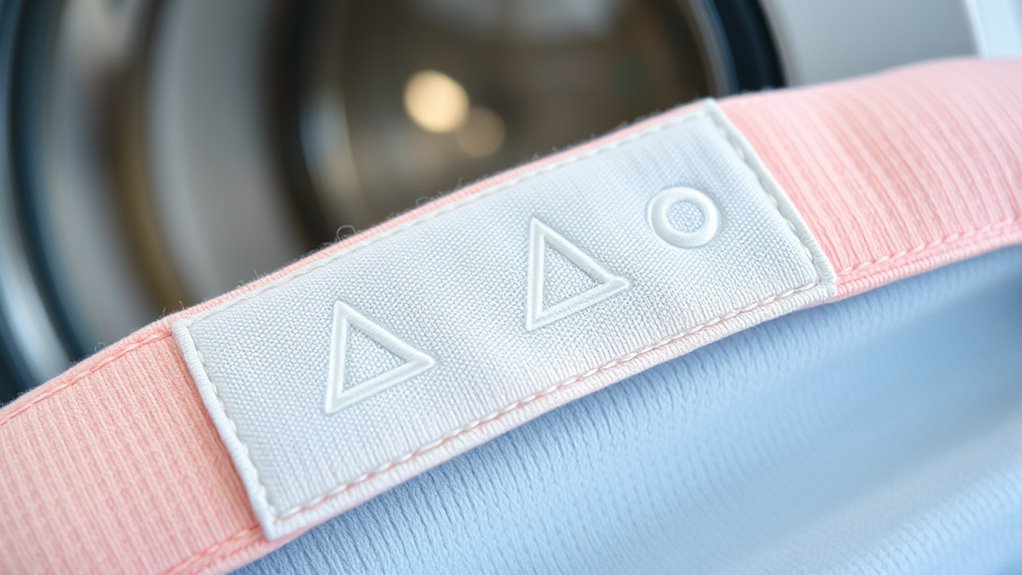
One common mistake people make is misinterpreting laundry symbols, which can lead to fabric damage or poor cleaning results. For example, ignoring symbols that indicate delicate wash cycles or high heat can ruin clothes. Another mistake is choosing the wrong detergent based on misunderstood symbols, which affects cleaning efficiency. Poor laundry room organization often causes confusion, making it harder to follow symbols correctly or keep track of garment care labels. When symbols aren’t properly understood, you might use too much or too little detergent, wasting resources or harming fabrics. Additionally, understanding proper laundry practices, such as following manufacturer instructions for washing and drying, is essential to avoid damage. Always double-check symbols before washing and organize your laundry space to keep care labels visible and accessible. Clear understanding helps you avoid costly mistakes and ensures your clothes stay in great condition longer.
Tips for Properly Caring for Different Fabric Types
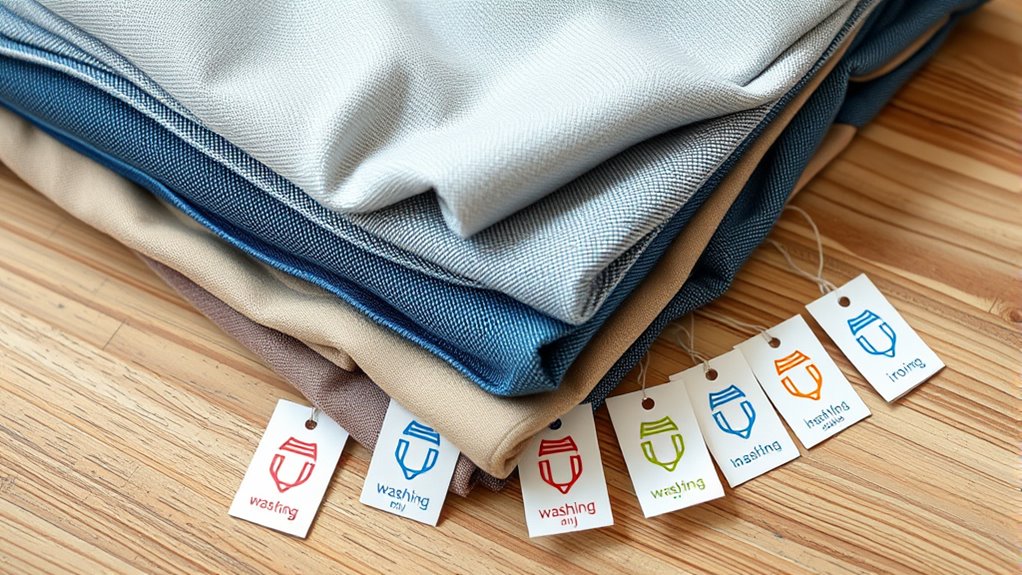
Taking care of different fabric types requires specific techniques to keep them looking their best. You’ll need to pay attention to handling delicate materials, setting the right washing temperature, and choosing the proper drying method. These tips help make certain your clothes stay in great shape over time. Additionally, understanding the importance of a well-organized workspace can contribute to more efficient laundry routines and overall household management.
Delicate Fabric Handling
Caring for delicate fabrics requires extra attention to prevent damage and maintain their appearance. Always check the care label first. Use a gentle cycle and cold water to protect fibers. When washing, consider applying a stain pre treatment carefully—avoid harsh scrubbing. Fabric softener can help keep delicate fibers soft, but use it sparingly to prevent buildup. Air drying is usually best; if you must tumble dry, choose a low heat setting. Handling with care extends the lifespan of your delicate items.
- Test stain pre treatment on a small area first
- Use a mesh laundry bag for extra protection
- Skip harsh detergents that can weaken fibers
- Lay flat to dry instead of hanging to prevent stretching
Washing Temperature Settings
Choosing the right washing temperature is essential for preserving your fabrics’ quality and longevity. Follow temperature guidelines to avoid damaging delicate fibers or setting stains. For most everyday clothes, use warm water, which balances cleaning power and fabric safety. For whites and heavily soiled items, hot water can be effective but should be used sparingly to prevent shrinking or fading. Cold water is ideal for delicate fabrics, bright colors, and synthetic materials, helping to prevent color bleeding and fabric deterioration. Always check the care labels for specific washing heat levels recommended by the manufacturer. Adjust your washing machine’s temperature settings accordingly, and avoid unnecessary high heat to extend your clothing’s lifespan and maintain its appearance over time. Proper wash cycle selection can also help maximize fabric care and cleaning efficiency.
Drying Methods Tips
Different fabric types require specific drying methods to maintain their shape, softness, and durability. For delicate fabrics like silk or lace, avoid tumble drying and use clothesline tricks, such as hanging items flat or by the edges. For cottons and linens, tumble drying tips include using lower heat settings to prevent shrinking and wrinkling. When air-drying, hang clothes in the shade to prevent color fading. For towels and heavier fabrics, ensure they’re shaken out before hanging to reduce wrinkles and speed up drying. Remember, proper drying care extends your clothes’ lifespan. Using the right method helps preserve fabric quality and fit. Whether you prefer clothesline tricks or tumble drying tips, always check the garment’s label for specific instructions.
Handy Tricks to Remember Laundry Symbols and Keep Your Wardrobe Fresh

Memorizing laundry symbols can feel overwhelming, but with a few simple tricks, you can easily keep your wardrobe looking fresh and well-maintained. One trick is to associate specific symbols with familiar laundry habits. For example, a tub with water means wash, while a crossed-out symbol indicates no washing. To remember which symbols relate to fabric softener, look for the symbol with a dotted line or a softener icon—these remind you it’s safe to use softener. Keep a cheat sheet nearby until you’re confident, and always check the laundry detergent label for instructions. When in doubt, sorting clothes by symbols helps prevent mishaps. Additionally, understanding noise levels of modern heat pumps can help you choose appliances that won’t disturb your household environment. With practice, recognizing laundry symbols becomes second nature, ensuring your clothes stay vibrant and in great shape.
Frequently Asked Questions
How Often Do Laundry Symbols Get Updated or Revised?
Laundry symbols are updated or revised periodically, usually every few years, to reflect new fabric dyeing techniques and washing machine cycle innovations. You should check for updates whenever manufacturers release new guidelines or when you notice changes in fabric care technology. Staying current guarantees you follow the latest fabric dyeing instructions and select appropriate washing machine cycles, helping your clothes last longer and stay vibrant.
Are There Universal Standards for Laundry Symbols Worldwide?
You’ll find that there aren’t strict universal standards for laundry symbols worldwide, leading to regional symbol variations. While some global icon consistency exists to help identify common instructions, many symbols differ depending on the country. This means you need to pay attention to local laundry practices and symbols, especially when traveling or using international products, to guarantee proper care of your clothes without damage or confusion.
Can Laundry Symbols Indicate Water Temperature Preferences?
Laundry symbols act like a secret code, revealing water temperature preferences that help you master fabric dyeing and stain removal. Yes, they can indicate the ideal temperature to protect colors or keep whites bright. By following these symbols, you prevent dye bleeding and stains setting, ensuring your clothes stay vibrant. Think of them as your laundry map, guiding you safely through the waters of fabric care, so every load comes out perfect.
What Should I Do if Symbols Conflict on a Clothing Label?
If you encounter conflicting instructions on a clothing label, don’t ignore them. First, review the label carefully to identify any misinterpretation or unclear symbols. When instructions conflict, prioritize the most delicate setting or follow the symbol that suggests the gentlest care. If you’re unsure, hand washing or using a laundry service is safest. Always remember, conflicting instructions can be confusing, so take extra care to prevent damage.
Do Laundry Symbols Vary for Eco-Friendly or Sustainable Fabrics?
You might think laundry symbols are the same for all fabrics, but eco-friendly fabrics often have unique symbols or labels emphasizing sustainability. Sustainable labeling highlights gentle cleaning methods, eco-friendly detergents, and lower temperatures to protect the environment. Pay close attention to these symbols, as they guide you to care for your eco-friendly fabrics properly, ensuring their longevity and reducing environmental impact. Always follow these specific symbols for ideal care.
Conclusion
So, next time you stare at those tiny symbols, remember—they’re your wardrobe’s secret language. Ignore them, and you might end up with a ruined shirt or a puddle of bleach instead of fresh laundry. Who knew that decoding laundry symbols could save you from a fashion disaster? With just a little attention, you’ll keep your clothes looking salon-fresh, no magic wand required—just a keen eye and a dash of laundry savvy.