TL;DR

Get the little things that make your day delivered free with Prime
- Fast, free delivery on millions of items
- Prime Video, Amazon Music and more included
- Member-only deals all year
A headline says U.S. Marines are assessing their conduct as a form of self-improvement. No article body was available, so the people involved, methods, timing and results cannot be verified.
A headline reports that U.S. Marines are assessing their conduct to improve themselves, describing a practice of reflection within the military. The available information does not identify the Marines involved, explain how the assessment is carried out or say whether it is part of a formal program.
The reported development is limited to the headline: Marines are reflecting on their conduct with the stated aim of self-improvement. No article body was available to establish where this is happening, when the reflection took place or whether it involves an individual, a unit or a wider Marine Corps initiative.
There are also no details about what conduct is being assessed, what tools or guidance Marines use, or whether supervisors, peers or outside specialists take part. The headline does not report findings, measurable outcomes or changes to training or policy. Those details cannot be inferred from the brief description.
No named Marines, officials or researchers are identified, and no direct statements are provided. The information therefore supports only a narrow account: the headline characterizes conduct assessment as a way for Marines to work on themselves, while leaving the practice and its scope unspecified.
Conduct · Reflection · Self-improvement
How U.S. Marines Reflect on Their Conduct to Improve Themselves
A headline says U.S. Marines assess their conduct with self-improvement as the stated aim. The available information offers no article details to verify who took part, how the assessment works, or what results followed.
The Development
The report characterizes conduct assessment as a way for Marines to work on themselves. No supporting article body was available, so the description cannot be expanded beyond that headline.
Established
Stated activity
The headline says U.S. Marines are assessing their conduct.
Stated aim
Self-improvement
Improving themselves is the purpose named in the headline, not a reported result.
Unverified
Practice and scope
No unit, location, date, method, oversight, or program status is identified.
What Reflection Could Shape
In general, examining decisions and behavior after events or during training could help service members consider how their actions affect teamwork, discipline, and trust. These are possible reasons the topic may matter, not outcomes reported here.
Individual
Review decisions
Reflection could offer a chance to consider choices and conduct. No specific review method is described.
Team
Consider shared effects
Conduct can affect trust and coordination in a military setting. No team-level process is confirmed.
Evidence
Measure change
Whether behavior or performance changed cannot be determined without reported findings.
Details Still Missing
The headline does not explain how the assessment happens or place it in a timeline, unit, or official policy context.
Process
What does assessment involve?
It is unknown whether Marines review decisions individually, discuss conduct with peers, receive evaluations, or use another method. Frequency and oversight are also unspecified.
People & scope
Who is taking part?
No Marines, officials, researchers, unit, or group size are identified. The information does not say whether this is service-wide or limited to a particular group.
Timing & status
When and where?
No location or date is given. It is unclear whether the activity is routine, newly introduced, or linked to a specific event.
Results & policy
What changed?
No findings, outcome data, training changes, or policy changes are reported. Formal program status is not established.
What Further Reporting Would Clarify
A fuller account could connect the stated aim to a documented process and any evidence of effects.
Identify participants
Name the Marines or unit involved and define the scope.
Explain the process
Describe the method, timing, guidance, and oversight.
Clarify the status
Establish whether it is formal policy, a local practice, or an informal exercise.
Support claims of impact
Provide participant accounts or documented changes in conduct, training, or evaluation.
Key Questions
The confirmed account remains limited to the headline’s description.
What are the Marines reported to be doing?
Assessing their conduct with the stated aim of self-improvement. The assessment itself is not described.
Is this a formal Marine Corps program?
The available information does not say whether it is an official program, a unit activity, or an informal exercise.
What results have been reported?
None. The headline states an intended purpose, not a verified outcome.
Where and when did it happen?
No date, location, or identity of the Marines involved is provided.
Source noted: news.google.com · Article body unavailable
How Reflection Could Shape Conduct
If carried out as described, reflection on conduct could give service members a way to examine decisions and behavior after events or during routine training. That may matter in a military setting, where individual actions can affect teamwork, discipline and trust. These are general reasons such a practice could be relevant, not reported outcomes of this particular development.
Without details about the process or evidence of results, it is not possible to say whether the assessment changes behavior, improves performance or forms part of official Marine Corps policy. The distinction matters: a headline describing an aim does not establish that the aim has been achieved.
What the Headline Establishes
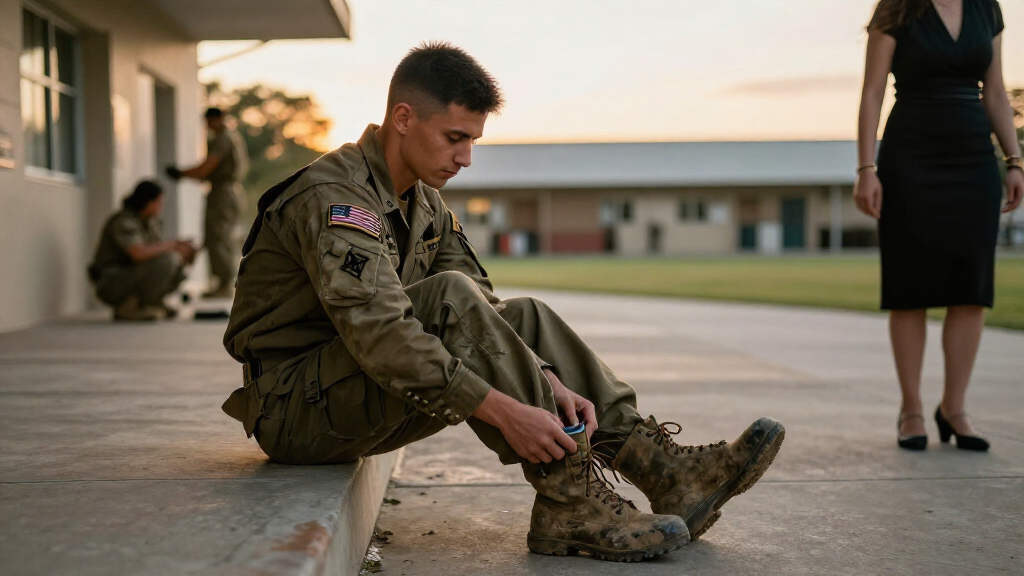
The available item is identified as a headline, not a full article. It reads, “U.S. Marines assess their conduct for self-improvement,” and is accompanied by an image caption indicating an image in a larger set. That wording supplies the broad subject and stated purpose, but no supporting account or publication details.
There is no timeline, location, unit name or description of earlier developments. It is also not stated whether the activity is routine, newly introduced or connected to a specific event. Without those facts, the report cannot be placed within a more detailed chronology of Marine Corps training or policy.
Details Missing From the Report
The central unanswered question is what the assessment involves. The available information does not say whether Marines review their own decisions, discuss conduct with peers, receive formal evaluations or use another method. It also does not explain how often the process occurs or who oversees it.
It remains unclear how many Marines are involved, whether the practice applies across the service or to a particular group, and whether any findings have been recorded. No official explanation, participant account or outcome data is included. The stated goal of self-improvement is presented in the headline, but no evidence is provided to measure whether that goal has been met.
Further Reporting Needed
A fuller account would need to identify the people or unit involved and explain the assessment process, its timing and its intended use. Statements from Marine Corps officials or participants could clarify whether this is a formal program, a local practice or an informal exercise.
Any claims about effects would also need supporting details, such as documented changes in conduct, training or evaluation. Until more information is available, the confirmed account remains limited to the headline’s description of Marines assessing their conduct for self-improvement.
Source: rss
Key Questions
What are the Marines reported to be doing?
The headline says U.S. Marines are assessing their conduct with the aim of self-improvement. It does not describe the assessment itself.
Is this a formal Marine Corps program?
The available information does not say whether the practice is an official program, a unit-level activity or an informal exercise.
What results have been reported?
No results or evidence of changed behavior are provided. The headline states an intended purpose, not a verified outcome.
Where and when did the assessment take place?
The headline-only information gives no location or date, and does not identify the Marines involved.
Source: news.google.com
Popular right now

Vitamix 5200 Professional-Grade Blender, 64 oz. Container, Black

Vitamix Propel Series 510 Professional-Grade Blender, 3 Programs, Black

Bose QuietComfort Wireless Noise-Cancelling Over-Ear Headphones, Black
As an affiliate, we earn on qualifying purchases.