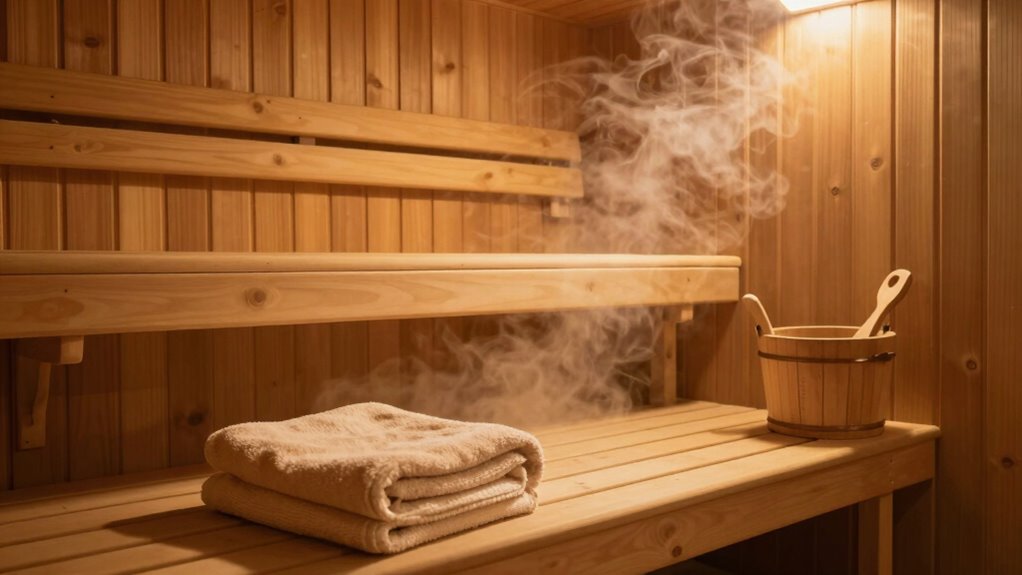

A home sauna can be an easy, effective way to boost your daily recovery and relaxation. Infrared saunas provide deep warmth at lower temperatures, easing muscle tension and soreness, while promoting overall well-being. They’re safe, energy-efficient, and fit well into your daily routine, helping you unwind after workouts or long days. Proper safety guidelines and thoughtful design make using a home sauna both relaxing and beneficial. Keep exploring to discover how you can optimize your recovery routine.

Get the little things that make your day delivered free with Prime
- Fast, free delivery on millions of items
- Prime Video, Amazon Music and more included
- Member-only deals all year
Key Takeaways
- Home saunas provide convenient, daily relaxation and muscle recovery at lower temperatures through infrared therapy.
- Regular sauna sessions promote overall well-being, reduce soreness, and improve circulation.
- Infrared rays penetrate deeply, easing muscle tension and accelerating recovery after physical activity.
- Safety guidelines, including hydration and session limits, ensure effective and risk-free use.
- Thoughtful design and maintenance enhance the sauna experience and energy efficiency for consistent recovery.
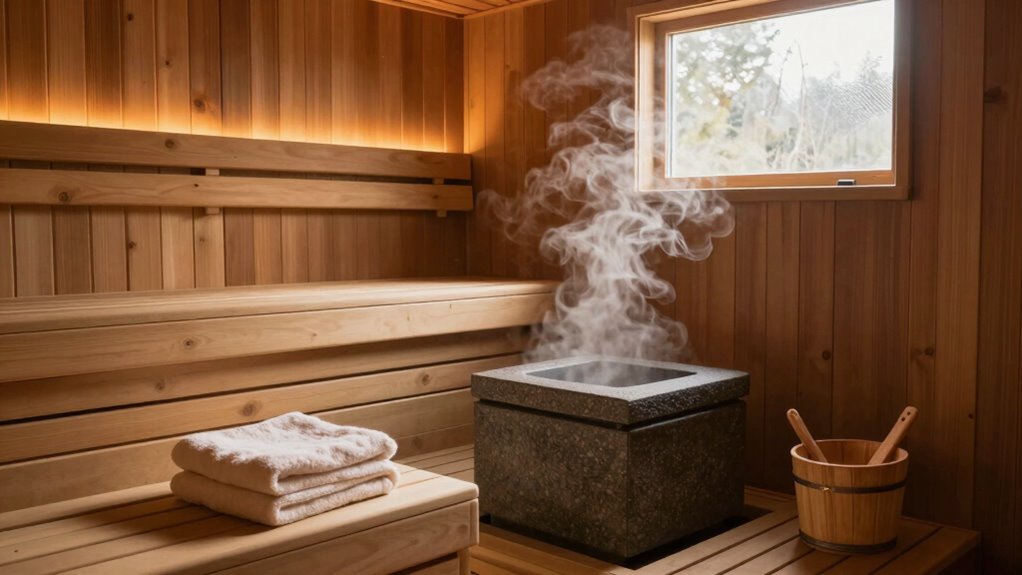
Have you ever wondered how to incorporate daily recovery into your busy routine? If so, installing a home sauna might be the perfect solution. Saunas offer a convenient way to unwind, relax muscles, and promote overall well-being without leaving your house. With several types available, infrared therapy stands out as a popular choice because it heats the body directly using infrared rays, providing deep warmth at lower temperatures. This makes it easier to enjoy regular sessions without the intense heat of traditional saunas, which can sometimes feel overwhelming or uncomfortable. Infrared saunas are also energy-efficient, helping you incorporate daily recovery without significantly increasing your energy bills.
When considering a home sauna, sauna safety should be your top priority. Make sure you understand how to operate your unit properly and follow the manufacturer’s guidelines. Proper sauna safety involves staying hydrated, limiting session times, and listening to your body. If you feel dizzy, nauseous, or uncomfortable, it’s important to exit the sauna immediately. Keep a timer nearby to prevent overexposure, especially if you’re new to sauna use. Also, be cautious about staying in the sauna for too long — typically, 15 to 20 minutes is enough for most people to experience benefits without risking dehydration or overheating. Remember, children, pregnant women, or individuals with certain medical conditions should consult a healthcare professional before using a sauna regularly. Incorporating water and tile color theory into your sauna design can enhance relaxation and create a calming environment that complements your recovery routine. Additionally, choosing the right natural materials for your sauna can further enrich the sensory experience and promote a healthier environment. Paying attention to energy efficiency can help reduce long-term costs and make daily use more sustainable. Ensuring proper ventilation and electrical safety is also crucial for maintaining a safe and comfortable environment during your sauna sessions. Regular maintenance and proper insulation can also improve energy conservation and overall safety.
Incorporating infrared therapy into your routine can enhance your recovery process, especially after workouts or long days. Infrared rays penetrate deep into muscles, easing tension and reducing soreness more effectively than standard heat. This targeted approach accelerates muscle recovery, improves circulation, and helps you feel more energized throughout the day. To maximize safety, ensure your sauna is well-maintained, with proper ventilation and electrical safety checks. Keep the environment clean and dry to prevent accidents or infections, and always follow safety tips provided by the manufacturer.
Frequently Asked Questions
How Long Should I Stay in a Home Sauna Each Session?
You should stay in a home sauna for about 15 to 20 minutes per session, depending on your heat tolerance. Sauna relaxation is key, so listen to your body and avoid overdoing it. If you start feeling dizzy or uncomfortable, step out immediately. Building up your heat tolerance gradually helps you enjoy the benefits safely, ensuring your sauna experience remains enjoyable and beneficial for daily recovery.
Are There Any Health Risks Associated With Daily Sauna Use?
Using a sauna daily can pose health risks like heat exhaustion or dehydration if you’re not careful. Be cautious of sauna addiction, which may lead you to overuse it out of habit rather than health benefits. Always listen to your body, stay hydrated, and limit sessions to prevent overheating. If you experience dizziness or nausea, it’s best to exit and cool down, ensuring safe, enjoyable use.
What Is the Best Temperature Setting for Daily Sauna Sessions?
You should aim for a temperature around 150-165°F for your daily sauna sessions, striking a balance with humidity to optimize your experience. Too hot, and you risk dehydration; too cool, you won’t reap the benefits. Think of it as a Goldilocks zone—just right. Adjust the temperature gradually, listen to your body, and keep the humidity at a comfortable level to enhance relaxation and recovery.
Can Home Saunas Help With Specific Medical Conditions?
Yes, home saunas can help with specific medical conditions by promoting detoxification benefits and supporting mental relaxation techniques. Regular use may alleviate symptoms of arthritis, improve circulation, and reduce stress. You can tailor your sauna sessions to boost detoxification and enhance mental clarity, making it easier to manage chronic pain or anxiety. Just make sure you consult a healthcare professional to personalize your sauna routine for your specific needs.
How Do I Maintain and Clean My Home Sauna Properly?
You might think maintaining a home sauna is complicated, but with simple routines, it’s easy. Prioritize sauna hygiene by wiping down surfaces regularly and using mild cleaning solutions. Incorporate maintenance routines like checking for mold, inspecting the heater, and ventilating after use. These steps keep your sauna clean, safe, and functioning efficiently, ensuring you enjoy daily recovery without worry. Regular upkeep extends your sauna’s lifespan and enhances your overall experience.
Conclusion
Imagine your home sauna as a warm embrace after a long day, wrapping you in soothing heat and tranquility. It’s more than just a refuge; it’s your personal retreat where stress melts away like snow under the sun. By making daily recovery a ritual, you’re nurturing your body and soul, transforming your space into a sanctuary of renewal. Embrace the warmth, and let each session be a gentle tide carrying away fatigue, leaving you refreshed and ready to face tomorrow.
Products Worth Considering
As an affiliate, we earn on qualifying purchases.