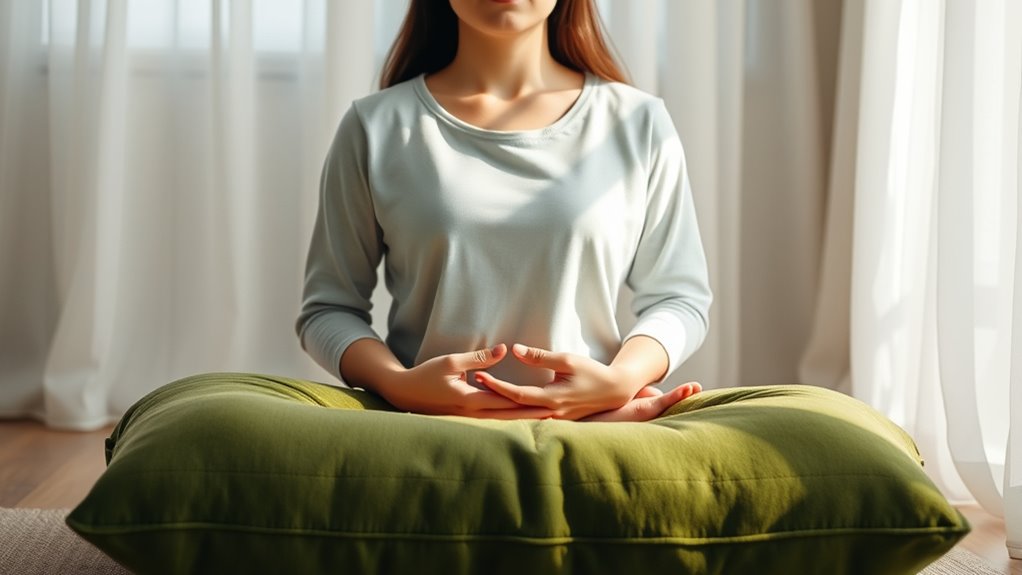

Breath awareness is a simple, effective practice that helps you stay present and calm. By focusing on each breath—noticing how air flows in and out—you can reduce stress, lower anxiety, and find a moment of peace amid busy days. You don’t need special tools or long routines—just a comfortable position and gentle attention. Keep exploring to discover more ways this straightforward practice can transform your well-being.
Key Takeaways
- Breath awareness involves paying focused attention to each natural breath to promote mindfulness and presence.
- Practice by sitting comfortably, closing your eyes, and observing the inhale and exhale without controlling your breath.
- It helps reduce stress, anxiety, and racing thoughts by activating the calming parasympathetic nervous system.
- Deepening the practice can include counting breaths or noticing physical sensations like air passing through nostrils.
- Regularly practicing breath awareness enhances mental clarity, emotional balance, and overall well-being.
Have you ever paused to truly notice your breath? It might seem like a simple act, but paying attention to your breathing can *unleash* incredible benefits for your mind and body. Mindful breathing, a core relaxation technique, involves focusing your awareness on each breath as it naturally flows in and out. When you bring your attention to your breath, you anchor yourself in the present moment, helping to quiet the constant chatter of your mind. This practice doesn’t require any special equipment or time-consuming routines—just a moment of conscious awareness.
Pause and notice your breath to find calm and presence in everyday life.
To begin, find a comfortable position, whether sitting or lying down. Close your eyes if it feels right, and take a deep, slow breath. As you inhale, notice the sensation of air filling your lungs, the rise of your chest or belly. Then, slowly exhale, observing the release of tension and air. The key is to focus entirely on the experience of breathing, letting any thoughts that drift in simply pass by like clouds. This is the essence of mindful breathing—being present with each inhale and exhale without judgment or expectation.
Using relaxation techniques centered around breath awareness can *considerably* reduce stress and anxiety. When you deliberately slow down your breathing, it triggers your parasympathetic nervous system—the part responsible for calming your body after stress. As you practice regularly, you might notice a decrease in racing thoughts and a greater sense of calm. Mindful breathing can be integrated into your daily routine, whether during a quick break at work, before bed, or in moments of overwhelm. It’s a portable tool that offers immediate relief and cultivates a deeper sense of inner peace.
One of the simplest ways to deepen your experience is to pay attention to the rhythm of your breath. You might try counting each inhale and exhale, aiming for a steady, even pace. Alternatively, focus on the sensation of air passing through your nostrils or the gentle movement of your chest. As you become more familiar with mindful breathing, you’ll find it easier to shift your focus away from worries and distractions, anchoring yourself in the present. Incorporating awareness of your well-being can enhance your overall health and resilience, making this simple practice even more beneficial.
Frequently Asked Questions
Can Breath Awareness Help Reduce Anxiety?
Yes, breath awareness can help reduce anxiety. When you practice mindfulness meditation focusing on your breath, you activate your body’s relaxation response, which lowers stress levels. By paying close attention to your breathing, you create a moment of calm amid chaos, making it easier to manage anxious feelings. Regularly practicing breath awareness supports ongoing stress reduction, helping you stay centered and more resilient during challenging times.
How Long Should I Practice Each Day?
You should practice mindful breathing for about 5 to 10 minutes each day. Consistency matters, so try to make it part of your daily routine. If you’re new to breath awareness, start with shorter sessions and gradually increase the time as you feel comfortable. Regular practice helps reduce stress and promotes calmness, making it easier to incorporate into your daily routine for lasting benefits.
Is Breath Awareness Suitable for Children?
Yes, breath awareness is suitable for children, especially when you use playful techniques to engage them. Some might think kids won’t stay interested, but involving them in fun activities like storytelling or simple games makes it enjoyable. Child participation helps them learn to focus and relax. You’ll find that with a light, playful approach, children naturally embrace this practice, benefiting from improved calmness and self-awareness.
Are There Any Side Effects or Risks?
Breath awareness is generally safe, but some misconceptions exist about potential risks. You might experience slight physical discomforts like dizziness or lightheadedness if you breathe too quickly or hold your breath too long. It’s essential to start slowly and listen to your body. If you feel any discomfort, stop and breathe normally. Being aware of these potential physical discomforts helps you practice safely and enjoy its calming benefits.
Can Breath Awareness Improve Sleep Quality?
Did you know that practicing mindful breathing can improve sleep quality by reducing stress and calming your nervous system? Breath awareness, as a relaxation technique, helps you slow your breathing and relax your mind before bed. Regularly engaging in these simple exercises can lead to deeper, more restful sleep, making you feel more refreshed. So, incorporate breath awareness into your nightly routine and enjoy the benefits of better sleep.
Conclusion
Now that you’ve experienced breath awareness, don’t you feel a little more grounded? It’s such a simple practice that can bring immediate calm and clarity to your day. Whenever life gets busy or overwhelming, you can always return to your breath—your natural anchor. So, why not make this mindful pause a regular part of your routine? After all, isn’t it amazing how just a few conscious breaths can reconnect you to the present moment?