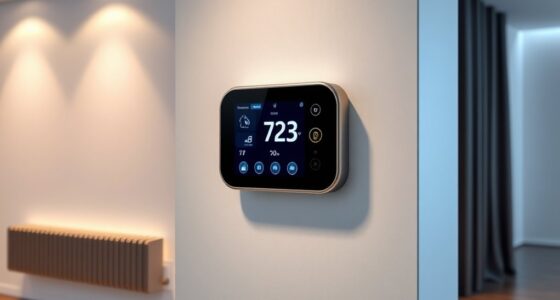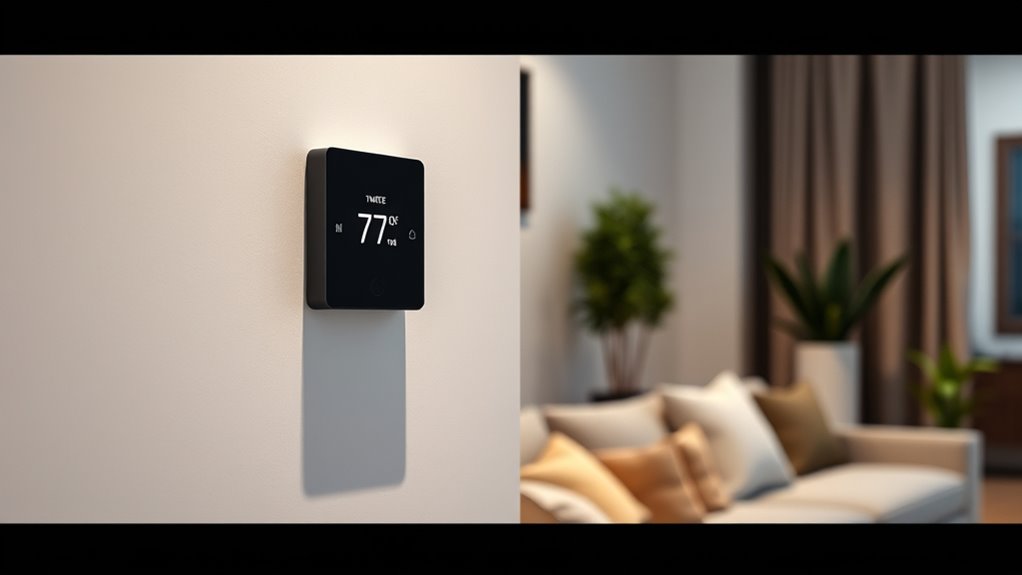

If you’re looking for the best Wi-Fi baseboard thermostats for 2025, I recommend models like Mysa, Meross, and MOES that support electric baseboard systems, Wi-Fi connectivity, and smart features like remote control and scheduling. Many offer large touchscreens, compatibility with Alexa, Google, and Apple, and energy-saving capabilities. Wiring requirements vary, so choosing one suited to your setup is key. Keep exploring to find out which options fit your needs perfectly.
Key Takeaways
- Compatibility with electric baseboard and radiant heaters ensures effective control of various heating systems.
- Wi-Fi connectivity enables remote management, scheduling, and energy monitoring via smartphone apps.
- Touchscreen interfaces and smart home integration provide intuitive control and voice command options.
- Easy DIY installation with clear guides and support for multi-voltage systems simplifies setup.
- Energy-saving features like programmable schedules and smart learning optimize home comfort and reduce costs.
Mysa Smart Thermostat LITE for Baseboard Heaters
If you’re looking for an easy-to-install, energy-efficient thermostat for your electric baseboard heaters, the Mysa Smart Thermostat LITE is an excellent choice. Designed for 120V-240V systems, it works with single and double pole setups, perfect for garages, workshops, or sunrooms. The simple 4-wire DIY installation takes about 15 minutes, guided by a helpful video. You can create custom schedules, reduce energy use when away, and monitor your consumption through a free app. Compatible with Apple HomeKit, Alexa, and Google Assistant, it offers convenient remote control and voice commands. Built to last and backed by a 2-year warranty, it’s a reliable, smart heating solution.
Best For: individuals seeking an easy-to-install, energy-efficient smart thermostat for their electric baseboard heaters in garages, workshops, or sunrooms.
Pros:
- Simple 4-wire DIY installation completed in approximately 15 minutes with a helpful video guide.
- Compatible with multiple smart home platforms including Apple HomeKit, Alexa, and Google Assistant for remote control and voice commands.
- Designed for 120V-240V systems and suitable for various spaces like garages, workshops, and sunrooms, with a durable, UL-certified build.
Cons:
- Limited to line voltage electric baseboard, fan-forced, wall, and convector heaters—may not work with other heating systems.
- Requires a WiFi connection for app control and scheduling, which might be a drawback in areas with unstable internet.
- No mention of a display screen or manual control options on the thermostat itself, relying solely on the app for adjustments.
meross Smart Thermostat for Electric Baseboard and In-Wall Heaters
The meross Smart Thermostat is an excellent choice for homeowners seeking a reliable, high-voltage solution to control electric baseboard and in-wall heaters. It installs easily in under 30 minutes and is compatible with systems requiring four or more wires. Designed for high loads—up to 16A, 1920W at 120V, and 3840W at 240V—it supports various electric heating types. With smart features like voice control via Siri, Alexa, and Google Assistant, plus integration with Apple HomeKit and SmartThings, it offers seamless automation. Its programmable schedule, real-time energy monitoring, and open window detection make it a versatile, energy-efficient option for modern homes.
Best For: homeowners seeking a reliable, high-voltage smart thermostat to efficiently control electric baseboard and in-wall heaters with smart home integration and energy monitoring.
Pros:
- Easy installation in under 30 minutes, compatible with systems requiring four or more wires
- Supports multiple voice assistants including Siri, Alexa, and Google Assistant for hands-free control
- Features programmable schedules, real-time energy monitoring, and open window detection for energy savings
Cons:
- Designed for high-voltage systems and may not be suitable for low-voltage applications
- Requires a minimum of four wires in the electrical box, which may limit compatibility with older wiring setups
- Does not include electric baseboard heaters, only the thermostat component
Mysa Smart Thermostat for Electric Baseboard Heaters
Looking for a smart thermostat that seamlessly controls high-voltage electric baseboard heaters? The Mysa Smart Thermostat is an excellent choice. It’s designed specifically for 120–240V systems, supporting loads up to 3800W. You’ll need at least four wires, including a neutral or second live wire, for proper setup. It offers Wi-Fi, app, voice, and touch control, with integration into Alexa, Google Assistant, and Apple HomeKit. The sleek LED display adjusts brightness automatically, and features like scheduling, geofencing, and energy insights make managing your heating effortless. Customer ratings are high, and installation is straightforward, making Mysa a reliable solution for modern smart homes.
Best For: homeowners with high-voltage electric baseboard heaters seeking a sleek, smart, and easy-to-integrate thermostat solution.
Pros:
- Compatible with 120–240V electric baseboard heating systems up to 3800W.
- Supports multiple control methods including app, voice commands, and touch, with seamless integration into Alexa, Google Assistant, and Apple HomeKit.
- Features adaptive display brightness, scheduling, geofencing, and energy insights for customizable and efficient heating management.
Cons:
- Requires at least four wires, including neutral or second live wire, which may complicate installation in some setups.
- Not suitable for low-voltage or two-wire systems, limiting compatibility for certain existing wiring configurations.
- Slightly higher price point compared to traditional thermostats, which could be a consideration for budget-conscious buyers.
MOES Programmable Smart Thermostat for Electric Baseboard Heaters
The MOES Programmable Smart Thermostat is an excellent choice for homeowners seeking convenient control over electric baseboard heaters. It supports 2.4G WiFi with 120V/240V systems and works seamlessly with Alexa and Google Home for voice commands. You can control and schedule your heating remotely via the Smart Life/TUYA app, making it easy to optimize energy use. The frosted display reduces glare, and the manual knob offers quick adjustments. Designed for standard wiring, it requires at least four wires, including a neutral. Overall, this thermostat combines digital convenience with manual control for efficient, flexible home heating management.
Best For: homeowners seeking easy remote and voice-controlled management of electric baseboard heaters with flexible manual adjustment options.
Pros:
- Supports 2.4G WiFi connectivity compatible with Alexa and Google Home for voice control.
- Features a frosted display that reduces glare and a manual knob for quick adjustments.
- Easy to install with standard wiring requirements, including a neutral or second live wire.
Cons:
- Requires at least four wires in the electrical box, which may not be available in older homes.
- Designed exclusively for electric baseboard heaters, limiting its versatility for other heating systems.
- Being a WiFi-enabled device, it may be vulnerable to network connectivity issues affecting remote control reliability.
Wi-Fi Smart Thermostat for Electric Baseboard Heaters
If you own electric baseboard heaters and want precise, remote control over your home’s temperature, a Wi-Fi smart thermostat is the ideal solution. Designed for 120-240V systems, it features a Fahrenheit LCD display showing current and target temperatures, time, and Wi-Fi status. You can control it via a dedicated app, voice commands with Alexa or Google Assistant, or remotely from anywhere. Installation is straightforward with included components, and programming schedules help save energy and prevent freezing. While rated 3.8 stars based on user reviews, it’s praised for its ease of use, compatibility, and energy-saving features, making it a solid choice for modern home comfort.
Best For: homeowners with 120-240V electric baseboard heaters seeking remote, programmable, and voice-controlled temperature management.
Pros:
- Easy to install with included components and straightforward setup
- Supports app control and voice commands via Alexa and Google Assistant
- Helps save energy and prevent freezing through programmable scheduling
Cons:
- Not compatible with 24V central heating or single pole systems
- Rated 3.8 stars, indicating some users may experience interface or functionality limitations
- Requires a 2.4 MHz Wi-Fi network for operation, which may limit compatibility in some environments
meross Smart Thermostat with WiFi and Voice Control
For homeowners seeking a versatile, easy-to-install smart thermostat, the meross Smart Thermostat with WiFi and Voice Control is an excellent choice. It supports 95% of HVAC systems, including conventional heating, cooling, and heat pumps, but not electric baseboard heaters. Installation is straightforward, taking less than 30 minutes with the app’s wizard, especially if you have a C-wire. It connects seamlessly via 2.4GHz Wi-Fi and integrates with Apple Home, Amazon Alexa, Google Home, and Samsung SmartThings through Matter technology. With flexible scheduling, remote control, and energy monitoring, it offers reliable comfort and efficiency, backed by professional support.
Best For: homeowners seeking an easy-to-install, versatile smart thermostat compatible with most HVAC systems and integrated with popular smart home platforms.
Pros:
- Supports 95% of HVAC systems, including conventional and heat pump types
- Seamless Wi-Fi connectivity with Matter technology for integration with Apple Home, Alexa, Google, and SmartThings
- DIY-friendly installation process that takes less than 30 minutes with app guidance
Cons:
- Not compatible with electric baseboard heaters
- Requires a C-wire for proper operation; lacking one may necessitate additional purchase of the adapter
- Limited to 2.4GHz Wi-Fi networks, potentially restricting connectivity in some setups
MAXKOSKO WiFi Smart Thermostat for Electric Floor Warming System
Anyone looking to upgrade their electric floor heating system with smart technology will appreciate the MAXKOSKO WiFi Smart Thermostat. Designed specifically for electric floor warming, it features a user-friendly touchscreen LED display and supports both 120V and 240V power. The included 15-foot floor sensor ensures consistent temperature control, while the easy DIY installation makes setup simple. You can manage your heating remotely through a smartphone app, and voice control with Alexa or Google Assistant adds convenience. With customizable programming and energy insights, this thermostat helps optimize comfort and reduce bills. Its sleek design and reliable performance make it a solid choice for smart home heating.
Best For: homeowners seeking a user-friendly, energy-efficient smart thermostat to control their electric floor warming system remotely and with voice commands.
Pros:
- Easy DIY installation with clear manual instructions
- Compatible with both 120V and 240V power supplies
- Supports remote management via smartphone app and voice control with Alexa and Google Assistant
Cons:
- Limited to electric floor heating systems, not suitable for other heating types
- Requires Wi-Fi connectivity for full remote features
- Customer reviews indicate some users experience connectivity or setup issues
Honeywell Wi-Fi Smart Color Thermostat
Looking for a thermostat that combines sleek design with personalized control? The Honeywell Wi-Fi Smart Color Thermostat is a great choice. Its customizable color options let you match it to your home décor, and the bright touchscreen makes navigation simple. It offers flexible 7-day scheduling, compatible with various HVAC systems like gas, oil, electric, and heat pumps, though not electric baseboard heat. It’s Energy Star certified, helping you save energy and money while providing remote control via the app or smart home devices like Alexa and Google Home. Just remember, it needs a C-wire for installation, so check your system compatibility first.
Best For: homeowners seeking a customizable, energy-efficient smart thermostat compatible with a variety of HVAC systems and integrated with popular smart home platforms.
Pros:
- Customizable color options and bright touchscreen for personalized and intuitive control
- Flexible 7-day scheduling and remote access via app, Alexa, and Google Home
- Energy Star certified, promoting energy savings and potential rebates
Cons:
- Requires a C-wire for installation; compatibility check necessary beforehand
- Not suitable for electric baseboard heating systems (120-240V)
- Limited to certain HVAC systems; may not work with heating-only oil furnaces without C-wire
Sensi Lite Smart Thermostat
The Sensi Lite Smart Thermostat is an excellent choice for homeowners seeking an easy-to-install, energy-efficient solution that can be managed remotely. It offers Wi-Fi connectivity, programmable scheduling, and compatibility with Alexa, making it simple to control your home’s comfort from anywhere. ENERGY STAR certified, it helps save around 23% on HVAC costs by utilizing features like geofencing and remote access. Installation is straightforward, with most systems not requiring a C-wire, except for heat/cool and heat pump setups. Plus, Sensi prioritizes privacy, ensuring your data stays secure. Overall, it’s a reliable, user-friendly thermostat that combines convenience with energy savings.
Best For: homeowners seeking an easy-to-install, energy-efficient smart thermostat with remote control capabilities and compatibility with voice assistants.
Pros:
- Easy DIY installation with step-by-step instructions and built-in level
- Energy Star certified, helping save approximately 23% on HVAC costs
- Compatible with Alexa and offers remote access via mobile app on Android and iOS
Cons:
- C-wire required only for heat/cool and heat pump systems, which may complicate installation for some users
- Limited compatibility with non-standard or older HVAC systems
- Lacks advanced features found in higher-end smart thermostats, such as advanced learning algorithms
KING K902-B Hoot WiFi Line Voltage Smart Thermostat
The KING K902-B Hoot WiFi Line Voltage Smart Thermostat is an excellent choice for homeowners seeking reliable, remote-controlled heating management. It supports 120/208/240V power and is designed for easy installation with a 4-wire double pole setup. Its sleek black touchscreen offers quick access to programming, with features like Wi-Fi connectivity, over-the-air updates, and customizable schedules for up to six periods daily. Compatible with various electric heaters, it provides precise temperature control within a 41º-90ºF range. Despite a decent rating of 3.7 stars, it remains a solid option for those wanting modern control and convenience in managing baseboard or radiant heating systems.
Best For: homeowners seeking a reliable, remote-controlled electric heating thermostat with modern features and precise temperature management.
Pros:
- Supports multiple voltages (120/208/240V) for versatile installation options
- Large, easy-to-use 4-inch touchscreen with Wi-Fi connectivity for remote control
- Programmable schedules with up to six periods daily and user-defined temperature limits
Cons:
- Average customer rating of 3.7 stars indicates potential for inconsistent user satisfaction
- Requires a double pole, 4-wire installation, which may be complex for some DIYers
- Limited to electric heating systems like baseboard, radiant, and fan-forced heaters, reducing compatibility with other heating types
KING K901-W Hoot WiFi Line Voltage Smart Programmable Thermostat
If you’re seeking a smart thermostat that offers precise temperature control and flexible scheduling for your electric baseboard or radiant heaters, the KING K901-W Hoot WiFi Line Voltage Smart Programmable Thermostat is an excellent choice. It supports 120/208/240V systems and features a large LCD touchscreen for easy navigation. You can set up to 6 daily time periods and lock the maximum temperature for safety. Its electronic thermistor guarantees accuracy within ±1ºF. With WiFi connectivity and OTA firmware updates, you can control and adjust your heating remotely via the Hoot app. This thermostat combines smart features with reliable performance for versatile electric heating control.
Best For: homeowners seeking precise, customizable, and remote-controlled electric heating management for baseboard, fan-forced, or radiant heaters in 120/208/240V systems.
Pros:
- Supports multi-voltage systems (120/208/240V) for versatile installation options
- Large LCD touchscreen for easy operation and navigation
- WiFi connectivity with OTA firmware updates for remote control and future enhancements
Cons:
- Limited to electric heating systems; not compatible with other HVAC types
- Requires single pole, 3-wire installation which may be complex for some setups
- Temperature accuracy within ±1ºF may not be sufficient for highly precise climate control needs
Sensi Smart Thermostat
Designed for DIY homeowners seeking reliable smart home integration, the Sensi Smart Thermostat offers easy installation and compatibility with popular voice assistants like Alexa and Google Assistant. Its familiar design with buttons and a 5-inch LED display makes setup straightforward, often without needing a common wire. Certified Energy Star, it can reduce HVAC costs by around 23%, thanks to flexible scheduling, remote access, and performance monitoring. The device provides alerts for maintenance and HVAC issues, enhancing efficiency. With a 3-year warranty and a focus on privacy, Sensi combines trusted HVAC expertise with user-friendly features, making it a top choice for smart home thermostats in 2025.
Best For: DIY homeowners seeking a reliable, easy-to-install smart thermostat compatible with voice assistants and capable of reducing energy costs.
Pros:
- Easy DIY installation with intuitive app instructions and built-in level
- Compatibility with popular voice assistants like Alexa and Google Assistant
- Energy Star certified, helping save approximately 23% on HVAC costs
Cons:
- Limited advanced programming features compared to high-end models
- May not support all complex HVAC configurations without additional accessories
- Smaller display size might be less ideal for users needing detailed controls
Honeywell Home CT410B Manual 4-Wire Thermostat
The Honeywell Home CT410B Manual 4-Wire Thermostat is ideal for those seeking reliable, straightforward control over electric baseboard heating systems without the need for programmable features. It’s a non-programmable, line voltage thermostat that works with 120-240 volts and is compatible with electric baseboards, convectors, and fan-forced heaters. Its simple bimetal sensor ensures dependable operation, and the double-line break provides a positive OFF setting for easy installation. With a temperature range from 40°F to 80°F, it’s perfect for controlling a single heater or multiple loads up to 5280W, making it a practical choice for manual, no-fuss heating control.
Best For: homeowners or property managers seeking a simple, reliable manual control thermostat for electric baseboard and line voltage heating systems without any programmable features.
Pros:
- Easy to install with double-line break for positive OFF control
- Compatible with a wide voltage range (120-240V) and various electric heaters
- No minimum load requirement, suitable for controlling a single or multiple heaters up to 5280W
Cons:
- Non-programmable, lacks automation or scheduling features
- Limited to manual temperature adjustment without remote access
- May require proper disposal of old mercury-based controls, adding environmental considerations
Honeywell Home RTH6580WF Wi-Fi 7-Day Programmable Thermostat, White
The Honeywell Home RTH6580WF Wi-Fi 7-Day Programmable Thermostat is ideal for homeowners who want to control their heating system remotely and efficiently. With its user-friendly app, I can manage my home’s temperature from anywhere using Total Connect Comfort or Honeywell Home. It supports voice commands with Alexa, Google Assistant, and Cortana, making smart home integration seamless. The large backlit display and intuitive controls make setup simple, and its Smart Response technology learns my household’s schedule to optimize comfort and save energy. Compatible with various heating systems (except electric baseboards), it’s a reliable, ENERGY STAR-certified choice for modern, connected homes.
Best For: homeowners seeking a user-friendly, Wi-Fi-enabled thermostat that offers remote control, smart scheduling, and voice assistant compatibility for energy-efficient heating management.
Pros:
- Easy DIY installation with included mounting hardware and clear instructions
- Supports remote management via smartphone apps and voice commands with Alexa, Google Assistant, and Cortana
- Features Smart Response technology that learns household patterns to optimize comfort and conserve energy
Cons:
- Requires a C-wire (24 VAC) for power, which may not be available in all homes
- Not compatible with electric baseboard heating systems (120-240V)
- Uses 2 AA batteries (not included) as backup power, which need regular replacement
Honeywell Home Smart Thermostat with WiFi
If you’re looking for a smart thermostat that offers seamless Wi-Fi control and compatibility with popular voice assistants, the Honeywell Home Smart Thermostat with WiFi is an excellent choice. Designed for conventional and heat pump systems, it supports remote control via the First Alert app and works with Alexa, Google Assistant, and Apple Home Kit. It features flexible scheduling, auto-away, and demand response capabilities to conserve energy and reduce bills. Its interchangeable decorative accents let you match your home decor. Certified ENERGY STAR and Matter, this thermostat guarantees reliable, eco-friendly operation, backed by a 2-year warranty, making it a versatile and efficient addition to your smart home.
Best For: homeowners seeking an ENERGY STAR certified, versatile smart thermostat compatible with multiple voice platforms and customizable to match their home decor.
Pros:
- Supports WiFi control via app and voice commands with Alexa, Google Assistant, and Apple Home Kit.
- Features flexible scheduling, auto-away, demand response, and decorative interchangeable accents.
- Backed by a 2-year warranty and certified for reliable, eco-friendly operation.
Cons:
- Requires a C-wire for installation, which may necessitate additional power adapters.
- Price varies and may be higher compared to basic thermostats.
- Some users might find setup and integration process complex without prior smart device experience.
Factors to Consider When Choosing a Wi-Fi Baseboard Thermostat
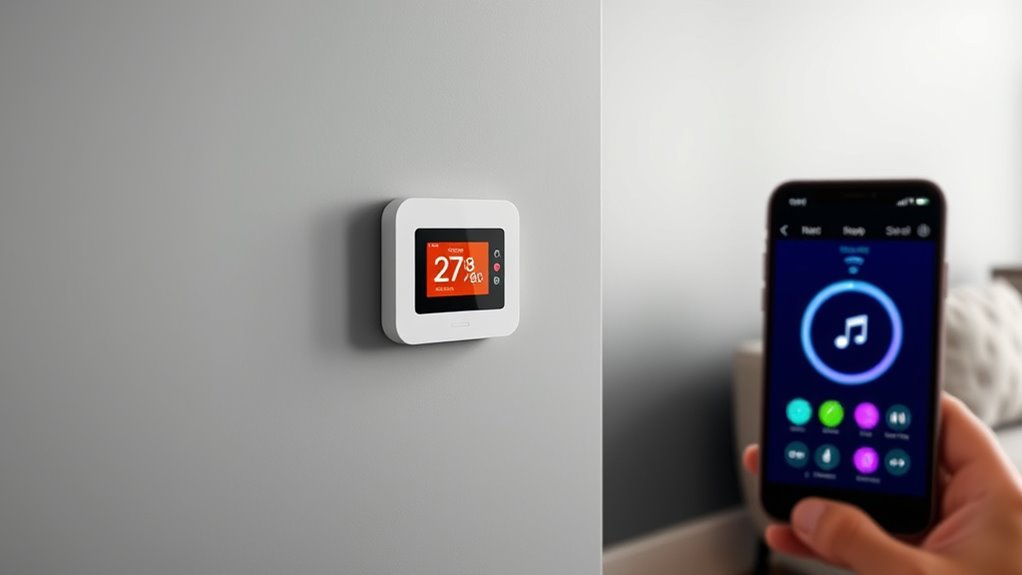
When choosing a Wi-Fi baseboard thermostat, I consider factors like compatibility with my heating system and how easy it is to control via apps. I also look at programming options, installation needs, and energy-saving features to make sure it fits my lifestyle. These points help me pick a thermostat that’s reliable, convenient, and efficient.
Compatibility With Systems
Choosing a Wi-Fi baseboard thermostat requires careful attention to compatibility with your existing heating system. First, make sure the thermostat matches your system’s voltage, whether it’s 120V, 208V, or 240V, to ensure safe and reliable operation. Also, check that it supports your wiring configuration, such as single pole, double pole, or multi-wire setups, for proper installation. It’s important the thermostat is compatible with your specific system type, whether electric baseboard, radiant, or heat pump, to avoid functional issues. Additionally, verify if it integrates with your preferred smart home platforms like Alexa, Google Assistant, or Apple HomeKit for seamless control. Finally, confirm all necessary wiring and control signals are supported, enabling effective communication between the thermostat and your heating system.
Connectivity and App Use
Connecting your Wi-Fi baseboard thermostat to your home’s network is essential for reliable control, so I always check that it supports 2.4 GHz Wi-Fi, which is standard for most smart devices. I also verify that the thermostat’s app is available on my preferred platform, whether iOS or Android, and offers remote control and scheduling. The app should provide real-time temperature monitoring, usage reports, and energy data so I can manage my home efficiently. Voice control compatibility with Amazon Alexa, Google Assistant, or Apple HomeKit is a big plus, allowing hands-free adjustments. Ultimately, I ensure the app uses secure access with user authentication and data encryption, protecting my home’s climate data and control settings from potential threats.
Programming Flexibility Options
Programming flexibility is a key factor that can greatly enhance how I manage my home’s climate. I look for thermostats that let me customize daily or weekly schedules to fit my routines, ensuring comfort and energy savings. Supporting multiple time periods per day, like 4 or 6 segments, gives me precise control over temperature adjustments. I also value the ability to manually override or make temporary changes without messing up the programmed settings. Remote programming via a smartphone app is a game-changer, letting me tweak my thermostat from anywhere. Additionally, adaptive or learning features that automatically adjust settings based on my habits make managing my home’s climate even easier. These options provide the flexibility I need to stay comfortable while optimizing energy use.
Installation Requirements
When selecting a Wi-Fi baseboard thermostat, it’s crucial to assess the installation requirements to guarantee compatibility and safety. First, check that your wiring includes at least four wires, such as a neutral or second live wire, for proper installation. Confirm that your electrical system voltage matches the thermostat’s specifications, usually 120V or 240V. Determine if a C-wire (common wire) is necessary or if an adapter is needed for systems without one. Additionally, verify that the wall space and mounting area can accommodate the thermostat’s size and fit within your existing wall box. Always follow the manufacturer’s installation instructions carefully to ensure safe wiring and efficient operation. Proper preparation prevents issues and ensures your thermostat functions reliably.
Energy Saving Features
To maximize energy savings with your Wi-Fi baseboard thermostat, it’s important to contemplate features that optimize heating efficiency. Programmable scheduling lets you set specific times for heating, reducing energy use when rooms are unoccupied. Look for models with energy reports or usage tracking; these help you monitor consumption and make smarter adjustments. Smart learning capabilities automatically adapt to your household habits, ensuring efficient heating without manual input. Open window detection is another valuable feature—if ventilation is detected, the thermostat reduces or turns off the heat to prevent waste. Finally, remote control via a mobile app provides convenience and allows you to tweak settings from anywhere, ensuring your home stays comfortable while conserving energy at all times.
Frequently Asked Questions
Can These Thermostats Control Multiple Zones Simultaneously?
Yes, many Wi-Fi baseboard thermostats can control multiple zones simultaneously. I’ve used some models that let me set and adjust different zones from a single app, making it easy to customize comfort throughout my home. Just keep in mind that not all thermostats have this feature, so it’s best to check the specifications before buying. Overall, multi-zone control is a great way to save energy and enhance convenience.
Are Compatibility Checks Required Before Installation?
Yes, compatibility checks are essential before installing a Wi-Fi baseboard thermostat. I always verify my system matches the thermostat’s requirements, like voltage and wiring type, to avoid issues. It’s a quick step that saves me time and money, and I recommend you do the same. Double-checking with the manufacturer’s specs or consulting a professional can help guarantee a smooth installation and peak performance.
How Secure Is Remote Access to These Thermostats?
Think of remote access like having a secret passage—if it’s well-guarded, it’s quite secure. Most Wi-Fi thermostats use encryption and secure login protocols, making hacking difficult. However, I always recommend strong passwords and regular updates to keep things locked tight. While no system is invincible, these thermostats are designed with security in mind, giving you peace of mind that your home’s comfort and safety stay protected.
Do They Support Voice Commands via Smart Assistants?
Yes, many Wi-Fi baseboard thermostats support voice commands through smart assistants like Alexa, Google Assistant, or Siri. I find this feature incredibly convenient because I can control my home’s temperature just by speaking, without needing to open an app. Compatibility varies by model, so I recommend checking if your preferred smart assistant is supported before making a purchase. Voice control adds a new level of ease and hands-free comfort to my home.
What Is the Typical Installation Complexity for Each Model?
Most Wi-Fi baseboard thermostats I’ve looked into are fairly straightforward to install, usually taking about 30 minutes to an hour. They generally involve turning off power, removing the old thermostat, and connecting a few wires to the new unit. I recommend reading the manufacturer’s instructions carefully and, if you’re unsure, hiring a professional. This way, you’ll make certain everything’s wired correctly and safely.
Conclusion
Choosing the right Wi-Fi baseboard thermostat is like finding the perfect key to unlock your home’s cozy potential. With so many options, you’re crafting a symphony of comfort tailored just for you. Remember, it’s not just about technology, but about creating a warm embrace that responds to your lifestyle. Trust your instincts, and let your chosen thermostat be the steady heartbeat of your home’s comfort landscape.