Whole-house air purifiers for allergies can mean a single portable unit intended for a large area or a purifier installed in a home’s HVAC system; those approaches do not provide the same coverage. For most shoppers comparing portable models, I’d start with the Blueair Blue Pure 211i Max for its large-room focus and smart controls, while the Nuwave OxyPure stands out for shoppers seeking a model marketed for whole-house use. The Levoit Vital 200S-P is another strong option for larger spaces where app controls and flexible scheduling matter. Coverage claims, airflow, filter costs, noise, and whether a unit can actually serve connected rooms are the main tradeoffs. Read on for the full comparison and guidance on matching a purifier to your home’s layout and allergy priorities.

Get the little things that make your day delivered free with Prime
- Fast, free delivery on millions of items
- Prime Video, Amazon Music and more included
- Member-only deals all year
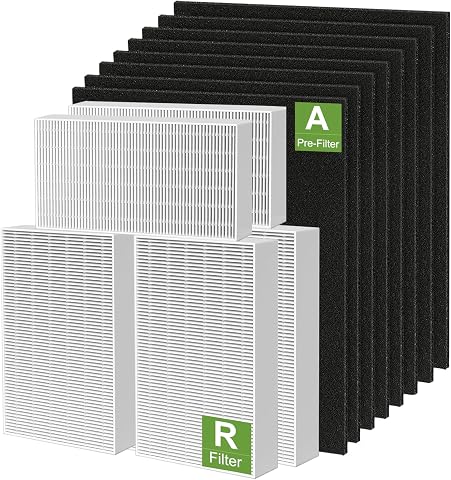
Complete the kit


Key Takeaways
- Portable coverage is not the same as whole-home coverage: Many models in this lineup are designed for a room or open area, while the Nuwave OxyPure is specifically presented as a whole-house option.
- Large-area claims need context: A stated square-foot figure does not by itself show how quickly a purifier cleans the air or whether its coverage assumes a particular ceiling height or air-change rate.
- Smart controls separate several large-room options: The Blueair Blue Pure 211i Max and Levoit Vital 200S-P offer connected controls, while simpler models may suit buyers who prefer fewer settings and less app dependence.
- Filter upkeep changes the long-term fit: Filter availability, replacement intervals, and cleaning steps matter as much as the initial feature list for households running a purifier through allergy season.
- Room layout can matter more than a headline coverage number: A single unit may work well in an open plan but struggle to serve closed bedrooms and separated living spaces.
| PuroAir 240 HEPA Air Purifier for Home, Pets, and Bedroom, up to 1,000 sq ft, Black |  | Best for Set-and-Forget Room Filtration | Coverage: Up to 1,000 sq ft in one hour | Filtration: Pre-filter, HEPA filter, and activated carbon | Pollutant filtration claim: Up to 99.9% | VIEW ON AMAZON | See Our Full Breakdown |
| Blueair Blue Pure 211i Max Smart Air Purifier |  | Best for Large Open-Plan Spaces | Coverage area: Up to 3,235 sq ft | Filtration technology: HEPASilent | Filter type: Activated carbon | VIEW ON AMAZON | See Our Full Breakdown |
| FreAire Air Purifier for Large Rooms up to 2,600 sq. ft. |  | Best for Washable Pre-Filter Convenience | Coverage: Up to 2,600 sq ft per hour | Filter: HEPA filter with washable pre-filter | Particle capture: 99.97% | VIEW ON AMAZON | See Our Full Breakdown |
| MOOKA PR1 Air Purifier for Large Rooms, White |  | Best for Pet-Focused Controls | Model: PR1 | Coverage area: Up to 2,200 sq ft | Filtration: Four-stage system with washable pre-filter | VIEW ON AMAZON | See Our Full Breakdown |
| Levoit Core 300-P Air Purifier |  | Best for Bedrooms and Smaller Rooms | Model: Core 300-P | Motor power: 56 W | CADR: 143 CFM smoke, 153 CFM dust, 167 CFM pollen | VIEW ON AMAZON | See Our Full Breakdown |
| MOOKA Air Purifier for Home, White |  | Best for Quiet, Monitored Operation | Coverage: Up to 2,200 ft² | Filtration: Three-stage system with washable pre-filter and HEPA filter | Air monitoring: PM2.5 sensor with digital display | VIEW ON AMAZON | See Our Full Breakdown |
| Coway Mighty AP-1512HH(W) Air Purifier, White |  | Best for Specified Particle Filtration | Model: AP-1512HH(W) | Coverage: Up to 1,748 sq. ft. in 60 minutes | Filtration: Washable pre-filter, deodorization filter, bipolar device, and HEPA filter | VIEW ON AMAZON | See Our Full Breakdown |
| Shark NeverChange Detect iQ MAX Air Purifier with BreatheClear, HP362 |  | Best for Low-Maintenance Monitoring | Model: HP362 | Room coverage: Up to 1,650 sq. ft. | Particle capture: 99.98% | VIEW ON AMAZON | See Our Full Breakdown |
| Dhyala Air Purifier with Wi-Fi, Dual Filters, and Aromatherapy |  | Best for Smart Controls and Broad Stated Coverage | Coverage: Up to 3,000 sq. ft. per hour | CADR: Up to 265 CFM | Filtration: Dual filters with pre-filter, HEPA filter, and activated carbon filter | VIEW ON AMAZON | See Our Full Breakdown |
| Nuwave OxyPure Smart Whole-House Air Purifier |  | Best for Large Rooms and Fine-Particle Capture | Model: 47005 | Coverage: Up to 2,934 sq. ft. | CADR: 664.6 m³/h | VIEW ON AMAZON | See Our Full Breakdown |
| KNKA APH4000 Air Purifier for Home, White |  | Best for Verified, Flexible Coverage | Model: APH4000 | Color: White | CADR: 226 CFM smoke/dust/PM2.5; 244 CFM pollen | VIEW ON AMAZON | See Our Full Breakdown |
| SIESEAN H13 True HEPA Air Purifier for Large Rooms |  | Best for Broad Stated Coverage | Filter: H13 True HEPA and activated carbon | CADR: 235 CFM | Coverage: Up to 3,500 sq. ft. | VIEW ON AMAZON | See Our Full Breakdown |
| Winix 5520 Air Purifier for Large Rooms |  | Best for Automated Allergy Management | Room coverage: Up to 1,882 sq. ft. per hour | Cleaning rates: 941 sq. ft. in 30 minutes; 627 sq. ft. in 20 minutes; 470 sq. ft. in 15 minutes | Filtration: Four-stage system with True HEPA, carbon filter, and washable fine-mesh pre-filter | VIEW ON AMAZON | See Our Full Breakdown |
| Levoit Vital 200S-P Smart Air Purifier for Large Rooms |  | Best for Pollen and Pet Allergies | Coverage area: Up to 1,875 sq. ft. | Smoke CADR: 250 CFM | Dust CADR: 254 CFM | VIEW ON AMAZON | See Our Full Breakdown |
| HEARBOBO K06 Air Purifier with Dual-Side Intake and H13 HEPA Filters |  | Best for Quiet Sleep | Model: K06 | Filter: Dual H13 HEPA filters | Intake: Dual-side | VIEW ON AMAZON | See Our Full Breakdown |
| whole house air purifiers for allergie | Filtration | Coverage |
|---|---|---|
| PuroAir 240 HEPA Air Purifier | Pre-filter, HEPA filter, and activated carbon | Up to 1,000 sq ft in one hour |
| Blueair Blue Pure 211i Max Sma | — | — |
| FreAire Air Purifier for Large | — | Up to 2,600 sq ft per hour |
| MOOKA PR1 Air Purifier for Lar | Four-stage system with washable pre-filter | — |
| Levoit Core 300-P Air Purifier | — | — |
| MOOKA Air Purifier for Home | Three-stage system with washable pre-filter and HEPA filter | Up to 2,200 ft² |
| Coway Mighty AP-1512HH(W) Air | Washable pre-filter, deodorization filter, bipolar device, and HEPA filter | Up to 1,748 sq. ft. in 60 minutes |
| Shark NeverChange Detect iQ MA | HEPA-exceeding multi-layer filter with activated carbon | — |
| Dhyala Air Purifier with Wi-Fi | Dual filters with pre-filter, HEPA filter, and activated carbon filter | Up to 3,000 sq. ft. per hour |
| Nuwave OxyPure Smart Whole-Hou | Five-stage system with stainless-steel pre-filter, Bio-Guard filter, ozone-removal filter, and HEPA/carbon filter | Up to 2,934 sq. ft. |
| KNKA APH4000 Air Purifier for | Dual three-stage filters with washable pre-filters, high-efficiency filters, and activated carbon | — |
| SIESEAN H13 True HEPA Air Puri | — | Up to 3,500 sq. ft. |
| Winix 5520 Air Purifier for La | Four-stage system with True HEPA, carbon filter, and washable fine-mesh pre-filter | — |
| Levoit Vital 200S-P Smart Air | — | — |
| HEARBOBO K06 Air Purifier with | — | Up to 375 sq. ft. in about 8 minutes or 3,000 sq. ft. in 1 hour under test conditions |
More Details on Our Top Picks
PuroAir 240 HEPA Air Purifier for Home, Pets, and Bedroom, up to 1,000 sq ft, Black
The PuroAir 240 suits allergy sufferers who want automatic response to changing indoor air without app controls. Its particle sensor adjusts power as air quality shifts, while the pre-filter, HEPA filter, and activated carbon target pollen, dust, dander, smoke, and some odors. Compared with the Levoit Core 300-P, it offers sensor-led operation and a longer stated one-hour coverage area, but the Levoit provides published CADR figures and a more compact footprint. The PuroAir’s stated reach is up to 1,000 square feet in one hour, so buyers should not read that as rapid, whole-home cleaning across multiple closed rooms. Sleep mode and a two-year warranty add practical appeal; its filtration and air-quality claims are based on lab testing, not a guarantee for every home.
Pros:- Pre-filter, HEPA filter, and activated carbon address several common indoor pollutants.
- Particle sensor adjusts power in response to detected air quality.
- Sleep mode supports quieter overnight operation.
- Two-year warranty is longer than the one-year-plus support listed for the FreAire.
Cons:- The 1,000-square-foot coverage figure is based on one room cleaned over one hour.
- Filtration and air-quality claims are based on lab testing.
- No app control or published CADR figures are provided in the product data.
Best for: People seeking a room purifier for a bedroom or shared living space who want automatic fan adjustment and a simple control approach.
Not ideal for: Buyers trying to clean several closed rooms at once, or those who want published CADR figures and app-based monitoring.
- Coverage:Up to 1,000 sq ft in one hour
- Filtration:Pre-filter, HEPA filter, and activated carbon
- Pollutant filtration claim:Up to 99.9%
- Particle sensor:Monitors air quality and adjusts power
- Sleep mode:Yes
- Warranty:2 years
- Color:Black
Our verdict“Choose the PuroAir 240 for sensor-guided room filtration and a two-year warranty, not as a substitute for purifying an entire multiroom house.”
Blueair Blue Pure 211i Max Smart Air Purifier
Among these five, the Blueair Blue Pure 211i Max has the most ambitious stated coverage, making it the strongest match for a large open-plan living area where pollen and pet dander circulate through connected spaces. HEPASilent filtration, automatic fan adjustment, and app controls give it a more connected setup than the MOOKA PR1, whose appeal leans on pet mode, a washable pre-filter, and an onboard display. The Blueair’s listed reach is up to 3,235 square feet, but the product data does not specify a time basis for that figure; it should not be treated as proof of fast cleaning in every layout. Its 23 dB noise rating is a useful low-noise specification, while corded power and filter replacement reminders mean it still needs a fixed spot and ongoing filter upkeep.
Pros:- Largest stated coverage area among the five products in this batch.
- App, Alexa, and button controls provide several ways to monitor and adjust operation.
- Sensors automatically adjust fan speed as air quality changes.
- Listed noise level is 23 dB.
Cons:- Requires a corded power connection and a suitable permanent location.
- Filter replacement reminders point to ongoing filter upkeep.
- Coverage is listed without a cleaning-time basis, so the figure is hard to compare directly with products that specify an hourly rate.
Best for: Households with a large, open living area that want app monitoring, automatic fan control, and Alexa compatibility.
Not ideal for: People who need a purifier for multiple closed rooms, want cordless placement, or prefer a washable pre-filter to reduce filter upkeep.
- Coverage area:Up to 3,235 sq ft
- Filtration technology:HEPASilent
- Filter type:Activated carbon
- Particle retention size:0.1 micron
- Noise level:23 dB
- Power:46 watts
- Controls:App, Amazon Alexa, and buttons
- Dimensions:14.4 × 14.4 × 22.7 in
- Weight:16 lb
Our verdict“Pick the Blueair 211i Max for a connected purifier in a large open-plan area, while treating its coverage figure cautiously for whole-home planning.”
FreAire Air Purifier for Large Rooms up to 2,600 sq. ft.
The FreAire combines a washable pre-filter with triple air intakes, making it a practical fit for homes where pet hair and larger debris build up alongside airborne allergens. Its PM2.5 display, automatic mode, and four fan speeds give buyers more visible control than the simpler PuroAir 240, while its stated 2,600-square-foot hourly coverage is below the Blueair 211i Max’s listed reach. The 22 dB sleep mode and lights-off setting are useful for bedrooms, and the timer offers four shutoff intervals. The tradeoff is recurring main-filter replacement: the recommendation is every three to six months, and the description advises using brand-specific filters. That upkeep can matter for allergy households running a purifier continuously, so the washable pre-filter reduces some debris but does not remove the main filter burden.
Pros:- Triple air intakes and a washable pre-filter suit rooms with pet hair and household debris.
- PM2.5 monitoring and automatic mode provide visible, sensor-based adjustments.
- Sleep mode is rated at 22 dB and can turn the lights off.
- Four fan speeds and timer settings allow more manual control than the PuroAir 240.
Cons:- Main HEPA filter replacement is recommended every three to six months.
- The product description recommends brand-specific replacement filters.
- Its 2,600-square-foot hourly coverage is lower than the Blueair 211i Max’s listed area.
Best for: Pet-owning households with a large room who want a washable first-stage filter, live PM2.5 readings, and quiet sleep operation.
Not ideal for: Buyers who want minimal filter replacement, do not want to rely on brand-specific replacement filters, or need app control.
- Coverage:Up to 2,600 sq ft per hour
- Filter:HEPA filter with washable pre-filter
- Particle capture:99.97%
- Air quality sensor:PM2.5
- Fan speeds:4
- Timer:2, 4, 6, or 8 hours
- Sleep mode noise:22 dB
- Recommended filter replacement:Every 3–6 months
- Warranty and support:30-day money-back guarantee, 1 year+ warranty, lifetime technical support
Our verdict“Choose the FreAire if washable pre-filter convenience and quiet sensor-guided operation matter more than minimizing main-filter changes.”
MOOKA PR1 Air Purifier for Large Rooms, White
The MOOKA PR1 is the most pet-specific choice here: its Pet mode, washable pre-filter, and four-stage filtration are aimed at hair, odors, smoke, and fine particles in a large room. That makes it more tailored to pet households than the Levoit Core 300-P, which is smaller and has no Auto mode, but the Levoit supplies published CADR ratings that make its particle-cleaning performance easier to compare. The PR1 adds a PM2.5 display with automatic fan adjustment, plus a child lock and timer for family spaces. Its stated reach is up to 2,200 square feet, though that figure is not paired with a cleaning-time rate in the supplied data. Sleep mode is listed as low as 26 dB. Main-filter changes every three to six months and sensor cleaning add maintenance beyond rinsing the pre-filter.
Pros:- Pet mode and four-stage filtration target the needs of homes with pets.
- Washable pre-filter helps catch hair and larger debris before it reaches the main filter.
- PM2.5 display and automatic fan adjustment show and respond to air-quality changes.
- Child lock and timer suit shared family spaces.
Cons:- Main filter replacement is recommended every three to six months.
- The PM2.5 sensor requires regular cleaning.
- Coverage is stated without a time basis, unlike the FreAire’s hourly coverage specification.
Best for: Pet-owning families who want a large-room purifier with a dedicated pet setting, washable pre-filter, and child lock.
Not ideal for: Buyers who prioritize published CADR comparisons, want fewer maintenance tasks, or need a clear hourly coverage figure.
- Model:PR1
- Coverage area:Up to 2,200 sq ft
- Filtration:Four-stage system with washable pre-filter
- Fan modes:Sleep, I, II, III, Auto, Pet
- Sleep mode noise:As low as 26 dB
- Sensor:PM2.5 air quality sensor with display
- Features:Timer, child lock, aroma function, filter replacement reminder
- Certifications:CARB, ETL, DOE, FCC
- Color:White
Our verdict“The MOOKA PR1 fits pet households wanting dedicated controls and a washable pre-filter, provided they accept regular filter and sensor maintenance.”
Levoit Core 300-P Air Purifier
The Levoit Core 300-P is the easiest of this group to place in a bedroom or smaller room: at 7.9 pounds and under nine inches wide, it takes up much less floor space than the Blueair 211i Max. Its published smoke, dust, and pollen CADR figures also give allergy shoppers more concrete performance data than the coverage-only details supplied for the MOOKA PR1. The 3-in-1 filter is rated to capture 99.97% of particles from 0.1 to 0.3 microns, and Sleep Mode runs at 24 dB with lights that can be turned off. Its tradeoff is scale: the 1,073-square-foot coverage figure does not make it a whole-house solution, especially across closed rooms. There is no Auto mode or smart connectivity, so buyers who want sensor-led operation should look at the PuroAir 240 instead.
Pros:- Compact 7.9-pound design is easier to place than the Blueair 211i Max.
- Published CADR ratings cover smoke, dust, and pollen.
- Sleep Mode is rated at 24 dB, and the lights can be turned off.
- AHAM Verified, FCC Certified, ETL Listed, and CARB Compliant.
Cons:- No Auto Mode or smart connectivity is listed.
- A single unit is better suited to a room than to multiple closed rooms across a house.
- Filter replacement is recommended every six to eight months.
Best for: Allergy sufferers seeking a compact purifier for a bedroom or single smaller room who value published CADR figures and quiet sleep settings.
Not ideal for: Households seeking whole-home coverage, automatic air-quality response, or app and voice controls.
- Model:Core 300-P
- Motor power:56 W
- CADR:143 CFM smoke, 153 CFM dust, 167 CFM pollen
- Coverage area:1,073 sq ft
- Filtration efficiency:99.97% for 0.1–0.3 μm particles
- Filter type:3-in-1 filtration; HEPA-grade in Sleep Mode
- Sleep Mode noise:24 dB
- Dimensions and weight:8.7 × 8.7 × 14.2 in; 7.9 lb
- Filter replacement interval:Every 6–8 months
Our verdict“Choose the Core 300-P for compact, quiet bedroom filtration with published CADR data, not as a single-device whole-house allergy solution.”
MOOKA Air Purifier for Home, White
The MOOKA pairs a large stated coverage area with a PM2.5 display and automatic fan adjustment, making it a convenient choice for allergy households that want the purifier to respond as particle levels change. Its washable pre-filter can catch larger debris before it reaches the HEPA filter, though it still needs regular cleaning and the main filter needs maintenance or replacement. Compared with the Coway Mighty AP-1512HH(W), MOOKA offers a larger stated area and a quieter listed sleep setting; Coway, however, specifies particle reduction and provides a three-year warranty. MOOKA’s child lock and timer suit bedrooms and family spaces, while the aromatherapy pad is an optional extra rather than an allergy-control feature. I’d treat the 2,200-square-foot figure as a broad coverage claim, not proof of fast, whole-home allergen removal.
Pros:- PM2.5 sensor and automatic mode adjust operation as readings change
- Washable pre-filter helps catch larger particles before they reach the main filter
- Sleep mode is rated as low as 20 dB and includes a timer
- Child lock adds a useful control safeguard in family spaces
Cons:- Main filter still needs cleaning or replacement over time
- The large coverage figure does not specify an air-change rate
- Aromatherapy requires separately supplied essential oil and does not improve allergen filtration
Best for: Households seeking a quiet large-area unit with visible PM2.5 readings, automatic operation, and a washable pre-filter.
Not ideal for: Buyers who need documented particle-reduction performance or a clearly specified whole-home air-change rate; the stated coverage alone does not establish either.
- Coverage:Up to 2,200 ft²
- Filtration:Three-stage system with washable pre-filter and HEPA filter
- Air monitoring:PM2.5 sensor with digital display
- Fan speeds:4
- Sleep-mode noise:As low as 20 dB
- Timer:2, 4, 6, or 8 hours
- Maximum-speed energy use:0.63 kWh per 24 hours
- Certifications:CARB, ETL, DOE
Our verdict“Choose MOOKA for quiet, sensor-led operation and a washable pre-filter, but not as a substitute for a verified whole-home ventilation or filtration plan.”
Coway Mighty AP-1512HH(W) Air Purifier, White
The Coway Mighty is the most evidence-specific pick in this group for buyers focused on fine particles: its listed HEPA filtration is rated to reduce 99.97% of 0.3-micron particles. A washable pre-filter, deodorization filter, and bipolar device round out the system, while auto and Eco modes can adjust operation to air quality or reduce activity when conditions permit. Compared with the MOOKA Air Purifier, Coway gives a more concrete particle-reduction figure and a three-year warranty, but its stated coverage is smaller and depends on a specified test condition. The air-quality light can be switched off, a practical detail for bedrooms, though the pre-filter needs regular cleaning and coverage claims may not match every home’s layout. Its specified performance makes it easier to judge than models that mainly emphasize broad coverage figures.
Pros:- HEPA filter is specified to reduce 99.97% of 0.3-micron particles
- Four-stage system includes washable pre-filter and deodorization filter
- Auto and Eco modes respond to monitored air quality
- Three-year warranty and filter alerts support maintenance planning
Cons:- Coverage claim is tied to specified test conditions and may vary in use
- Washable pre-filter requires regular cleaning
- Listed coverage is lower than the large-area claims of the MOOKA and Dhyala models
Best for: Allergy-conscious buyers who prioritize a stated fine-particle reduction figure, automatic operation, and filter-maintenance alerts.
Not ideal for: People trying to clean a very large, open-plan home with one unit, or anyone unwilling to clean the washable pre-filter regularly.
- Model:AP-1512HH(W)
- Coverage:Up to 1,748 sq. ft. in 60 minutes
- Filtration:Washable pre-filter, deodorization filter, bipolar device, and HEPA filter
- Particle reduction:99.97% of 0.3-micron particles
- Modes:Auto and Eco
- Monitoring:Air-quality monitor and indicator light
- Maintenance features:Filter alerts
- Warranty:3 years
Our verdict“Pick the Coway when a clearly stated particle-reduction specification and maintenance alerts matter more than the largest coverage claim.”
Shark NeverChange Detect iQ MAX Air Purifier with BreatheClear, HP362
Shark’s strongest distinction is its filter-life design: the washable Debris Defense Pro filter is intended to help the HEPA-exceeding filter last up to six years, reducing the frequency of main-filter changes. Its sensors track particles, VOCs, motion, and light, and the display provides readings without requiring an app. That makes this a more informative, low-intervention option than the MOOKA Air Purifier, whose listed monitoring focuses on PM2.5 and whose main filter still needs maintenance. The tradeoff is scale: Shark’s stated 1,650-square-foot coverage is based on one air change per hour at maximum fan speed, so it may be less suited to rapid allergen cleanup across a sprawling home than the Nuwave OxyPure’s larger stated area. Its particle-capture figure also comes from testing with non-living particles, not a direct measure of allergy relief.
Pros:- Washable pre-filter is designed to extend main-filter life up to six years
- Monitors particles, VOCs, motion, and light
- Displays air-quality details without requiring an app
- Automatic operation can respond to air quality and household activity
Cons:- Coverage rating is based on one air change per hour at maximum fan speed
- Particle-capture result is based on non-living particles
- Coverage is lower than the stated figures for Nuwave and Dhyala
Best for: Households wanting detailed on-device air readings and less frequent main-filter replacement in a large room.
Not ideal for: Buyers who need a purifier rated for faster air turnover across a very large home, or who want allergen-specific performance evidence.
- Model:HP362
- Room coverage:Up to 1,650 sq. ft.
- Particle capture:99.98%
- Filter life:Up to 6 years
- Air monitoring:3,600 checks per hour
- Sensors:Particles, VOCs, motion, and light
- Filtration:HEPA-exceeding multi-layer filter with activated carbon
- Controls:Auto mode, manual fan speeds, scheduling, and Sleep mode
Our verdict“Choose Shark for detailed, app-free monitoring and a long-life filter design, provided its one-air-change-per-hour coverage suits your room.”
Dhyala Air Purifier with Wi-Fi, Dual Filters, and Aromatherapy
Dhyala combines dual filters with app and voice controls, giving buyers several ways to manage a purifier across a large area. Its listed CADR of up to 265 CFM is more useful for comparing cleaning capacity than the coverage figure alone, although the claimed 3,000-square-foot-per-hour area should still be read alongside room layout and desired air-change rate. Compared with the Nuwave OxyPure, Dhyala offers Wi-Fi, Alexa and Google Assistant support, plus a quieter listed sleep setting; Nuwave provides a higher listed CADR and a finer stated particle size. Dhyala’s washable pre-filters can be reused after drying, but the main filters still require replacement, and the performance figures come from listing claims. Its child lock and tilt shutoff add household safety features, while aromatherapy remains an optional comfort feature rather than allergy treatment.
Pros:- Dual filter arrangement and washable, reusable pre-filters
- Wi-Fi app, Alexa, and Google Assistant controls
- PM2.5 monitoring can adjust fan speed automatically
- Child lock and tilt-triggered automatic shutoff
Cons:- Main filters still need replacement
- Coverage, noise, and filtration figures are listing claims
- The 3,000-square-foot figure does not specify air changes per hour
Best for: Smart-home households that want app or voice control, dual filters, and a large-area unit with automatic PM2.5 response.
Not ideal for: Buyers who require independently substantiated whole-home performance or want to avoid ongoing replacement of main filters.
- Coverage:Up to 3,000 sq. ft. per hour
- CADR:Up to 265 CFM
- Filtration:Dual filters with pre-filter, HEPA filter, and activated carbon filter
- Controls:Wi-Fi app, Alexa, Google Assistant, and four manual fan speeds
- Air monitoring:PM2.5 sensor with automatic fan adjustment
- Sleep-mode noise:As low as 15 dB
- Timer:1–12 hours
- Warranty:24 months
Our verdict“Choose Dhyala for connected controls and dual-filter convenience, but verify that its stated capacity matches the air turnover your home needs.”
Nuwave OxyPure Smart Whole-House Air Purifier
Nuwave is the most substantial option here for buyers seeking a large-room purifier with a detailed filtration stack: its five-stage system is specified to capture particles as small as 0.09 microns, and its stated coverage reaches 2,934 square feet. Particle and odor sensors feed auto mode, while six fan speeds, Eco, Sleep, and Ultimate Clean settings let users choose between quieter running and stronger cleaning. Compared with the Dhyala Air Purifier, Nuwave lists a higher CADR and a smaller captured particle size, but it lacks Dhyala’s stated Wi-Fi and voice controls. The stainless-steel pre-filter, Bio-Guard filter, and ozone-removal filter are reusable or washable according to the product data, yet the HEPA/carbon filter still needs periodic replacement. At 26 pounds and 26 inches tall, it also asks for more floor space than a compact-room unit.
Pros:- Five-stage filtration is specified to capture particles as small as 0.09 microns
- Large stated coverage and listed CADR suit spacious rooms
- Particle and odor sensors can adjust fan speed automatically
- Washable or reusable pre-filter, Bio-Guard, and ozone-removal components
Cons:- HEPA and activated carbon filter needs replacement approximately every 12 months
- At 26 pounds and 14 × 14 × 26 inches, it takes substantial space and effort to move
- A large coverage figure does not by itself confirm whole-home air turnover
Best for: Households with a large open room, pets, or varied particle and odor concerns that want sensor-led operation and multiple fan modes.
Not ideal for: Buyers needing a lightweight, compact purifier or those seeking app connectivity; the unit is sizable and its listed controls are app-based.
- Model:47005
- Coverage:Up to 2,934 sq. ft.
- CADR:664.6 m³/h
- Filtration:Five-stage system with stainless-steel pre-filter, Bio-Guard filter, ozone-removal filter, and HEPA/carbon filter
- Particle retention:As small as 0.09 microns
- Noise level:31.4 dB
- Dimensions:14 × 14 × 26 in
- Weight:26 lbs
- Controls and modes:App; auto, six fan speeds, Sleep, Eco, Ultimate Clean, and timer
Our verdict“Choose Nuwave for a large room and fine-particle filtration features, if you can accommodate its size and recurring HEPA/carbon filter replacement.”
KNKA APH4000 Air Purifier for Home, White
The KNKA APH4000 is a measured choice for allergy-prone households that want published particle-cleaning figures and operating modes for different routines. Its AHAM-verified CADR includes a 244 CFM pollen rating, while dual three-stage filters pair washable pre-filters with high-efficiency media and activated carbon. That gives it a clearer performance reference than the SIESEAN H13, whose stated coverage reaches farther but whose CADR is lower at 235 CFM.
The coverage figures need context: it refreshes air 4.8 times hourly in rooms up to 350 square feet, but only once per hour at the maximum 1,695-square-foot claim. Sleep mode runs at 22–24 dB, and Auto, PET, and ECO modes add useful flexibility. The tradeoff is filter replacement every 3–6 months, plus limited allergy-focused refresh speed in the largest spaces.
Pros:- AHAM-verified CADR ratings include a 244 CFM pollen figure
- Dual three-stage filters combine washable pre-filters, high-efficiency filters, and activated carbon
- Sleep Mode is specified at 22–24 dB
- Auto, PET, and ECO modes plus a real-time air-quality display
Cons:- At the maximum stated coverage, air is refreshed only once per hour
- Replacement filters are recommended every 3–6 months
Best for: Allergy sufferers who want verified pollen CADR, quiet nighttime operation, and modes for pets or energy-conscious use in a medium-to-large room.
Not ideal for: People seeking frequent air changes across a very large open-plan home; the maximum stated coverage is refreshed only once per hour.
- Model:APH4000
- Color:White
- CADR:226 CFM smoke/dust/PM2.5; 244 CFM pollen
- Room coverage:Up to 1,695 sq. ft.
- Air changes:4.8 per hour up to 350 sq. ft.; 1 per hour up to 1,695 sq. ft.
- Filtration:Dual three-stage filters with washable pre-filters, high-efficiency filters, and activated carbon
- Sleep Mode noise:22–24 dB
- Modes and speeds:PET, ECO, Sleep, Auto; four fan speeds
- Filter replacement interval:Every 3–6 months
Our verdict“Choose the KNKA for verified pollen performance and quiet, adaptable operation in a room where its faster 350-square-foot cleaning rate is the relevant measure.”
SIESEAN H13 True HEPA Air Purifier for Large Rooms
The SIESEAN is the broad-coverage pick in this group, with a stated reach of up to 3,500 square feet and a 235 CFM CADR. That pairing may suit buyers who want one floor-standing unit for a large shared area, but the coverage number alone does not establish how often air is cleaned across that space. The KNKA APH4000, by contrast, provides explicit air-change rates at two room sizes, making its allergy-use performance easier to interpret.
Its H13 True HEPA and activated carbon target particles and odors, while dual-sided intake, Auto Mode, a PM2.5 display, and a child lock add practical household controls. Sleep operation is listed at 30 dB, louder than the KNKA’s stated 22–24 dB range. Filter changes every 3–4 months are another ongoing task, and the listing omits dimensions and weight, which makes placement planning harder.
Pros:- H13 True HEPA and activated carbon target particles, smoke, VOCs, and odors
- 235 CFM CADR with dual-sided intake
- Auto Mode, PM2.5 display, timer, child lock, and filter indicator
- Adjustable display brightness and 30 dB Sleep Mode
Cons:- Maximum 3,500-square-foot coverage is not paired with a stated air-change rate
- Replacement filters are recommended every 3–4 months
- Dimensions and weight are not provided
Best for: Households with a large open living area that want HEPA and carbon filtration, automatic operation, and child-safety controls in one floor-standing unit.
Not ideal for: Buyers who need clearly stated air-change rates for allergy planning, quietest documented sleep operation, or dimensions before choosing a spot.
- Filter:H13 True HEPA and activated carbon
- CADR:235 CFM
- Coverage:Up to 3,500 sq. ft.
- Airflow:Dual-sided intake
- Sleep Mode noise:30 dB
- Display:PM2.5 air-quality display
- Controls:Auto Mode, timer, child lock, dimmer, and filter replacement indicator
- Energy consumption:As little as 0.66 kWh per day
- Filter replacement interval:Every 3–4 months, depending on use and air conditions
Our verdict“Pick the SIESEAN when broad stated coverage and household controls matter more than documented room-specific air-change rates or the quietest sleep setting.”
Winix 5520 Air Purifier for Large Rooms
The Winix 5520 earns its place for buyers who want a purifier to respond to changing indoor air rather than rely on a fixed fan setting. Its sensors adjust airflow in Auto Mode, and app compatibility adds remote control; the washable fine-mesh pre-filter also catches larger debris before it reaches the main filtration stages. For allergy planning, its stated cleaning rates are more useful than a single maximum-room figure: it lists 941 square feet in 30 minutes and 470 square feet in 15 minutes.
That makes the Winix easier to compare with the Levoit Vital 200S-P, which offers independently tested pollen CADR of 289 CFM but no noise figure in the supplied details. Winix lists 23.5 dB only at its lowest speed, so louder settings remain unspecified. Its True HEPA and carbon filtration suit allergens and odors, while PlasmaWave is presented as a possible added aid rather than the main reason to buy.
Pros:- True HEPA and carbon filtration address airborne particles, allergens, odors, and VOCs
- Air-quality sensors adjust fan speed in Auto Mode
- Multiple stated cleaning rates help match the unit to room size
- Washable pre-filter, app compatibility, and darkness-activated Sleep Mode
Cons:- Only the lowest fan-speed noise level is specified
- PlasmaWave is described as a technology that may help reduce pollutants
Best for: People with changing allergy triggers who want sensor-led fan adjustment, app control, and stated cleaning rates for choosing a room size.
Not ideal for: Buyers who need documented noise levels across fan speeds or prefer a product listing that avoids relying on optional PlasmaWave claims.
- Room coverage:Up to 1,882 sq. ft. per hour
- Cleaning rates:941 sq. ft. in 30 minutes; 627 sq. ft. in 20 minutes; 470 sq. ft. in 15 minutes
- Filtration:Four-stage system with True HEPA, carbon filter, and washable fine-mesh pre-filter
- Particle capture:Claims 99.99% capture of airborne allergens and particles as small as 0.01 microns
- Noise:23.5 dB on the lowest speed
- Controls:Auto Mode, Sleep Mode, and Winix Smart App compatibility
- Certifications:AHAM Verified and UL Certified
Our verdict“Choose the Winix if automatic sensor response and app control matter more than having noise figures for every speed.”
Levoit Vital 200S-P Smart Air Purifier for Large Rooms
The Levoit Vital 200S-P is the clearest fit here for households whose allergy concerns center on pollen, dust, and pets. Its 289 CFM pollen CADR is the highest pollen figure supplied among these five products, and AHAM certification gives buyers independently tested CADR data for comparing room performance. The U-shaped inlet is intended to help capture pet hair, complementing filtration aimed at dander and other airborne particles.
Compared with the Winix 5520, Levoit offers a stronger stated pollen CADR, while Winix provides more detail about timed cleaning rates, sensor-led Auto Mode, and app control. The Levoit listing instead highlights replacement-filter choices, including Pet Allergy, Smoke Remover, and Toxin Absorber, so buyers can match filtration to household concerns. The tradeoff is missing information: noise and energy use are not specified here, and replacement filters remain part of ownership.
Pros:- AHAM-certified with independently tested smoke, dust, and pollen CADR ratings
- 289 CFM pollen CADR targets a common seasonal allergy concern
- Traditional and U-shaped inlets address airborne particles and pet hair
- Pet Allergy, Smoke Remover, and Toxin Absorber replacement-filter options
Cons:- Noise level and energy consumption are not specified in the supplied product details
- Replacement filters are needed, with no interval stated in the supplied details
Best for: Pet owners and seasonal allergy sufferers who want a large-room purifier with a strong independently tested pollen CADR and specialized replacement-filter options.
Not ideal for: Buyers who need stated sleep noise, energy consumption, or detailed automatic-control specifications before deciding.
- Coverage area:Up to 1,875 sq. ft.
- Smoke CADR:250 CFM
- Dust CADR:254 CFM
- Pollen CADR:289 CFM
- Air inlets:Traditional inlet and U-shaped inlet
- Replacement filter options:Toxin Absorber, Smoke Remover, and Pet Allergy
- Certification:AHAM-certified
Our verdict“The Vital 200S-P is the strongest match for pollen- and pet-focused buyers who value verified CADR data over fully listed noise and energy details.”
HEARBOBO K06 Air Purifier with Dual-Side Intake and H13 HEPA Filters
The HEARBOBO K06 stands apart for bedrooms where nighttime noise is a deciding factor: its Sleep Mode is listed at 20 dB, quieter than the KNKA APH4000’s 22–24 dB and the SIESEAN’s 30 dB. Dual-side intake and dual fans are designed to pull air from two directions, while a PM2.5 sensor and Auto Mode can adjust operation as readings change. A washable pre-filter helps catch larger debris, but the H13 HEPA filters themselves are not washable.
Its coverage claim reaches 3,000 square feet per hour under test conditions, with a separate claim of 375 square feet in about eight minutes. Those figures are less directly comparable to the Winix 5520’s listed timed cleaning rates, so I would not treat the largest number as a promise of equivalent allergy control throughout a home. The compact 16.14-inch height may aid placement, but filter replacement every 3–6 months adds upkeep.
Pros:- Sleep Mode is specified at 20 dB
- Dual-side intake and dual fans support airflow from two directions
- PM2.5 sensor and Auto Mode adjust operation based on air quality
- Removable pre-filter can be vacuumed or rinsed
Cons:- Only the pre-filter is washable; HEPA filters require replacement
- Coverage figures are stated under test conditions and do not provide directly comparable room air-change rates
- Replacement filters are recommended every 3–6 months
Best for: Light sleepers with allergy concerns who want a compact purifier with a very quiet listed Sleep Mode, PM2.5 sensing, and automatic fan adjustment.
Not ideal for: Buyers who need independently comparable, room-specific air-change data or expect the main HEPA filters to be washable.
- Model:K06
- Filter:Dual H13 HEPA filters
- Intake:Dual-side
- Coverage:Up to 375 sq. ft. in about 8 minutes or 3,000 sq. ft. in 1 hour under test conditions
- Washable filter:Removable pre-filter only; HEPA filters are not washable
- Air-quality sensor:PM2.5
- Sleep Mode noise:20 dB
- Height:16.14 inches
- Filter replacement interval:Every 3–6 months
Our verdict“Choose the K06 for a quiet bedroom setup, but favor the Winix 5520 if documented room-specific cleaning rates matter more than its low Sleep Mode noise.”

How We Picked
I compared the 15 models against the needs behind the search for allergy-focused whole-home air cleaning: stated coverage, filtration claims, airflow design, controls, noise-related features, maintenance needs, and suitability for different room sizes. I also distinguished products marketed for large rooms from a model explicitly described as a whole-house purifier, since a portable unit in one room cannot automatically clean air throughout a closed or multi-level home.
The ranking logic favors products that appear to offer a useful balance of coverage, practical controls, and allergy-relevant filtration, while recognizing that product claims should be checked against a home’s layout and the manufacturer’s specifications. The lineup includes compact room units such as the Levoit Core 300-P, larger-space models such as the Blueair 211i Max and Levoit Vital 200S-P, and the Nuwave OxyPure for shoppers focused on whole-house positioning. No single feature determines the order: a broad coverage claim is less persuasive if the intended space, filter upkeep, or installation needs do not fit the buyer.
Factors to Consider When Choosing Whole House Air Purifiers For Allergies
Choosing among these models starts with a practical question: do you need to clean air in one large shared area, several separate rooms, or through a home’s ventilation system? I’d settle that before comparing smart features or filter labels. The points below help separate a useful match from a unit whose advertised coverage may not fit your home.
Decide Whether You Need a Portable Room Unit or HVAC-Based Coverage
Many products described as large-room purifiers are portable devices, not replacements for filtration throughout a home’s HVAC system. A unit placed in a living room cleans air that reaches its intake, but closed doors and distant rooms limit how much it can help elsewhere. For several bedrooms, you may need more than one purifier or a properly sized central filtration setup. Check whether the product is designed for standalone use, HVAC integration, or a specific installation arrangement before treating it as a whole-home solution. I would choose based on where allergy symptoms occur most, not just the largest coverage number on the box.
Read Coverage Claims Alongside Airflow and Room Conditions
Square-foot coverage is a useful starting point, but it does not tell you how quickly a unit filters a room or what air-cleaning rate the claim assumes. High ceilings, open stairways, frequent door opening, and cooking or pet activity can all raise the cleaning workload. A smaller purifier may be a sensible bedroom choice if it can run at a comfortable setting, while a large open living space may call for stronger airflow. Compare the manufacturer’s coverage guidance with your actual room dimensions and intended fan speed. Avoid assuming that one advertised area figure guarantees equal performance throughout a connected home.
Match Filtration Claims to the Allergens You Want to Address
For airborne particles such as pollen, dust, and pet dander, look closely at the filter type and the complete device’s stated filtration performance. A label such as HEPA or H13 describes a filter category or claim, but it does not alone tell you how much air the whole unit moves or how well it suits your room. If odors or gases are also a concern, check whether the model includes an activated-carbon stage and whether its capacity is described. Avoid choosing on a filter acronym alone; airflow, sealing, and correct use all affect what reaches the filter. Buyers with diagnosed allergies should also follow clinician advice and address sources such as bedding, dampness, or outdoor pollen entering the home.
Plan for Filter Replacement and Routine Care
A purifier only remains useful if its filters can be maintained on schedule. Before buying, check replacement-filter availability, the manufacturer’s suggested replacement interval, and whether pre-filters can be cleaned between changes. Homes with shedding pets, heavy dust, or seasonal pollen may load filters faster than a lightly used room. Washable or reusable components can reduce some routine work, but they do not mean every filter lasts indefinitely. I’d favor a model whose upkeep is easy to understand and whose required parts are straightforward to source.
Balance Noise, Placement, and Smart Features
Air cleaning depends on running the unit, so a purifier that is too loud at the setting you need may end up switched off. Think about whether it will sit beside a bed, in a shared living area, or in a rarely used space, and compare noise information across fan settings when available. Smart sensors and app controls can help automate operation, but they do not substitute for choosing a suitable purifier or checking its filters. A simpler control panel may be preferable for someone who wants to set a speed and leave the unit alone. Also leave enough open space around the intake and outlet; placing a purifier behind furniture can restrict airflow.
Set Expectations for Allergies and Whole-Home Results
An air purifier can reduce some airborne particles in the space it serves, but it cannot remove every allergy trigger or prevent new particles from entering. Pollen can come in through open windows, while dust and pet allergens also settle on surfaces and fabrics. For a larger home, improving filtration in a central system, using room purifiers where symptoms are worst, and keeping up with cleaning may work better than relying on one portable unit. Be cautious of claims that imply a purifier alone will resolve allergy symptoms across every room. The best choice is the one whose coverage and upkeep match a realistic plan for your home.
Frequently Asked Questions
Can one portable air purifier clean an entire house?
Usually, one portable unit is best understood as serving the room or open area where it operates, rather than every room in a house. Walls, closed doors, floors, and distance restrict how air moves back to the purifier. A central HVAC filtration system or multiple strategically placed units may be a better fit for separate rooms. Compare the manufacturer’s coverage guidance with your layout and the airflow between spaces. For this lineup, the Nuwave OxyPure is marketed for whole-house use, while many other options are framed around large rooms or individual spaces.
Should I choose the largest coverage claim for allergy relief?
Not automatically. A large stated coverage area may not tell you the cleaning rate, assumed ceiling height, or fan setting needed to reach that area. A unit that fits a bedroom well and can run comfortably may be more useful there than a larger model that is awkward or noisy. Consider the room where symptoms are strongest, then compare dimensions, airflow information, and the recommended operating conditions. If your goal is several closed rooms, coverage claims for one open area will not answer the whole-home question.
Is a HEPA or H13 label enough to choose a purifier for allergies?
No. The filter label is one useful detail, but the complete purifier also needs to move air through the filter effectively and suit the room where it will run. Look for clear manufacturer information about filtration, coverage, and use, then check replacement-filter requirements. Also think about whether you need odor control, which may call for a separate carbon stage. For allergy management, a well-matched unit run consistently is a more useful goal than selecting a model on a label alone.
Do I need a separate purifier for each bedroom?
If bedroom doors are usually closed, a purifier in a living room may have limited impact on the air in those rooms. A dedicated bedroom unit can target the space where someone sleeps, though it adds another filter and device to maintain. Some households may instead prioritize a central filtration solution or place portable units in the rooms where symptoms are most noticeable. Consider room size, nighttime noise, available floor space, and replacement-filter logistics before adding multiple units. Start with the rooms that matter most rather than assuming every room needs the same setup.
How should I choose between a smart purifier and a simpler model?
Smart controls are useful if you want remote scheduling, app access, or automatic operation based on a sensor, but those features do not directly guarantee better allergy filtration. A simpler model may be a better match if you prefer manual controls and do not want another connected device. For buyers comparing this lineup, the Blueair Blue Pure 211i Max and Levoit Vital 200S-P offer smart-focused options, while several other models provide a more straightforward purifier format. Put room fit, filtration information, and maintenance ahead of connectivity, then decide whether automation would make regular use easier.
Conclusion
For a strong all-around large-room choice, I’d start with the Blueair Blue Pure 211i Max; it pairs a large-space focus with smart controls, though its portable format should not be mistaken for HVAC-wide coverage. The best value depends on your room size and filter upkeep needs, so I’d compare simpler options such as the Coway Mighty AP-1512HH(W) and Winix 5520 against their current specifications and replacement-filter availability. For a premium, whole-house-oriented pick, the Nuwave OxyPure is the lineup’s clearest candidate, but confirm that its installation and coverage claims match your home. Beginners may prefer a straightforward room-focused model such as the Levoit Core 300-P for a single smaller space. For larger areas with connected controls, consider the Levoit Vital 200S-P; for closed bedrooms across a home, plan on targeted units or a central filtration approach rather than expecting one portable purifier to do every job.
Fall Picks
fall essentials
As an affiliate, we earn on qualifying purchases.