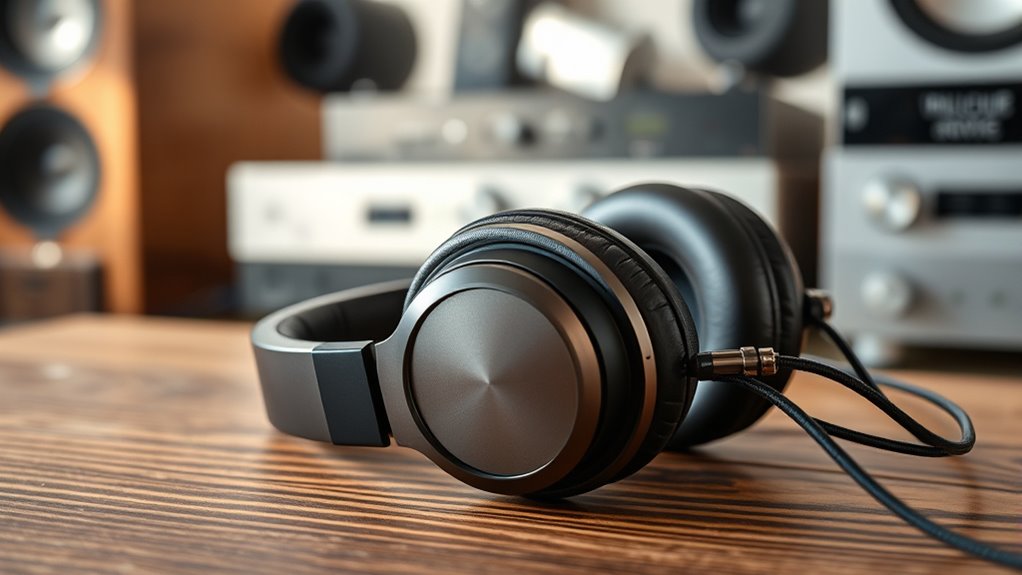

The best audiophile headphones for most listeners are the Sennheiser HD 660S2, with the Sennheiser HD 600 and Sennheiser HDB 630 standing out for natural wired listening and wireless convenience. The main choice is between open-back headphones, which create a more spacious presentation but let sound in and out, and closed-back models that offer more isolation. You’ll also need to weigh wired sound and simplicity against wireless features, as well as comfort, portability, and the power your source can provide. I rank these 15 options by how well their sound and design suit distinct listening needs, not by specs alone. Read on for the full breakdown and help matching a pair to your setup.

Get the little things that make your day delivered free with Prime
- Fast, free delivery on millions of items
- Prime Video, Amazon Music and more included
- Member-only deals all year
Complete the kit


Key Takeaways
- The HD 660S2 leads as the most balanced dedicated listening pick; the HD 600 is a strong alternative if you favor a classic, natural open-back presentation.
- Open-back design dominates this lineup, but it is a poor match for shared rooms, commuting, or any setting where sound leakage and outside noise matter.
- The HDB 630 is the standout for wireless listening, while most other picks prioritize wired playback and a simpler, more traditional audiophile setup.
- Studio headphones serve a different goal from home listening models: the ATH-M50x and MDR-7506 emphasize practical monitoring use, while the ATH-M20x offers a more basic entry point.
- Several Sennheiser models overlap in purpose; the HD 560S, HD 505, and HD 599 options make the most sense when their specific listening character, comfort, or use case fits better than a higher-tier pick.
| Sennheiser HD 620S Closed-Back Over-Ear Headphones |  | Best for Spacious Closed-Back Listening | Design: Closed-back, over-ear | Drivers: Angled 42 mm dynamic drivers with 38 mm diaphragms | Impedance: 150 ohms | VIEW ON AMAZON | See Our Full Breakdown |
| Sennheiser HDB 630 Wireless Audiophile Headphones with BTD 700 Hi-Res Adapter |  | Best Wireless Feature Set | Fit and drivers: Over-ear, 42 mm dynamic drivers | Frequency response: Up to 40 kHz | Impedance: 470 ohms | VIEW ON AMAZON | See Our Full Breakdown |
| Audio-Technica ATH-M50x Professional Studio Monitor Headphones | 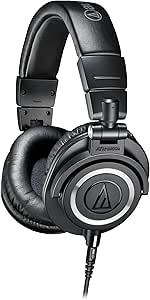 | Best for Studio Monitoring | Design: Over-ear professional monitor headphones | Drivers: 45 mm dynamic | Frequency response: 15–28,000 Hz | VIEW ON AMAZON | See Our Full Breakdown |
| Meze Audio 105 AER Wired Open-Back Over-Ear Headphones |  | Best for Warm Open-Back Sound | Design: Open-back, over-ear | Driver: 50 mm dynamic | Impedance: 42 ohms | VIEW ON AMAZON | See Our Full Breakdown |
| Sennheiser HD 569 Closed-Back Wired Headphones |  | Best for Easy Everyday Listening | Design: Closed-back, over-ear | Transducer size: 38 mm | Impedance: 23 ohms | VIEW ON AMAZON | See Our Full Breakdown |
| Sennheiser HD 660S2 Open-Back Audiophile Headphones |  | Best for Rich, Extended Listening | Design: Open-back, over-ear | Driver type: Dynamic | Driver size: 42 mm | VIEW ON AMAZON | See Our Full Breakdown |
| Sennheiser HD 505 Wired Open-Back Audiophile Headphones | 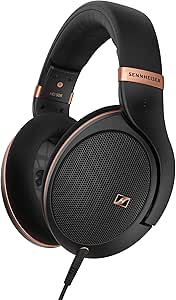 | Best for a Comfortable Home Setup | Design: Open-back, over-ear | Connectivity: Wired | Driver type: Dynamic | VIEW ON AMAZON | See Our Full Breakdown |
| Sennheiser HD 560S Open-Back Wired Over-Ear Headphones |  | Best for Accurate Listening | Design: Open-back, over-ear | Connectivity: Wired | Driver type: Dynamic | VIEW ON AMAZON | See Our Full Breakdown |
| Sennheiser HD 599 Open-Back Wired Headphones, Ivory |  | Best for Flexible Everyday Home Listening | Design: Wired, open-back, over-ear | Color: Ivory | Driver type: Dynamic | VIEW ON AMAZON | See Our Full Breakdown |
| Sony MDR-7506 Professional Over-Ear Headphones | 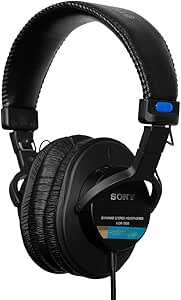 | Best Closed-Back Pick for Monitoring | Design: Closed-back, foldable, over-ear | Driver size: 40 mm | Frequency response: 10 Hz–20 kHz | VIEW ON AMAZON | See Our Full Breakdown |
| Sennheiser HD 599 SE Open-Back Wired Headphones, Black |  | Best for Comfortable Everyday Listening | Design: Open-back, wired, over-ear | Driver: 38 mm dynamic | Impedance: 50 ohms | VIEW ON AMAZON | See Our Full Breakdown |
| Sennheiser HD 600 Open-Back Wired Headphones |  | Best for Reference Listening | Design: Open-back, over-ear, wired | Impedance: 300 ohms | Frequency response: 12–39,000 Hz | VIEW ON AMAZON | See Our Full Breakdown |
| Audio-Technica ATH-M20x Professional Studio Monitor Headphones |  | Best for Isolated Studio Monitoring | Design: Closed-back, over-ear | Driver: 40 mm dynamic | Frequency response: 15–20,000 Hz | VIEW ON AMAZON | See Our Full Breakdown |
| Aune AR5000 MK2 Full-Size Open-Back Headphones |  | Best for Portable-Friendly Open-Back Listening | Driver: 50 mm open-back dynamic | Diaphragm: Multi-Layer Distributed | Impedance: 28 ohms | VIEW ON AMAZON | See Our Full Breakdown |
| Sennheiser HD 650 Open-Back Dynamic Headphones | 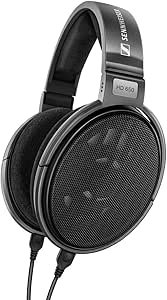 | Best for Long, Relaxed Listening | Design: Wired, open-back, over-ear | Driver: 42 mm matched dynamic | Frequency response: 10 Hz–41,000 Hz | VIEW ON AMAZON | See Our Full Breakdown |
| audiophile headphone | Design | Impedance | Warranty | Frequency response |
|---|---|---|---|---|
| Sennheiser HD 620S Closed-Back | Closed-back, over-ear | 150 ohms | 2 years | — |
| Sennheiser HDB 630 Wireless Au | — | 470 ohms | — | Up to 40 kHz |
| Audio-Technica ATH-M50x Profes | Over-ear professional monitor headphones | 38 ohms | 2 years on parts and labor | 15–28,000 Hz |
| Meze Audio 105 AER Wired Open- | Open-back, over-ear | 42 ohms | 1 year manufacturer | 30 kHz |
| Sennheiser HD 569 Closed-Back | Closed-back, over-ear | 23 ohms | — | — |
| Sennheiser HD 660S2 Open-Back | Open-back, over-ear | 300 ohms | 2 years | — |
| Sennheiser HD 505 Wired Open-B | Open-back, over-ear | — | 2 years | — |
| Sennheiser HD 560S Open-Back W | Open-back, over-ear | 120 ohms | — | — |
| Sennheiser HD 599 Open-Back Wi | Wired, open-back, over-ear | 50 ohms | 1 year | — |
| Sony MDR-7506 Professional Ove | Closed-back, foldable, over-ear | — | — | 10 Hz–20 kHz |
| Sennheiser HD 599 SE Open-Back | Open-back, wired, over-ear | 50 ohms | 2 years | Not specified in source data |
| Sennheiser HD 600 Open-Back Wi | Open-back, over-ear, wired | 300 ohms | 2 years | 12–39,000 Hz |
| Audio-Technica ATH-M20x Profes | Closed-back, over-ear | 47 ohms | 2 years on parts and labor | 15–20,000 Hz |
| Aune AR5000 MK2 Full-Size Open | — | 28 ohms | 1 year | — |
| Sennheiser HD 650 Open-Back Dy | Wired, open-back, over-ear | — | 2 years | 10 Hz–41,000 Hz |
More Details on Our Top Picks
Sennheiser HD 620S Closed-Back Over-Ear Headphones
The HD 620S is my pick for listeners who want a more open sense of stereo space without switching to open-back headphones. Its angled 42 mm drivers are designed to give music room to spread across the image, while the closed cups help limit outside distractions. That makes it a more isolation-minded choice than the open-back Meze Audio 105 AER, though the Meze is the better fit for listeners who prefer a warm, bass-emphasized presentation and do not need isolation.
The tradeoff is the HD 620S’s 150-ohm impedance: a suitable headphone output can help it perform at its best, so it is less convenient than the 23-ohm HD 569 for casual use from varied devices. Its wired connection also rules out wireless listening. A detachable cable, comfort-focused pads, and reinforced headband make it better suited to long, stationary sessions.
Pros:- Spacious presentation for a closed-back design
- Angled drivers support precise stereo imaging
- Detachable cable and included 6.3 mm adapter
- Comfort-oriented earpads and steel-reinforced headband
Cons:- 150-ohm impedance may benefit from a headphone amplifier
- Wired-only listening limits mobility
Best for: Listeners who want detailed, spacious stereo imaging from closed-back headphones for focused listening at home or in shared spaces.
Not ideal for: Buyers who need wireless playback, or who want headphones that are easy to drive from nearly any device without checking its output.
- Design:Closed-back, over-ear
- Drivers:Angled 42 mm dynamic drivers with 38 mm diaphragms
- Impedance:150 ohms
- Cable:Detachable 1.8 m cable with 3.5 mm plug
- Included adapter:3.5 mm to 6.3 mm
- Weight:400 g
- Warranty:2 years
Our verdict“Choose the HD 620S if you want a spacious, isolation-friendly wired headphone and can accommodate its higher impedance.”
Sennheiser HDB 630 Wireless Audiophile Headphones with BTD 700 Hi-Res Adapter
The HDB 630 is the most flexible listening option here: it combines adaptive noise cancellation, a transparency mode, app-based parametric EQ, and wireless playback with USB-C audio up to 24-bit/96 kHz. Its included BTD 700 adapter adds another route for compatible wireless sources. Compared with the wired Sennheiser HD 620S, it is far easier to take between listening spaces and gives you more control over sound and noise, but it trades the HD 620S’s straightforward wired setup for charging and wireless-source considerations.
Up to 60 hours of battery life and a rapid-charge feature support long stretches away from an outlet. The neutral profile and EQ make it a strong fit for listeners who want to tune their presentation rather than accept a fixed signature. Its limitations are practical: it is not water resistant, and the listed 470-ohm impedance may complicate wired use with some sources. This is the convenience-led pick, not the simplest choice for a purist seeking a cable-only setup.
Pros:- Bluetooth and USB-C playback, including USB-C audio up to 24-bit/96 kHz
- Adaptive noise cancellation and transparency mode
- App-based parametric EQ allows detailed sound adjustment
- Up to 60 hours of battery life with fast charging
Cons:- Not water resistant
- Listed 470-ohm impedance may call for a suitable source during wired listening
- Wireless features require battery charging
Best for: Listeners who want high-resolution wireless and USB-C playback, adjustable sound, and noise control for commuting or travel.
Not ideal for: Buyers seeking a simple wired headphone for stationary listening, or anyone who needs water resistance for outdoor activity.
- Fit and drivers:Over-ear, 42 mm dynamic drivers
- Frequency response:Up to 40 kHz
- Impedance:470 ohms
- Connectivity:Bluetooth, wired, and hybrid
- Bluetooth:Version 5; supports aptX HD and aptX Adaptive
- USB-C audio:Up to 24-bit/96 kHz
- Battery life:Up to 60 hours
- Noise control:Adaptive noise cancellation and transparency mode
- Included adapter:BTD 700 Bluetooth adapter
Our verdict“Pick the HDB 630 if adjustable, noise-cancelling wireless listening matters more to you than a cable-only audiophile setup.”
Audio-Technica ATH-M50x Professional Studio Monitor Headphones
The ATH-M50x earns its place as the practical monitoring pick: its 45 mm drivers, sound-isolating cups, and deep, accurate bass suit editing, tracking, and everyday listening where outside sound needs to stay in the background. Swiveling earcups make one-ear monitoring possible, a useful studio feature the Sennheiser HD 620S does not list. The M50x is also easier to pair with ordinary sources than the HD 620S, with its 38-ohm impedance.
This is a closed-back, work-ready choice rather than the roomier presentation promised by the HD 620S. Its folding design, detachable cable, and durable construction favor portability and frequent handling, but the wired connection limits movement and it has no water resistance. Buyers looking for a more relaxed listening presentation or an open-back sense of space may prefer the Meze Audio 105 AER, provided they can live with sound escaping through its open cups.
Pros:- 45 mm drivers deliver clear sound with deep, accurate bass
- Sound-isolating over-ear cups help reduce distractions
- 90-degree swiveling earcups support one-ear monitoring
- Detachable cable and foldable design aid studio and everyday use
Cons:- Wired-only connectivity limits freedom of movement
- Not water resistant
Best for: Home-studio creators and listeners who want bass-aware monitoring, isolation, and one-ear cueing from a wired headphone.
Not ideal for: Listeners who prioritize an expansive open-back presentation, wireless use, or headphones for wet and rugged environments.
- Design:Over-ear professional monitor headphones
- Drivers:45 mm dynamic
- Frequency response:15–28,000 Hz
- Impedance:38 ohms
- Sensitivity:99 dB
- Connectivity:Wired, 3.5 mm headphone jack
- Features:Sound isolation, 90-degree swiveling earcups, foldable
- Warranty:2 years on parts and labor
Our verdict“Choose the ATH-M50x for versatile, isolated studio monitoring; choose the HD 620S instead if spacious stereo imaging is your priority.”
Meze Audio 105 AER Wired Open-Back Over-Ear Headphones
The 105 AER is the open-back choice for listeners who want a warm, full-bodied sound with extra bass depth rather than a strictly neutral presentation. Its 50 mm dynamic drivers and open construction suit home listening, where the design can provide a more airy experience than the closed-back Audio-Technica ATH-M50x. The M50x is the more practical option when isolation or one-ear monitoring matters; the Meze is better aimed at uninterrupted listening in a quiet room.
Replaceable components, a detachable cable, and included carrying accessories support long-term ownership and careful storage. There is a real compromise: open-back cups let sound pass in both directions, so these are poorly suited to shared rooms, commuting, or recording near a microphone. Their listed weight is also substantial at 2.6 pounds, making fit and comfort a personal consideration despite the premium materials. I would choose this model for its tuning and serviceable design, not for portability or noise control.
Pros:- Warm, full-bodied tuning with enhanced bass depth
- Open-back design supports an airy listening presentation
- Replaceable components support longer-term maintenance
- Detachable cable, hard carrying pouch, and jack adapter included
Cons:- Open-back cups provide no noise control and allow sound leakage
- Listed weight of 2.6 pounds may be substantial for extended wear
- Wired connection limits mobility
Best for: Home listeners who prefer a warm, bass-rich open-back presentation and value replaceable components for long-term ownership.
Not ideal for: Commuters, shared-room listeners, and recording users who need sound isolation or minimal audio leakage.
- Design:Open-back, over-ear
- Driver:50 mm dynamic
- Impedance:42 ohms
- Sensitivity:112 dB
- Frequency response:30 kHz
- Weight:2.6 pounds
- Cable:Detachable 1.8 m Kevlar OFC cable
- Included accessories:Hard carrying pouch, cable pouch, and 3.5 mm to 6.3 mm adapter
- Warranty:1 year manufacturer
Our verdict“Choose the 105 AER for warm, open-back home listening and serviceable construction, but skip it if you need isolation.”
Sennheiser HD 569 Closed-Back Wired Headphones
The HD 569 is the everyday-friendly closed-back choice in this group. Its 23-ohm impedance makes it a more straightforward match for common listening devices than the 150-ohm Sennheiser HD 620S, while its closed cups suit listeners who want a more private setup than the open-back Meze Audio 105 AER. Two detachable cables add useful flexibility: the shorter lead has an inline microphone and remote for calls, while the longer cable ends in a 6.3 mm jack for home equipment.
That convenience comes with fewer audiophile-specific details in the supplied product information: driver size is listed as 38 mm, but there is no stated frequency response or tuning description. Buyers seeking the HD 620S’s emphasis on spacious imaging, or the ATH-M50x’s explicit studio-monitoring features, may find those models a more defined fit. The replaceable pads and two cable options make the HD 569 the sensible pick for listeners who split time between calls and music, not those chasing a clearly specified specialist sound.
Pros:- Low 23-ohm impedance suits a wide range of everyday audio sources
- Closed-back over-ear design supports more private listening
- Soft, replaceable ear pads
- Two detachable cables, including one with an inline microphone and remote
Cons:- Wired-only design offers no wireless listening
- Product data does not specify frequency response or a sound signature
- The 3 m cable may be cumbersome for portable use
Best for: Listeners who want easy-to-drive closed-back headphones for music and calls, with cable options for both mobile and home setups.
Not ideal for: Audiophile buyers seeking detailed sound-tuning specifications, wireless playback, or features aimed at studio monitoring.
- Design:Closed-back, over-ear
- Transducer size:38 mm
- Impedance:23 ohms
- Connectivity:Wired
- Ear pads:Soft, replaceable
- Long cable:3 m cable with 6.3 mm jack
- Short cable:1.2 m cable with 3.5 mm jack, inline microphone, and remote
Our verdict“Choose the HD 569 for accessible closed-back listening and call-friendly cable options, rather than specialist sound tuning or wireless features.”
Sennheiser HD 660S2 Open-Back Audiophile Headphones
The HD 660S2 is the pick here for listeners who want an open presentation without giving up a sense of bass depth. Its 42 mm dynamic drivers and 300-ohm impedance pair detailed highs and full mids with the described deeper low end, making it more suited to focused music sessions than casual, untethered use. Compared with the HD 560S, which is positioned around accurate monitoring, the HD 660S2 emphasizes a richer listening character. The plush, breathable cushions and two included cables support longer sessions and connection to different headphone outputs. The tradeoff is practical: it is wired and open-back, so sound leaks both ways and it offers little isolation. I’d rank it above the HD 505 for a more substantial listening setup, but not for commuting or shared rooms.
Pros:- Open-back presentation with detailed highs, rich mids, and deep bass
- Plush, breathable ear cushions suit extended listening
- Includes 6.3 mm and 4.4 mm cables, an adapter, and a carry pouch
- Detachable cables make replacement or setup changes easier
Cons:- Open-back construction leaks sound and provides little isolation
- Wired listening limits movement
- 300-ohm impedance makes the choice of audio source more relevant than with the 50-ohm HD 599
Best for: Home listeners with a suitable headphone output who prioritize spacious sound, rich mids, and long-session comfort.
Not ideal for: Commuters, listeners in shared spaces, and buyers who need wireless playback or meaningful noise isolation.
- Design:Open-back, over-ear
- Driver type:Dynamic
- Driver size:42 mm
- Impedance:300 ohms
- Weight:0.3 kg
- Included cables:6.3 mm cable (1.8 m) and 4.4 mm cable (1.8 m)
- Other included accessories:6.3 mm to 3.5 mm adapter and carry pouch
- Warranty:2 years
Our verdict“Choose the HD 660S2 for rich, spacious home listening if you have a suitable wired source and do not need isolation.”
Sennheiser HD 505 Wired Open-Back Audiophile Headphones
The HD 505 makes sense for listeners who want an open-back design for music, gaming, or audio work and place comfort ahead of premium materials. Its spacious soundstage and clear, detailed presentation suit listening where hearing space and separation matters more than blocking outside noise. A lightweight headband, reduced clamping force, and velour pads are aimed at making longer sessions easier. Compared with the HD 560S, the HD 505 is presented as a flexible home-listening option rather than a specifically accuracy-focused monitoring pick; the HD 560S also lists its driver size and impedance, while those details aren’t supplied for the HD 505 here. The included screw-on adapter helps connect to a larger headphone jack. Its plastic enclosure, wired cable, and sound leakage make it a poor choice for travel or shared rooms.
Pros:- Open-back design supports a spacious listening presentation
- Clear, detailed sound suits music, gaming, and audio work
- Lightweight headband, reduced clamping force, and velour ear pads target comfort
- Includes a screw-on 3.5 mm to 6.35 mm adapter and drawstring bag
Cons:- Open-back construction offers little sound isolation and leaks audio
- Wired connection restricts mobility
- Plastic enclosure is less substantial than a metal-built alternative
Best for: Home listeners, gamers, and audio hobbyists seeking an open-back fit for longer sessions and a supplied adapter for different audio jacks.
Not ideal for: Travelers or people who listen near others and need wireless convenience, sound isolation, or water resistance.
- Design:Open-back, over-ear
- Connectivity:Wired
- Driver type:Dynamic
- Cable length:1.8 m
- Connector:3.5 mm jack
- Enclosure material:Plastic
- Weight:558 g
- Included accessories:3.5 to 6.35 mm screw-on adapter and drawstring bag
- Warranty:2 years
Our verdict“Pick the HD 505 for comfortable, versatile home listening, but skip it if you need isolation or a portable wireless set.”
Sennheiser HD 560S Open-Back Wired Over-Ear Headphones
The HD 560S is the strongest fit in this group for listeners who want a natural, monitoring-oriented presentation. Its angled 38 mm dynamic drivers are described as producing a wide soundstage, which can help make spatial cues easier to follow in music and audio work. At 120 ohms, it is less demanding on paper than the HD 660S2’s 300-ohm design, while still requiring a wired source. Compared with the HD 599, the HD 560S leans more directly toward accurate, natural sound rather than making comfort and multiple cable options its central appeal. A detachable cable is a useful practical advantage, but the package lists one cable and an adapter. The open-back construction means no meaningful noise isolation, so this is best kept for a quiet desk or listening room.
Pros:- Natural, accurate sound is suited to monitoring and focused listening
- Angled drivers and open-back design create a wide soundstage
- Detachable cable can be replaced if damaged
- 120-ohm impedance is lower than the HD 660S2’s 300 ohms
Cons:- Open-back design provides no noise isolation and lets sound escape
- Wired connection limits movement
- Includes a single cable rather than the two cable lengths supplied with the HD 599
Best for: Listeners and audio hobbyists who want a natural, spacious sound for focused listening or monitoring at home.
Not ideal for: Commuters, people recording near a microphone, or anyone who needs closed-back isolation and freedom from a cable.
- Design:Open-back, over-ear
- Connectivity:Wired
- Driver type:Dynamic
- Driver size:38 mm
- Impedance:120 ohms
- Frequency range:6 Hz to 38 kHz
- Sensitivity:110 dB
- Connector:6.3 mm jack with 3.5 mm adapter
- Cable:Detachable
Our verdict“Choose the HD 560S if accurate, spacious sound matters more than isolation, wireless use, or multiple included cables.”
Sennheiser HD 599 Open-Back Wired Headphones, Ivory
The HD 599 is a practical choice for listeners who want an open, natural presentation and useful cable options in the box. Its 50-ohm impedance is lower than the HD 560S’s 120 ohms and the HD 660S2’s 300 ohms, making it the less demanding specification on paper among those three for common wired sources. The standout convenience is its two detachable cables: a longer 3 m lead with a 6.3 mm plug and a shorter 1.2 m lead with a 3.5 mm plug. Replaceable velour pads also offer a path to refreshing the main contact point over time. Compared with the HD 560S, the HD 599 prioritizes flexible connections and comfort rather than an explicitly monitoring-focused brief. As with the others, its open back leaks sound and offers no noise control; it is also not water resistant.
Pros:- Open-back design supports natural spatial sound
- Padded headband and velour ear pads support long listening sessions
- Replaceable ear pads can be renewed over time
- Two detachable cables cover long-reach and shorter 3.5 mm connections
Cons:- Open-back construction provides no noise control and leaks sound
- Wired design limits mobility
- Not water resistant
Best for: Home listeners who want an open, natural sound, replaceable velour pads, and both long and short detachable cable options.
Not ideal for: People who need noise isolation, water resistance, or a single lightweight setup for commuting.
- Design:Wired, open-back, over-ear
- Color:Ivory
- Driver type:Dynamic
- Impedance:50 ohms
- Frequency range:12–38,500 Hz
- Cable options:Detachable 3 m cable with 6.3 mm plug and 1.2 m cable with 3.5 mm plug
- Ear pads:Replaceable velour
- Water resistance:Not water resistant
- Warranty:1 year
Our verdict“Choose the HD 599 for comfortable home listening with adaptable cable lengths, not for noisy or wet environments.”
Sony MDR-7506 Professional Over-Ear Headphones
The MDR-7506 serves a different purpose from the open-back Sennheisers in this roundup: it is a closed-back monitoring headphone for situations where reducing outside noise matters more than an airy soundstage. That makes it more practical for broadcasting, studio work, and listening around other people than the HD 560S or HD 660S2, both of which leave the ear area open. Its folding design and included soft case help with storage, while the 40 mm drivers and stated 10 Hz–20 kHz frequency response suit its monitoring role. The compromise is the fixed 9.8 ft cord: unlike the detachable-cable HD 560S and HD 599, it cannot be swapped out if damaged and can feel cumbersome with portable gear. I’d choose it for controlled monitoring, not for the most spacious home listening presentation.
Pros:- Closed-back design helps reduce external noise compared with the open-back Sennheiser models
- 40 mm drivers and stated frequency response suit monitoring use
- Folding construction and soft case simplify storage
- Includes a 1/4-inch adapter
Cons:- Non-detachable 9.8 ft cord cannot be replaced independently
- Long cable may be cumbersome with portable devices
- Closed-back design does not offer the open presentation of the HD 560S or HD 660S2
Best for: Studio, broadcast, and home-monitoring users who need a closed-back wired headphone that folds for storage.
Not ideal for: Listeners who prioritize an open, spacious presentation, a detachable cable, or a short cord for portable use.
- Design:Closed-back, foldable, over-ear
- Driver size:40 mm
- Frequency response:10 Hz–20 kHz
- Cable length:9.8 ft
- Cable:Non-detachable OFC cord
- Plug:Gold-plated plug
- Weight:8 oz
- Included accessories:Soft case and 1/4-inch adapter
Our verdict“Choose the MDR-7506 for practical closed-back monitoring, but pick an open-back Sennheiser if soundstage is your priority.”
Sennheiser HD 599 SE Open-Back Wired Headphones, Black
The HD 599 SE is a strong fit for listeners who want spacious, balanced sound without making a high-impedance headphone the center of their setup. Its 50-ohm impedance is more approachable for common audio sources than the 300-ohm Sennheiser HD 600, while the open-back design gives music an airy presentation that closed-back studio models such as the Audio-Technica ATH-M20x cannot provide. Plush velour pads and two detachable cables also make it practical for long home listening sessions and different connector needs. The tradeoff is that its open construction lets outside noise in and sound out, so it is a poor match for commuting or shared rooms. It also remains fully wired, unlike the wireless Sennheiser HDB 630.
Pros:- Spacious presentation with balanced sound and clear mids and highs
- Plush velour ear pads support long listening sessions
- Includes detachable 3.5 mm and 6.3 mm cables
- 50-ohm impedance is less demanding than the HD 600’s 300 ohms
Cons:- Open-back cups provide little isolation and allow sound to leak
- Wired-only connection rules out cable-free listening
Best for: Home listeners who want a comfortable open-back headphone for extended music sessions and need both 3.5 mm and 6.3 mm cable options.
Not ideal for: Commuters, listeners in noisy shared spaces, and anyone who needs wireless playback or strong sound isolation.
- Design:Open-back, wired, over-ear
- Driver:38 mm dynamic
- Impedance:50 ohms
- Frequency response:Not specified in source data
- Sensitivity:106 dB
- Cable options:Detachable 3 m 6.3 mm cable and 1.2 m 3.5 mm cable
- Warranty:2 years
Our verdict“Choose the HD 599 SE for comfortable, spacious home listening with flexible cable connections, but skip it if isolation or wireless use matters.”
Sennheiser HD 600 Open-Back Wired Headphones
The HD 600 earns its place for listeners who value natural, detailed reproduction for focused listening, studio work, or mastering. Its open-back stereo presentation and low stated distortion suit careful evaluation, while the lightweight 260 g build helps during longer sessions. Compared with the more accessible HD 599 SE, the HD 600 asks more of the source: its 300-ohm impedance can call for a suitable amplifier or audio interface, making it less convenient for casual use from basic portable devices. The detachable, Kevlar-reinforced cable is built for regular handling, but the open cups offer little isolation and are not suited to noisy surroundings. Choose it over the HD 650 when the stated reference and mastering use is the priority; choose neither for travel.
Pros:- Detailed, natural sound suited to focused listening and studio tasks
- Spacious stereo imaging from the open-back design
- Light 260 g build and plush pads support longer sessions
- Detachable Kevlar-reinforced cable
Cons:- 300-ohm impedance may require a suitable amplifier or audio interface
- Open-back design provides limited isolation and leaks sound
Best for: Critical listeners, home-studio users, and mastering work where a capable headphone output is available and natural presentation matters more than isolation.
Not ideal for: Portable-device listeners without suitable amplification, commuters, and anyone who needs closed-back noise isolation.
- Design:Open-back, over-ear, wired
- Impedance:300 ohms
- Frequency response:12–39,000 Hz
- Total harmonic distortion:0.1%
- Weight:260 g
- Cable:Detachable, Kevlar-reinforced oxygen-free copper
- Warranty:2 years
Our verdict“Pick the HD 600 for reference-oriented home or studio listening with appropriate amplification, not for grab-and-go use.”
Audio-Technica ATH-M20x Professional Studio Monitor Headphones
The ATH-M20x takes a more practical studio-monitoring route than the open-back Sennheiser models here. Its closed-back earcups help keep outside sound out during tracking, while the 40 mm drivers are tuned for enhanced low-frequency performance. That makes it a useful fit for recording and monitoring in environments where the HD 599 SE or HD 600 would leak sound. It is less aimed at the airy, spacious presentation many listeners seek from an open-back audiophile headphone, and its supplied 3 m cable can be cumbersome away from a desk. Compared with the more feature-rich ATH-M50x elsewhere in the roundup, this model is a simpler studio-oriented option. Its 47-ohm impedance is comparatively approachable, but the cable is fixed and the headphone is not water resistant.
Pros:- Closed-back earcups provide useful sound isolation for tracking
- 40 mm drivers are tuned for enhanced low-frequency performance
- Single-sided cable exit helps keep the cable routed to one side
- 47-ohm impedance suits a range of standard headphone outputs
Cons:- Long 3 m cable can be awkward away from a studio or desk
- Closed-back presentation is less open and spacious than the HD 600
- Not water resistant
Best for: Home-studio beginners and musicians who need closed-back isolation for tracking, monitoring, or listening near other people.
Not ideal for: Listeners seeking an expansive open-back soundstage, a detachable cable, or a compact headphone for mobile use.
- Design:Closed-back, over-ear
- Driver:40 mm dynamic
- Frequency response:15–20,000 Hz
- Impedance:47 ohms
- Sensitivity:96 dB
- Cable:Single-sided, 3 m
- Connector:3.5 mm headphone jack
- Warranty:2 years on parts and labor
Our verdict“Choose the ATH-M20x for isolated studio tracking on a straightforward wired setup, rather than for open-back audiophile listening.”
Aune AR5000 MK2 Full-Size Open-Back Headphones
The AR5000 MK2 stands apart from the Sennheiser HD 600 with a 28-ohm impedance designed to work with portable sources more readily, while retaining an open-back presentation for home listening. Its 50 mm multilayer distributed diaphragm, angled drivers, and earpads are intended to create controlled bass, extended highs, and precise imaging rather than the isolation of a closed-back headphone such as the ATH-M20x. Breathable memory foam and an all-metal headband add comfort and a sturdier build character. This is the lineup’s clearest choice for listeners who want an open design without committing first to a high-impedance setup. Still, easy compatibility does not make it a travel headphone: sound leaks both ways, and the description notes that desktop equipment may help reveal its full potential. Its one-year warranty is shorter than the two-year coverage listed for the Sennheiser options.
Pros:- 28-ohm impedance supports compatibility with portable devices
- Angled drivers and earpads are designed for spacious sound and precise imaging
- Breathable acoustic memory foam supports extended wear
- All-metal headband and detachable cable
Cons:- Open-back construction offers limited isolation and leaks sound
- May benefit from desktop equipment to reach its full potential
- One-year warranty is shorter than the two-year coverage listed for the HD 600 and HD 650
Best for: Listeners who want a full-size open-back headphone that can connect to portable devices without the HD 600’s 300-ohm load.
Not ideal for: Commuters, people listening near others, and buyers who want a longer warranty or guaranteed isolation.
- Driver:50 mm open-back dynamic
- Diaphragm:Multi-Layer Distributed
- Impedance:28 ohms
- Cable:Detachable
- Earpads:Breathable acoustic memory foam
- Headband:All-metal construction
- Color:Champagne gold
- Warranty:1 year
Our verdict“Choose the AR5000 MK2 if you want spacious open-back listening with a less demanding impedance, and avoid it where sound leakage is a problem.”
Sennheiser HD 650 Open-Back Dynamic Headphones
The HD 650 is the relaxed-listening pick in this group, built around natural sound and comfort for extended sessions. Its 42 mm matched dynamic drivers and over-ear format are aimed at home listening, while the included 3.5 mm and 1/4-inch connections make it adaptable to different wired sources. Compared with the HD 600, the HD 650 has a stated frequency response extending to 10 Hz at the low end, though the supplied data does not establish how that translates into a tonal difference; choose between them based on fit, setup, and listening priorities rather than that figure alone. Like the HD 600 and HD 599 SE, it is open-backed, so it is a poor choice around noise or nearby listeners. The wired-only connection also gives the wireless HDB 630 a clear advantage for cable-free listening.
Pros:- Natural sound aimed at audiophile listening
- Over-ear design is suited to extended listening sessions
- Includes both 3.5 mm and 1/4-inch connectors
- 42 mm matched dynamic drivers
Cons:- Open-back design provides limited isolation and allows sound leakage
- Wired connectivity offers no cable-free listening
Best for: Home listeners who prioritize comfortable, natural-sounding wired playback over long sessions and have a quiet listening space.
Not ideal for: Commuters, listeners needing privacy or noise isolation, and buyers who want wireless convenience.
- Design:Wired, open-back, over-ear
- Driver:42 mm matched dynamic
- Frequency response:10 Hz–41,000 Hz
- Sensitivity:103 dB
- Connectors:3.5 mm jack and 1/4-inch connector
- Noise control:Passive noise cancellation
- Enclosure material:Aluminum
- Warranty:2 years
Our verdict“Choose the HD 650 for comfortable, natural wired listening at home, but look to a closed-back or wireless option for noisy settings.”

How We Picked
I ranked these headphones by their fit for focused music listening, with attention to tonal balance, detail, spatial presentation, comfort, build, and how readily each model fits into a typical setup. I also weighed practical distinctions that change the buying decision: open versus closed construction, wired versus wireless playback, portability, and whether a model is aimed at home listening or studio monitoring. A headphone can sound capable yet rank lower if its use case is narrow or it gives up isolation, convenience, or versatility.
The order reflects each product’s overall value to its intended listener, not a claim that one sound signature suits everyone. The HD 660S2 ranks first as a dedicated listening choice, while the HD 600 and HD 650 appeal to listeners who prioritize established open-back Sennheiser tuning. The HDB 630 earns a distinct place for wireless flexibility; studio models and more accessible open-back choices rank by how well they meet specific needs. I treat near-identical variants, such as the HD 599 and HD 599 SE, as choices shaped more by finish and availability than a different listening role.
Factors to Consider When Choosing Audiophile Headphones
Before choosing a model, I’d start with where and how you listen. Audiophile headphones can make music more engaging, but no single design suits every room, source, or listener. These broader checks can prevent a technically appealing pair from becoming an inconvenient one.
Match the headphone design to your listening space
Open-back headphones allow air and sound to pass through the earcups, which can make listening feel less enclosed, but people nearby may hear your music and room noise remains audible. Closed-back designs are more practical around other people and in noisy spaces, though their presentation can feel more contained. A common mistake is choosing open-back headphones solely for a reputation for spacious sound, then finding them unusable at a desk shared with family or colleagues. Think about the loudest and most private places you regularly listen, not just your ideal quiet room. If your routine includes both, a dedicated home pair and a portable closed-back pair may serve you better than asking one model to do everything.
Check source compatibility before buying
Headphones differ in how much signal they need to reach comfortable listening levels, and the output quality of a phone, laptop, interface, or dedicated amplifier varies. Before adding an amp or adapter to your plan, check the headphone specifications and the output capability of the device you already own. A common buying error is spending on amplification before confirming that the headphones actually need it. The reverse can also happen: a demanding pair may play, but leave little volume headroom from a weak source. Start with your current setup, then add equipment only to solve a clear problem such as insufficient volume, noise, or missing connections.
Choose a sound signature for your music and habits
There is no universal audiophile tuning: some listeners want vocals and instruments to sound even-handed, while others prefer stronger bass or a more energetic presentation. Consider the music you play most, how long you listen, and whether you want headphones for enjoyment, mixing, or both. Studio-oriented models can make flaws easier to hear, which is useful for monitoring but may feel less forgiving with rough recordings. A neutral-leaning pair is not automatically the best choice if you prefer a fuller or more lively sound. If possible, compare familiar tracks at matched listening levels so loudness does not make one pair seem better by default.
Prioritize fit, comfort, and repairability
Weight, clamp force, pad shape, heat, and headband pressure can matter more than small sound differences during long sessions. Product photos rarely show how a fit will work with your head shape or glasses, so check return terms and replacement-pad availability before committing. Pads are wear items: changes in their condition can affect both comfort and sound, making maintenance part of ownership. A rugged foldable design may suit travel, while a home-focused pair may favor a more spacious fit over compact storage. I’d choose the headphone I can wear comfortably for a full listening session rather than the one with the most impressive specification sheet.
Pay for features you will actually use
Wireless playback, included adapters, detachable cables, folding hinges, and microphone support can all add practical value, but they do not improve every listening setup. If you mostly listen at a desk, a straightforward wired pair may be simpler and avoid battery upkeep. For mobile use, wireless convenience can outweigh the appeal of a wired-only design, especially when carrying a separate cable is a nuisance. Don’t assume that a studio label means a headphone is automatically a better home-listening choice; monitoring durability and casual comfort are different priorities. Decide which feature would change your routine before paying extra for it.
Separate listening headphones from mixing tools
Headphones marketed for studio monitoring are built around practical recording tasks, but that does not mean every model is equally suited to mastering or relaxed music listening. Mixing calls for a consistent presentation and reliable translation to other playback systems; casual listening may favor comfort or a more personally pleasing sound. One common mistake is expecting a monitoring headphone to make every recording sound flattering. Another is assuming an enjoyable home-listening pair will expose every balance issue in a mix. If you need both roles, set a primary use and treat the second as a compromise, or keep separate headphones for each job.
Frequently Asked Questions
Should I choose open-back headphones if I mainly listen at home?
Open-back headphones can suit quiet home listening because their design avoids the sealed-in feel of many closed-back models. They also let sound escape, so someone nearby may hear your music, and household noise can distract you. If you listen alone in a calm room, that tradeoff may be easy to accept. If you share a room, work near others, or need to block noise, a closed-back option is the more practical starting point. Choose based on the room you actually use rather than assuming home listening always means open-back.
Do audiophile headphones need a separate amplifier?
Not always: many headphones can reach useful listening levels from a computer or portable device, while some setups benefit from more output power. The answer depends on the headphone’s electrical demands and the capabilities of your source, not on the audiophile label alone. If your current device plays cleanly at a comfortable level, an amplifier may not add meaningful value to your routine. If volume is limited or the sound becomes strained, compare the source output with the headphone requirements before buying new gear. I’d solve a demonstrated compatibility issue rather than purchasing an amp as a default upgrade.
Can I use studio monitor headphones for everyday music listening?
Yes, but studio headphones are designed around practical monitoring needs, which may not match your preferred sound for casual listening. Their presentation can make recording flaws or harshness more apparent instead of smoothing them over. That can be useful when editing or checking mixes, but less relaxing for some listeners. Comfort, cable length, and portability also vary, so a studio model may be less convenient outside a desk setup. Choose one if monitoring is a real part of your routine, not just because the label suggests professional sound.
Is the Sennheiser HD 599 different enough from the HD 599 SE to choose between them?
The HD 599 and HD 599 SE belong to the same model family, so I would not treat them as separate sound categories. Their visible distinction is the finish, making comfort, fit, connection needs, and the specific listing details more useful decision points than expecting a major change in listening character. Check the included cable and connector details for the version you are considering, since those affect how easily it fits your devices. If both versions meet your needs, choose the one that suits your setup and preferred appearance. For a clearly different role, compare them with another design in the roundup instead.
Which type of audiophile headphones is the better choice for commuting?
For commuting, isolation and convenience usually matter more than the open, airy presentation sought in a quiet room. Closed-back wired models can reduce sound leakage, while a wireless option can cut down on cable handling. Neither design automatically blocks all outside noise, so check whether passive isolation is enough for your route and never raise volume to unsafe levels to overpower traffic. Open-back headphones are generally a poor fit for public travel because they share sound and leave you exposed to ambient noise. If commuting is your main use, prioritize a secure fit, practical connections, and noise control over a home-listening soundstage.
Conclusion
For most dedicated home listeners, I’d start with the Sennheiser HD 660S2 as the best overall pick: it sits at the center of this lineup’s focused open-back listening options. The Audio-Technica ATH-M20x is the best value-minded entry for buyers who want a straightforward studio-style wired pair, while the Sennheiser HD 600 is my best premium-leaning choice for listeners drawn to a refined, natural open-back presentation. Beginners who want an approachable first open-back model should compare the Sennheiser HD 560S with the HD 505 and HD 599 options based on fit and sound preference. For specific needs, choose the Sennheiser HDB 630 for wireless listening, a closed-back Sennheiser model for more privacy, or the ATH-M50x and Sony MDR-7506 for practical studio monitoring. If your room is noisy or shared, prioritize a closed-back design; if you listen alone and want an open presentation, the HD 660S2, HD 600, and HD 650 are the clearest places to begin.
Fall Picks
fall essentials
As an affiliate, we earn on qualifying purchases.