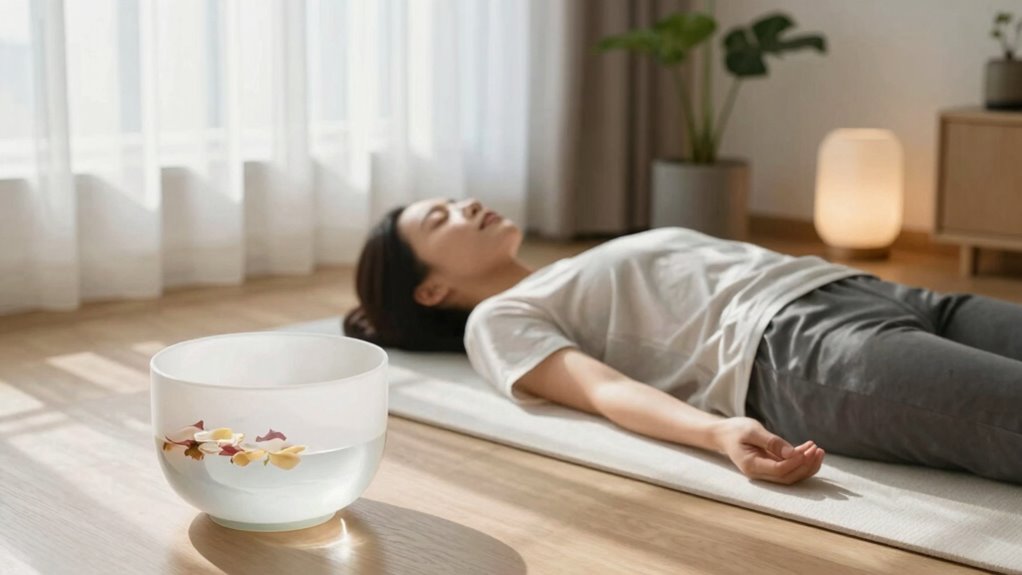

Relaxation helps you unwind by passively calming your body through methods like deep breathing or guided imagery, offering a temporary break from stress. Mindfulness, on the other hand, involves actively paying attention to your present experience without judgment, fostering self-awareness and emotional resilience. While relaxation soothes and disconnects, mindfulness encourages curiosity and acceptance of your thoughts and feelings. If you want to understand how these practices work together and support your well-being, keep exploring their differences.

Get the little things that make your day delivered free — and shop member deals
- Fast, free delivery on millions of items
- Access to Prime Big Deal Days deals on October 6–7
- Prime Video, Amazon Music and more included
Key Takeaways
- Relaxation is a passive state aimed at reducing physical tension, while mindfulness actively involves present-moment awareness without judgment.
- Relaxation techniques often focus on calming the body through methods like deep breathing, whereas mindfulness emphasizes observing thoughts and sensations.
- Relaxation provides temporary stress relief; mindfulness fosters ongoing self-awareness and emotional resilience.
- Relaxation typically involves disengaging from stressors, while mindfulness encourages acceptance and curiosity about current experiences.
- Combining both practices can enhance overall well-being and improve stress management skills.
Many people often confuse relaxation with mindfulness, but they serve different purposes and involve distinct practices. Relaxation is primarily about reducing stress and calming your body, often through techniques that help you unwind. Breathing techniques are a common tool here—taking slow, deep breaths can instantly signal your nervous system to relax. Meditation practices also play a role, especially those designed to calm the mind and body, like progressive muscle relaxation or guided imagery. These methods help you disconnect from stressors temporarily, providing a break for your nervous system to reset. Relaxation practices often involve a passive approach—you sit back, close your eyes, and let your body unwind without necessarily analyzing or observing your thoughts. Incorporating body awareness can deepen relaxation by helping you recognize physical tension patterns more effectively.
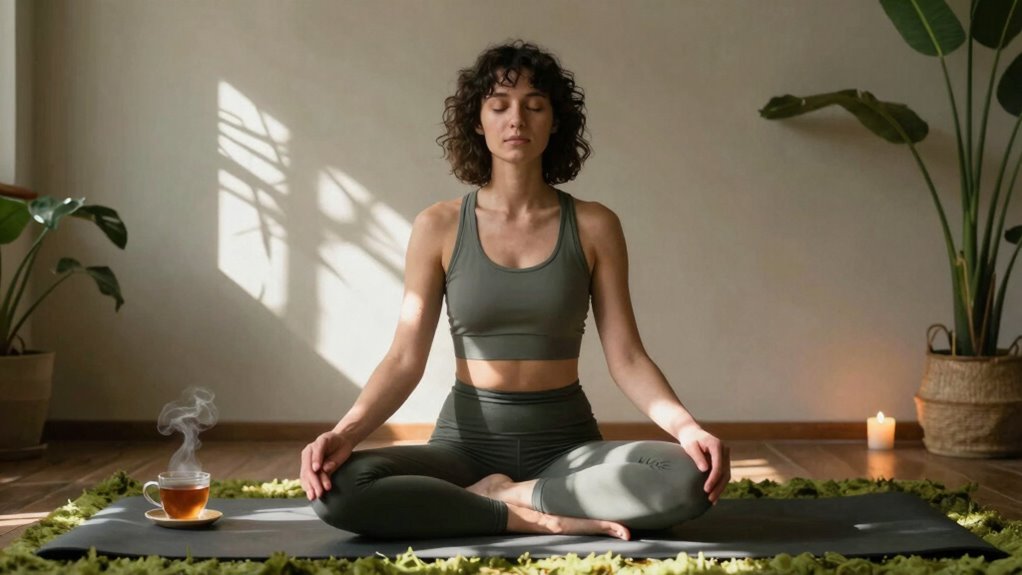
Relaxation soothes the body, while mindfulness cultivates present-moment awareness without judgment. Both foster peace but serve different needs.
Mindfulness, however, is more active. It involves intentionally paying attention to your current experience—your breath, sensations, thoughts, or emotions—without trying to change or judge them. Breathing techniques are essential here, not just for calming, but as anchors that keep your awareness grounded in the present. Meditation practices for mindfulness often include sitting quietly and observing your thoughts as they come and go, noticing each sensation or emotion without attachment. This practice fosters a different kind of calm—one rooted in acceptance and clarity. Instead of seeking to turn off your thoughts, mindfulness encourages you to observe them with curiosity, which can lead to deeper self-awareness and emotional resilience. Additionally, incorporating natural elements like plants or water features can enhance mindfulness practices by creating a more calming environment.
While both relaxation and mindfulness can be practiced separately, they often complement each other. For example, you might begin a session with breathing techniques to ease physical tension, then shift into mindfulness meditation to cultivate present-moment awareness. In this way, relaxation helps prepare your mind and body for mindfulness, making it easier to stay attentive and non-judgmental. Conversely, regularly practicing mindfulness can enhance your ability to relax because you develop a better understanding of your stress triggers and responses. Ultimately, understanding the difference allows you to choose the right approach depending on whether you want temporary relief or long-term mental clarity.
Frequently Asked Questions
Can Relaxation Techniques Replace Mindfulness Practices?
Relaxation techniques can’t fully replace mindfulness practices because they serve different purposes. Relaxation helps reduce stress and promote calm, but mindfulness enhances mental clarity and awareness in the present moment. Combining both allows you to manage stress effectively while developing a deeper understanding of your thoughts and feelings. So, incorporate relaxation for immediate relief and mindfulness for long-term mental clarity and emotional resilience.
How Quickly Can I Experience Benefits From Mindfulness?
You can often experience immediate relaxation after just a few minutes of mindfulness practice, thanks to its calming effects on your nervous system. While some benefits, like reduced stress and improved focus, can appear quickly—sometimes within days—long-term mindfulness can lead to lasting mental and emotional health improvements over weeks or months. Regular practice accelerates these benefits, making mindfulness a powerful tool for both instant relief and sustained well-being.
Are Relaxation and Mindfulness Suitable for Children?
Relaxation and mindfulness are suitable for children, helping them build emotional resilience and reduce stress. You can introduce child relaxation techniques like deep breathing or gentle stretching, making it fun and engaging. Mindfulness exercises, such as focusing on sounds or sensations, are also effective and easy to adapt for kids. These practices encourage calmness and awareness, supporting their overall well-being from a young age.
Do I Need Special Equipment for Either Practice?
Imagine you’re planting a seed; for both relaxation and mindfulness, you only need simple tools. You don’t require special equipment—just your breath and focus. Breathing exercises can be done anywhere to help you relax or meditate. Meditation tools like cushions or calming music enhance your experience, but they’re optional. The key is your intention; with or without tools, your practice grows stronger each day.
Can I Combine Relaxation and Mindfulness Effectively?
Yes, you can combine relaxation and mindfulness effectively. Start with breathing exercises to calm your mind and body, then practice body scanning to increase awareness of physical sensations. As you focus on your breath and scan your body, you naturally cultivate mindfulness while relaxing. Integrating these techniques helps deepen your practice, making it easier to stay present and relaxed simultaneously. No special equipment is needed—just your attention and intention.
Conclusion
Understanding the difference between relaxation and mindfulness helps you choose what best suits your needs. Relaxation offers quick relief from stress, while mindfulness builds long-term resilience. Did you know that practicing mindfulness for just 10 minutes daily can reduce cortisol levels by up to 30%? By incorporating both into your routine, you can create a balanced approach to mental well-being, helping you stay calm and focused no matter what life throws your way.
Products Worth Considering
As an affiliate, we earn on qualifying purchases.