
Stop placing diffusers in small, enclosed spaces or running them constantly around your pets. Never apply essential oils directly to your pet’s fur or skin without proper dilution. Keep all oils out of reach in secure, labeled containers, and avoid using multiple oils at once. Always consult your veterinarian before using oils nearby, especially near food or water. If you continue, you’ll discover simple steps to keep your pets safe while enjoying aromatherapy.
Key Takeaways
- Stop placing diffusers in enclosed, small spaces; instead, use well-ventilated areas with fans or open windows.
- Avoid applying undiluted oils directly to your pet’s skin or fur; opt for diffusing diluted oils or pet-safe sprays.
- Don’t store oils on countertops or easily accessible areas; instead, keep them in high, locked, and clearly labeled containers out of pets’ reach.
- Refrain from using multiple oils simultaneously without veterinary guidance; instead, limit to one or two safe oils and monitor your pet’s reactions.
- Stop assuming all natural-sounding oils are safe; always consult a veterinarian and follow proper dilution and application practices.
Relying on Generic Diffusers Without Proper Ventilation

Using generic diffusers without guaranteeing proper ventilation can pose risks to your pets. The way you place your diffuser matters—avoid placing it in small, enclosed spaces where essential oils can concentrate. Proper diffuser placement helps prevent overwhelming your pet’s sensitive respiratory system. Ventilation importance cannot be overstated; without adequate airflow, essential oils may build up to toxic levels. Keep windows open or run fans to promote air circulation, reducing the risk of inhalation issues. Never run a diffuser continuously in a closed room, especially when pets are present. Additionally, using appropriate apps or journals to monitor your diffuser’s usage and environment can further enhance your pet’s safety. By paying attention to diffuser placement and ventilation, you help ensure your pet’s safety and minimize health risks associated with essential oil diffusion. Proper ventilation is key to creating a safe environment for your furry friends.
Using Essential Oils Directly on Your Pet’s Skin or Fur
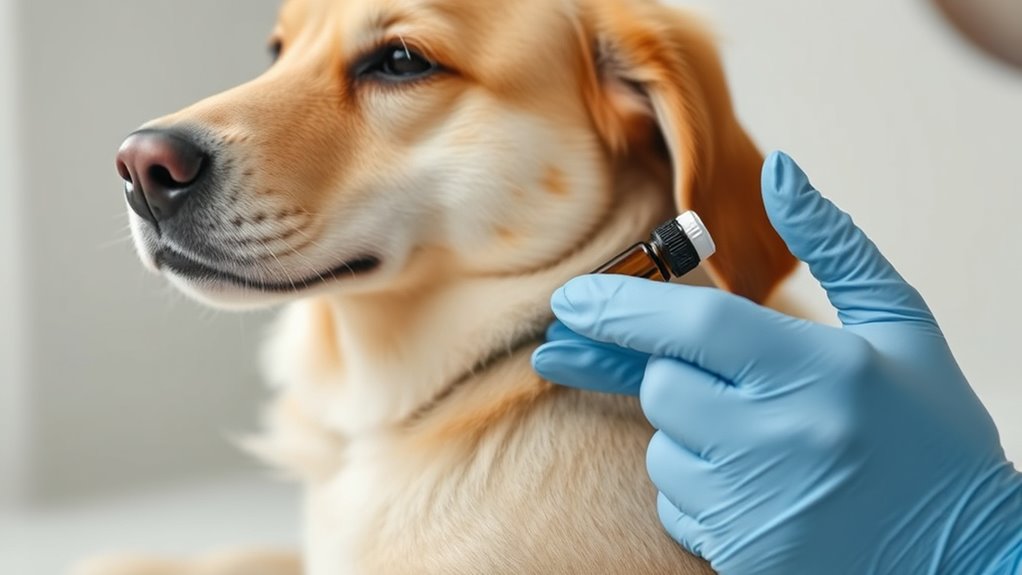
Applying essential oils directly to your pet’s skin or fur can be risky, even if you’re trying to provide them with aromatherapy benefits. Pet skin is sensitive, and fur application with undiluted oils can cause irritation or allergic reactions. Always avoid applying essential oils directly without proper dilution and guidance. Instead, consider safer methods like diffusing specific oils or using pet-safe products designed for skin and fur. Here’s what to keep in mind:
| Method | Pet Skin Impact | Fur Application |
|---|---|---|
| Direct application | Can cause irritation | Risk of oil build-up |
| Diluted oils | Safer, minimizes risk | Suitable for fur |
| Diffusing oils | No direct contact | No fur application |
| Commercial sprays | Tested for safety | Designed for fur |
| Consult a vet | Best practice | Essential for safety |
Always prioritize pet-specific guidance to protect their health. Proper knowledge of pet safety and essential oil use is crucial for preventing adverse reactions.
Ignoring Pet-Specific Sensitivities and Allergies
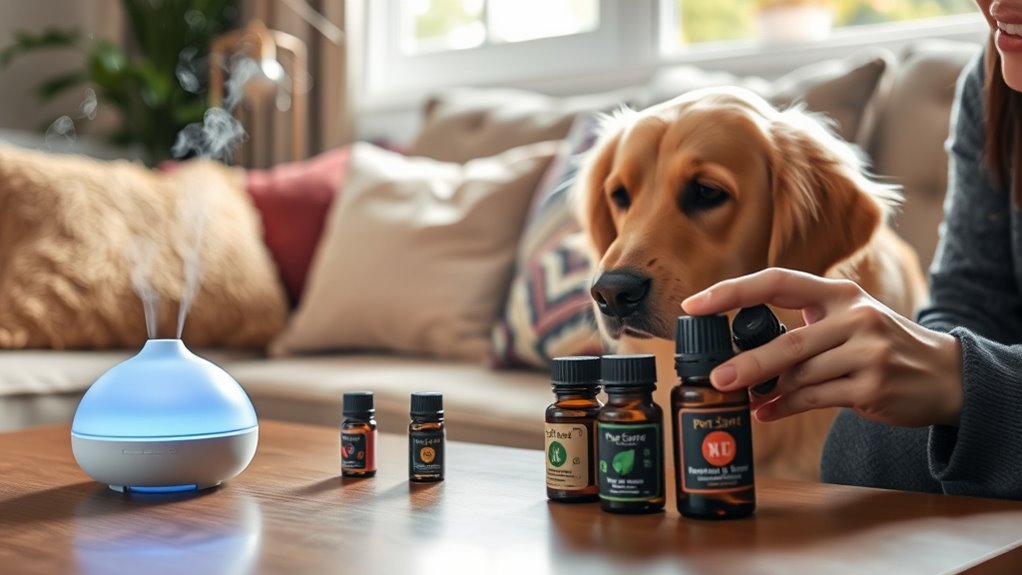
Ignoring your pet’s unique sensitivities and potential allergies can lead to serious health issues, even when using seemingly safe essential oils. Pets can have pet allergies or oil sensitivities that make certain oils harmful, despite their natural reputation. Overlooking these factors puts your pet at risk of skin irritations, respiratory problems, or more severe reactions. You might assume an oil is safe because others use it without issues, but every pet is different. It’s essential to observe your pet closely and consult your veterinarian before introducing new oils. Never assume that what’s safe for humans or even other animals is safe for your pet. Recognizing and respecting your pet’s sensitivities helps prevent avoidable health emergencies. Additionally, understanding Practical Support resources can provide guidance on safe pet care practices.
Overusing or Doubling Up on Multiple Oils at Once
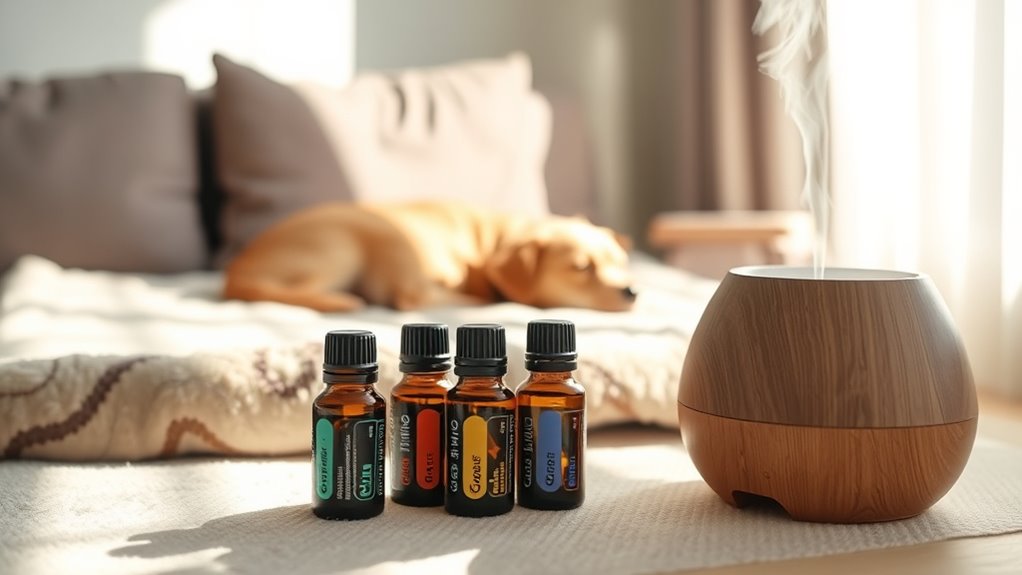
Doubling up on multiple essential oils or overusing them can quickly lead to adverse reactions in your pet. When you blend oils or try different aromatherapy techniques simultaneously, you risk overwhelming their sensitive system. Using too many oils at once can cause skin irritation, respiratory issues, or toxicity. Instead, stick to single oils and use them in moderation. If you want to create a calming blend, choose one or two safe options and dilute them properly. Always observe your pet’s reactions and avoid applying multiple oils together without guidance. Proper oil blending involves understanding which oils complement each other and are safe for pets. Additionally, being aware of AI safety measures and monitoring your pet while using essential oils can help prevent unexpected reactions. By practicing restraint and focusing on one oil at a time, you help ensure a safe and effective aromatherapy experience for your furry friend.
Neglecting to Consult Your Veterinarian Before Use

Before using essential oils on your pet, it’s vital to consult your veterinarian. They can advise you on potential toxicity risks and proper application methods. Skipping this step might put your pet’s health at unnecessary risk. Additionally, understanding the safe application techniques for essential oils can help prevent accidental harm.
Veterinary Advice Matters
While essential oils may seem harmless, consulting your veterinarian before using them around your pets is crucial. Your vet has the expertise to guide pet toxin prevention and identify which oils are safe or risky. Skipping a veterinarian consultation increases the chance of unknowingly exposing your pet to harmful substances. Every pet reacts differently, and an expert can help you understand specific risks for your animal’s breed, age, or health condition. Relying solely on online advice can be dangerous, as not all sources are accurate. Always seek professional guidance before introducing any new product or supplement. Prioritizing your veterinarian’s advice ensures you’re making informed choices that protect your pet’s health and well-being.
Potential Toxicity Risks
Have you considered the risks of using essential oils without consulting your veterinarian? Ignoring expert advice can lead to serious toxin exposure and pet poisoning. Essential oils contain compounds that may be harmless to humans but toxic to animals, especially if misused. Always check with your vet before introducing any new oils to your pet’s environment. Here’s a quick overview of potential risks:
| Essential Oil | Risk to Pets | Symptoms of Toxin Exposure |
|---|---|---|
| Tea Tree | Pet poisoning | Lethargy, vomiting |
| Eucalyptus | Toxicity | Drooling, difficulty breathing |
| Lavender | Mild toxicity | Skin irritation, weakness |
Neglecting proper guidance increases the chance of accidental poisoning. Always prioritize veterinary advice to ensure your pet’s safety. Additionally, understanding essential oil safety is crucial to prevent harmful effects.
Proper Usage Guidelines
Using essential oils around your pets without consulting a veterinarian can lead to unintended health risks. Always check with your vet before introducing any new oils into your home. Proper usage starts with correct diffuser placement; keep diffusers in well-ventilated areas, away from your pet’s sleeping or frequent spaces. Avoid placing diffusers near their bedding or food bowls. Additionally, ensure proper oil dilution—undiluted oils can be too potent and increase toxicity risks. Use only recommended dilutions and avoid applying oils directly to your pet’s skin. Remember, even safe oils can be harmful if misused. Always follow veterinary advice and manufacturer instructions to guarantee your pet’s safety and well-being when using essential oils. Understanding toxicity is crucial to prevent accidental poisoning.
Storing Oils Within Reach of Curious Pets

You need to keep essential oils out of your pet’s reach to prevent accidental ingestion. Store them in secure containers that pets can’t open or knock over easily. Taking these simple steps helps protect your curious furry friends from potential harm. Additionally, consider proper storage practices to ensure maximum safety and prevent accidental exposure.
Keep Oils Out of Reach
Since curious pets can quickly get into trouble with essential oils, it’s crucial to store them securely out of their reach. Proper oil storage is key to maintaining pet safety and preventing accidental ingestion or skin contact. Keep bottles on high shelves or in cabinets that pets cannot access, ensuring they’re out of paw’s reach. Never leave oils unattended on countertops or tables where pets can knock them over. Using a locked cabinet or a dedicated storage box can further protect curious noses and paws. Remember, even small amounts of essential oils can be dangerous for pets, so keeping them out of reach is a simple yet effective way to prevent emergencies. Additionally, understanding pet-safe oils and their proper use can help you create a safer environment for your furry friends. Prioritize pet safety by making oil storage a secure and inaccessible part of your home.
Use Secure Storage Containers
Even if you’ve already stored oils out of your pet’s reach, it’s essential to guarantee they’re kept in secure containers that prevent accidental access. Proper containers should be sturdy, leak-proof, and clearly labeled to avoid confusion. Using secure storage minimizes risks if your pet manages to find the oils. Choose containers with childproof caps or locks, ensuring they stay sealed. Here’s a quick guide:
| Container Type | Material | Features |
|---|---|---|
| Glass bottles | Dark glass | Protects oils from light |
| Plastic jars | BPA-free | Durable, easy to handle |
| Metal tins | Airtight seal | Long-lasting, secure |
| Lockable boxes | Heavy-duty plastic | Keeps multiple oils safe |
Proper containers are key to keeping your pets safe from accidental ingestion. Additionally, storing oils in appropriate containers helps preserve their quality and efficacy over time.
Assuming All Natural Oils Are Completely Safe for Pets

Many people assume that all natural oils are safe for pets because they come from plants and are marketed as natural remedies. However, this isn’t always true. Even natural oils can trigger pet allergies or cause adverse reactions if not properly diluted. Just because an oil is labeled as natural doesn’t mean it’s safe in any amount. Always remember to dilute essential oils before use, as full-strength oils can be too potent and harmful to your pet’s sensitive skin or respiratory system. Never assume safety without research or consulting a veterinarian. Every pet reacts differently, so what’s safe for one might not be for another. Be cautious, and don’t rely solely on the “natural” label as a guarantee of safety.
Applying Essential Oils Near Your Pet’s Food or Water Bowls

Applying essential oils near your pet’s food or water bowls requires careful consideration because pets often associate these areas with their nourishment and might inadvertently ingest or inhale oils if they’re too close. If essential oils contaminate pet food or water, it can lead to pet food contamination, causing digestive issues or toxicity. To prevent this, always dilute essential oils properly—using a safe essential oil dilution ratio—before applying them nearby. Keep oils at a distance from bowls to avoid accidental ingestion or inhalation. Even small amounts of concentrated oils can pose risks, so err on the side of caution. Ensuring proper dilution and placement helps protect your pet’s health and prevents unintended exposure during mealtime.
Failing to Observe Your Pet for Adverse Reactions

After applying essential oils near your pet’s food or water bowls, it’s important to monitor them closely for any signs of adverse reactions. Pets can develop allergies or sensitivities unexpectedly, so being vigilant is vital. Pay attention to symptoms like drooling, vomiting, difficulty breathing, or lethargy. Enhancing your pet allergy awareness helps you respond quickly if issues arise. Always check essential oil labeling for safe usage and proper dilution. To better understand potential reactions, review this table:
| Symptom | Possible Cause | Action |
|---|---|---|
| Excessive drooling | Allergic reaction | Remove oil and consult vet immediately |
| Coughing or wheezing | Respiratory irritation | Seek emergency care |
| Lethargy | Toxicity or overdose | Contact veterinarian promptly |
Monitoring ensures your pet stays safe and healthy.
Frequently Asked Questions
Can Essential Oils Cause Long-Term Health Issues in Pets?
Yes, crucial oils can cause long-term health issues in pets if not used properly. You might unknowingly put your pet at risk by neglecting dilution safety, which can lead to pet toxicity. Always make certain oils are properly diluted and used in moderation. Over time, exposure to undiluted or improperly used oils can result in chronic health problems, so it’s vital to stay informed and cautious to keep your pet safe.
How Do I Identify if My Pet Has an Allergic Reaction?
If your pet shows symptoms like itching, swelling, hives, or difficulty breathing, you should recognize these as signs of an allergic reaction. Conduct symptom recognition by observing any unusual behavior or physical changes after exposure to essential oils. To confirm, consider allergy testing performed by your veterinarian. Promptly seek veterinary care if you suspect an allergy, ensuring your pet’s health and safety.
Are There Specific Essential Oils Safe for Certain Pet Breeds?
You might think all pets are the same, but some breeds have sensitivities that could turn a simple essential oil into a disaster zone! For example, lavender and chamomile are generally safe for cats, while certain citrus oils can be risky for dogs. Always consider pet breed sensitivities when choosing essential oils, and opt for those specifically formulated for your pet’s breed to keep them safe and happy.
What Are the Signs of Essential Oil Poisoning in Pets?
If your pet shows signs of essential oil poisoning, look for symptoms like difficulty breathing, excessive drooling, vomiting, or skin irritation. Toxic plants or oils can cause these issues, especially if ingested or applied improperly. Be alert for changes in behavior, lethargy, or coughing. If you notice any of these signs, contact your veterinarian immediately to prevent further harm and guarantee your pet’s safety.
How Frequently Should I Use Essential Oils Around My Pet?
You should follow the recommended frequency guidelines for pet safety, usually avoiding daily use of essential oils around your pet. It’s best to use oils sparingly and observe their reactions. Consult with a veterinarian to determine safe intervals, as overuse can cause toxicity. Remember, moderation is key; even pet-safe oils can become harmful if used too often. Prioritize your pet’s health by sticking to expert-approved guidelines.
Conclusion
Remember, your pet’s safety hinges on mindful use. Just as a gentle breeze carries the scent of calming lavender, a careless mistake can upset your furry friend’s world. By avoiding common pitfalls—like overusing oils or neglecting vet advice—you create a peaceful environment where your pet can thrive. Keep these tips in mind, and watch as your home becomes a sanctuary where comfort and safety blend seamlessly, like a quiet sunset calming the restless sky.