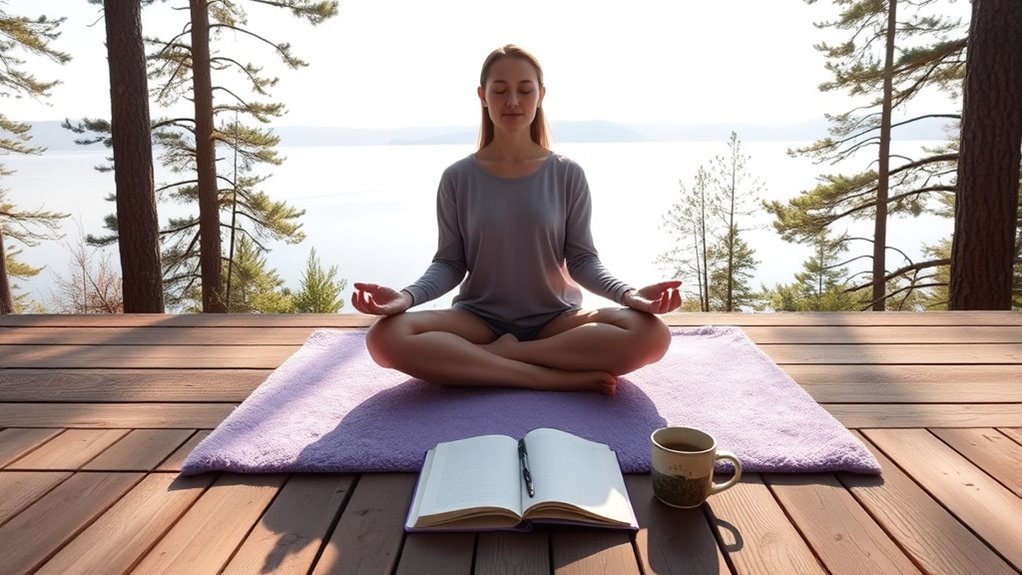

A 30-day mindfulness plan for beginners helps you reduce stress, sharpen focus, and boost overall well-being through simple daily practices. Start with short breathing exercises, paying attention to each inhale and exhale, and incorporate mindful eating moments to fully savor your food. Consistency is key; even just a few minutes daily builds a solid foundation. Stick with it consistently, and you’ll notice longer-lasting benefits. Keep going to discover how these small efforts can transform your daily life.
Key Takeaways
- Start with daily 3-5 minute breathing exercises to develop foundational mindfulness skills.
- Incorporate mindful eating by savoring each bite without distractions to enhance awareness and gratitude.
- Establish a consistent routine and create a dedicated meditation space to build habit and focus.
- Gradually increase practice duration and diversify techniques to deepen mindfulness over 30 days.
- Focus on gentle awareness and routine rather than perfection to promote long-term mental clarity and calm.

Beginning on a 30-day mindfulness plan can transform how you handle stress, improve focus, and boost your overall well-being. When starting this journey, it’s helpful to incorporate simple techniques that anchor you in the present moment. Breathing exercises are a fundamental tool you’ll want to practice daily. They’re easy to do and don’t require special equipment—just a few minutes each day can make a noticeable difference. To begin, find a comfortable seat, close your eyes if you like, and focus on your breath. Inhale slowly through your nose, feeling the air fill your lungs, then exhale gently through your mouth. As you do this, pay attention to the sensation of the breath entering and leaving your body. If your mind drifts, gently bring it back to your breath without judgment. Over time, these breathing exercises can help calm your nervous system, reduce anxiety, and increase your ability to stay present throughout the day.
Another key aspect to integrate early in your mindfulness plan is mindful eating. Instead of rushing through meals or eating while distracted by screens or other tasks, dedicate a few minutes to truly savor each bite. When you sit down to eat, take a moment to notice the appearance, texture, and aroma of your food. As you take each bite, focus on the taste and the sensations in your mouth. Chew slowly and deliberately, paying attention to how each flavor unfolds. This practice not only enhances your enjoyment of food but also encourages better digestion and a healthier relationship with eating. Mindful eating helps you become more aware of hunger and fullness cues, preventing overeating and fostering gratitude for your nourishment.
Throughout the 30 days, consistency is key. You don’t need to spend hours meditating—just a few minutes each day practicing breathing exercises or mindful eating can build a solid foundation for mindfulness. As you progress, you’ll notice that these practices become more natural and integrated into your daily routine. They empower you to respond thoughtfully rather than react impulsively, especially during stressful moments. Additionally, establishing a dedicated meditation space can enhance your focus and commitment to your practice. Remember, the goal isn’t perfection but cultivating a gentle awareness of the present. By embracing these simple yet powerful techniques from the start, you set yourself up for a more centered, peaceful, and focused life as you continue your mindfulness journey.
Frequently Asked Questions
Can Mindfulness Help With Anxiety or Depression?
Mindfulness therapy can definitely help you manage anxiety and depression by improving emotional regulation. When you practice mindfulness, you become more aware of your thoughts and feelings without judgment, which can reduce overwhelming emotions. Regular mindfulness exercises help you stay present, break negative thought patterns, and build resilience. Over time, this practice can lead to a calmer mind and better emotional balance, making it a valuable tool for mental health support.
Do I Need Any Special Equipment for Mindfulness Practice?
You don’t need any special equipment for mindfulness practice, but some meditation accessories like cushions or mats can make sitting more comfortable. Wear comfortable clothing that allows free movement and helps you relax. While accessories aren’t essential, they can create a more inviting space for your practice. Focus on your breath and presence, and let your environment support your journey without feeling pressured to buy anything fancy.
How Long Does It Take to See Benefits From Mindfulness?
You can start noticing benefits from mindfulness meditation within just a few days to a couple of weeks with consistent daily practice. The key is to be patient and committed, as regular mindfulness helps reduce stress, improve focus, and promote emotional well-being. By dedicating a few minutes each day, you’ll gradually experience positive changes in your mental clarity and overall mood, making mindfulness a valuable part of your routine.
Is Mindfulness Suitable for Children or Teenagers?
Did you know that studies show 70% of children experience reduced anxiety through mindfulness? Child mindfulness and teen mindfulness are both highly suitable for young people, helping them develop emotional regulation and focus. As a parent or educator, you can introduce simple practices like breathing exercises or guided imagery. These techniques are safe and effective, making mindfulness a valuable tool for kids and teens to navigate stress and build resilience.
Can Mindfulness Be Combined With Other Wellness Practices?
Yes, you can definitely combine mindfulness with other wellness practices to create a powerful wellness synergy. By integrating mindfulness with activities like yoga, meditation, or journaling, you enhance your overall well-being. This mindfulness integration helps deepen your relaxation, improve focus, and foster emotional resilience. You’ll find that blending these practices makes your wellness routine more effective and enjoyable, supporting your mental, emotional, and physical health holistically.
Conclusion
By sticking to this 30-day mindfulness plan, you’ll start to notice small changes that add up over time. Remember, Rome wasn’t built in a day, so be patient with yourself and celebrate each step forward. With consistency, mindfulness will become second nature, helping you find calm amid life’s chaos. Keep at it, and soon you’ll see that a little goes a long way—your mind and body will thank you for it.