

Mindset books can help readers question unhelpful thought patterns, build resilience, or turn ambition into daily action. My best overall pick is Mindset: Updated Edition for its focused case for learning and growth, while Make Your Bed is a more direct choice for readers who want simple routines and Get Out of Your Head speaks to those caught in repetitive negative thinking. The main tradeoff is whether you want research-led ideas, practical habits, spiritual encouragement, or a motivational framework. Some books offer a narrow toolset; others cover broader goals but may feel less focused. Read on for the full comparison and help matching a book to your needs.

Get the little things that make your day delivered free with Prime
- Fast, free delivery on millions of items
- Prime Video, Amazon Music and more included
- Member-only deals all year
Key Takeaways
- Mindset: Updated Edition earns the lead for readers seeking a clear growth-oriented framework, while Mindset: The New Psychology of Success gives the title’s core idea a second, distinct entry point.
- Make Your Bed is the most action-oriented short-form choice here: its emphasis on small routines contrasts with the broader motivational scope of books such as The Greatness Mindset.
- Readers who want help responding to thought spirals have a more targeted option in Get Out of Your Head than in the general encouragement of The Power of Positive Thinking.
- The list divides between practical behavior change, such as Make Your Bed, and changes in interpretation or belief, such as Don’t Believe Everything You Think.
- Think and Grow Rich and The Let Them Theory are built around specific motivational lenses; they may suit readers who want a strong central idea more than a broad, research-led treatment.
| Don’t Believe Everything You Think (Expanded Edition): Why Your Thinking Is the Beginning and End of Suffering |  | Best for Rethinking Thought-Driven Suffering | Edition: Expanded Edition | Format: Book | Subject: Thinking and suffering | VIEW ON AMAZON | See Our Full Breakdown |
| Make Your Bed: Little Things That Can Change Your Life…And Maybe the World |  | Best for Small, Action-Oriented Habits | Format: Not specified in supplied product data | Edition: Not specified in supplied product data | Stated theme: Small actions and personal change | VIEW ON AMAZON | See Our Full Breakdown |
| The Happiness Advantage: How a Positive Brain Fuels Success in Work and Life |  | Best for a Positive Outlook at Work | Format: Not specified in supplied product data | Edition: Not specified in supplied product data | Stated subject: Positive thinking | VIEW ON AMAZON | See Our Full Breakdown |
| The Greatness Mindset: Unlock the Power of Your Mind and Live Your Best Life Today |  | Best for Motivational Personal Growth | Subject: Personal growth and mindset | Stated theme: Developing a greatness mindset | Intended focus: Pursuing a more fulfilling life | VIEW ON AMAZON | See Our Full Breakdown |
| Mindset: Updated Edition — Changing the Way You Think to Fulfil Your Potential |  | Best for Potential-Focused Mindset Readers | Edition: Updated Edition | Format: Not specified in supplied product data | Subject: Mindset | VIEW ON AMAZON | See Our Full Breakdown |
| Think and Grow Rich: The Landmark Bestseller, Revised and Updated for the 21st Century | 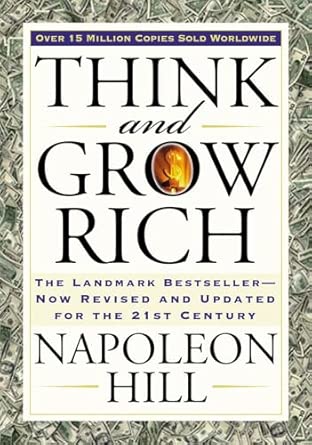 | Best for Goal-Driven Readers | Title: Think and Grow Rich: The Landmark Bestseller, Revised and Updated for the 21st Century | Author: Napoleon Hill | Edition: Revised and updated for the 21st century | VIEW ON AMAZON | See Our Full Breakdown |
| Get Out of Your Head: Stopping the Spiral of Toxic Thoughts |  | Best for Interrupting Negative Thought Loops | Title: Get Out of Your Head: Stopping the Spiral of Toxic Thoughts | Format: Book | Subject: Recognizing and interrupting toxic thought cycles | VIEW ON AMAZON | See Our Full Breakdown |
| Mindset: The New Psychology of Success |  | Best for Understanding Growth and Learning | Title: Mindset: The New Psychology of Success | Author: Carol S. Dweck | Format: Book | VIEW ON AMAZON | See Our Full Breakdown |
| The Let Them Theory |  | Best for Letting Go of Others’ Reactions | Title: The Let Them Theory | Format: Book | Subject: A theory for approaching life | VIEW ON AMAZON | See Our Full Breakdown |
| The Power of Positive Thinking |  | Best for Readers Seeking an Optimistic Outlook | Title: The Power of Positive Thinking | Author: Norman Vincent Peale | Format: Book | VIEW ON AMAZON | See Our Full Breakdown |
| mindset book | Edition | Format | ASIN | Subject |
|---|---|---|---|---|
| Don’t Believe Everything You T | Expanded Edition | Book | B0DHJH6QHB | Thinking and suffering |
| Make Your Bed: Little Things T | Not specified in supplied product data | Not specified in supplied product data | 1455570249 | — |
| The Happiness Advantage: How a | Not specified in supplied product data | Not specified in supplied product data | 0307591557 | — |
| The Greatness Mindset: Unlock | Not specified in supplied product data | Not specified in supplied product data | B0C1DKMC9Z | Personal growth and mindset |
| Mindset: Updated Edition | Updated Edition | Not specified in supplied product data | 147213995X | Mindset |
| Think and Grow Rich: The Landm | Revised and updated for the 21st century | Book | 1585424331 | Success and personal achievement |
| Get Out of Your Head: Stopping | Not specified | Book | 1601429649 | Recognizing and interrupting toxic thought cycles |
| Mindset: The New Psychology of | Not specified | Book | 0345472322 | Mindsets and psychology of success |
| The Let Them Theory | Not specified | Book | B0DFMZMKFJ | A theory for approaching life |
| The Power of Positive Thinking | Not specified | Book | 0743234804 | Positive thinking |
More Details on Our Top Picks
Don’t Believe Everything You Think (Expanded Edition): Why Your Thinking Is the Beginning and End of Suffering
I’d pick this for readers whose main mindset question is how thoughts shape their distress. Its title frames thinking as central to suffering, giving it a more inward, reflective angle than Make Your Bed, which is oriented toward small actions and discipline. The expanded edition may appeal to readers who want the updated version, but the supplied details do not describe what was added, so I can’t treat that as a guarantee of broader coverage. This is a focused choice rather than a clearly documented step-by-step program: the available information gives me little basis to judge its exercises, structure, or level of detail. Choose it for its specific theme; skip it if you need a confirmed workbook-style method or a detailed contents outline.
Pros:- Centers on the relationship between thinking and suffering
- Expanded edition is identified in the product data
- A more reflective focus than action-oriented titles such as Make Your Bed
Cons:- The supplied details do not explain the book’s method or chapter contents
- The changes in the expanded edition are unspecified
- Readers seeking a clearly documented practical program may lack enough information to judge fit
Best for: Readers interested in examining how their thinking relates to emotional suffering and who prefer a focused mindset theme.
Not ideal for: Buyers who need a clearly described set of exercises, a detailed syllabus, or verified information about what the expanded edition adds.
- Edition:Expanded Edition
- Format:Book
- Subject:Thinking and suffering
- Approach indicated by title:Examines how thinking relates to suffering
- Edition details:Specific expanded content not provided
- ASIN:B0DHJH6QHB
Our verdict“Choose this if you want a focused examination of thought and suffering, but favor a more fully described guide if you need a known framework.”
Make Your Bed: Little Things That Can Change Your Life…And Maybe the World
Make Your Bed is the most action-first pick in this group: its title makes the case for starting with small tasks and connecting them to larger change. That emphasis sets it apart from Mindset: Updated Edition, which is framed around how thinking shapes potential rather than a particular everyday action. I’d consider it for readers who want an accessible prompt to act, not a detailed theory of mindset. The tradeoff is that the supplied product data offers no edition, format, chapter, or method details beyond the title, so I can’t verify how extensively it develops its message. Readers who want a deeper account of thought patterns or a clearly specified practice may prefer a more directly described option.
Pros:- Clearly signals a practical, action-oriented theme
- Connects everyday habits with broader personal change
- Offers a distinct alternative to books centered on thought patterns
Cons:- The supplied product data does not specify format or edition
- No details are available about the book’s structure or practical exercises
- Its small-actions framing may feel too basic for readers seeking a detailed mindset framework
Best for: Readers who want a straightforward motivational book centered on small actions and their possible wider effects.
Not ideal for: Readers looking for a detailed psychology-based explanation of mindset or for verified information about exercises and structure.
- Format:Not specified in supplied product data
- Edition:Not specified in supplied product data
- Stated theme:Small actions and personal change
- Broader focus indicated by title:Possible wider effects of everyday actions
- Author:Not specified in supplied product data
- ASIN:1455570249
Our verdict“Choose it if small actions are the kind of motivational starting point you want; choose Mindset: Updated Edition for a more explicitly thought-focused theme.”
The Happiness Advantage: How a Positive Brain Fuels Success in Work and Life
This is the clearest fit for readers linking mindset with professional and everyday success: the title explicitly connects a positive brain with work and life. Compared with Make Your Bed, which points toward small actions, The Happiness Advantage frames positivity as the starting point for broader outcomes. That makes it a distinct choice for someone interested in the relationship between outlook and achievement, rather than a narrowly habit-led prompt. The limitation is the thin supplied product data: it provides no edition, format, or detail about the ideas and practices inside. I’d select it for its work-and-life emphasis, but readers who want a reliably described method or a specific habit plan may be better served by a title whose available information spells that out.
Pros:- Directly links positive thinking with work and life
- Offers a broader success-oriented focus than Make Your Bed’s small-actions framing
- Has a clearly identifiable positive-outlook theme
Cons:- The supplied data does not specify format or edition
- No details are provided about its practical framework
- Readers seeking a narrowly defined habit routine may find the stated scope broad
Best for: Readers interested in how a positive outlook may relate to success across work and personal life.
Not ideal for: Buyers who need confirmed details about the book’s format, edition, exercises, or specific approach before choosing.
- Format:Not specified in supplied product data
- Edition:Not specified in supplied product data
- Stated subject:Positive thinking
- Work-life focus:Work and life
- Outcome named in title:Success
- ASIN:0307591557
Our verdict“Choose this for a mindset book framed around positivity and success in work and life, not for a confirmed step-by-step habit plan.”
The Greatness Mindset: Unlock the Power of Your Mind and Live Your Best Life Today
The Greatness Mindset is the most overtly aspirational pick here: its stated theme is personal growth and using the mind to pursue a more fulfilling life. That broad motivational framing contrasts with Don’t Believe Everything You Think, which centers on thinking in relation to suffering. I’d choose this when encouragement and a forward-looking personal-growth theme matter more than a narrowly defined problem. The tradeoff is a lack of supplied detail about its format, structure, or specific practices; the title and brief description don’t tell me how it turns motivation into action. Readers who want a clearly described psychological framework or practical routine should compare it with options whose available information identifies a more specific focus.
Pros:- Clearly positioned around personal growth
- Uses a motivational, forward-looking theme
- Contrasts with books focused on suffering or a specific everyday habit
Cons:- The supplied information does not describe its specific method
- Format and edition details are not provided
- The broad greatness theme may not satisfy readers seeking a narrowly defined mindset skill
Best for: Readers looking for an aspirational personal-growth book focused on using mindset to pursue a more fulfilling life.
Not ideal for: Readers who want a clearly documented method, chapter structure, or specific exercises before buying.
- Subject:Personal growth and mindset
- Stated theme:Developing a greatness mindset
- Intended focus:Pursuing a more fulfilling life
- Format:Not specified in supplied product data
- Edition:Not specified in supplied product data
- ASIN:B0C1DKMC9Z
Our verdict“Choose it for an aspirational personal-growth focus, but look to a more fully described title if you need a specific plan or framework.”
Mindset: Updated Edition — Changing the Way You Think to Fulfil Your Potential
Mindset: Updated Edition is my clearest choice for readers specifically drawn to the idea that thought patterns shape potential. Its framing is more directly about how people think than Make Your Bed, whose title emphasizes small actions, and less centered on emotional suffering than Don’t Believe Everything You Think. That makes it a strong thematic fit for a roundup about mindset, particularly for readers who want to reflect on their beliefs and capacity. The product data confirms an updated edition but gives no details about its changes, format, or practical tools, so I wouldn’t assume what the update adds. Choose it for the potential-focused premise; skip it if you need a fully described program or verified edition contents.
Pros:- Directly focuses on mindset and personal potential
- The supplied data identifies it as an updated edition
- Offers a more explicitly thought-centered theme than Make Your Bed
Cons:- The supplied details do not explain what changed in the updated edition
- Format and practical contents are not specified
- Readers seeking a clearly documented action plan may not have enough information to judge fit
Best for: Readers interested in how their thinking may shape personal potential and who want an explicitly mindset-focused title.
Not ideal for: Buyers who need details on the updated edition’s changes, a confirmed format, or a clearly described set of exercises.
- Edition:Updated Edition
- Format:Not specified in supplied product data
- Subject:Mindset
- Stated focus:How thinking relates to potential
- Edition changes:Not specified in supplied product data
- ASIN:147213995X
Our verdict“Choose this for a direct focus on thinking and potential, but verify the edition details if the update itself matters to you.”
Think and Grow Rich: The Landmark Bestseller, Revised and Updated for the 21st Century
Think and Grow Rich takes a success-and-achievement route to mindset: its revised edition presents Napoleon Hill’s classic within a 21st-century framing. That makes it a fit for readers who want ideas about ambition and personal achievement, rather than a focused guide to changing how they learn. Compared with Carol Dweck’s Mindset: The New Psychology of Success, this book is more directly oriented toward success principles, while Dweck’s title centers on how beliefs shape learning and growth. The main tradeoff is its classic framework: readers seeking current research or step-by-step exercises may find the approach less direct. Its place here rests on its distinct focus on achievement, not on being a universal guide to every mindset challenge.
Pros:- Focuses specifically on personal achievement and success
- Revised and updated edition offers a contemporary framing of a classic
- Part of the Think and Grow Rich series for readers interested in related titles
Cons:- Its classic success framework may feel less current than newer approaches
- The supplied description does not identify practical exercises or detailed methods
Best for: Readers who want a classic, achievement-focused framework for thinking about ambition and personal success
Not ideal for: Readers looking for a research-centered explanation of learning, or a detailed workbook with specific exercises
- Title:Think and Grow Rich: The Landmark Bestseller, Revised and Updated for the 21st Century
- Author:Napoleon Hill
- Edition:Revised and updated for the 21st century
- Series:Think and Grow Rich
- Subject:Success and personal achievement
- Format:Book
- ASIN:1585424331
Our verdict“Choose this edition if you want a classic mindset book centered on ambition and achievement rather than learning psychology.”
Get Out of Your Head: Stopping the Spiral of Toxic Thoughts
Get Out of Your Head is the most directly focused choice here for readers whose mindset challenge is a recurring spiral of negative thoughts. Its stated aim is to help readers recognize and interrupt those cycles, which gives it a narrower, more immediate use than Mindset: The New Psychology of Success, a broader book about learning, achievement, and growth. That focus can make the subject easier to connect with when overthinking is the problem at hand. The tradeoff is that the available description offers no detail about the book’s methods, structure, or supporting material, so readers wanting a clearly specified toolkit may prefer a title with a more defined framework. I’d pick it for its targeted subject, not as a general guide to every kind of personal development.
Pros:- Addresses toxic thought cycles directly
- Emphasizes recognizing thoughts as well as interrupting the cycle
- Offers a narrower focus than broad success or personal-growth titles
Cons:- Available product information does not describe its specific techniques
- Its focus on thought spirals may not address wider goals such as learning or achievement
Best for: Readers who want a book specifically about recognizing and interrupting recurring negative thought patterns
Not ideal for: Readers seeking a clearly described step-by-step program or a broad framework for learning and achievement
- Title:Get Out of Your Head: Stopping the Spiral of Toxic Thoughts
- Format:Book
- Subject:Recognizing and interrupting toxic thought cycles
- Focus:Negative thought patterns
- Edition:Not specified
- Series:Not specified
- ASIN:1601429649
Our verdict“Choose this when recurring negative thoughts are your main mindset concern and a focused subject matters more than a fully specified method.”
Mindset: The New Psychology of Success
Mindset: The New Psychology of Success is the clearest choice in this group for readers who want to connect their beliefs with how they learn, pursue achievement, and grow. Its scope makes it more useful as a broad lens than Get Out of Your Head, which targets toxic thought spirals, or Think and Grow Rich, which centers on ambition and success. That breadth is its advantage if you want one idea to apply across different parts of life. The tradeoff is that readers looking for a narrow, immediate response to overthinking may find it less tailored than a book devoted to that concern. The supplied description does not give further details about its methods, so this pick is based on its stated focus rather than claims about specific exercises.
Pros:- Connects mindset with learning and achievement
- Covers personal growth as well as success
- Offers a broader focus than books aimed at one specific thought pattern
Cons:- May feel broad for readers seeking help with one immediate mindset challenge
- The available description does not specify exercises or practical tools
Best for: Readers who want to examine how their beliefs affect learning, achievement, and personal growth across different situations
Not ideal for: Readers looking for a narrowly focused guide to negative thought spirals or a described set of practical exercises
- Title:Mindset: The New Psychology of Success
- Author:Carol S. Dweck
- Format:Book
- Subject:Mindsets and psychology of success
- Focus:Learning, achievement, and personal growth
- Edition:Not specified
- ASIN:0345472322
Our verdict“Choose this for a broad exploration of how beliefs shape learning and growth, rather than a targeted guide to one thought pattern.”
The Let Them Theory
The Let Them Theory stands apart from the other picks by centering its approach on a named idea for how to approach life. That gives it a different angle from Mindset: The New Psychology of Success, which focuses on beliefs and their relationship to learning and achievement. The named theory may appeal to readers who want a memorable lens for everyday situations, especially if they are exploring how to respond to other people’s choices. However, the supplied description does not explain the theory’s steps or scope, so I can’t recommend it as a detailed method based on the available information. Compared with Get Out of Your Head, it also appears less specifically targeted at thought spirals. Its appeal is the distinct organizing idea; its limitation is the lack of detail about how that idea is applied.
Pros:- Organizes its approach around a distinct named theory
- Offers a different angle from books centered on achievement or learning
- May suit readers who prefer a memorable guiding idea
Cons:- Available product information does not explain the theory’s steps
- The stated description does not establish how broadly the approach applies
Best for: Readers drawn to a single named framework for approaching everyday life and other people’s choices
Not ideal for: Readers who need a clearly described, step-by-step method or a book specifically focused on toxic thought cycles
- Title:The Let Them Theory
- Format:Book
- Subject:A theory for approaching life
- Named framework:The Let Them Theory
- Edition:Not specified
- Series:Not specified
- ASIN:B0DFMZMKFJ
Our verdict“Pick this if a single named life framework appeals to you, but choose a more clearly specified guide if you need detailed methods.”
The Power of Positive Thinking
The Power of Positive Thinking is the most direct fit for readers attracted to optimism as the central theme of a mindset book. That makes it distinct from Get Out of Your Head, which targets recurring toxic thoughts, and Mindset: The New Psychology of Success, which links beliefs with learning and achievement. Its title promises a clear thematic direction, but the product information supplied here gives no further detail about its arguments, practices, or structure. I’d treat it as a choice for readers already seeking an optimism-centered perspective, not assume it offers a specific program for changing thought habits. Compared with the more defined subject descriptions of the other titles, that lack of detail makes it harder to match to a precise need before reading.
Pros:- Has a clear, optimism-centered subject
- Offers a different emphasis from achievement- and learning-focused titles
- May appeal to readers who want positive thinking as the main theme
Cons:- Available product information gives no detail about its methods or structure
- The description does not establish whether it addresses specific mindset challenges
Best for: Readers specifically looking for a book centered on positive thinking and an optimistic outlook
Not ideal for: Readers who want a clearly described method for changing thought patterns or a book focused on learning psychology
- Title:The Power of Positive Thinking
- Author:Norman Vincent Peale
- Format:Book
- Subject:Positive thinking
- Focus:Optimistic outlook
- Edition:Not specified
- ASIN:0743234804
Our verdict“Choose this if optimism is the subject you want to read about, but look elsewhere for a clearly outlined method or specialized focus.”

How We Picked
I ranked these books by how clearly each one serves a distinct mindset need: changing beliefs, managing negative thoughts, building everyday discipline, or pursuing goals. I also weighed accessibility, the usefulness of the central idea, and how easily a reader can connect the book’s approach to daily choices. A focused book can be a better fit than a wide-ranging one when its subject matches the reader’s actual challenge.
The ranking favors a strong balance of clarity, relevance, and practical use, which puts Mindset: Updated Edition first as the clearest fit for the category’s central promise. Other entries rise for specific audiences rather than trying to do the same job: Make Your Bed for habit-minded readers, and Get Out of Your Head for those focused on thought spirals. Books centered on broad positivity, wealth, or one memorable theory rank lower for general use because their appeal depends more on the reader’s preferred framework.
| mindset book | Edition | Format | Title |
|---|---|---|---|
| Don’t Believe Everything You T | Expanded Edition | Book | — |
| Make Your Bed: Little Things T | Not specified in supplied product data | Not specified in supplied product data | — |
| The Happiness Advantage: How a | Not specified in supplied product data | Not specified in supplied product data | — |
| The Greatness Mindset: Unlock | Not specified in supplied product data | Not specified in supplied product data | — |
| Mindset: Updated Edition | Updated Edition | Not specified in supplied product data | — |
| Think and Grow Rich: The Landm | Revised and updated for the 21st century | Book | Think and Grow Rich: The Landmark Bestseller, Revised and Updated for the 21st Century |
| Get Out of Your Head: Stopping | Not specified | Book | Get Out of Your Head: Stopping the Spiral of Toxic Thoughts |
| Mindset: The New Psychology of | Not specified | Book | Mindset: The New Psychology of Success |
| The Let Them Theory | Not specified | Book | The Let Them Theory |
| The Power of Positive Thinking | Not specified | Book | The Power of Positive Thinking |
Factors to Consider When Choosing Mindset Books
The right mindset book depends less on how inspiring its title sounds and more on what you want to change. I would start by naming the problem you want the book to address, then match that need to its style, scope, and level of practical guidance.
Choose the change you want to make
Before picking a title, write down the situation where you want a different response: setbacks, self-criticism, procrastination, or relationships. These are not interchangeable goals, even when books use similar language about positive thinking or success. A book focused on growth beliefs may help you rethink how you approach learning, while a book about thought spirals may speak more directly to rumination. A common mistake is choosing the most famous title rather than the one aimed at the specific pattern you want to address. If you are unsure, favor a book whose central problem is easy to recognize in your own life. That makes it easier to judge whether the book’s advice fits before committing to a longer reading plan.
Some readers respond to explanations and concepts; others want short lessons, examples, or direct instructions. A motivational voice can keep a reader engaged, but it may not satisfy someone looking for a careful account of why a mindset works. On the other hand, a more explanatory book can feel slow if you want prompts or actions you can try immediately. Check a sample chapter when possible and notice whether the author gives reasoning, stories, exercises, or slogans. Do not assume that a readable book is shallow or that a serious tone guarantees practical help. The best fit is the style you are likely to return to when the initial enthusiasm fades.
Look for usable practices, not just memorable ideas
A compelling central idea can shift how you think, but lasting change usually asks for some form of practice. Look for reflection questions, repeatable habits, or clear ways to apply the book’s argument in ordinary situations. If a title offers mostly inspiration, decide whether that is what you want or whether you need a guide that helps turn insight into routine. One common buying mistake is expecting a book to function like a personalized plan without doing any follow-up work. You can create a simple test: identify one action you could try after each chapter. When a book makes that step clear, it is more likely to support behavior change rather than a brief burst of motivation.
Check how broad or specialized the framework is
A broad book may connect mindset to work, relationships, goals, and daily habits, which can be useful if you are still defining your priorities. A specialized book can offer a closer fit when you already know the issue you want to address. Breadth has a tradeoff: covering more topics can leave less room for any one of them. Narrow focus has its own limit, since a tool designed for one situation may not transfer neatly to another. Avoid choosing based only on the biggest promise on the cover; ask whether the scope matches the amount of guidance you need. Readers with a defined goal often gain more from a targeted approach, while curious beginners may prefer a wider introduction.
Decide whether you want ideas, encouragement, or a routine
Mindset books often blend three different jobs: explaining a way to think, offering emotional encouragement, and helping readers establish routines. They may overlap, but one book rarely gives equal weight to all three. If you already have motivation, a more structured approach may add more than another round of reassurance. If you feel discouraged, a practical but stern book may not be the most welcoming starting point. Think about what would help you take the next step this month, rather than what sounds impressive as a long-term goal. This distinction can keep you from collecting several books that repeat the same kind of advice while leaving your actual need unmet.
Frequently Asked Questions
Which mindset book is a good first choice if I have never read one?
I would start with a book whose central idea is easy to connect to a current challenge, rather than picking the broadest or most ambitious title. Mindset: Updated Edition is the strongest general entry in this roundup for readers interested in learning and growth, while Make Your Bed suits someone who prefers short, action-led lessons. Think about whether you want a framework to reflect on or a routine to try. If you are uncertain, read a sample and check whether the author’s voice feels approachable. A first book should be readable enough that you finish it and specific enough that you can use one idea afterward.
Are growth-mindset books and positive-thinking books the same kind of read?
They overlap in their interest in how beliefs shape behavior, but they do not necessarily make the same case. Growth-oriented books tend to focus on learning, effort, and responses to challenges, while positive-thinking titles place more emphasis on outlook and encouragement. Neither approach is a substitute for addressing every source of stress or difficulty. If you want a framework for how to respond to setbacks, look for a book centered on learning and development. If you want uplifting language, a positive-thinking book may fit better, though readers who prefer practical steps may find it less specific.
Should I choose a book about negative thoughts or one about building better habits?
Start with the issue that most often gets in the way of your day. If repetitive or distressing thoughts are the main concern, a book focused on thought patterns is a closer match than a routine-centered title. If you already know what you want to do but struggle to follow through, habit-focused guidance may be more useful. These needs can overlap, yet reading about habits may not address the thoughts behind avoidance, and thought-focused advice may not create a daily structure. You can also read them in sequence, beginning with the issue that currently feels most disruptive. Set a clear goal for each book so the second one adds a new tool rather than repeating the first.
Can a motivational mindset book replace professional mental health support?
No. A self-help book can offer reflection prompts, encouragement, or ideas to discuss, but it cannot assess an individual’s situation or provide personalized care. Books about positive thinking or thought patterns should not be treated as a cure for persistent distress. If symptoms are disrupting daily life or feel difficult to manage, consider reaching out to a qualified mental health professional. A book may still be a useful companion if its approach feels supportive, but it should not delay care. Choose material that avoids blaming readers for struggling and treat any advice as one resource among others.
Is it better to read one mindset book closely or several for different perspectives?
For most readers, starting with one book and trying its ideas is more useful than reading several similar titles back to back. A close read gives you time to notice which practices fit and which claims do not match your experience. Once you know what is missing, choose a second book with a genuinely different focus, such as moving from broad growth beliefs to daily habits or managing thought spirals. Reading many motivational books without applying anything can create a sense of progress without changing routines. Keep brief notes on one idea to test, then decide whether another perspective would add something distinct.
Conclusion
For a single starting point, I recommend Mindset: Updated Edition as the best overall choice for readers seeking a clear growth-oriented framework. Make Your Bed is my best value in practical terms for readers who want accessible lessons tied to everyday action, while The Greatness Mindset is the best premium-style pick for someone drawn to a broader, more ambitious motivational program. Beginners who want a straightforward entry can start with Make Your Bed; readers focused on recurring negative thoughts should choose Get Out of Your Head. If relationships and other people’s choices are the specific concern, The Let Them Theory offers the most targeted lens. Match the title to the change you want, rather than choosing by promise alone.